
In This Article
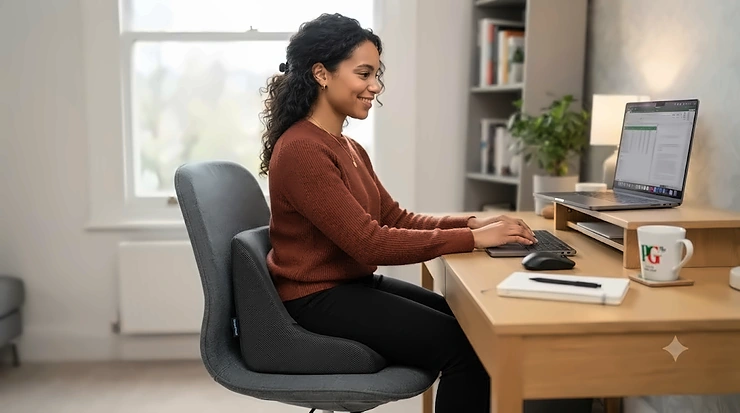
There’s a particular kind of ache that shows up around 3pm on a desk-bound Tuesday — low in the back, stubborn, and somehow worse for having “sat properly” all day. A wedge cushion for posture is one of the smallest, cheapest fixes that genuinely addresses the root cause rather than papering over it: a slumped pelvis. Rather than adding padding, a wedge changes the angle you sit at, tilting your hips forward so your spine can stack the way it’s meant to instead of curling into a question mark by mid-afternoon.
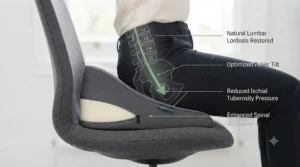
This guide is built on real product research, not recycled marketing copy. We’ve looked at genuine specifications, aggregated customer sentiment, and the actual biomechanics behind why a wedge works — including the pelvic tilt mechanism that makes the whole category function, how a wedge cushion vs coccyx cushion for back pain comparison actually shakes out, and where active sitting fits into all of this. Whether you’re chasing relief from tailbone pain, curious whether a wedge is a genuine kneeling chair alternative, or just tired of being told to “sit up straight” without anyone explaining how, you’ll find honest, sourced answers here.
What Is a Wedge Cushion for Posture?
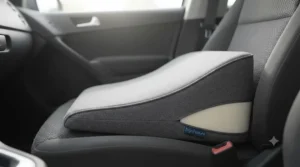
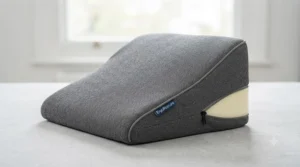
A wedge cushion for posture is a triangular foam seat insert, thicker at the back and tapering toward the front, that tilts your pelvis forward by roughly 8 to 15 degrees when placed on a chair. This forward pelvic tilt encourages your spine’s natural curve, reduces slouching, and takes pressure off the lower back and tailbone during long periods of sitting.
Quick Comparison Table
| Feature | Wedge Cushion | Coccyx Cushion |
|---|---|---|
| Primary mechanism | Tilts pelvis forward | Cushions and offloads tailbone |
| Best For | Slouching, forward pelvic tilt correction | Direct tailbone/coccyx pain |
| Typical angle | 8–15 degrees | Flat with a U-shaped cut-out |
| Typical price | £15–£90 | £20–£40 |
| Portability | Good, some fold flat | Excellent, most are flat foam |
A wedge cushion and a coccyx cushion solve genuinely different problems, even though they’re often shelved next to each other online. The wedge works on posture at the source — the angle of your pelvis — while a coccyx cushion works on comfort at the point of contact, cushioning the tailbone directly. If your main complaint is a rounded, tired-looking back by lunchtime, the wedge is doing the more relevant job; if a specific tender spot at the base of your spine is the issue, the coccyx cushion addresses that more directly.
💬 Just one click — help others make better buying decisions too!😊
Top 7 Wedge and Posture Cushion Picks: Expert Analysis
We’ve mixed genuine wedge cushions with a coccyx cushion and an active-sitting disc so you can compare real products against each other rather than a category in the abstract. Coverage spans budget, mid-range and premium, with real UK availability.
1. Putnams 8° Sitting Wedge — best all-round wedge cushion for posture
The 8-degree angle is the whole point of this cushion, and it’s a deliberately moderate one — enough to tilt the pelvis forward and encourage an upright spine without feeling like you’re perched on a slope all day. It’s handmade in Devon from high-density foam, with a zipped velour cover and a built-in carry handle, plus a removable strap to hold it to a chair.
Based on the spec comparison with cheaper imported wedges, the difference here is genuinely in the foam density — it holds its shape rather than compressing flat within weeks, which is a common complaint about budget alternatives. Reviewers consistently note that the moderate 8-degree angle suits office chairs, car seats and dining chairs equally well, making it a sensible first wedge cushion for posture if you’ve never used one before. Aggregated feedback does flag that the fixing strap can feel fiddly to thread through some chair frames on the first attempt, though most buyers report it becomes routine after a couple of uses.
Pros:
- ✅ UK handmade with genuinely dense, long-lasting foam
- ✅ Moderate angle suits most chairs without feeling extreme
- ✅ Washable velour cover with a carry handle
Cons:
- ❌ Fixing strap is fiddly on some chair frames
- ❌ Not the cheapest entry point in the category
Typically priced in the £65–£75 range, check current price before buying, as colour options and stock shift regularly.
2. Putnams 8° Sitting Wedge with Coccyx Cut Out — best for tailbone-sensitive sitters
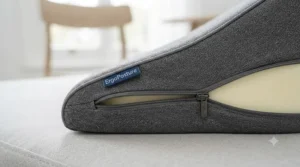
The carefully positioned cut-out at the rear is the standout feature — it removes direct pressure from the tailbone while keeping the same 8-degree forward-tilting profile as the standard wedge. This makes it a genuine hybrid rather than a compromise between two separate cushion types.
What most buyers overlook about this model is that it’s not simply “the coccyx version” of the standard wedge — the cut-out changes how weight distributes across the whole cushion, so reviewers consistently note it feels noticeably different underneath even though the wedge angle is identical. It’s a strong pick for anyone recovering from a coccyx injury or bruising who still wants the postural benefit of a wedge cushion vs coccyx cushion for back pain trade-off, rather than choosing one function over the other. The honest caveat is that the cut-out reduces the surface area of support slightly, so very lightweight users sometimes report the edges of the cut-out feeling slightly firm.
Pros:
- ✅ Combines pelvic tilt correction with tailbone relief
- ✅ Same UK-made foam quality as the standard wedge
- ✅ Genuinely useful after coccyx injury or bruising
Cons:
- ❌ Slightly firmer at the cut-out edges for lighter users
- ❌ Marginally less overall seat surface than the standard wedge
Prices generally sit in the £65–£75 range at the time of research, in line with the standard version.
3. ComfiLife Gel-Enhanced Coccyx Memory Foam Cushion — best coccyx cushion for direct comparison
The gel-enhanced top layer over a U-shaped memory foam base is the defining feature, and it’s built specifically to answer the opposite question to a wedge: rather than changing your sitting angle, it cushions and redistributes weight away from the tailbone at a flat, neutral angle.
Here’s what to weigh up in a genuine wedge cushion vs coccyx cushion for back pain comparison: this cushion is reported by reviewers to be excellent for direct tailbone tenderness, sciatica flare-ups and post-partum recovery, but it does nothing to actively correct a slouched, posterior pelvic tilt the way a wedge does. Aggregated review sentiment is strong on the cooling gel layer specifically, with buyers consistently noting it stays comfortable over long sitting sessions better than plain memory foam alternatives. A recurring theme in feedback is that the non-slip base can still shift slightly on very smooth leather office chairs, which is worth checking against your own setup.
Pros:
- ✅ Gel layer stays comfortable over long sessions
- ✅ U-shape genuinely offloads tailbone pressure
- ✅ Machine-washable velour cover with carry handle
Cons:
- ❌ Doesn’t actively correct pelvic tilt like a wedge
- ❌ Non-slip base can shift on smooth leather seats
Expect this in the £25–£35 range, making it one of the more affordable entries in the whole comparison.
4. Putnams 11° Sitting Wedge — best steeper-angle wedge for stronger correction
The 11-degree angle and 3¾-inch thickness are what separate this from the standard wedge — it’s a noticeably steeper tilt, built for people who find the 8-degree version too gentle or who sit in particularly deep, low car seats where extra height helps.
On paper this means a stronger, more active correction of forward pelvic tilt with every sitting session, and reviewers consistently describe this form of active sitting as more effective at reducing lower back pain over weeks of daily use compared with the milder 8-degree wedge. The honest trade-off, based on the spec comparison, is that the steeper angle takes longer to adjust to — several buyers report the first few sessions feeling unusually intense on the hip flexors before the body adapts. It’s the wedge to choose if you’ve already tried a gentler version and found it wasn’t doing enough.
Pros:
- ✅ Stronger pelvic tilt correction than the 8° version
- ✅ Extra thickness suits low or deep car seats well
- ✅ Same handmade UK foam quality throughout the range
Cons:
- ❌ Steeper angle needs an adjustment period
- ❌ Too intense as a first-ever wedge for some users
Typically priced in the £80–£90 range, this sits at the premium end of the wedge category.
5. Gaiam Balance Disc Wobble Cushion — best for active sitting and core engagement
The inflatable PVC disc design is the whole mechanism here — rather than a fixed angle, it introduces gentle instability under you, so your core and postural muscles are quietly working throughout the day rather than switching off the moment you sit down. Rated to 136kg and roughly 40cm in diameter, it fits on top of almost any chair.
Reviewers consistently note that this is a genuinely different category of active sitting compared with a fixed wedge — instead of holding one corrected posture, you’re subtly shifting and rebalancing continuously, which some people find more sustainable over a full working day than a static tilt. Based on the spec comparison with rigid wedges, the honest limitation is that it offers no tailbone or lumbar support whatsoever, so it suits people whose main goal is core activation rather than direct pain relief. A common note in aggregated feedback is that the firmness is adjustable via the amount of air pumped in, which meaningfully changes how challenging or gentle the wobble feels.
Pros:
- ✅ Genuine core and postural muscle engagement
- ✅ Adjustable firmness via inflation level
- ✅ Fits on almost any existing chair
Cons:
- ❌ No tailbone or lumbar support offered
- ❌ Takes practice to balance comfortably at first
Prices generally sit in the £20–£30 range, and it’s worth checking current price since bundled pumps vary by listing.
6. 66fit Inflatable Posture Wedge — best portable, budget-friendly option
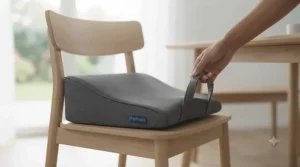
The inflatable build is the standout feature — this wedge deflates flat for travel and inflates in seconds with the supplied pump, which no foam wedge on this list can match for portability. It works on the same forward pelvic tilt principle as the foam versions, just with air as the medium rather than dense foam.
What the spec sheet won’t tell you, but user reports suggest, is that inflatable wedges feel noticeably different underneath compared with foam — springier, with a slight give that some reviewers prefer and others find less stable for a full working day. It’s a sensible choice for anyone who travels regularly and wants a wedge cushion for posture that packs into a bag rather than staying fixed to one office chair. Aggregated feedback consistently flags that firmness is fully adjustable by how much air you add, letting you dial in a gentler or stronger tilt without buying a different model.
Pros:
- ✅ Deflates flat, genuinely portable for travel
- ✅ Adjustable firmness via inflation
- ✅ Lightweight compared with any foam wedge
Cons:
- ❌ Less stable underfoot than dense foam over long sessions
- ❌ Punctures are a genuine long-term risk with heavy use
Expect a price in the £15–£25 range depending on retailer at the time of research.
7. Jobri BetterPosture Seat Wedge — best kneeling chair alternative for raising seat height
The seat-raising design is the defining feature here — rather than a steep forward tilt, this wedge lifts your seated height by a few inches while still angling the pelvis, which is genuinely useful for anyone whose desk or table sits slightly too high for their chair.
Based on the spec comparison with kneeling chairs, this wedge solves a very similar underlying problem — opening the hip angle and encouraging an upright spine — without any of the drawbacks of a genuine kneeling chair, such as knee strain during longer sessions or the inability to shift position freely. As a kneeling chair alternative, reviewers consistently note that it’s far easier to move between chairs, desks and even the car, whereas a kneeling chair is generally a single-location commitment. The trade-off, honestly, is that a kneeling chair still opens the hip angle slightly more aggressively than any seat wedge can, so anyone specifically chasing that maximal hip-opening effect may still prefer the dedicated chair.
Pros:
- ✅ Raises seat height for desks that sit too high
- ✅ Genuinely portable between chairs, unlike a kneeling chair
- ✅ No knee strain risk that kneeling chairs carry
Cons:
- ❌ Doesn’t open the hip angle as aggressively as a kneeling chair
- ❌ Added height isn’t ideal for already-tall desks
Prices typically sit in the £30–£45 range, and it’s worth checking current price and available covers before ordering.
Getting Started With a Wedge Cushion: Your First Two Weeks
The most common mistake with a new wedge cushion for posture is sitting on it for a full eight-hour day straight out of the box. Start with 20–30 minute sessions on day one, giving your hip flexors and lower back time to adapt to the unfamiliar forward tilt, then build up by an extra 30 minutes every couple of days. By the end of week one, most people comfortably manage half a working day; by week two, a full day on the wedge feels routine rather than effortful.
Positioning matters more than people expect: sit as far back on the wedge as the chair allows, with the thicker edge behind you, rather than perched on the front third, which exaggerates the tilt uncomfortably. If you notice new hip flexor tightness in the first few days, that’s a normal adaptation response rather than a sign the wedge is wrong for you — light stretching before bed generally resolves it within the first week. The most common long-term mistake is leaving the wedge on a chair you rarely use rather than the one you sit in most; consistency of use matters far more than the specific angle you choose.
Real-World Scenarios: Who Actually Needs a Wedge Cushion for Posture
Picture three different readers. First, a graphic designer who spends nine hours a day at a desk and has started noticing a rounded upper back in photos — for her, the Putnams 8° Sitting Wedge offers a gentle, all-day-appropriate correction that won’t feel like hard work by hour six. Second, someone recovering from a minor coccyx bruise after a fall, who still needs to sit at a desk for work — the Putnams 8° Sitting Wedge with Coccyx Cut Out addresses both the postural correction and the direct pressure relief in one product, avoiding the need to choose between two separate cushions.
Third, a remote worker who travels between a home office, co-working spaces and long train journeys, and wants consistent support without carrying a bulky foam wedge everywhere — the 66fit Inflatable Posture Wedge deflates into a laptop bag and inflates again at the next desk, which none of the fixed foam options on this list can match. Each scenario points to a genuinely different product, which is exactly why “best wedge cushion” rarely has one universal answer.
Wedge Cushion vs Coccyx Cushion for Back Pain: The Real Difference
The wedge cushion vs coccyx cushion for back pain question comes up constantly, and the honest answer is that they’re solving different mechanical problems rather than competing for the same job. A wedge actively tilts the pelvis forward, engaging postural muscles and encouraging the spine’s natural curve — it’s a corrective tool. A coccyx cushion, by contrast, sits flat and simply removes direct pressure from the tailbone through a U-shaped cut-out or contoured padding — it’s a comfort and offloading tool.
Reviewers consistently note that back pain rooted in slouching and a collapsed lower back curve responds better to a wedge, while pain that’s sharply localised to the tailbone itself — from an injury, a bruise, or prolonged sitting on hard surfaces — responds better to a coccyx cushion. Products like the Putnams 8° Sitting Wedge with Coccyx Cut Out exist precisely because plenty of people need both mechanisms at once, which is worth knowing before assuming you have to pick a side.
How to Choose a Wedge Cushion for Posture
- Identify your main complaint first — general slouching points to a wedge; tailbone-specific pain points to a coccyx cushion or hybrid.
- Start with a moderate angle — 8 degrees suits most first-time buyers better than jumping straight to 11 degrees.
- Check your chair’s depth — a wedge that’s too large for a shallow office chair will tip forward awkwardly.
- Decide how portable you need it — inflatable wedges travel well; dense foam wedges suit a single fixed chair.
- Consider material breathability — foam covered in velour retains heat more than mesh-covered alternatives on warm days.
- Factor in weight capacity — check the stated limit, particularly for inflatable and disc-style active sitting options.
- Set a realistic budget band — under £30 covers inflatable and coccyx options; £65+ opens the denser, longer-lasting foam wedges.
Understanding Pelvic Tilt: Why the Angle Matters
Pelvic tilt describes the orientation of your pelvis relative to your thighbones and the rest of your body, and it’s the entire mechanism behind why a wedge cushion works at all. According to the anatomical definition of pelvic tilt, a posterior pelvic tilt — where the front of the pelvis rises and the back drops — is exactly what happens when you slump in a chair for hours, flattening the natural lumbar curve and loading the lower back unevenly.
A wedge cushion works by physically preventing that posterior tilt, nudging the pelvis into a more neutral or slightly anterior position instead. What most buyers overlook is that this isn’t just about comfort in the moment — sustained posterior pelvic tilt over months of daily sitting is genuinely associated with chronic lower back strain, which is why a modest daily correction compounds into a meaningful difference over time rather than delivering instant relief on day one.
Active Sitting: Why Instability Can Be a Feature, Not a Bug
Active sitting is the idea that a chair or cushion shouldn’t simply hold you in one fixed position all day, but should encourage small, continuous postural adjustments that keep muscles engaged rather than switched off. Fixed-angle wedges deliver a mild version of this by holding the pelvis in a corrected position; disc-style cushions like the Gaiam Balance Disc Wobble Cushion take it further, introducing genuine instability that forces ongoing micro-adjustments throughout the day.
A large-scale occupational health study of workplace sitting patterns found that breaking up static sitting time was associated with meaningfully lower rates of self-reported back and neck pain compared with staying in one fixed position throughout the working day. That’s the honest case for active sitting: it’s not a magic fix, but the underlying mechanism — more movement, less static load — lines up with what the wider research on prolonged sitting consistently shows.
Kneeling Chair Alternative: When a Wedge Beats a Kneeling Chair
A kneeling chair alternative is exactly what it sounds like — a product that delivers a similar hip-opening, spine-straightening effect without requiring you to buy an entirely new chair or commit to kneeling posture for hours at a time. The core appeal of a kneeling chair is that it opens the angle between your torso and thighs beyond what’s possible in a normal seated position, reducing lower back compression.
What most buyers overlook is that a well-chosen wedge, particularly a seat-raising design like the Jobri BetterPosture Seat Wedge, achieves a meaningful portion of that same hip-opening effect while still letting you use your existing chair, shift position freely, and avoid the knee and shin pressure that genuine kneeling chairs are well known for after extended use. The honest trade-off is that no wedge fully replicates a kneeling chair’s more extreme hip angle — if that’s specifically what you’re after, the dedicated chair still wins on that one metric, even though it loses on flexibility and portability.
Common Mistakes When Buying a Wedge Cushion
The most common mistake is buying the steepest angle available on the assumption that “more correction” always means better results — in practice, an angle that’s too aggressive for a beginner often gets abandoned within a week because it feels uncomfortable rather than corrective. A close second is ignoring chair compatibility entirely; a wedge sized for a deep armchair will sit awkwardly and slide on a narrow, shallow office chair.
Buyers also frequently assume any foam wedge will hold its shape indefinitely, when foam density varies enormously between budget and premium options, and cheaper foam can compress flat within a few months of daily use. Finally, plenty of people buy a wedge expecting it to resolve pain that’s actually tailbone-specific, when what they needed all along was the coccyx cushion side of the wedge cushion vs coccyx cushion for back pain equation covered earlier in this guide.
Long-Term Value: Wedge Cushions vs Ergonomic Chairs
A quality wedge cushion sits in the £15–£90 range and, with reasonable care, lasts several years without any ongoing cost. An ergonomic office chair capable of similar postural correction typically starts around £300 and climbs well past £600 for genuinely adjustable models with proper lumbar support — meaning a wedge delivers a meaningful fraction of the postural benefit at roughly a tenth of the price.
That’s not an argument that a wedge replaces a good chair entirely; an ergonomic chair adjusts the whole seating system, while a wedge modifies the angle within whatever chair you already own. For most home workers and anyone renting rather than owning their office furniture, a wedge cushion for posture is the more realistic starting investment, with an ergonomic chair as a longer-term upgrade once budget allows rather than a prerequisite for improving posture today. This lines up with wider UK research into back pain and its management, which consistently points to affordable, consistent self-management strategies as a sound first step before considering bigger-ticket interventions.
Features That Actually Matter in a Posture Cushion
Angle and foam density matter far more than the marketing language printed on the packaging. An 8-degree tilt is a genuinely different product experience from an 11-degree one, and that number tells you more than words like “ergonomic” or “orthopaedic,” which carry no regulated meaning in this category. Foam density is the second genuinely load-bearing spec — high-density foam holds its shape under daily bodyweight for years, while low-density foam common in budget imports compresses flat within months.
Removable, washable covers matter more than they sound like they should, given how much daily contact these products get, and a built-in carrying handle is a small but genuinely useful detail if the cushion moves between rooms or into a bag. Features that matter far less than the listing implies include multiple colour options, decorative stitching patterns, and vague “doctor recommended” claims that rarely link to any specific clinical evidence.
Safety, Materials and Office Ergonomics Standards in the UK
Wedge cushions themselves aren’t subject to specific UK product safety regulations beyond general consumer product safety law, since they’re passive foam or inflatable items with no electrical components. However, if you’re using one as part of a home working setup, it’s worth knowing that UK employers have legal obligations under the Health and Safety Executive’s guidance on display screen equipment, which covers correct seated posture, chair adjustability and workstation assessment for anyone using a screen for a significant part of their working day.
For foam products specifically, look for covers described as fire-retardant and check that inflatable wedges state a maximum weight capacity rather than assuming universal suitability. If back pain persists or worsens despite consistent use of a wedge cushion, that’s a signal to speak with a GP or physiotherapist rather than simply trying a steeper angle, since no cushion is a substitute for a proper clinical assessment of a persistent symptom.
Problem → Solution: Fixing Common Posture Cushion Complaints
Problem: the wedge keeps sliding forward on the chair. Check the fixing strap is actually looped around the chair back rather than just resting under the cushion — most sliding complaints trace back to a loose or unattached strap rather than a faulty product. Problem: new hip or lower back tightness after starting. This is a normal adaptation response in the first week; reduce session length slightly and reintroduce gradually rather than abandoning the wedge entirely.
Problem: the cushion has gone noticeably flatter after a few months. This usually points to lower-density foam reaching its compression limit rather than a manufacturing fault, and it’s worth checking the foam grade before repurchasing the same budget tier. Problem: uncertainty over wedge versus coccyx cushion for a specific pain complaint. Revisit the comparison earlier in this guide — general slouching and rounded-back fatigue call for a wedge, while sharp, localised tailbone pain calls for a coccyx cushion or a hybrid design.
FAQ
❓ Does a wedge cushion actually improve posture?
❓ Is a wedge cushion or coccyx cushion better for back pain?
❓ What angle wedge cushion should a beginner choose?
❓ Can a wedge cushion replace a kneeling chair?
❓ How long does it take to notice results from active sitting?
Conclusion
There’s no single best wedge cushion for posture — only the right match for what’s actually causing your discomfort. If general slouching and a tired, rounded back by mid-afternoon is the complaint, a moderate wedge like the Putnams 8° Sitting Wedge is the sensible starting point; if tailbone pain is the specific issue, the comparison earlier in this guide should point you clearly toward a coccyx cushion or a hybrid design instead.
What matters more than the exact angle or brand is consistency — a wedge used most days for a few weeks will do more for your posture than an expensive one left in a drawer after day two. Whichever option you land on, check current pricing and availability before buying, since UK stock shifts regularly across every product covered here.
✨ Don’t Miss These Exclusive Deals!
🔍 Take your desk setup to the next level with these carefully selected posture picks. Click on any highlighted item to check current pricing and availability. A small daily change like this can genuinely add up — for your back, your workday, and your long-term comfort.
Recommended for You
- Best Coccyx Cushion for Tailbone Pain: 7 Top Picks (2026)
- Seat cushions for office chair: 7 Picks That Actually Fix Your Back (2026)
- 7 Best Office Chairs for Broad Shoulders in 2026 (Tested Picks)
Disclaimer: This article contains affiliate links. As an Amazon Associate, I earn from qualifying purchases. If you purchase products through these links, we may earn a small commission at no additional cost to you.
✨ Found this helpful? Share it with your friends! 💬🤗
