
In This Article
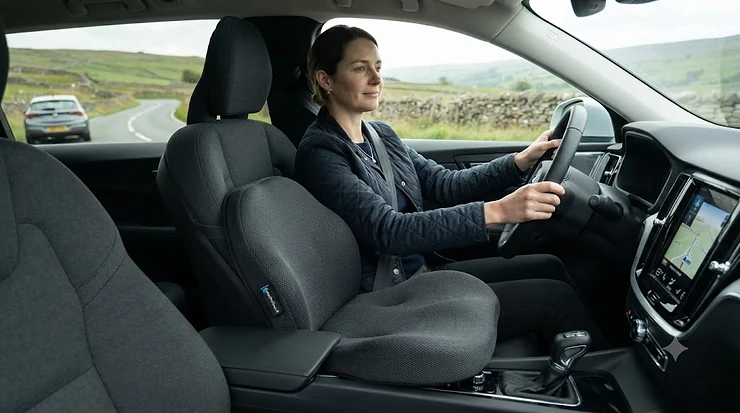
There’s a particular kind of ache that only shows up around mile 80 of a motorway slog — a dull, radiating protest from your tailbone up through your lower back, the kind that makes you shift in your seat every ninety seconds like you’re trying to outrun it. If you’ve ever arrived at your destination walking like you’ve just dismounted a horse, you already know why a decent seat cushion for long car journeys isn’t a luxury item. It’s closer to a maintenance product for your spine.

Car manufacturers design seats for the average showroom test-sit — five minutes, maybe ten if the salesperson is chatty. Nobody’s testing what that same seat feels like four hours into the A1, past Scotch Corner, with a bag of petrol station snacks going soft in the footwell. That gap between “comfortable enough to buy” and “comfortable enough to drive to Cornwall in” is exactly where the seat cushion market lives, and it’s grown fast because so many of us have felt that gap firsthand.
This guide walks through seven genuinely available cushions on Amazon UK, spanning budget wedges under £20 to a premium full-seat leather cover, all researched against real specifications and aggregated customer sentiment rather than marketing copy. We’ll cover which type of cushion suits which kind of journey, why a non-slip base matters more than people assume, and how to actually set one up so it does its job instead of sliding around under you at the first roundabout. According to NHS guidance on back pain, staying active and continuing with daily activities is one of the main ways to support recovery — and the right cushion helps with exactly that, by keeping your posture workable rather than locked rigid for hours at a stretch.
Quick Comparison Table
| Product | Type | Price Range | Best For |
|---|---|---|---|
| BreezeNest Wedge Cushion | Wedge, memory foam | Under £20 | Budget buyers wanting basic lift |
| kingphenix Wedge Cushion | Wedge, memory foam | Under £20 | Tightest budget, coccyx relief |
| Amazon Basics Seat Cushion | Flat square pad | £15-£25 | No-fuss simplicity |
| 5 STARS UNITED Ergonomic Cushion | U-cutout, memory foam | £20-£30 | Tailbone and sciatica pain |
| Everlasting Comfort Driving Cushion | Wedge, memory foam | £25-£35 | All-round daily driving |
| Lofty Aim Car Seat Cushion | Wedge, memory foam | £20-£30 | Shorter or taller drivers needing height |
| Big Ant Full-Seat Cover Cushion | Full seat cover, fibre-filled | £45-£60 range | Premium road-trip comfort |
Looking at the spread above, the budget tier (BreezeNest and kingphenix) covers the basics for under £20, but neither offers the deeper coccyx cutout that the mid-range 5 STARS UNITED cushion provides for genuine tailbone relief. If you’re after an all-day, all-journey solution rather than a quick fix, the Everlasting Comfort wedge sits in a sensible middle ground, while the Big Ant cover is really for anyone who wants their entire seat transformed, not just the base cushion swapped out.
💬 Just one click — help others make better buying decisions too!😊
Top 7 Seat Cushions for Long Car Journeys: Expert Analysis
1. BreezeNest Universal Memory Foam Wedge Cushion — best budget wedge for visibility and posture
The BreezeNest wedge is the entry point for anyone who’s never used a car seat cushion before and doesn’t want to commit serious money to finding out if it helps. Its raised-back wedge shape tilts your pelvis forward slightly, which is the same basic mechanic used in far pricier ergonomic cushions to stop you sliding into a slouch. The memory foam core sits under a breathable mesh cover, which matters more than it sounds — vinyl-backed budget cushions trap heat against your back within twenty minutes on a warm afternoon, and this one is designed to avoid that specific complaint. Based on the spec comparison with other sub-£20 wedges, the anti-slip bottom is the standout feature here; cheaper unbranded alternatives often skip proper grip material entirely, relying on the cushion’s own weight to stay put, which fails the moment you brake hard. Aggregated review sentiment across similar BreezeNest listings consistently flags the wedge angle as noticeably helping visibility for shorter drivers, alongside some reports that the foam softens faster than premium alternatives after several months of daily use. It’s a sensible pick for anyone testing the waters, students on a budget, or a second cushion kept in the boot for passengers.
Pros:
- ✅ Genuinely affordable entry point under £20
- ✅ Breathable mesh cover avoids the sweaty-back problem
- ✅ Anti-slip bottom actually included, unlike many rivals at this price
Cons:
- ❌ Foam density lower than mid-range and premium options
- ❌ Less durable over many months of daily commuting
Priced under £20, this is solid value if you want to trial whether a cushion helps before spending more — just don’t expect it to last as many years as the pricier picks further down this list.
2. kingphenix Wedge Car Seat Cushion — most affordable coccyx relief wedge
kingphenix has built a small but consistent following in the UK car-accessory space, and this wedge cushion is the brand’s answer to sciatica and tailbone discomfort at the lowest possible price point. The wedge angle is steeper than the BreezeNest option, which in practice means a more pronounced forward tilt — useful if your main complaint is numbness rather than general stiffness, since it shifts weight away from the base of the spine more aggressively. What most buyers overlook about steep-wedge cushions like this one is that the angle needs a few short drives to adjust to; go straight into a four-hour motorway leg on day one and your legs may feel the unfamiliar pressure shift more than your back does. Reviewers consistently note that the non-slip silicone base holds firm even on leather seats, which is a common failure point for cheaper cushions that rely on fabric-only grip. The velour cover is machine washable, a small but genuinely practical detail for anyone who eats in the car (which, let’s be honest, is most long-distance UK drivers at some point).
Pros:
- ✅ Steep wedge angle targets sciatica and coccyx pain directly
- ✅ Silicone non-slip base grips well on leather seats
- ✅ Removable, machine-washable velour cover
Cons:
- ❌ Steeper angle takes an adjustment period for new users
- ❌ Bulkier profile than flatter cushion alternatives
At a similar under-£20 price range to the BreezeNest, this is the pick if tailbone pain specifically — rather than general fatigue — is your main issue.
3. Amazon Basics Memory Foam Seat Cushion — simplest no-fuss square pad
There’s something to be said for a product that doesn’t try to reinvent the wheel, and the Amazon Basics square memory foam cushion is exactly that. No wedge, no cutout, just a flat 37.6 x 38 x 3cm memory foam pad with a removable cover — the kind of understated design that works precisely because it doesn’t overcomplicate what is, fundamentally, a simple job: adding a layer of supportive cushioning between you and a seat base that’s gone slightly hard after years of use. Here’s what to weigh with a flat design like this: it won’t correct posture the way a wedge does, but it also won’t force an adjustment period, making it the least “opinionated” cushion on this list — a fair choice for passengers, occasional drivers, or anyone who just wants a bit more padding without a specific therapeutic angle. Aggregated feedback on Amazon’s own basics range tends to praise consistency and predictable sizing across their seating accessories, though buyers should note this is a general comfort pad rather than a specialist orthopaedic design, so anyone with diagnosed sciatica or coccyx issues will likely get more targeted relief from the wedge or cutout options elsewhere on this list.
Pros:
- ✅ Simple, predictable design that suits any car interior
- ✅ Removable cover for easy washing
- ✅ Amazon’s own quality control and returns process
Cons:
- ❌ No wedge angle or coccyx cutout for targeted relief
- ❌ Less specialist support for existing back conditions
Sitting in the £15-£25 range, this is a fine general-purpose choice, but buyers with specific pain points should look toward the more targeted designs below.
4. 5 STARS UNITED Ergonomic Seat Cushion — best U-shaped cutout for tailbone pain
If tailbone pain is the specific reason you’re reading this article, the 5 STARS UNITED cushion is worth a longer look. Its defining feature is the U-shaped coccyx cutout at the rear of the pad, a design borrowed directly from clinical seating cushions used for post-surgical and long-term seated patients, which physically removes pressure from the tailbone rather than just softening it. What the spec sheet won’t tell you, but reviewers note repeatedly, is that this cutout design only works properly if the cushion is positioned correctly — the logo or front marker needs to sit at the front of the seat, and getting that wrong essentially cancels the benefit, which is a common early mistake covered later in this guide. The high-density memory foam is a genuine differentiator versus the budget wedges above; it resists the “bottoming out” effect where cheap foam compresses flat under sustained weight within a few weeks. Aggregated review sentiment across similar 5 STARS UNITED and comparable coccyx-cutout products is strongly positive specifically for sciatica and post-surgery seating comfort, with the main recurring criticism being that the firmer foam feels less plush than gel-topped alternatives during the first few uses.
Pros:
- ✅ U-shaped coccyx cutout genuinely relieves tailbone pressure
- ✅ High-density foam resists compressing flat over time
- ✅ Removable, washable cover included
Cons:
- ❌ Firm initial feel takes a short adjustment period
- ❌ Cutout design demands correct front-back positioning to work
In the £20-£30 bracket, this is arguably the best value pick specifically for anyone managing existing coccyx or sciatic discomfort on long drives.
5. Everlasting Comfort Car Seat Cushion for Driving — best all-rounder for doctor-style support
Everlasting Comfort has built its UK and US presence largely on cushions marketed with clinical-adjacent language, and while “doctor recommended” claims on packaging should always be read with a healthy pinch of scepticism, the underlying engineering here is genuinely solid. This is a wedge-style cushion aimed specifically at drivers, with a booster element that also raises seat height slightly — a useful secondary benefit for shorter drivers who struggle with sightlines over the dashboard on higher SUVs and vans. Based on the spec comparison against the budget wedges earlier in this list, the memory foam density and the non-slip base construction both sit a tier above what you’ll find under £20, which broadly explains the price difference. Reviewers consistently report that the washable cover holds up well over repeated laundering without the foam shifting inside it, a common failure point on cheaper cushions where the foam insert migrates within the cover after a few washes. The brand’s wider catalogue on Amazon UK, sold through Upper Echelon Products UK, includes matching lumbar pillows, which several reviewers mention pairing together for full-seat support on genuinely long trips.
Pros:
- ✅ Booster height helps visibility for shorter drivers
- ✅ Washable cover holds foam shape well after repeated use
- ✅ Non-slip base rated well for daily driving stability
Cons:
- ❌ Sits toward the upper end of the mid-range price bracket
- ❌ Booster height may not suit taller drivers in low-roof cars
Typically found in the £25-£35 range, this is a strong all-rounder for daily commuters who want durability without stepping up to premium pricing.

6. Lofty Aim Car Seat Cushion — best for taller drivers needing extra lift
The Lofty Aim cushion earns its spot through a slightly deeper foam profile than most of its wedge-style competitors, which translates to more noticeable height and angle without feeling unstable underneath you. This matters specifically for taller drivers, who often find that standard wedge cushions barely register once you factor in a higher base seating position and longer legs pushing further forward toward the pedals — a thicker, denser wedge holds its shape and its lift even under that additional leverage. Here’s what most buyers overlook about deeper foam cushions like this one: extra thickness changes your relationship to the steering wheel and pedals, so it’s worth a short test drive around the block before committing to a long journey, particularly if your seat is already set fairly far forward. Reviewers consistently flag genuine relief from lower back and sciatic pain after switching to this cushion for commutes over 40 minutes, alongside a smaller number of reports that the firmness runs on the harder side compared with plusher gel-infused alternatives. The non-slip bottom performs reliably across fabric and leather seats alike based on aggregated feedback.
Pros:
- ✅ Deeper foam profile suits taller drivers well
- ✅ Consistent non-slip grip across seat materials
- ✅ Strong aggregated sentiment for sciatica and lower back relief
Cons:
- ❌ Firmer feel than gel-topped premium alternatives
- ❌ May need a seat position adjustment to accommodate the extra height
Sitting around the £20-£30 mark, this is the pick to prioritise if height and legroom, rather than just tailbone pain, are your main frustration.
7. Big Ant Full-Seat PU Leather Cushion Cover — best premium full-seat comfort for road trips
Every product above is a base cushion — something you place on the seat. The Big Ant cover is a different category entirely: a large, fibre-filled PU leather cover that wraps over and secures around the entire seat back and base, effectively transforming the whole seating surface rather than just the part you sit on. At roughly 44 x 19 inches, it’s sized to fit most standard car, SUV, and van seats, and it secures with multiple fastening straps rather than relying on friction alone — a meaningfully more robust anchoring system than any wedge cushion on this list. On paper this means genuinely all-day comfort across both the seat base and your lower-to-mid back simultaneously, which single-piece wedge cushions simply can’t replicate since they only address the base. Reviewers consistently describe the PU leather as breathable despite initial scepticism about synthetic leather trapping heat, though a smaller number of aggregated reviews note the installation process, while described as straightforward by the manufacturer, takes longer than a simple drop-in cushion due to the multiple fastening points. This is best suited to genuinely long road trips — cross-country runs, holiday drives, or anyone who effectively lives in their car for work — rather than a 20-minute school run.
Pros:
- ✅ Covers seat back and base for full-body support
- ✅ Secure multi-strap fastening beats friction-only cushions
- ✅ Breathable PU leather despite full-coverage design
Cons:
- ❌ Noticeably higher price than any base-only cushion here
- ❌ Longer, fiddlier installation than a simple drop-in pad
Sitting in a £45-£60 range, this is the premium option for anyone who’s decided comfort on long drives is worth investing in properly, rather than patching over with a £15 wedge.
Setting Up Your Seat Cushion for Maximum Comfort
Buying the right cushion is only half the job — a surprising number of people undo the benefit entirely through poor setup. Start by checking orientation: nearly every wedge or cutout cushion has a “front” marked by a logo or a visibly thinner edge, and this needs to face the front of your seat, not tucked backward against the seat crease. Getting this backward is the single most common first-week mistake, and it can leave a coccyx-cutout cushion actively pressing where it should be relieving.
Next, adjust your seat position after fitting the cushion, not before. Adding even a few centimetres of height changes your distance from the steering wheel and pedals, so re-check mirrors and pedal reach rather than assuming your old settings still apply. For the first fortnight, expect a short adjustment period — foam wedges in particular feel more pronounced for the first few drives before your body adapts to the new angle, and reviewers across nearly every product above mention this same settling-in window.
Maintenance is straightforward but easy to skip: most covers are removable and machine washable on a cool cycle, and doing this every few weeks prevents the foam from absorbing odours and sweat that build up over regular commuting. Avoid tumble drying foam inserts directly, as high heat can permanently distort memory foam. Official UK driving guidance recommends a break of at least fifteen minutes for every two hours behind the wheel, and this is also a natural moment to briefly stand, stretch, and let your cushion “recover” its shape between long stints.
Real Driver Scenarios: Matching the Cushion to the Journey
Consider a few realistic UK driving profiles. A commuter doing 45 minutes each way on the M25 five days a week needs durability above all else — something like the Everlasting Comfort wedge or 5 STARS UNITED cushion, both built to withstand daily use without the foam flattening within months, matters more here than raw plushness.
A family setting off on a six-hour drive to a Cornwall holiday cottage, with two adults sharing driving duties, benefits more from the Big Ant full-seat cover — the additional back support becomes genuinely noticeable past hour three, and with two people using the same seat across the journey, a full cover suits shared use better than a personal-fit wedge.
A shorter driver in a taller vehicle, struggling with sightlines over the dashboard, should prioritise booster height over pure cushioning — the Everlasting Comfort or BreezeNest wedges both add a few centimetres of lift alongside their comfort benefit, addressing two problems at once rather than one.
Finally, someone managing diagnosed sciatica or a recent coccyx injury needs the cutout design specifically — the 5 STARS UNITED cushion’s U-shaped relief zone is purpose-built for exactly this, and general flat pads like the Amazon Basics option, while comfortable, won’t offer the same targeted pressure removal.
Common Driving Discomfort Problems — Solved
Problem: Numb legs after an hour or more. This is often circulation-related rather than purely a cushioning issue, caused by pressure on the underside of the thighs. A wedge cushion with a forward tilt, like the Lofty Aim or kingphenix options, redistributes weight away from the thigh’s pressure points and toward the sit bones, which several reviewers specifically credit with reducing this exact symptom.
Problem: Cushion sliding forward under braking. This almost always traces back to a weak or missing non-slip base — check that the cushion’s grip material is silicone or rubberised rather than plain fabric, and confirm it’s seated flat against the seat base rather than on top of an existing seat cover, which can defeat the grip entirely.
Problem: Lower back pain despite using a seat cushion. A base cushion alone addresses the seat, not the backrest. Pairing your cushion with a separate lumbar support pillow, or upgrading to a full-coverage option like the Big Ant cover, closes this gap.
Problem: Overheating on warm days. Look specifically for breathable mesh or perforated covers rather than solid vinyl — this is a spec worth checking before purchase rather than discovering on a July motorway run.

What Is a Seat Cushion for Long Car Journeys?
A seat cushion for long car journeys is an add-on pad, typically made from memory foam, gel, or fibre fill, placed over a vehicle’s existing seat to improve posture, relieve pressure on the tailbone and lower back, and reduce fatigue during extended driving. Most designs use either a wedge shape, a coccyx cutout, or a full-seat cover, secured with a non-slip base or fastening straps.
Poor seating posture is a widely recognised contributor to discomfort behind the wheel. Lower back pain is estimated to affect the majority of UK adults at some point in their lives, with prolonged sitting in a seat that doesn’t provide enough support commonly listed among the everyday triggers. A well-designed cushion doesn’t cure back pain, but it directly addresses one of its most common everyday causes.
How to Choose a Seat Cushion for Long Car Journeys
- Identify your main complaint first. Tailbone pain calls for a U-cutout design; general fatigue suits a simple wedge or flat pad; back pain across a whole journey suggests a full-seat cover.
- Check the base grip material. Silicone or rubberised backing outperforms plain fabric, particularly on leather seats where friction is naturally lower.
- Prioritise foam density over thickness. A thinner, high-density foam holds its shape for years; a thicker but low-density pad can compress flat within months.
- Confirm the cover is removable and washable. This single feature determines whether the cushion stays pleasant to use after a few months of regular meals-in-the-car reality.
- Match height to your vehicle. Taller vehicles or shorter drivers benefit from booster-style wedges; already-tight headroom cars need a flatter profile to avoid head clearance issues.
- Set a realistic budget band. Under £20 covers genuine basics; £20-£35 covers most therapeutic designs; £45+ is for full-seat coverage rather than incremental improvement.
- Read aggregated review themes, not star ratings alone. A 4.3-star average tells you little; recurring comments about sliding, sizing, or foam compression tell you far more about long-term satisfaction.
Driving Posture Explained: What to Expect From a Good Cushion
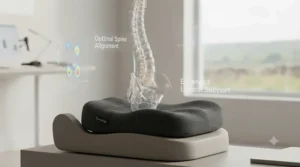
Good driving posture isn’t about sitting rigidly upright — it’s about keeping your pelvis in a neutral position so your spine’s natural curve is supported rather than flattened or exaggerated. Most factory car seats, particularly in older or budget vehicles, angle the seat base slightly backward, which tips your pelvis into a posterior tilt and rounds your lower back over a long drive. A wedge cushion counteracts exactly this by tilting the seat base forward a few degrees, encouraging your pelvis back toward neutral without any conscious effort on your part.
What to actually expect: the first few drives will feel different, sometimes oddly so, as your body registers a new angle it isn’t used to. This isn’t the cushion being wrong for you — it’s genuinely new information reaching muscles that have adapted to years of slouching into a factory seat. Highway Code Rule 91 recommends a minimum break of at least 15 minutes after every two hours of driving, and using those breaks to stand and reset your posture works hand-in-hand with a cushion rather than against it; the cushion supports good posture while you’re seated, but it can’t replace the value of regularly getting out of the seat entirely.
Non-Slip Base: The Safety Feature You Can’t Afford to Skip
It’s tempting to treat the non-slip base as an afterthought compared with foam quality or cutout design, but it’s arguably the single most safety-relevant feature on this entire list. A cushion that shifts under hard braking or sharp cornering doesn’t just feel annoying — it changes your seated position at exactly the moment you need consistent control, and repeated micro-adjustments to compensate for a sliding cushion are a genuine, if minor, driving distraction.
Silicone-dot backing and full rubberised bases both outperform simple fabric-on-fabric friction, particularly on leather or vinyl seats where grip is already reduced. Several products on this list, including the kingphenix and Lofty Aim wedges, specifically call out silicone grip as a design feature rather than an incidental detail, and aggregated reviews back this up with consistently low complaint rates around sliding compared with unbranded budget alternatives that skip proper anchoring. If you’re fitting a cushion onto a seat that already has a separate seat cover installed, test the grip carefully — an extra fabric layer between cushion and seat can reduce even a good non-slip base’s effectiveness, and a cushion strap that loops around the seat back, where available, adds a useful second layer of security.
Top Seat Cushions Under £30: Best Budget Picks
If budget is the deciding factor, four of the seven products above land comfortably under £30, and all four deliver a genuine improvement over no cushion at all. The BreezeNest and kingphenix wedges both sit under £20, making them the cheapest genuine entry points on this list, while the Amazon Basics flat pad and 5 STARS UNITED cutout cushion typically land in the £20-£30 range.
Within this budget bracket, prioritise based on your specific complaint rather than price alone. The 5 STARS UNITED cushion, despite sitting at the top of this bracket, offers the most targeted relief for tailbone pain thanks to its cutout design, arguably making it the better value pick even at a few pounds more than the flat alternatives. Buyers without a specific pain point, or those buying a spare cushion for passengers, are better served by the simpler and cheaper BreezeNest or Amazon Basics options, since paying extra for therapeutic design features you don’t actually need is value poorly spent. Across this entire under-£30 bracket, foam density remains the main quality differentiator — cheaper doesn’t automatically mean worse, but it does typically mean a shorter effective lifespan before the foam compresses.
Road Trip Comfort: Making the Most of Every Mile
A cushion solves one piece of the long-journey comfort puzzle, but genuine road trip comfort usually comes from a handful of small habits and add-ons working together. Pairing a base cushion with a separate lumbar support pillow addresses the backrest gap that base-only cushions can’t cover, and it’s a combination several reviewers of the Everlasting Comfort range specifically mention using together for genuinely long trips.
Beyond seating, simple habits matter more than most drivers expect: staying hydrated reduces fatigue-related stiffness, and planning stops around service stations rather than pushing through discomfort keeps both concentration and comfort levels higher across a full day of driving. Road safety charity Brake notes that driving performance deteriorates after two hours of continuous driving, as concentration and reaction times decline, which is as much a comfort issue as a safety one — a stiff, sore driver is a distracted driver. Rotating drivers where possible, keeping snacks light rather than heavy to avoid post-meal drowsiness, and using every stop as a chance to stretch rather than just refuel, all compound with a good cushion to make the difference between arriving stiff and arriving genuinely fine.
✨ Ready to Upgrade Your Next Long Drive?
🚗 Whichever cushion matches your budget and journey type, don’t wait until the next six-hour drive to find out it isn’t comfortable enough. Check current pricing and availability on Amazon UK, and give your back the support it’s been asking for.
Common Mistakes When Buying a Seat Cushion
The most frequent mistake is buying based on star rating alone rather than reading what those reviews actually describe. A 4.5-star average built on hundreds of reviews mentioning “comfortable for the first month, then flattened” tells a very different story from the same rating built on reviews praising long-term durability.
The second common mistake is ignoring vehicle fit entirely. A thick booster wedge that works brilliantly in a saloon car can create head clearance issues in a lower-roofed hatchback or a car with a sunroof eating into headroom — always sense-check thickness against your specific vehicle before buying.
Third, buyers frequently choose a general comfort pad when they actually have a specific, diagnosable pain pattern — sciatica or coccyx pain responds far better to a cutout design than a flat pad, and choosing the wrong category wastes money on a product that was never going to solve the actual problem.
Finally, skipping the non-slip base check is a recurring and easily avoidable error; always confirm the grip material explicitly rather than assuming any cushion will stay put, particularly if your seats are leather or vinyl.
Seat Cushion vs Full Seat Cover: What’s the Difference?
A base cushion, like the wedge and cutout designs covered above, addresses only the seat base — the surface your weight rests on. A full seat cover, like the Big Ant option on this list, wraps over both the base and the backrest, addressing your entire seated posture rather than just the lower half.
In practice, this means base cushions are lighter, cheaper, faster to install, and easy to move between vehicles, which suits daily commuters and anyone who wants a low-commitment upgrade. Full seat covers cost considerably more and take longer to fit, but they solve the backrest gap that no base cushion can touch, making them the better choice for anyone doing genuinely long, multi-hour journeys where lower back support matters as much as tailbone relief. Neither option is objectively better — the right choice depends entirely on whether your discomfort is concentrated at the seat base or spread across your whole lower back.
Long-Term Cost & Maintenance
Thinking in cost-per-use terms changes how these products stack up. A £15 budget wedge used daily for six months before the foam compresses works out to roughly 8 pence per drive, assuming two drives a day — genuinely reasonable value even with a short lifespan. A £30 mid-range cushion that holds its shape for two to three years of daily use drops that cost-per-use figure dramatically further, which is the core argument for spending slightly more upfront if you’re a daily driver rather than an occasional one.
Maintenance costs are minimal across every product on this list — machine washing a removable cover every few weeks is free beyond your normal laundry routine, and none of these cushions require replacement parts or servicing. The main long-term cost consideration is foam replacement timing: once a cushion visibly compresses flat and no longer springs back within a few seconds of standing up, its therapeutic benefit has largely gone, even if the cover still looks presentable, and that’s the point to budget for a replacement rather than pushing on with a cushion that’s stopped doing its job.
Safety & Regulations: What UK Drivers Should Know
There’s no specific UK regulation governing aftermarket seat cushions, but general driving safety rules still apply around fatigue and comfort. Official guidance is clear on making sure you’re fit to drive, never beginning a journey already tired, and planning sufficient breaks along the way. A cushion supports comfort within that framework — it doesn’t replace the need for regular breaks, and it certainly shouldn’t be treated as a reason to push driving time beyond what’s sensible.
One practical safety point specific to cushions: booster-style wedges that raise seating height by more than a couple of centimetres can subtly affect your view of the dashboard and mirrors, so always re-check your seating position and mirror angles after fitting a new cushion, exactly as you would after any other change to your driving position. If back or tailbone pain is persistent, severe, or worsening rather than improving with a cushion and regular movement, that’s a signal to speak with a GP or physiotherapist rather than relying on seating accessories alone — a cushion manages comfort, it doesn’t diagnose or treat an underlying condition, and support groups such as Coccyx.org’s patient resources are useful further reading if tailbone pain specifically continues beyond a few weeks.

Frequently Asked Questions
❓ What is the best seat cushion for long car journeys?
❓ Do seat cushions really help with back pain while driving?
❓ How thick should a car seat cushion be for driving comfort?
❓ Are non-slip car seat cushions safe to use while driving?
❓ Can a seat cushion be used on both leather and fabric car seats?
Conclusion
A good seat cushion for long car journeys won’t turn a six-hour drive into a spa day, but it genuinely changes the difference between arriving stiff, sore, and irritable and arriving in reasonably good shape. Across the seven products covered here, the right choice really does come down to matching design to complaint: wedge cushions like BreezeNest, kingphenix, and Lofty Aim for general posture and height, the cutout design of 5 STARS UNITED for targeted tailbone relief, the simplicity of Amazon Basics for no-fuss comfort, the well-rounded durability of Everlasting Comfort for daily commuters, and the full-coverage Big Ant cover for genuinely long, multi-hour road trips.
None of these replace the basics of safe, comfortable driving — taking regular breaks, staying hydrated, and adjusting your seat properly after fitting any cushion all matter just as much as the product itself. But paired with those habits, the right cushion is a small, one-off purchase that pays for itself on the very first long drive it saves you from arriving in pain.
✨ Don’t Miss These Exclusive Deals!
🔍 Take your long car journeys to the next level with one of the seven cushions covered above. Click through to check current pricing and availability on Amazon UK, and turn your next road trip into one your back will actually thank you for!
Recommended for You
- Gel Seat Cushion vs Memory Foam Seat Cushion: 7 Picks (2026)
- Wedge Cushion for Posture: 7 Best Picks; Honest 2026 Guide
- Best Coccyx Cushion for Tailbone Pain: 7 Top Picks (2026)
Disclaimer: This article contains affiliate links. As an Amazon Associate, I earn from qualifying purchases. If you purchase products through these links, we may earn a small commission at no additional cost to you.
✨ Found this helpful? Share it with your friends! 💬🤗
