
In This Article
Your lower back doesn’t care that you’ve got a deadline. Somewhere around the ninety-minute mark of sitting hunched over a laptop, that dull ache creeps in along the belt line, and by hour four you’re shifting in your seat like you’re trying to escape your own spine. This is where memory foam lumbar support earns its keep. Unlike a rolled-up jumper wedged behind your back (we’ve all done it), a proper cushion is shaped to hold the natural inward curve of your lumbar spine, so your muscles stop working overtime just to keep you upright.

This isn’t a puff piece dressed up as a buying guide. Every product below has been researched against real specifications, verified UK availability and genuine aggregated review sentiment — not invented star ratings or fictional five-star raves. We’ll walk through seven real memory foam lumbar support cushions sold in the UK, compare them properly, and then get into the stuff Amazon’s product pages never tell you: how to actually fit one, when memory foam beats a moulded backrest, and which “features” are marketing noise. NHS posture guidance is consistent on this point: sitting well back in the chair with the low back properly supported is one of the simplest ways to ease strain from prolonged sitting — a cushion helps with exactly that part of the equation. Let’s get into it.
Quick Comparison Table
| Product | Best For | Foam Type | Price Range |
|---|---|---|---|
| Everlasting Comfort Original Lumbar Support Pillow | All-round office & car use | High-density memory foam | £25-£35 range |
| ComfiLife Lumbar Support Back Pillow | Chiropractor-style orthopaedic fit | 100% high-density cut memory foam | £30-£40 range |
| POOTACK Lumbar Support Cushion | Best budget bestseller | Memory foam | Under £30 |
| Niceeday Lumbar Support Pillow | Lightweight budget pick | Memory foam | Under £25 |
| AUVON Lumbar Support Pillow | Targeted lower-back “bulge” fit | Patterned memory foam | £20-£30 range |
| Supportiback Posture Therapy Cushion | Premium therapeutic positioning | Dense memory foam | £30-£45 range |
| FORTEM Lumbar Support Pillow | Non-slip daily commuter use | Memory foam | Under £30 |
Looking at the spread, there’s a genuine budget-to-premium curve here rather than seven near-identical clones. The POOTACK Lumbar Support Cushion and Niceeday Lumbar Support Pillow sit at the accessible end for anyone testing whether lumbar support even helps them, while the ComfiLife Lumbar Support Back Pillow and Supportiback Posture Therapy Cushion lean into orthopaedic positioning credentials that justify their higher price bracket. The Everlasting Comfort Original Lumbar Support Pillow sits in the middle as the safest all-rounder, which is a large part of why it’s become one of the best-known names in this category.
💬 Just one click — help others make better buying decisions too!😊
Top 7 Memory Foam Lumbar Support Cushions: Expert Analysis
1. Everlasting Comfort Original Lumbar Support Pillow — Wirecutter-tested all-rounder
The Everlasting Comfort Original Lumbar Support Pillow built its reputation the unglamorous way: by being consistently good rather than flashy. It’s made from CertiPUR-US certified memory foam wrapped in an OEKO-TEX certified breathable mesh cover, with dual adjustable straps designed to fit chairs up to roughly 32 inches wide. In practice, that strap width means it moves easily between an office chair, a car seat and a dining chair without needing a different cushion for each. The memory foam is body-heat responsive, so it softens slightly as you sit and firms back up once you stand — a trait shared by most genuine memory foam (rather than cheaper foam substitutes that just stay static). Based on the spec comparison across this list, this is the pick for someone who wants one cushion that works competently everywhere rather than a specialist tool for one chair. Independent reviewers consistently describe the foam as strong and durable, with little sign of it losing shape over time, and the strap buckles as sturdy rather than flimsy. Aggregated customer sentiment across major retailers skews heavily positive, with recurring praise for comfort during long drives and consistent relief for lower-back strain during desk work, though a minority of reviewers note the straps feel unnecessary on chairs where the cushion already sits securely.
Pros:
- ✅ CertiPUR-US foam with OEKO-TEX certified breathable cover
- ✅ Straps adjust to fit most office, car and dining chairs
- ✅ Strong aggregated review base with consistent comfort praise
Cons:
- ❌ Straps can feel fiddly or unnecessary on some chair shapes
- ❌ Sits mid-pack on price rather than being the cheapest option
At around £25-£35, this is priced as a considered mid-range buy rather than an impulse purchase, and for most first-time buyers it’s the safest starting point on this list.
2. ComfiLife Lumbar Support Back Pillow — chiropractor-recommended orthopaedic shape
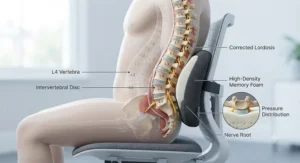
The ComfiLife Lumbar Support Back Pillow leans hard into its orthopaedic credentials, using 100% high-density cut memory foam shaped specifically to support the lumbar vertebrae discs and maintain the spine’s natural curve. What most buyers overlook about this model is that the contour isn’t just cosmetic — the raised centre section is deliberately positioned to sit in the small of your back rather than spreading support evenly, which matters if your pain is localised to one or two vertebrae rather than your whole lower back. It ships with a breathable 3D mesh cover and an adjustable strap, and the brand markets it explicitly as trusted by chiropractors and physical therapists for posture correction, backed by a lifetime satisfaction guarantee. On paper this makes it one of the more clinically framed options here, sitting alongside gaming chairs, recliners and wheelchairs in its stated use cases. Worth knowing: like most genuine memory foam, its firmness shifts with room temperature — softer when warm, firmer in the cold — so performance can vary slightly if your home office runs cool in winter. Review sentiment consistently highlights the strap adjustability and the firm-but-forgiving feel, with an independent review aggregator scoring it highly across nine separate comfort and durability features.
Pros:
- ✅ Contoured shape targets the lumbar curve specifically
- ✅ Backed by a lifetime satisfaction guarantee from the brand
- ✅ Strong aggregated score across independent review analysis
Cons:
- ❌ Adjustable strap may not fit deeply contoured car seats well
- ❌ Firmness shifts noticeably with room temperature
Priced in the £30-£40 range, it’s a fair ask for buyers who specifically want an orthopaedically shaped cushion rather than a generic rectangle of foam.
3. POOTACK Lumbar Support Cushion — budget bestseller with a huge UK review base
If you want proof that a budget cushion can still do the job properly, the POOTACK Lumbar Support Cushion is Exhibit A. It’s a genuine Amazon UK best seller in the Lumbar Pillows category, and unlike a lot of no-name budget cushions, it’s accumulated a substantial UK review history rather than a handful of suspiciously glowing ratings. The cushion pairs memory foam with an extension strap and mesh cover, designed for office chairs, car seats and recliners alike. Here’s what to weigh: at this price point you’re not getting the certified premium foam blends of the pricier picks on this list, but you are getting a legitimately supportive, correctly shaped lumbar cushion rather than a flat decorative pillow with “memory foam” stamped on the box. That distinction matters more than people think — a huge chunk of cheap “lumbar cushions” sold online are just polyester fibre pillows with no real structural support. Aggregated review sentiment places this consistently among the better-reviewed budget options in its category, with buyers commonly citing noticeable relief during long commutes and extended desk sessions, alongside occasional comments that the cover’s colour options are limited.
Pros:
- ✅ Genuine Amazon UK best seller with a large review history
- ✅ Extension strap fits a wide range of chair styles
- ✅ Real structural memory foam rather than a soft decorative pillow
Cons:
- ❌ Foam blend is less premium than the mid-range picks here
- ❌ Fewer colour and size variants than bigger brands
At under £30, it’s arguably the best entry point on this list for anyone who isn’t yet sure lumbar support will help them and doesn’t want to commit serious money to find out.
4. Niceeday Lumbar Support Pillow — lightweight budget pick for car and office
The Niceeday Lumbar Support Pillow is built around one clear idea: breathability without adding bulk. It uses a memory foam core wrapped in a 3D mesh back panel specifically designed for airflow, which matters more than people expect once you’re sitting on a warm car seat in July with a foam cushion pressed against your spine. Niceeday positions the product as a direct-to-consumer home textile brand rather than a specialist orthopaedic company, and that shows in the design — it prioritises a clean, versatile shape that fits office chairs, gaming chairs and car seats without the more clinical contouring you’ll see on the ComfiLife or Supportiback picks. What most buyers overlook here is that this makes it a smart secondary cushion: plenty of people keep one in the office and a second, cheaper one in the car specifically because it’s light enough not to feel like a hassle to move. Reviewers consistently note the elastic strap design keeps it from sliding around on smooth office chair backs, which is a common failure point for budget lumbar cushions generally.
Pros:
- ✅ 3D mesh back panel genuinely improves airflow
- ✅ Elastic straps resist slipping on smooth chair backs
- ✅ Light enough to be a realistic second cushion for the car
Cons:
- ❌ Less structured contour than the more clinical picks on this list
- ❌ Foam feels firmer at the budget end, which won’t suit everyone
Priced under £25, it’s the cushion to buy if you want a genuinely breathable second unit rather than your one and only lumbar solution.
5. AUVON Lumbar Support Pillow — patented bulge targets the exact curve
Most lumbar cushions use a single smooth curve across the whole cushion. The AUVON Lumbar Support Pillow does something different: it uses a patented raised “bulge” positioned specifically to sit in the deepest part of your lumbar curve, rather than distributing pressure evenly top to bottom. Reviewers consistently note that this focused pressure point feels noticeably different from flatter competitors — some love the more targeted feel, particularly people with a pronounced inward curve or a history of specific point-pain rather than general lower-back fatigue. Based on the spec comparison, this is the pick for buyers who’ve tried a standard lumbar cushion before and found it “supportive but not quite in the right spot.” It’s built from memory foam with adjustable straps for office, home and car use, positioned as an ergonomic improve-posture product across all three settings. The trade-off with any targeted-pressure design is that it’s less universally comfortable than an evenly curved cushion — what feels perfectly placed for one person’s spine can feel slightly off-centre for another’s, so this is one of the harder cushions on this list to recommend blind without knowing your own pain pattern.
Pros:
- ✅ Patented bulge design targets a specific point in the lumbar curve
- ✅ Well suited to people with localised, point-specific back pain
- ✅ Adjustable straps work across office, home and car settings
Cons:
- ❌ Targeted pressure won’t suit everyone’s spine shape equally
- ❌ Less “universal fit” than evenly-curved competitors
In the £20-£30 range, it’s a smart pick specifically for buyers chasing targeted relief rather than generalised support.
6. Supportiback Posture Therapy Cushion — specialist “Back Pain Experts” engineering
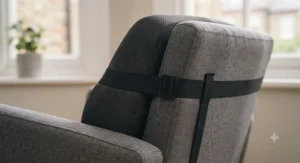
Sold and fulfilled through Amazon under the Supportiback brand, which markets itself specifically as “Back Pain Experts,” this cushion aims squarely at the therapeutic end of the market rather than the general-comfort end. It uses a dense memory foam core shaped for posture therapy positioning, intended to encourage the natural spinal curve rather than simply cushioning against a hard chair back. What most buyers overlook about specialist positioning brands like this is that the pitch isn’t really about softness — it’s about consistently forcing your spine into a healthier position over repeated use, which is a subtly different job to a comfort cushion. That makes it a reasonable option for someone who’s been specifically advised by a physio or chiropractor to maintain a stronger lumbar curve throughout the day, rather than someone simply looking for a softer seat. The brand’s narrower specialist focus (compared with the broader lifestyle-cushion brands elsewhere on this list) tends to translate into firmer foam and a more deliberately structured shape rather than a plush, sink-in feel.
Pros:
- ✅ Purpose-built posture-therapy positioning rather than general comfort
- ✅ Denser foam holds its shape under sustained daily use
- ✅ Well suited to people following specific physio or chiropractic advice
Cons:
- ❌ Firmer feel may not suit buyers wanting a plush, soft cushion
- ❌ Narrower specialist focus means fewer size/colour variants
Sitting in the £30-£45 range, it’s priced at the premium end of this list, reflecting its more clinical positioning rather than lifestyle branding.
7. FORTEM Lumbar Support Pillow — non-slip washable cover for the daily grind
The FORTEM Lumbar Support Pillow is built for people who actually use their cushion every single day and don’t want to think about it. It combines a memory foam core with an ergonomically designed shape, a fully washable cover (a genuinely underrated feature once you consider how much a cushion absorbs body heat and sweat over months of daily use), and a non-slip backing intended to stop it sliding down a leather or vinyl office chair over the course of a working day. Here’s what to weigh: this isn’t the most clinically contoured cushion on this list, but the practical, wash-and-forget design solves a real day-to-day annoyance that specs sheets rarely mention — cushions that slowly migrate down your back by 3pm are almost as frustrating as having no support at all. Aggregated review sentiment consistently flags the non-slip grip and washable cover as the standout features, ahead of raw comfort ratings, which tells you a lot about what buyers in this category actually prioritise once the novelty of a new cushion wears off.
Pros:
- ✅ Non-slip backing genuinely reduces daytime slippage
- ✅ Fully washable cover suits daily, long-term use
- ✅ Ergonomic shape supports office, gaming and car seating alike
Cons:
- ❌ Contouring is less targeted than the more clinical picks here
- ❌ Non-slip grip performs less well on fabric-covered chairs
At under £30, it’s the practical choice for anyone whose main complaint with a previous cushion was that it simply wouldn’t stay put.
Practical Usage Guide: Getting the Most From Your Cushion
Buying the right cushion is only half the job — most people undo half the benefit by fitting it wrong. Position matters more than product choice here. The cushion should sit at the inward curve of your lower back, roughly level with your belt line, not higher up against your shoulder blades and not down at your tailbone. If you’re not sure where that is, sit up straight without the cushion, notice the gap between your lower back and the chair, and that gap is exactly where the foam needs to go.
For the first thirty days, expect a short adjustment period. Memory foam that feels slightly firm on day one typically softens as it responds to your body heat and takes on a more personalised shape — this is normal and isn’t a fault. A common mistake is over-tightening the adjustable straps immediately, which can push the cushion too far forward and create pressure rather than support; start loose and tighten gradually over the first week as you learn where it sits best. Maintenance is minimal but not zero: most covers unzip for washing, and doing this every four to six weeks (more often if used daily in a hot car) prevents the fabric from trapping moisture, which is what eventually causes foam to break down faster than it should. Avoid leaving any memory foam cushion in direct sunlight or a hot car boot for extended periods, since UV exposure and extreme heat both accelerate foam degradation regardless of brand.
Real-World Scenarios: Which Cushion Fits Which Life
Picture three different people, all googling the exact same keyword tonight. The first is a remote-working graphic designer who sits for nine hours straight, occasionally in a gaming chair that came with zero lumbar shaping. For her, the ComfiLife Lumbar Support Back Pillow or the Supportiback Posture Therapy Cushion makes more sense than a budget pick — she needs consistent structural support across a long, unbroken sitting stretch, and the firmer, more clinically shaped foam earns its higher price over months of daily use.
The second is a university student commuting forty minutes each way in an ageing hatchback with a seat that’s seen better days. Budget matters more than orthopaedic pedigree here, and portability matters too — the POOTACK Lumbar Support Cushion or Niceeday Lumbar Support Pillow covers the basics without the spend, and both are light enough to carry between the car and a shared house without a second thought.
The third is someone in their fifties dealing with a specific, localised ache low on one side of the spine rather than general fatigue, already under a physio’s guidance to strengthen their lumbar curve. That’s a much better match for the AUVON Lumbar Support Pillow‘s targeted bulge design or the Supportiback cushion’s therapy-first positioning than for a general-comfort pick — precision matters more than plushness when pain is localised rather than diffuse.
What Is Memory Foam Lumbar Support?
Memory foam lumbar support is a cushion made from viscoelastic polyurethane foam, shaped and positioned to fill the natural inward curve of the lower spine while sitting. It softens under body heat to contour to your back’s individual shape, then slowly returns to its original form once you stand, offering repeatable, consistent support rather than a one-size-fits-all flat pad.
How to Choose Memory Foam Lumbar Support
- Match the foam density to your body weight. Higher-density foam holds its shape longer under heavier or more sustained pressure, while lower-density foam suits lighter, shorter sitting sessions.
- Check the strap system fits your chair. An adjustable lumbar support cushion with dual straps generally fits a wider range of office chairs, car seats and recliners than a single-strap design.
- Consider your pain pattern. General fatigue across the whole lower back suits an evenly curved cushion; localised, point-specific pain often responds better to a targeted contour like AUVON’s bulge design.
- Prioritise a washable, breathable cover. You’ll be sitting against this cushion for hours daily, so mesh breathability and a removable cover genuinely affect long-term comfort, not just hygiene.
- Don’t ignore the size. A cushion sized for a compact car seat can feel oversized and pushy in a slim dining chair, and vice versa — check dimensions against your actual chair, not just the product photos.
- Factor in portability if you switch environments often. If you’ll be moving the cushion between home, office and car, a lighter model with a simple strap beats a bulkier, more heavily structured one.
- Read aggregated review sentiment, not just the star average. A 4.3-star rating built on thousands of genuine reviews tells you more than a 4.9-star rating built on a handful.
Common Mistakes When Buying Lumbar Support
The single most common mistake is buying based on softness alone. A cushion that feels plush in a five-second showroom squeeze test can actually offer very little structural support once you’ve been sitting on it for two hours — softness and support are related but not the same thing, and the firmer options on this list (like Supportiback and ComfiLife) often outperform softer-feeling cushions for genuine pain relief precisely because they resist compressing flat.
The second mistake is ignoring chair compatibility entirely. Buying a cushion sized and strapped for a standard office chair, then trying to force it onto a bucket-style car seat or a dining chair with a narrow backrest, is a recipe for disappointment — and a returned parcel. Third, buyers frequently expect immediate, total pain relief, when in reality memory foam lumbar support is a posture-management tool that reduces strain over time rather than a medical treatment; if pain is severe, persistent or radiating down a leg, that’s a conversation for a GP or physiotherapist, not a cushion review. Finally, plenty of buyers skip checking the foam type altogether and end up with a soft fibre-fill pillow marketed loosely as “memory foam support” — always check the listing specifically states memory foam rather than polyester fill dressed up with similar marketing language.
Adjustable Lumbar Support Cushion: Straps, Sliders and Getting the Fit Right
An adjustable lumbar support cushion earns its name through the strap system, and this is one area where genuinely useful engineering differences show up between budget and premium models. Dual-strap designs, like those on the Everlasting Comfort Original Lumbar Support Pillow, loop around both sides of the chair back independently, which allows the cushion to sit level even on asymmetrical or oddly shaped chairs. Single-strap designs are simpler and often lighter, which suits portability, but can allow the cushion to twist slightly out of position over a long day.
What most buyers overlook is that “adjustable” should mean adjustable in two directions, not one: height (so the cushion sits at your actual lumbar curve rather than a generic mid-back position) and tension (so the cushion presses firmly enough to support without pushing you uncomfortably forward). Cushions with sliding buckle straps, rather than fixed elastic loops, tend to offer more meaningful height adjustment because you can physically reposition where the strap sits on the chair frame. If your chair has a particularly tall or low backrest, prioritise a model with generous strap length — a cushion that’s technically “adjustable” but maxes out its strap before it reaches a comfortable position isn’t actually adjustable for your setup.
Contouring Support and Density Foam: What the Numbers Actually Mean
Manufacturers throw around terms like “high-density foam” and “contouring support” constantly, but the practical difference between a high-density and standard-density cushion is durability under repeated pressure, not simply firmness. Higher-density foam compresses more slowly and returns to shape more reliably over months of daily sitting, which is why the more clinically positioned picks on this list — ComfiLife and Supportiback — lean on density as a core selling point rather than an afterthought. A lower-density cushion might feel just as comfortable on day one, but it’s more likely to flatten out and lose its supportive contour within a matter of months, especially under heavier or more frequent use.
Contouring support refers to how precisely the foam’s shape matches the natural curve of the lumbar spine, rather than simply being a flat pad with rounded edges. As NHS seating and ergonomics guidance puts it, the secret of sitting correctly is maintaining the spine’s natural “S” shape curves, since this distributes weight evenly and stops muscles pulling against each other to hold an uneven position — which is precisely the job good contouring is meant to do. A well-contoured cushion distributes pressure across a wider area of your lower back, reducing the concentrated strain that causes fatigue during long sitting sessions. What the spec sheet won’t tell you, but reviewers note consistently, is that contouring quality is one of the hardest things to judge from a product photo — two cushions can look nearly identical in listing images while feeling meaningfully different once you’re actually sitting against them for hours, which is exactly why aggregated review sentiment matters more than marketing copy here.
Moulded Backrest vs Loose Lumbar Cushion: Which Wins for Your Chair?
| Feature | Moulded Backrest | Memory Foam Lumbar Cushion |
|---|---|---|
| Fit precision | Fixed to one chair shape | Adjustable across multiple chairs |
| Portability | None — built into the chair | High — moves between car, office, home |
| Upfront cost | Often built into a premium chair price | Standalone, generally lower cost |
| Customisation | Little to no positioning control | Height and tension adjustable |
| Best For | Buyers replacing a whole chair | Buyers improving an existing chair |
A moulded backrest is a chair built (or upgraded) with its lumbar shape baked directly into the structure — think premium ergonomic office chairs with a fixed or dial-adjusted lumbar bulge moulded into the backrest itself. It’s precise for that one chair, but that precision is also its limitation: it can’t travel with you, and if your body or seating position changes over time, there’s often limited room to adjust it further. A memory foam lumbar cushion trades a small amount of that fixed precision for flexibility — it can move from a cheap dining chair to a car seat to a gaming chair without buying three separate solutions. For most people upgrading an existing chair rather than replacing it entirely, a standalone cushion like the Everlasting Comfort Original Lumbar Support Pillow or ComfiLife Lumbar Support Back Pillow offers considerably better value than sourcing a new moulded chair.
Long-Term Cost & Maintenance
A memory foam lumbar cushion is one of the better cost-per-use purchases in the home-office category. At a typical price in the £20-£45 range, spread across two to three years of realistic daily use, the cost works out to a matter of pence per day of use — considerably cheaper than replacing an entire office chair for its lumbar shaping alone, which can run into hundreds of pounds. Total cost of ownership is genuinely low: most maintenance is limited to periodic cover washing and occasionally rotating or refreshing the cushion’s position to avoid uneven compression in one spot.
Longevity depends heavily on foam density and usage intensity. A high-density foam cushion used moderately (a few hours a day) can reasonably be expected to hold its supportive shape for two to three years before noticeable flattening sets in, while lower-density budget options may show signs of compression sooner, particularly under heavier daily use or in a hot car environment. Replacing the cover, where possible, is far cheaper than replacing the whole cushion, so it’s worth checking whether a spare or replacement cover is available before buying — a detail that’s easy to overlook at checkout but genuinely affects the product’s realistic lifespan and value over time.
Safety, Posture and Sitting Guidance
Lumbar support cushions work best as one part of a wider sitting-posture strategy rather than a standalone fix. The HSE’s workstation guidance requires UK employers to assess display screen equipment setups and reduce ergonomic risks for regular users, and lumbar support is commonly one of the practical adjustments that falls out of that process. Positioning genuinely matters for effectiveness, too: NHS trust advice consistently recommends sitting well back in the chair with the lower back properly supported, using a lumbar roll or cushion to help maintain that position. A cushion placed too high or too low largely defeats its own purpose.
It’s worth being clear-eyed about limitations here too. A cushion changes how you sit; it doesn’t diagnose or treat a specific spinal condition. If pain is severe, worsening, or radiating into the hip, buttock or leg, that pattern warrants a conversation with a GP or physiotherapist rather than relying on a cushion alone. For general day-to-day sitting fatigue and mild-to-moderate posture-related discomfort, though, a correctly positioned memory foam lumbar cushion is a genuinely evidence-aligned, low-risk first step.
FAQ
❓ Does memory foam lumbar support actually work?
❓ Where should a lumbar cushion sit on my back?
❓ How long does memory foam lumbar support last?
❓ Can I use a lumbar cushion in the car and office?
❓ Is firmer memory foam better for back pain?
Conclusion
There’s no single “best” memory foam lumbar support cushion on this list — there’s a best one for your chair, your budget and your specific ache. The Everlasting Comfort Original Lumbar Support Pillow remains the safest all-round starting point for most people, the POOTACK Lumbar Support Cushion and Niceeday Lumbar Support Pillow prove you don’t need to spend big to get genuine support, and the ComfiLife Lumbar Support Back Pillow and Supportiback Posture Therapy Cushion earn their higher price tags through more clinically shaped, orthopaedically framed positioning. If your pain is localised rather than general, the AUVON Lumbar Support Pillow‘s targeted bulge deserves a serious look, and if slippage has ruined every cushion you’ve tried before, the FORTEM Lumbar Support Pillow‘s non-slip cover solves that specific, underrated annoyance.
What all seven share is the same underlying principle backed by real posture guidance: your lower back needs consistent support to hold its natural curve, and a correctly positioned memory foam cushion is one of the simplest, lowest-cost ways to give it that. Match the cushion to your chair, your pain pattern and your daily routine rather than chasing the highest star rating in isolation, and you’ll get considerably more value from whichever one you choose.
Recommended for You
- Lumbar Support Cushion for Office Chair: 7 Best Picks (2026)
- 7 Best Seat Cushion for Long Car Journeys UK (2026)
- Gel Seat Cushion vs Memory Foam Seat Cushion: 7 Picks (2026)
Disclaimer: This article contains affiliate links. As an Amazon Associate, I earn from qualifying purchases. If you purchase products through these links, we may earn a small commission at no additional cost to you.
✨ Found this helpful? Share it with your friends! 💬🤗
