

In This Article
Your office chair is probably fine. It’s the five small wheels underneath that are quietly giving up. A wobble here, a grinding crunch there, and one castor that refuses to swivel unless you kick it. Fitting heavy duty replacement office chair castors is one of the rare fixes that costs less than a takeaway and can rescue a chair worth many times that.
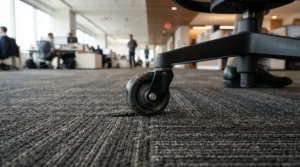
The stakes are bigger than annoyance. HSE’s display screen equipment workstation checklist asks employers and home workers to confirm that a chair is stable and fully working, and the base and wheels are the foundation of that stability. A cracked or mismatched castor can tip you mid-reach, which is not how anyone wants to end a Tuesday.
This guide covers seven real, widely listed sets on amazon.co.uk, picked across budget, mid-range and premium-feeling options (all of them cheap by furniture standards). Along the way we’ll untangle nylon vs polyurethane castors, decode the weight rating on a listing, and look at the chair base stress points that decide whether a “reinforced” wheel helps or just moves the failure elsewhere.
One honest note up front: everything below comes from spec-sheet analysis, published listing details and aggregated star ratings. It is not bench testing, and I won’t pretend otherwise.
Quick Comparison: 7 Heavy Duty Replacement Office Chair Castors at a Glance
Before the deep dives, here’s the whole field on one screen. Stem sizes and headline claims come from the amazon.co.uk listings at the time of research. Always re-check them before buying.
| Product | Wheel type (per listing) | Stem / size | Headline claim | Best for |
|---|---|---|---|---|
| COSYLAND Office Chair Castors | Rubber, roller-blade style | 11x22mm, 2 inch | “Fits most chairs”, quiet | Best all-rounder |
| DSL Office Chair Wheels | Rubber | 11x22mm universal | Up to 295kg / 650lbs | Heavier users on a budget |
| RRIUTO Office Chair Wheels | PU (polyurethane) | 11x22mm | Up to 700lbs (about 317kg) | Hard floors and heavy loads |
| Heedpeiur Heavy Duty Office Chair Castors | Rubber, plastic and steel parts | 11x22mm (7/16″ x 7/8″) | “Heavy duty” | Tightest budgets |
| SharkByte 10mm Office Chair Wheels | Rubber, with 2 brake-lock castors | 10mm stem | IKEA-compatible, braked | Chairs that roll away |
| VEVOR 3 Inch Office Chair Wheels | Rubber/PU, larger wheel | 3 inch | “Heavy duty” | Thick carpet and thresholds |
| Namvo 10 x 22 mm Caster Wheels | Floor-protecting, quiet | 10 x 22mm | “Ultra heavy duty” | 10mm-stem chairs |
Looking at the table, COSYLAND is the safest pick if you simply want something that fits and rolls quietly. DSL and RRIUTO advertise the biggest weight figures, though those numbers need the scrutiny we give them later. SharkByte and Namvo earn their place by solving the 10mm-stem problem that trips up many buyers.
💬 Just one click — help others make better buying decisions too!😊
What Are Heavy Duty Replacement Office Chair Castors?
Heavy duty replacement office chair castors are aftermarket wheels, usually sold in sets of five, built to replace the original castors on a swivel chair. They use stronger wheel materials, sturdier stems and a higher advertised weight rating than basic factory wheels, so the chair rolls smoothly and stays stable under daily load.
That definition hides a few important details. Most sets are “universal”, meaning an 11mm-diameter, 22mm-long stem that presses into the socket in each leg of the five-star base. Some chairs, notably IKEA models, use a 10mm stem, which is why a separate pair of sets in this list exists. The wheel itself can be hard nylon, soft polyurethane or a rubber-style tread. Each behaves differently on carpet and hard floors, which is the real story behind the nylon vs polyurethane castors debate.
Think of castors as tyres for your chair. Nobody fits summer slicks for a winter commute, yet people routinely bolt carpet wheels onto a laminate floor and wonder where the scratches came from.
Top 7 Heavy Duty Replacement Office Chair Castors: Expert Analysis
Each entry below turns specs into practical meaning, flags what reviewers and star ratings suggest, and says who the set suits. Prices are ranges at the time of research and may vary, so check current price before buying.
1. COSYLAND Office Chair Castors — best all-rounder for most chairs
The standout here is simple compatibility: a quiet, roller-blade-style wheel on the common 11x22mm stem.
That stem size matches the majority of standard five-star bases, so for most people there’s nothing to measure or adapt. The roller-blade design (a softer tread that spreads weight over a wider contact patch) glides more quietly than hard plastic and is kinder to laminate and wood. On paper that makes it a sensible daily driver for a home office chair.
Based on the spec comparison, it suits mixed households: someone who works on a hard floor with occasional rugs, say. It’s less obviously aimed at users near the top of a chair’s weight limit, because the listing leans on “heavy-duty” wording rather than a clearly stated per-castor rating.
Buyer sentiment looks strong: the listings I could see show ratings around 4.6 out of 5 across a few hundred reviews, and several colour variants appear among Amazon’s best sellers in castors. I couldn’t verify the text of individual reviews, so I won’t summarise specific complaints.
Pros:
- ✅ Fits the common 11x22mm stem
- ✅ Quiet, floor-friendly roller-blade tread
- ✅ Strong star ratings and volume
Cons:
- ❌ No clearly stated per-castor weight rating
- ❌ Won’t fit 10mm-stem (IKEA-style) chairs
Price: roughly the £8-£14 range depending on colour and pack, which is excellent value for a set that suits most chairs.
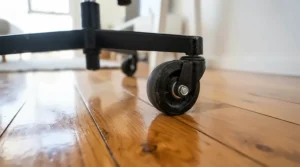
2. DSL Office Chair Wheels — biggest budget weight claim
DSL headlines a rating of up to 295kg (650lbs), which is the loudest number in the budget bracket.
The listing says it’s for all floor types and a universal fit (and explicitly “Not IKEA”). Here’s what the spec sheet won’t tell you: the listing doesn’t make clear whether that figure is per castor or for the full set of five. Divide 295kg by five and you get roughly 59kg per wheel. That’s still comfortable for a typical user but far from the “industrial” impression the headline gives.
Even so, the rating is a useful sorting signal. Sellers who publish a number at all tend to have thought about the load, and the rubber tread should protect hard floors. It’s a sensible shortlist candidate for someone around the 100kg mark who wants headroom without paying more.
I couldn’t verify detailed review themes for this specific set, so treat the rating as a seller claim until you’ve read recent buyer comments yourself.
Pros:
- ✅ Publishes a clear weight rating
- ✅ Suitable for hard floors and carpet
- ✅ Budget-friendly pack of five
Cons:
- ❌ Unclear whether rating is per caster or per set
- ❌ Not for IKEA chairs
Price: low-teens range, so decent value if you read the rating as a set total.
3. RRIUTO Office Chair Wheels — polyurethane for hard floors and heavy loads
The differentiator is material: RRIUTO sells PU (polyurethane) chair castors rather than a generic rubber-style wheel.
Polyurethane is the grown-up choice for hard floors because it’s tough but not so hard that it scores wood or vinyl. The listing claims capacity up to 700lbs, roughly 317kg. As with any set-level claim, divide by five before getting excited: that’s still about 63kg per wheel, which comfortably covers most users with headroom.
For anyone on laminate, engineered wood or tile, this is the spec combination I’d put near the top of the list. The trade-off is that PU can feel sluggish on thick carpet, a theme we’ll return to in the nylon vs polyurethane castors section.
I couldn’t access enough review text to summarise sentiment reliably, so check recent buyer comments for squeaks or stem looseness before ordering.
Pros:
- ✅ Polyurethane tread protects hard floors
- ✅ High advertised weight rating
- ✅ Universal 11x22mm stem
Cons:
- ❌ Can drag on deep-pile carpet
- ❌ Review depth unverified
Price: check current price; it sits in the same budget band as comparable sets. Good value if you have hard floors.
4. Heedpeiur Heavy Duty Office Chair Castors — cheapest way in
Heedpeiur is the budget floor: a five-piece rubber set, plastic and steel construction, and the standard 7/16″ x 7/8″ (11x22mm) stem.
The steel components matter because the stem is where chair castors usually fail. A metal stem resists bending far better than a brittle plastic one, which makes this a reasonable repair for a well-worn chair under moderate loads. The wheel pivots a full 360 degrees and is marketed for hard floors.
It won’t suit someone at the top end of the weight range, mainly because the listing doesn’t back the “heavy duty” label with a hard number. That makes it a smart pick for lighter users, spare chairs and rental properties rather than a heavy-use workhorse.
The listing shows around 4.4 out of 5 from roughly a hundred ratings, a decent result for a price this low, though I haven’t verified individual comments.
Pros:
- ✅ Very low price per set
- ✅ Steel stem components
- ✅ Standard universal stem size
Cons:
- ❌ No stated weight rating
- ❌ Smaller review pool
Price: under £10 at the time of research. Strong value if you’re repairing a light-use chair.
5. SharkByte 10mm Office Chair Wheels — brake-lock castors for chairs that wander
The hook here is two brake-lock castors in the set, plus compatibility with IKEA-style 10mm stems.
Brakes solve a real problem: a chair that rolls away when you stand up or sit down. They’re particularly handy on hard floors, where PU or rubber wheels glide freely. A locked castor also helps if you transfer from a wheelchair or need a stable seat when getting up.
Because only two of the five castors brake, you’ll want to place them sensibly (usually the front pair) and understand they add a lever to the stress equation. A locked wheel is a rigid pivot under load, so avoid heavy sideways shoves on a braked chair.
I couldn’t verify detailed review themes. Reading recent comments for brake slippage is worth five minutes.
Pros:
- ✅ Two brake-lock castors included
- ✅ Fits 10mm-stem IKEA-style chairs
- ✅ Roller-blade style tread for floors
Cons:
- ❌ Only two of five wheels brake
- ❌ Won’t fit 11mm-stem chairs
Price: check current price; brake sets usually cost a little more than plain ones. Good value for the problem it solves.

6. VEVOR 3 Inch Office Chair Wheels — bigger wheels for thick carpet and thresholds
The advantage is diameter: three inches rather than the usual two.
A larger wheel rolls over thick carpet, cable covers and door thresholds more easily because the contact angle with the obstacle is gentler. It also spreads load across more material. The catch is height. Moving from a 2-inch to a 3-inch wheel raises the seat roughly half an inch (about 13mm), which can matter if your knees are already tight under the desk.
Check your stem diameter and clearance before ordering. Some chairs have base arms with limited space around the wheel, and a larger castor can scrape or foul the leg.
I couldn’t verify review text for this listing, so read recent buyer comments for fitment issues before committing.
Pros:
- ✅ Rolls over thresholds and thick carpet easily
- ✅ Spreads load across a larger wheel
- ✅ Suits rough or uneven floors
Cons:
- ❌ Raises seat height by about 13mm
- ❌ Can foul some base arms
Price: check current price; it typically sits a little above 2-inch sets. Good value for carpet-heavy offices.
7. Namvo 10 x 22 mm Caster Wheels — “ultra heavy duty” on a 10mm stem
The hook is the stem: a 10 x 22mm size aimed at chairs that reject 11mm universals.
Plenty of buyers discover this the hard way. The stem slides in loosely, the chair wobbles and the wheel works itself out within days. A correctly sized 10mm stem is the entire game here. The listing promises floor-protecting, quiet operation, and the “ultra heavy duty” label is marketing, not a measured standard.
If you’ve got an IKEA-style or other 10mm-stem chair, this set is worth shortlisting alongside SharkByte. Measure first, buy second.
I couldn’t verify individual review themes, so check comments for stem fit before ordering.
Pros:
- ✅ Correct stem for 10mm chairs
- ✅ Quiet, floor-protecting design
- ✅ Pack of five
Cons:
- ❌ “Ultra heavy duty” is unquantified
- ❌ Useless on 11mm-stem chairs
Price: check current price; comparable to other budget sets. Good value if the stem matches.
Nylon vs Polyurethane Castors: Which Wheel Material Wins?
Nylon vs polyurethane castors is the single biggest decision after stem size. Hard nylon is what most chairs ship with, and it glides over carpet because it doesn’t sink into the pile. Polyurethane has a softer tread that grips, runs quietly and protects hard flooring. Castors Online’s UK guide makes the same split: hard nylon or larger twin wheels for carpet, soft rubber or polyurethane for hard floors.
| Feature | Nylon | Polyurethane |
|---|---|---|
| Carpet | Rolls easily | Fine, can feel heavier |
| Hard floors | Can scratch or dent | Protects surfaces |
| Noise | Louder on hard floors | Quieter |
| Best for | Carpeted offices | Wood, laminate, tile |
Read that table as a rule of thumb, not a law. If you’ve got mostly hard floors, polyurethane wins comfortably, and it’s worth the swap on wood or vinyl, where nylon marks appear within months. On carpet, nylon rolls more freely, but a larger polyurethane wheel can match it.
A quick caveat: many listings say “rubber” without telling you whether the tread is true polyurethane, TPR or something else. That’s why RRIUTO‘s explicit PU labelling is useful, while others need a closer look at the product description.

Weight Rating Explained: What the Number on the Listing Really Means
The weight rating is the most misunderstood figure in this whole category. A listing might shout “supports 295kg”, and it sounds like each wheel can carry a small elephant.
Here’s the more useful maths. Caster engineers distinguish static ratings (a wheel standing still) from dynamic ratings (a wheel rolling and swivelling). CasterHQ’s engineering guide notes that dynamic capacity is typically around 50-75% of static, and suggests dividing the load by one fewer castor than you have, because one wheel can be airborne. On a five-castor chair that means dividing by four.
Take a 120kg user and a 20kg chair: 140kg divided by four is 35kg per castor. Add a 1.5-2x safety factor and you want roughly 52-70kg per wheel. If a 295kg headline is really a set total (about 59kg per wheel), that is right on the edge for this user, not comfortable headroom.
So treat big numbers as a sorting hint, favour sellers that state the rating clearly, and remember that the castor is only one link. The chair’s own rating still caps the whole assembly.
High Weight Capacity Office Chair Castors for Heavier Users
If you’re nearer the top of your chair’s rating, high weight capacity office chair castors deserve extra scrutiny. Standard task chairs are commonly rated somewhere in the 114-146kg range, and users above that should check the supplier’s maximum for the specific model.
The practical rules are straightforward. Choose steel-stemmed castors, ideally in polyurethane for hard floors or larger twin wheels for carpet. Prefer a published rating over vague wording. And match the castors to the chair: fitting stronger wheels on a weak base just relocates the failure.
For heavier users, RRIUTO (polyurethane, high advertised rating) and VEVOR (larger wheels, better load spreading) are the logical shortlist from this list. DSL is the budget alternative, provided you treat its rating cautiously. Avoid the cheapest sets for daily heavy use, because the stem is the first thing to deform under repeated load.
Weight also interacts with floor type. Soft rubber wheels sink into carpet under load and stall, so heavier users on carpet should lean towards harder, larger wheels.
Chair Base Stress Points: Where Heavy Duty Castors Actually Fail
Chair base stress points are where all your weight funnels into small pieces of plastic and metal. Understanding them tells you when castors are the problem and when they aren’t.
The first stress point is the stem-and-socket joint. Each castor stem sits in a socket at the end of a base arm, and a loose or undersized stem acts like a lever, widening the socket over time. The second is the base arm itself, particularly on nylon bases, where hairline cracks begin near the socket. The third is the gas-lift column, which takes the vertical load and any sideways twisting.
Some industrial caster guides suggest that uneven floors, swivelling under load and sideways pushing can all cut effective capacity noticeably. In an office that means thresholds, cable covers and sudden shoves, which add shock to the load.
Inspect the sockets for cracks every few months, and replace the base, not just the wheels, if you find any. Stronger castors on a cracked base are a false economy.
How to Choose Heavy Duty Replacement Office Chair Castors
Follow these seven steps and you’ll avoid most returns.
- Measure the stem. Compare the diameter and length with 11x22mm and 10mm options. A sloppy fit is the leading cause of failure.
- Identify your floor. Hard floors need polyurethane or soft treads, while carpet suits nylon or larger wheels.
- Check the weight rating. Look for a stated figure and clarify whether it’s per castor or per set.
- Choose steel stems. Metal resists bending far better than plastic under repeated load.
- Pick a wheel size. Two inches is standard, three inches rolls better over carpet but lifts the seat.
- Decide on brakes. Brake-lock castors prevent roll-away but add leverage stress.
- Check the chair first. If the base is cracked, castors won’t save it.
Reinforced Castors for Daily Use: What to Expect in the Real World
Reinforced castors for daily use sounds reassuring, but what does it mean on a normal Wednesday? Realistically, an office worker’s chair makes dozens of short trips and constant micro-pivots as the user leans, reaches and swivels.
Reinforced usually means a stronger stem, a sturdier wheel core or a harder tread. That’s useful, but it isn’t a guarantee. Based on the spec comparison, you should expect good sets to roll quietly, swivel freely and stay tight in the socket. The first signs of wear are a wobble, a faint clicking or a wheel that stops turning.
Hair and carpet fibre are the quiet enemies. Tangles around the axle create drag, and drag becomes stress on the stem. A quick monthly check keeps a set healthy far longer than any reinforcement can on its own.
Lifespan varies with load, floor and care, so I won’t promise a number. As a reasonable expectation, a properly sized set under moderate load should outlast the chair’s other wear parts.
✨ Don’t Miss These Exclusive Deals!
🔍 Take your office chair to the next level with these carefully selected castors. Click on any highlighted product name to check current pricing and availability. A few pounds spent on the right wheels can give you a smoother, safer chair for years!
Industrial Strength Chair Wheels vs Standard Castors
“Industrial strength chair wheels” is a marketing phrase, not a regulated standard. In practice it describes aftermarket wheels with stronger stems, tougher treads and, sometimes, a stated rating.
| Feature | Standard factory castors | Industrial strength chair wheels |
|---|---|---|
| Stem | Often plastic or thin metal | Frequently steel |
| Tread | Hard nylon | PU or rubber-style |
| Weight rating | Rarely stated | Often advertised |
| Best for | Light-duty use | Daily and heavy use |
The table shows why upgrading is worthwhile: the improvements land exactly where chairs fail. Still, “industrial” is a label, not a test result. Treat it as a prompt to check the stem material and rating, not as proof of strength.
For most people, COSYLAND or DSL deliver the practical benefits of upgrading without the exaggeration, while VEVOR adds genuine mechanical advantage through size.

Practical Guide: Fitting and Looking After Your New Castors
This is the part Amazon listings skip. Set aside ten minutes.
Step 1: Measure. Pull one old castor and compare the stem to the new one. Match diameter and length before opening the whole pack.
Step 2: Remove. Tip the chair onto its side or upside down on a towel. Grip the wheel housing and pull firmly, using pliers if needed. A little silicone spray on the stem helps stubborn ones.
Step 3: Fit. Align the new stem and push it home until it seats fully. It should click or sit flush with no visible gap.
Step 4: Test. Press down on each wheel by hand, then roll the chair a few metres and listen for wobble.
Step 5: Maintain. Once a month, flip the chair and clear hair and fibres from the axles. Every few months, check the sockets and wheels for looseness.
Common first-30-day mistakes include forcing a mismatched stem, ignoring a slightly loose fit and fitting braked castors in the wrong positions.
Problem and Solution: Fixing Common Castor Headaches
Problem: the chair rolls away when you stand. Fit SharkByte-style brake-lock castors, or use a chair mat with a slightly grippy surface.
Problem: wheels scratch your floor. Swap hard nylon for polyurethane such as RRIUTO, and consider a protective mat.
Problem: the chair sticks on thick carpet. Move to larger wheels like VEVOR, which roll over pile more easily.
Problem: castors keep falling out. Your stem is probably the wrong size. Measure again, and choose Namvo if it’s a 10mm chair.
Problem: squeaking. Clear hair from the axle and apply a tiny amount of lubricant to the swivel.
Real-World Scenarios: Matching Castors to Your Setup
The home worker on laminate (budget about £15). Eight hours a day, mostly hard floor. RRIUTO is the logical pick, with polyurethane protecting the surface.
The heavier user on a carpeted office floor. Frequent rolling between desks over medium-pile carpet. VEVOR gives larger, easier-rolling wheels, and the extra half inch of height probably helps.
The renter with a spare chair. Occasional use, cheap fix. Heedpeiur keeps costs under a tenner and does the job.
The IKEA chair owner. Namvo or SharkByte, depending on whether brakes appeal.
Common Mistakes When Buying Heavy Duty Replacement Office Chair Castors
The most frequent error is buying by headline weight rating alone. As we’ve seen, a big number can hide a set-level figure or a flimsy stem.
Another is ignoring stem size. Eleven millimetres versus ten may sound trivial, but it separates a secure fit from a wobbling hazard.
A third is choosing the wrong wheel for the floor, especially hard nylon on wood. Others include forgetting seat-height changes with larger wheels, skipping the base inspection and trusting “industrial” as a quality guarantee.
Finally, don’t assume brakes are risk-free. Locked castors carry load differently, so avoid sharp sideways pushes while braked.
Long-Term Cost and Maintenance: What Replacement Castors Really Save You
A set of replacement castors typically costs far less than a new chair. Even at the upper end of this list, you’re spending a small fraction of the price of a decent ergonomic seat.
| Option | Typical cost | Best value when |
|---|---|---|
| Budget set (e.g. Heedpeiur) | Under £10 | Light use, spare chairs |
| Mid-range set (e.g. COSYLAND, DSL) | About £8-£15 | Daily home use |
| Larger or braked set (e.g. VEVOR, SharkByte) | Check current price | Carpet or roll-away problems |
| New chair | Far higher | Base or mechanism is damaged |
Looking at the table, replacing wheels is almost always the cheaper fix when the base and mechanism are sound. Spread over a few years of use, even a modest set costs only pennies per week. Maintenance is the cheap multiplier: monthly cleaning and an occasional socket check protect that investment.

FAQ
❓ Will heavy duty replacement office chair castors fit my chair?
❓ How long do replacement castors last?
❓ Do brake castors work on carpet?
❓ Is a higher weight rating always better?
❓ Can I use these castors on an IKEA chair?
Conclusion
The right heavy duty replacement office chair castors won’t make your chair glamorous, but they will make it safer, quieter and smoother for a fraction of a new chair’s cost. Start with the stem, because everything else is wasted if it doesn’t fit. Match the wheel to your floor, read weight ratings as hints rather than guarantees, and inspect the base before you blame the wheels.
For most people, COSYLAND is the sensible all-rounder, RRIUTO suits hard floors and heavier loads, and VEVOR helps on thick carpet. SharkByte and Namvo rescue 10mm-stem chairs, DSL offers a bold budget rating you should read carefully, and Heedpeiur keeps repairs cheap.
If the chair itself is the weak link, TechRadar’s guide to choosing an office chair is a useful next read on sizing, adjustability and build quality.
✨ Ready to fix the wobble?
🔧 Click any product name above to check current price and availability, then give your chair the smooth, stable base it deserves. Your back, your floor and your sanity will thank you! 🚀
Recommended for You
- Replacement Office Chair Castors: 7 Best Buys For UK Chairs (2026)
- Chair Mat For Gaming Chair: 7 Best Picks For UK Floors (2026)
- Transparent Chair Mat For Office: 7 Best Picks For UK Desks (2026)
Disclaimer: This article contains affiliate links. As an Amazon Associate, I earn from qualifying purchases. If you purchase products through these links, we may earn a small commission at no additional cost to you.
✨ Found this helpful? Share it with your friends! 💬🤗
