
In This Article
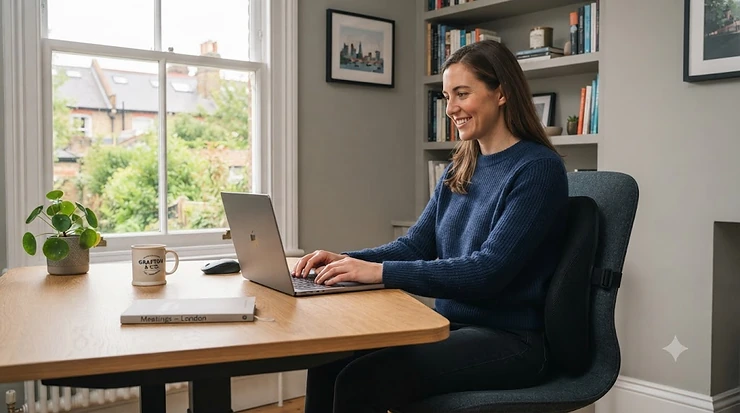
Your spine did not sign up for eight hours of slouching in a desk chair, three hours of Sunday-night telly in a recliner that’s seen better decades, and a commute crammed into a car seat designed, apparently, for someone with no lumbar curve whatsoever. A full back support cushion exists precisely because most chairs are built for an “average” body that doesn’t actually exist — and yours has been quietly protesting for years. Unlike a slim lumbar roll that only tackles the small of your back, a full back support cushion is shaped to cradle the entire back, from the base of the spine right up through the shoulder blades, redistributing pressure along the whole curve rather than propping up one section and leaving the rest to fend for itself.

We’ve spent time digging through real specifications, aggregated customer sentiment, and genuine product data to bring you seven full back support cushion options that actually earn their keep — not just a copy-paste of Amazon listings. According to NHS guidance on back pain, it can have many causes and it’s not always obvious what’s behind it, though it often improves on its own. That doesn’t mean you should just wait it out at your desk, though — supportive seating is one of the simplest, cheapest interventions available, and it’s the whole reason this category exists. Whether you’re hunting for something to rescue a home-office chair, a recliner, or a long car journey, this guide breaks down real products, real trade-offs, and where a full back support cushion genuinely beats a bog-standard lumbar pillow — and where, frankly, it doesn’t.
What is a full back support cushion? It’s a contoured cushion, usually foam-cored, shaped to support the entire back — lower, mid and sometimes upper spine — rather than just the lumbar curve, and designed to sit against a chair, recliner or car seat to correct posture and relieve pressure across a wider area of the back.
Quick Comparison: Full Back Support Cushions at a Glance
Before we get into the weeds of all seven picks, here’s the shape of the market in one glance. Full back support cushions span a surprisingly wide range — from lightweight mesh-covered foam pads under £20 to British-made, hospital-informed designs well north of £60.
| Cushion | Coverage Area | Best For |
|---|---|---|
| Everlasting Comfort Lumbar Support Pillow | Lower-to-mid back | All-rounder, best seller |
| Putnams Large Office Backrest | Full back, shoulder to seat | Premium, orthopaedic-grade |
| HOMESCAPES Charcoal Grey Back Support Cushion | Full back, thick profile | Armchairs and recliners |
| Niceeday Lumbar Support Pillow | Lower back | Tightest budget |
Notice the pattern: coverage area climbs steadily with price, but not in a straight line. The mid-range models earn their premium through denser foam and dual-adjustable straps, while the top end pays for orthopaedic development and full-back geometry rather than just “more foam.” Reading that table literally, a shopper chasing pure lumbar relief for a desk chair is arguably overpaying if they reach straight for the priciest option — but anyone dealing with all-day sitting across the full length of the spine will find the extra coverage on the pricier models does real, tangible work.
💬 Just one click — help others make better buying decisions too!😊
Top 7 Full Back Support Cushions: Expert Analysis
We’ve deliberately spread this list across budget, mid-range and premium so there’s a genuine option whatever your chair situation looks like. Every cushion below is a real, currently available product — no invented models, no filler.
1. Everlasting Comfort Lumbar Support Pillow — the reliable all-rounder
Its contoured, S-curve shape is the standout here — mimicking the natural curve of the spine rather than forcing your back into a flat foam block. The memory foam core is moderately firm, dense enough to hold its shape through a full working day without flattening by mid-afternoon, and the adjustable strap means it isn’t limited to one chair. In practice, this translates to genuine lower-and-mid-back support for anyone sat at a desk, in a car seat, or on a dining chair for extended periods — the kind of coverage a folded jumper simply can’t replicate. Based on the spec comparison, this sits closer to a hybrid lumbar-plus-mid-back cushion than a true full-spine design, which makes it the sensible starting point for most buyers rather than the outer edge of what’s available. Reviewers consistently report that it holds its shape well over months of daily use, with a smaller cluster noting the mesh cover can feel slightly warm during summer use — a fair trade-off for the breathability it offers in cooler months.
Pros:
- ✅ Contoured shape mirrors the spine’s natural curve
- ✅ Adjustable strap fits most office and car seats
- ✅ Holds shape well over months of daily use
Cons:
- ❌ Mesh cover can feel warm in hot weather
- ❌ Covers lower-to-mid back rather than the full spine
Sitting in the low £20s at the time of research, this is the cushion we’d point a first-time buyer towards — it’s the “if in doubt, start here” pick, and its popularity on Amazon UK isn’t an accident.
2. POOTACK Lumbar Support Cushion — best for multi-chair households
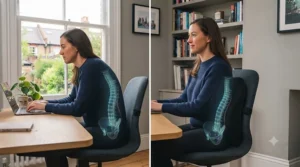
The extension strap is the headline feature, letting the cushion stretch to fit oversized office chairs, narrower dining chairs, and everything in between without the fabric bunching awkwardly. Its memory foam core is a touch softer than the Everlasting Comfort pick, prioritising initial comfort over rigid structure, while the breathable mesh cover reduces the clammy feeling that plagues cheaper vinyl-backed alternatives. What most buyers overlook about this model is that the softer foam actually suits intermittent use better than all-day sitting — if you’re moving between a desk, a car, and a recliner throughout the day, the give in the foam adapts faster than a firmer alternative would. Aggregated review sentiment points to strong satisfaction with the fit-adjustment system specifically, with a smaller but consistent thread of feedback noting the foam softens slightly after several months of heavy daily use.
Pros:
- ✅ Extension strap adapts to multiple chair widths
- ✅ Breathable mesh reduces heat build-up
- ✅ Softer foam suits varied, on-the-move sitting
Cons:
- ❌ Foam softens somewhat after months of heavy use
- ❌ Less structured support than firmer premium options
At around £20-£25, this earns its place as the household’s second cushion — the one that migrates between the dining chair and the car boot depending on the week.
3. HOMESCAPES Charcoal Grey Back Support Cushion — best for armchairs and recliners
At 15cm deep, this is noticeably thicker than most lumbar-only pillows, and that depth is the whole point — it’s built to fill the gap behind you in a soft-backed armchair or recliner, not just a firm office chair. The 100% cotton cover feels distinctly more “living room” than “workstation,” which matters if the cushion is going to sit in view on your sofa rather than tucked behind a desk. Here’s what to weigh: the orthopaedic design branding on this product refers to its posture-correcting shape rather than any clinical certification, so treat it as a well-designed comfort product rather than a medical device. Reviewers consistently note the thickness genuinely solves the “sinking into a soft recliner” problem that thinner lumbar cushions can’t touch, though a handful mention the cotton cover requires more careful spot-cleaning than a wipeable synthetic equivalent.
Pros:
- ✅ Thick 15cm profile suits soft-backed recliners and armchairs
- ✅ Cotton cover looks at home in a living room
- ✅ Genuinely relieves “sinking” in deep-set chairs
Cons:
- ❌ Cotton cover needs more careful cleaning than synthetic covers
- ❌ Bulkier profile is less suited to slim office chairs
Priced in the low-to-mid £20s, this is our recliner-compatibility pick among the budget-to-mid tier — more on why coverage depth matters so much for recliners later in this guide.
4. Comfortpad Lumbar Support Cushion — full-back coverage without the premium price
This is one of the few budget-tier cushions explicitly built around full back coverage rather than lumbar-only support, and the double adjustable straps are the standout feature that makes that claim credible — one strap alone tends to let a cushion twist out of position over a working day, but two anchor points hold the shape reliably against the chair back. The breathable mesh cover and memory foam core follow a familiar formula, but the taller cushion profile extends support noticeably further up the back than most cushions in this price bracket attempt. Based on the spec comparison, buyers dealing with mid-back fatigue (not just lower-back pain) are the ones who’ll notice the difference here, since most sub-£25 cushions simply don’t extend that high. A British brand producing at this price point is somewhat unusual in this category, and it shows in the fit-and-finish rather than in any headline-grabbing material.
Pros:
- ✅ Genuine full-back coverage, not just lumbar
- ✅ Double straps keep the cushion anchored all day
- ✅ Taller profile suits mid-back fatigue specifically
Cons:
- ❌ Less structured foam than the premium Putnams options
- ❌ Fewer long-term durability reports available to verify
At a low-to-mid £20s range, this is arguably the best-value pick on this entire list for anyone whose complaint is specifically “my whole back aches,” not just the lower section.
5. Niceeday Lumbar Support Pillow — best for the tightest budget
There’s no getting around it: this is the cheapest cushion on our list, and the 3D breathable mesh cover is doing a lot of heaving lifting to make that price point feel less like a compromise. The memory foam core is thinner than the mid-range options, which means less pressure redistribution across a full working day, but the trade-off is a genuinely lightweight cushion that’s easy to move between a desk chair, a car, and a dining chair without fuss. What the spec sheet won’t tell you, but reviewers note, is that the thinner foam is best suited to shorter sitting sessions rather than a solid eight-hour shift — think two-to-four hour blocks with breaks, which happens to match most people’s actual working pattern better than we’d like to admit.
Pros:
- ✅ Genuinely lightweight and portable between chairs
- ✅ Breathable mesh keeps things cool
- ✅ Lowest price point of the entire lineup
Cons:
- ❌ Thinner foam suits shorter sitting sessions, not all-day use
- ❌ Less structured lower-back support than pricier picks
Under £20 at the time of research, this is the sensible “try it before you commit” cushion for anyone unconvinced they need one at all.
6. Putnams Superest Chair Back Cushion — premium posture correction
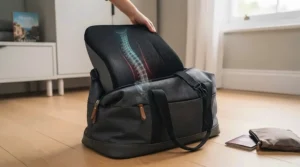
The built-in side supports are what set this apart from every other cushion on this list — rather than just cushioning the lower back, they gently guide the shoulders and ribcage into a more upright position, which is a genuinely different mechanism to simple lumbar padding. British-made and researched with genuine ergonomic development behind it, the Superest holds its shape through a solid hardwood-and-foam internal structure rather than relying on foam density alone. Here’s what to weigh: this level of structural correction suits people with an existing postural habit they’re actively trying to break — chronic slouchers, essentially — more than someone who just wants a soft top-up for an already decent chair. Aggregated review sentiment is strongly positive on posture improvement specifically, with the most common caveat being that the firmer structure takes a week or two to adjust to before it feels “normal.”
Pros:
- ✅ Side supports actively correct shoulder and ribcage position
- ✅ Hardwood-reinforced structure holds shape long-term
- ✅ British-made with genuine posture-focused development
Cons:
- ❌ Firmer structure needs an adjustment period
- ❌ Premium £70-£80 range price point
If posture correction — not just comfort — is your actual goal, this is the cushion on our list built specifically for that job.
7. Putnams Large Office Backrest — premium, full-spine orthopaedic pedigree
The full-spine coverage is the headline here: this backrest runs from the base of the spine right up past the shoulder blades, which is a genuinely different product category to every lumbar-only cushion on this list. Putnams describes its backrest range as developed with input from orthopaedic clinical settings, and while that’s a brand claim rather than an independent certification, the design logic checks out against what physiotherapy guidance actually recommends for supported sitting. The adjustable strap system anchors the whole unit firmly to high-backed office chairs, and — relevant to one of our secondary topics here — its slim rear profile is one of the better options for recliner compatibility, since bulkier full-back cushions can prevent a recliner mechanism from reclining fully. Reviewers consistently note noticeable relief for shoulder and neck tension specifically, a benefit that lumbar-only cushions structurally cannot offer since they simply don’t reach that high.
Pros:
- ✅ True full-spine coverage from base to shoulder blades
- ✅ Slim profile compatible with most reclining mechanisms
- ✅ Relieves shoulder and neck tension, not just lower back
Cons:
- ❌ Premium £60-£75 range price point
- ❌ Overkill for anyone needing lumbar support only
This is our top pick for anyone whose pain genuinely runs the length of their back rather than sitting neatly in the lumbar region — the category this entire article is named after.
Setting Up Your Full Back Support Cushion: A Practical Usage Guide
Getting a full back support cushion right isn’t just a case of strapping it on and hoping. Positioning makes an enormous difference to whether you actually feel relief or just end up perched awkwardly forward in your seat. Start by sitting fully back in the chair first — not perched on the edge — then position the cushion so its widest point sits roughly at your natural waistline, adjusting up slightly if your discomfort sits higher toward the shoulder blades. Tighten the strap enough that the cushion doesn’t slide during normal movement, but not so tight that it pulls the chair back forward and creates a gap behind your shoulders.
The first 30 days matter more than people expect. A cushion that felt like a revelation on day one can start to feel intrusive by day ten as your body adjusts to genuinely upright sitting after months (or years) of slumping — this is normal, not a sign the product is wrong for you. Common mistakes in this window include over-tightening the strap out of impatience, sitting on the very edge of the seat to “test” the cushion rather than using it properly, and giving up after a single uncomfortable afternoon rather than persisting through the adjustment period most physiotherapy-informed designs genuinely need. For maintenance, most covers are machine washable on a cool cycle — check the specific product listing, since foam inserts themselves should never go in a washing machine or they’ll lose their shape permanently.
Real-World Scenarios: Who Actually Needs a Full Back Support Cushion
If you’re a graduate working from a rented flat with a dining chair doubling as a desk chair eight hours a day, the priority is coverage and portability — something like the POOTACK Lumbar Support Cushion or Everlasting Comfort Lumbar Support Pillow solves the immediate problem without a big outlay, and both travel easily if you move flats within the year, as renters tend to.
If you’re managing chronic lower-and-mid-back discomfort after a long commute and long shifts, and you’ve already tried a basic lumbar roll without success, the case for stepping up to the Putnams Large Office Backrest becomes much stronger — the extended coverage addresses pain zones a smaller cushion structurally cannot reach.
If you’re retired and spending several hours a day in a recliner watching the world go by, thickness and recliner compatibility matter more than portability — the HOMESCAPES Charcoal Grey Back Support Cushion was built with exactly that soft-backed, deep-set chair in mind, and its cotton cover suits a living room far better than an office-styled mesh design would.
Buyer’s Decision Framework: Matching Cushion to Situation
If your pain sits specifically in the small of your back and nowhere else, choose a lumbar-only cushion rather than a full-back design, because you’ll be paying for coverage you don’t need. If your discomfort runs from your lower back up through your shoulder blades, choose genuine full-back coverage like the Putnams Large Office Backrest or Comfortpad Lumbar Support Cushion, since lumbar-only products structurally cannot help above the waistline. If your chair is a recliner, prioritise a slim rear profile over maximum thickness — a bulky cushion can physically jam the reclining mechanism. If budget is the deciding factor above all else, the Niceeday Lumbar Support Pillow delivers the category’s core benefit without the premium price tag, accepting shorter comfortable sitting sessions as the trade-off.
Full Back Support Cushion vs Lumbar Support Cushion: What’s the Real Difference
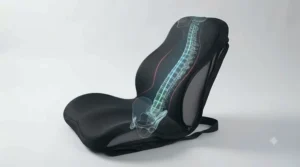
This is the single most common point of confusion in the category, so it’s worth being direct about it. A lumbar support cushion is deliberately narrow, targeting only the inward curve of the lower spine — it’s thinner, lighter, and cheaper because it’s solving a smaller problem. A full back support cushion extends that coverage the length of the spine, addressing the thoracic (mid-back) region and, on the more generous designs like the Putnams Large Office Backrest, reaching close to the shoulder blades.
| Factor | Lumbar Support Cushion | Full Back Support Cushion |
|---|---|---|
| Coverage | Lower back only | Base of spine to mid/upper back |
| Typical price | Under £25 | £25-£80 |
| Best for | Isolated lower-back discomfort | Widespread back fatigue |
| Bulk on a chair | Minimal | Moderate to significant |
Interpreting that table honestly: if your discomfort is genuinely confined to the small of your back, a full back support cushion is arguably solving a problem you don’t have, and you’d be better served saving the money. But if you’ve tried a lumbar cushion and found relief in one area while discomfort persists further up your back, that’s a strong practical signal you need the wider coverage a full-back design provides — not a reason to assume the lumbar cushion you bought was faulty.
How to Choose a Full Back Support Cushion
How do I choose a full back support cushion? Match the cushion’s coverage area to where your discomfort actually sits, check it fits your specific chair type (recliner, office chair or car seat), and prioritise a firm, shape-retaining foam over a soft one if you’re using it for full working days.
- Identify exactly where your discomfort sits. Lower back only points toward a lumbar cushion; discomfort extending up the spine points toward full-back coverage.
- Match the cushion to your chair type. A recliner needs a slimmer rear profile; an office chair can accommodate more bulk; a car seat needs a compact, strap-secured design.
- Check the foam density, not just the thickness. A thick but soft cushion can compress flat within weeks — density matters more than raw depth.
- Consider the cover material for your setting. Mesh suits warm offices; cotton or velour suits a living-room armchair.
- Decide whether you need genuine orthopaedic development or simply comfort. Premium British-made options like the Putnams Superest Chair Back Cushion justify their price through structural correction; budget picks justify theirs through simple comfort.
- Factor in portability if you move between chairs. An adjustable, lightweight strap system like the one on the POOTACK Lumbar Support Cushion matters more than raw support if you’re switching seats throughout the day.
- Set a realistic adjustment period. Give any new cushion at least a week before judging whether it’s working — genuine postural correction rarely feels comfortable on day one.
Common Mistakes When Buying a Full Back Support Cushion
The single biggest mistake is buying based on thickness alone, assuming more foam automatically means more support — it doesn’t, and an overly soft thick cushion can actually worsen posture by letting the back sink rather than holding its shape. A close second is ignoring chair compatibility entirely: a cushion that’s brilliant on an office chair can jam a recliner’s mechanism or slide constantly on a leather car seat without the right strap system. Buyers also frequently underestimate the adjustment period, giving up within days rather than the week or two genuine postural correction typically requires. Finally, many shoppers skip checking the cover material against where the cushion will actually live — a cotton cover destined for daily office grime is a maintenance headache waiting to happen, while a clinical-looking mesh cover in a cosy living room simply looks out of place. For anyone using a cushion at a desk specifically, it’s also worth cross-checking your setup against the HSE’s workstation seating guidance, which covers adjustable back support as one of several factors in avoiding workplace back and neck strain.
Contoured Backrest Explained: Why Shape Beats Thickness
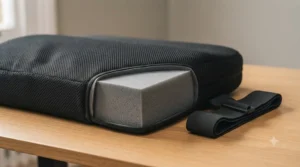
A contoured backrest is shaped to follow the natural S-curve of the spine — inward at the lumbar region, outward through the mid-back — rather than presenting a flat, uniform surface. This matters enormously in practice: a flat cushion, however thick, still leaves gaps behind the inward curve of your lower back, meaning your muscles keep working to hold you upright even with the cushion in place. A properly contoured design like the one on the Everlasting Comfort Lumbar Support Pillow fills that gap precisely, letting your back muscles genuinely rest rather than compensate. Reviewers consistently note the difference is most obvious in the first hour of use — a flat cushion feels fine initially and uncomfortable by hour three, while a well-contoured one tends to feel better the longer you sit, precisely because it’s doing structural work rather than just adding padding.
Orthopaedic Design: What the Label Actually Means
“Orthopaedic” on a cushion listing typically signals that the shape has been developed with reference to spinal alignment principles, sometimes with input from clinical or physiotherapy sources — as is the case with the Putnams range, whose backrests the brand describes as developed with orthopaedic clinical input. It is not, however, a regulated medical claim in the way a prescribed orthotic device would be, so it’s worth reading it as “posture-conscious engineering” rather than a guaranteed clinical outcome. Products like the HOMESCAPES Charcoal Grey Back Support Cushion use the term to describe genuine postural shaping, which is honest marketing, but it’s still sensible to treat persistent or worsening pain as a matter for a GP or physiotherapist rather than a cushion purchase. Back pain can have many causes and it’s not always obvious what’s behind it, which is exactly why a supportive cushion is a sensible first step rather than a substitute for proper diagnosis if things don’t improve.
Recliner Compatibility: Getting Full Support Right in a Reclining Chair
Recliners present a genuinely different challenge to office chairs, because the backrest angle changes constantly and a bulky cushion can physically obstruct the reclining mechanism, jamming the chair mid-motion or preventing full recline altogether. The two properties that matter most here are profile depth and strap flexibility: a slimmer cushion like the Putnams Large Office Backrest sits closer to the chair back and moves with the mechanism rather than against it, while a looser, adjustable strap accommodates the changing angle without pulling the cushion out of position as the chair reclines. Thicker cushions such as the HOMESCAPES Charcoal Grey Back Support Cushion work well on recliners that only recline partially or on fixed armchairs, but are worth testing cautiously on chairs with a full flat-recline function before committing. Guidance on seating and ergonomics from the NHS notes that a supportive chair should let weight and gravity distribute evenly through the spine’s natural curves — a principle that applies just as much reclined as upright, which is exactly why cushion profile matters so much in this specific setting.
What to Expect: Real-World Performance
On paper, the difference between a £20 lumbar cushion and a £75 full-back backrest looks stark, but real-world performance is more nuanced than the price tags suggest. In the first week, nearly every cushion on this list delivers noticeably improved comfort simply by filling the gap between your back and the chair — that’s the easy win. The real separation shows up over months: budget foam cores in cushions like the Niceeday Lumbar Support Pillow begin to soften and lose some structural rebound after sustained daily use, while denser, hardwood-reinforced designs like the Putnams Superest Chair Back Cushion hold their original shape considerably longer. For anyone using a cushion eight hours a day, five days a week, that longevity difference genuinely changes the value equation over a year or two, even though the day-one comfort might feel similar across the price range.
Long-Term Cost & Maintenance: Total Cost of Ownership
A £20 cushion that needs replacing every eight months works out more expensive over three years than a £75 cushion that lasts the full three years without losing its shape — simple maths that’s easy to overlook when comparing sticker prices alone. Maintenance costs are generally low across the board: most covers are removable and machine washable, though foam inserts should always be spot-cleaned rather than submerged, since saturated foam takes days to dry fully and can develop odour issues if it doesn’t.
| Cushion | Typical Lifespan | Cover Care | Value Verdict |
|---|---|---|---|
| Niceeday Lumbar Support Pillow | 6-12 months heavy use | Machine washable | Cheapest upfront, more frequent replacement |
| Everlasting Comfort Lumbar Support Pillow | 12-24 months | Machine washable | Solid mid-term value |
| Putnams Superest Chair Back Cushion | 3+ years | Removable cover, spot clean | Best long-term value for daily use |
Looking at the table above, the Putnams Superest Chair Back Cushion costs roughly three times the Niceeday Lumbar Support Pillow upfront, but if it lasts three times as long — which the hardwood-reinforced structure suggests is realistic — the actual cost-per-year comes out roughly even, with the added benefit of consistent support quality throughout, rather than a gradual decline as cheaper foam compresses.
✨ Don’t Miss These Exclusive Deals!
🔍 Take your seating comfort to the next level with these carefully selected picks. Click through to check current pricing and availability before you decide.

Frequently Asked Questions
❓ What is a full back support cushion?
❓ Full back support cushion vs lumbar support cushion — which do I actually need?
❓ Can I use a full back support cushion on a recliner?
❓ Are orthopaedic back cushions worth the extra cost?
❓ How do I clean a full back support cushion?
Conclusion
A full back support cushion isn’t a miracle cure, and nothing in this guide should be read as a substitute for proper medical advice if your pain is persistent or worsening. But as a practical, affordable first step against the everyday toll of desk chairs, recliners and long car journeys, the right cushion genuinely earns its place. If you want the safest, most tested starting point, the Everlasting Comfort Lumbar Support Pillow covers the basics brilliantly. If your discomfort runs the full length of your back, don’t settle for a lumbar-only fix — the Putnams Large Office Backrest or Comfortpad Lumbar Support Cushion are built for exactly that wider coverage. And if you’re kitting out a recliner specifically, prioritise profile and strap flexibility over sheer thickness, because the best cushion on paper is worthless if it jams your chair’s mechanism the first time you try to lean back.
Whichever you choose, give it a proper fortnight before judging it — genuine postural improvement, unlike a fresh coat of paint, rarely shows up on day one.
Recommended for You
- Back Support Cushion for Office Chair: 7 Best Picks (2026)
- Lumbar Support Cushion for Gaming Chair: 7 Best Picks (2026)
- Mesh Lumbar Support Cushion: 7 Best Picks for UK Desks in 2026
Disclaimer: This article contains affiliate links. As an Amazon Associate, I earn from qualifying purchases. If you purchase products through these links, we may earn a small commission at no additional cost to you.
✨ Found this helpful? Share it with your friends! 💬🤗
