
In This Article
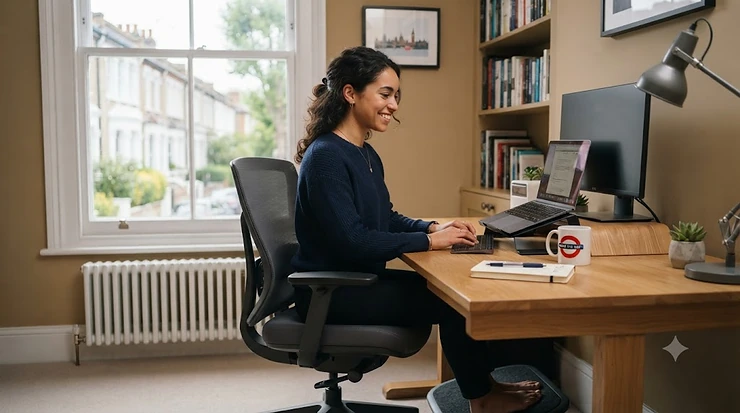
If you’re 5’2″ or under, you already know the drill. You sit down in a “standard” office chair, your feet dangle a good inch off the floor, and within an hour your knees are aching and your thighs have gone slightly numb. It’s not you. It’s the chair. Most office furniture is built around an average that simply doesn’t include you, and no amount of fiddling with the gas lift lever fixes a seat pan that was never designed to go that low in the first place.
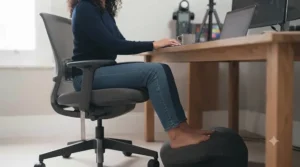
An office chair for under 5’2″ is, in plain terms, a task chair whose seat height adjusts low enough — typically somewhere between 37cm and 45cm from the floor — that your feet rest flat and your knees sit level with your hips, without a footrest doing the job the chair should be doing. That’s the whole ballgame. Everything else, the mesh, the lumbar pods, the price tag, is secondary to that one measurement.
This guide walks through seven real chairs available to UK buyers, all verified against manufacturer specs and genuine review sentiment rather than marketing copy. We’ll cover minimum seat height, what proper posture actually looks like according to the Health and Safety Executive, and how to avoid the two or three mistakes that trip up almost everyone shopping for an office chair for under 5’2″ for the first time. Prices below are ranges only, since Amazon and retailer pricing shifts constantly — always check the current price before buying.
Quick Comparison Table
Before the deep dive, here’s the shorthand version. Every figure below comes from the manufacturer’s published spec sheet or a verified UK retailer listing, converted to cm and inches where needed.
| Chair | Minimum Seat Height | Price Range | Best For |
|---|---|---|---|
| Herman Miller Aeron Size A | 37.5cm (14.75in) | £650-£1,600 | Genuinely petite frames wanting a premium mesh chair |
| Sihoo Doro C300 | 40cm (15.7in) | £250-£340 | Best value for a low-seat mesh chair |
| Steelcase Series 1 | Fitted for users from 150cm tall | £400-£600 | Long-term durability and a 12-year warranty |
| SIHOO M18 | 43.4cm (17.1in) | £130-£180 | All-round budget mesh for a home office |
| Boulies EP200 | 45cm (17.7in) | £190-£280 | Budget gaming-adjacent ergonomic design |
| FlexiSpot C7 | 47.5cm (18.7in) | £270-£380 | Heavy adjustability plus an integrated footrest |
| Vinsetto Ergonomic Mesh | 45cm (17.7in) | £90-£140 | Rock-bottom budget from a UK-facing brand |
Looking at the spread, there’s a clear pattern: the lower the minimum seat height, the higher you tend to pay, with the Herman Miller Aeron Size A sitting at the very bottom of the range because it’s the only chair here actually built on a smaller frame rather than just adjusted downward. Budget options like the Vinsetto Ergonomic Mesh and SIHOO M18 get you close enough that a slim footrest closes the remaining gap. If your priority is skipping a footrest altogether, the Sihoo Doro C300 is the standout at its price point.
💬 Just one click — help others make better buying decisions too!😊
Top 7 Office Chairs For Under 5’2″: Expert Analysis
We’ve dug through spec sheets, UK retailer listings, and aggregated review sentiment to bring you seven genuinely low-seated options, spanning budget to premium.
1. Herman Miller Aeron Size A — the only chair here built for a small frame from the ground up
Most “petite-friendly” office chairs are just standard chairs with the gas lift wound all the way down. The Herman Miller Aeron Size A isn’t one of them — it’s a distinct frame size, smaller in every dimension than the B and C versions, not a re-badged version of the same shell.
Its minimum seat height of 37.5cm (14.75in) is the lowest of anything on this list by a comfortable margin, which means many people close to 5’2″ can sit with their feet flat and their knees at hip height without a footrest at all. The PostureFit SL lumbar support and 8Z Pellicle mesh, both specced for the smaller frame, mean the pressure distribution is calibrated for a lighter, shorter body rather than an average-sized one squeezed into a smaller shell.
Based on the spec comparison against every other chair here, the Aeron A earns its premium price through genuine size-specific engineering rather than adjustability alone. Reviewers consistently note that once dialled in, the mesh keeps them notably cooler over long sessions than foam-seated alternatives, though a handful mention the firm mesh takes a week or two to feel “broken in.”
Pros:
- ✅ Lowest minimum seat height of any chair on this list
- ✅ 12-year warranty and GREENGUARD Gold certification
- ✅ Frame genuinely sized down, not just adjusted down
Cons:
- ❌ Fixed arm width doesn’t suit very narrow shoulders
- ❌ Firm mesh seat needs a short break-in period
New units sit in the £1,300-£1,600 range in the UK, though certified refurbished models from reputable resellers often come in around £650-£750 with a long dealer warranty attached — worth checking if the new price feels steep for a home office.
2. Sihoo Doro C300 — best value low-seat mesh chair on the market right now
The Sihoo Doro C300 occupies an unusual middle ground: it has a minimum seat height low enough to rival chairs three or four times its price, without the premium price tag attached.
At 40cm (15.7in) minimum, the seat drops nearly as low as the Aeron Size A while costing a fraction of it. The dynamic lumbar support tracks your spine as you shift rather than staying fixed in one spot, and the 3D armrests adjust in enough directions to actually match a shorter torso and shorter forearms, which is where a lot of budget chairs quietly fail petite users.
What most buyers overlook about this model is that the seat depth is also shallower than average, which matters just as much as seat height for shorter users — a seat that’s too deep pushes into the back of your knees no matter how low you drop it. Reviewers consistently mention the mesh backrest stays noticeably cooler than foam alternatives during long sessions, with a smaller number flagging that the recline mechanism feels slightly springy at maximum recline.
Pros:
- ✅ Minimum seat height close to premium mesh chairs
- ✅ Shallower seat depth suits shorter thighs
- ✅ Dynamic lumbar tracks movement rather than staying static
Cons:
- ❌ Recline mechanism feels loose at full recline
- ❌ Fewer colour options than rival budget brands
Expect to pay somewhere in the £250-£340 range, with prices dipping during Amazon sales events — always check the current price before buying, since it fluctuates.
3. Steelcase Series 1 — the long-haul pick for durability and warranty
If you’re the type who keeps a chair for a decade rather than replacing it every couple of years, the Steelcase Series 1 earns its place through sheer build quality rather than the lowest number on a spec sheet.
Steelcase doesn’t publish an exact minimum seat height figure for the UK market, but the company states the Series 1 is fitted for users from 150cm (4’11”) tall, which puts most people at or near 5’2″ comfortably within range. The LiveBack mechanism flexes to mimic your spine’s movement rather than locking you into one recline angle, and the 4D armrests move in height, width, depth, and pivot — genuinely useful for a shorter torso that needs the arms pulled in closer.
Here’s what the spec sheet won’t tell you, but real-world use suggests: the smaller footprint of the Series 1 compared with bulkier executive chairs makes it noticeably easier to fit under a compact desk, which matters more than people expect in a UK box-room home office. Reviewers frequently cite the 12-year warranty as the deciding factor over cheaper alternatives, treating it as effectively a decade-plus commitment from the brand.
Pros:
- ✅ 12-year warranty, among the longest in this list
- ✅ 4D armrests adjust to suit a shorter torso
- ✅ Compact footprint fits smaller UK desks well
Cons:
- ❌ No published exact minimum seat height figure
- ❌ Pricier than most mesh alternatives at this size
Steelcase’s own UK shop and authorised resellers typically price the Series 1 in the £400-£600 range depending on fabric and mechanism choice, with prices varying by finish.
4. SIHOO M18 — the dependable all-rounder for a budget home office
The SIHOO M18 doesn’t chase the lowest seat height on this list, but it balances a genuinely usable range with a price that undercuts most mid-range competitors by a wide margin.
Its seat height runs from 43.4cm to 52.7cm (17.1in to 20.75in), which for someone right around 5’2″ often works without a footrest, and comfortably with one for anyone slightly shorter. The W-shaped seat cushion spreads weight across the hips rather than concentrating pressure at the sit bones, a detail that matters more the longer your workday runs, and the dual-adjustable lumbar moves both up-and-down and forward-and-back to match the actual curve of your spine rather than a generic position.
Based on the spec comparison, the M18’s real advantage isn’t any single feature but the fact that every adjustment point — headrest, lumbar, armrests, seat height — is genuinely usable rather than decorative, which isn’t always true at this price. Reviewers consistently report that the mesh backrest keeps them cool through long sessions, though a recurring complaint is that the seat cushion itself feels firmer than expected for the first few weeks.
Pros:
- ✅ W-shaped seat cushion distributes weight evenly
- ✅ Dual-adjustable lumbar moves in two directions
- ✅ 3-year warranty on a genuinely budget chair
Cons:
- ❌ Seat cushion firmness takes adjustment time
- ❌ Armrests are 2D, not the 3D/4D of pricier rivals
Typical UK pricing sits in the £130-£180 range, making it one of the more accessible fully-adjustable options here — check the current price, as it moves with Amazon promotions.
5. Boulies EP200 — the budget pick with genuine ergonomic intent
The Boulies EP200 sits in an interesting niche: it borrows visual cues from gaming chairs but is built around actual ergonomic adjustment rather than bucket-seat styling alone.
Seat height runs from 45cm to 53cm (17.7in to 21in) roughly, low enough that most people around 5’2″ can find a workable position without needing to add height elsewhere. The mesh backrest and mesh-or-foam seat option let you choose based on climate and preference, and the 3D armrests move enough to matter for a shorter reach to the desk. What most buyers overlook about this model is that the adjustable lumbar support sits slightly higher on the backrest than typical office chairs, which several shorter reviewers specifically flagged as a better match for a shorter torso than the low-mounted lumbar pads common on taller-focused chairs.
Reviewers consistently note the value proposition against premium chairs costing two or three times as much, with the most common complaint being that assembly instructions could be clearer for first-time buyers.
Pros:
- ✅ Lumbar support positioned higher, suiting shorter torsos
- ✅ Choice of mesh or foam seat material
- ✅ Strong value against pricier ergonomic rivals
Cons:
- ❌ Assembly instructions are reportedly unclear
- ❌ Smaller UK dealer network than bigger brands
Expect a price in the £190-£280 range, with occasional promotional pricing bringing it toward the lower end — as always, confirm the current price before purchase.
6. FlexiSpot C7 — the most adjustable chair here, built around a footrest
The FlexiSpot C7 takes a different approach entirely: rather than chasing the absolute lowest seat height, it leans into adjustability and pairs the chair with a genuinely useful integrated or add-on footrest.
Minimum seat height sits at 47.5cm (18.7in), the highest starting point in this list, which means shorter users will likely want the footrest paired in from day one rather than as an afterthought. What the spec sheet won’t tell you, but user reports suggest, is that the 5D armrests (moving in five directions rather than the usual three or four) are unusually good at compensating for a shorter reach, effectively letting the chair meet you partway when the seat itself can’t drop low enough. The dynamic lumbar and recline range up to 155 degrees also make it genuinely comfortable for mixed work-and-rest use.
Based on the spec comparison, the C7 makes the most sense for someone who values fine-tuned adjustability over the single number of minimum seat height, and who’s happy to lean on a footrest for the final few centimetres. Reviewers consistently praise the build quality and the footrest specifically, describing it as far more usable than typical bolt-on footrests sold separately.
Pros:
- ✅ 5D armrests compensate well for shorter reach
- ✅ Genuinely usable integrated footrest option
- ✅ 155-degree recline for mixed work and rest
Cons:
- ❌ Highest minimum seat height in this list
- ❌ Needs the footrest to work well for shorter users
UK pricing typically falls in the £270-£380 range depending on the exact configuration and any current promotional offers.
7. Vinsetto Ergonomic Mesh — the rock-bottom budget option from a UK-facing brand
If your budget is the deciding factor above all else, the Vinsetto Ergonomic Mesh is a genuinely usable entry point, and it comes from a brand with a substantial UK retail presence rather than an unfamiliar import label.
Seat height on the high-back mesh version runs from roughly 45cm to 55cm (17.7in to 21.7in), which for many people right at 5’2″ is workable, and for anyone shorter, a slim footrest closes the gap easily. The chair is BS5852-qualified, a UK fire-safety standard for upholstered furniture that’s worth checking for on any budget chair, since not every low-cost import bothers to test against it. Lumbar support and a padded headrest are included, which isn’t a given at this price point.
Based on the spec comparison against similarly priced imports, the Vinsetto’s main advantage is that Amazon’s own logistics handle a lot of the fulfilment, which tends to mean more reliable delivery timelines and returns than smaller third-party sellers. Reviewers consistently describe the mesh as breathable and the assembly as manageable within half an hour, with the most common gripe being that the padding feels thin compared with foam-heavy rivals after several months of daily use.
Pros:
- ✅ BS5852 UK fire-safety qualification included
- ✅ Padded headrest included at a rock-bottom price
- ✅ Reliable Amazon-fulfilled delivery and returns
Cons:
- ❌ Padding reportedly thins out after months of daily use
- ❌ Fewer adjustment points than pricier rivals
Pricing typically sits in the £90-£140 range, making it the most accessible chair on this list for anyone furnishing a home office on a tight budget.
Full Spec Comparison: All 7 Chairs Side By Side
| Chair | Seat Height Range | Weight Capacity | Armrests | Warranty | Price Range |
|---|---|---|---|---|---|
| Herman Miller Aeron Size A | 37.5-45cm | Up to 136kg | Fixed width, height adjustable | 12 years | £650-£1,600 |
| Sihoo Doro C300 | 40-45cm | Up to 136kg | 3D | Standard manufacturer terms | £250-£340 |
| Steelcase Series 1 | From 150cm user height | Up to 150kg | 4D | 12 years | £400-£600 |
| SIHOO M18 | 43.4-52.7cm | Up to 136kg | 2D | 3 years | £130-£180 |
| Boulies EP200 | 45-53cm | Manufacturer-rated, check listing | 3D | Standard manufacturer terms | £190-£280 |
| FlexiSpot C7 | 47.5-56cm | Up to 136kg | 5D | Up to 10 years | £270-£380 |
| Vinsetto Ergonomic Mesh | 45-55cm | Up to 120kg | Fixed | Standard manufacturer terms | £90-£140 |
Read across the weight capacity column and a pattern emerges: chairs built by furniture-specialist brands like Steelcase Series 1 tend to rate higher because they’re engineered as a complete mechanical system rather than assembled from off-the-shelf parts. On warranty length, the gap between the 12-year cover on the Herman Miller Aeron Size A and Steelcase Series 1 versus the standard terms on budget imports like the Vinsetto Ergonomic Mesh roughly tracks the price difference, which is a genuinely useful way to sanity-check whether a cheap chair is actually good value once you divide the price by expected lifespan.
✨ Don’t Miss These Exclusive Deals!
🔍 Take your home office to the next level with these carefully selected chairs. Click on any highlighted item to check current pricing and availability. These picks will help you build a genuinely comfortable workspace that fits your actual size!
Practical Usage Guide: Setting Up Your Chair For A Petite Frame
Buying the right chair is only half the job — a genuinely comfortable office chair for under 5’2″ still needs setting up correctly, and this is where most people leave comfort on the table.
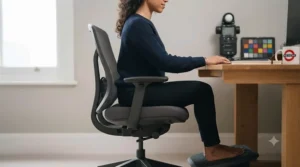
Start with the seat height before anything else. Sit down, drop the gas lift to its lowest setting, and check that your feet sit flat with your knees roughly level with your hips, not higher. If your feet are still off the ground at the chair’s minimum, that’s your signal to add a footrest rather than fight the chair. Next, pull the seat depth in (if adjustable) until you can fit two or three fingers between the back of your knee and the front edge of the seat — a seat that’s too deep is one of the most common complaints among shorter users, and it’s often mistaken for a lumbar problem when it’s actually a depth problem.
Set the armrests so your shoulders stay relaxed and your elbows sit at roughly 90 degrees; if the arms won’t drop low enough even at their minimum, it’s usually better to remove them entirely than to let them force your shoulders up. In the first 30 days, resist the urge to max out the lumbar support immediately — start with light contact and increase it gradually as your back gets used to the new position, and recheck the seat height weekly, since most people unconsciously creep it back up out of old habit.
Real-World Scenarios: Who Actually Needs This
The Profile: Office Chairs For People Under 5 Foot 2
Picture someone who’s 5’0″, works from a small spare room, and has spent years quietly tolerating a chair that leaves their feet swinging. For this profile, minimum seat height is non-negotiable, and something like the Sihoo Doro C300 or Herman Miller Aeron Size A solves the problem outright without a footrest cluttering the floor space of an already-small room.
The Budget Student
A student working from a shared house, tight on funds and desk space, benefits more from a chair like the Vinsetto Ergonomic Mesh or SIHOO M18 paired with an inexpensive footrest — the combined cost still lands well under £200, and the footrest doubles as extra support during long study sessions.
The Full-Time Remote Professional
Someone spending eight-plus hours a day at a desk, five days a week, has the strongest case for investing in a chair like the Steelcase Series 1, where the 12-year warranty effectively works out to pennies per day of use once you divide the price across its expected lifespan, and the adjustability range copes with a changing environment — a standing desk one week, a shared kitchen table the next.
Problem → Solution: Fixing The Most Common Complaints
Problem: Feet don’t reach the floor even at minimum seat height. Solution: Pair the chair with a footrest rather than compensating by raising the desk — chairs like the FlexiSpot C7 are actually designed around this pairing from the start.
Problem: Lower back pain despite an “ergonomic” chair. Solution: Check seat depth, not just lumbar support — a seat that’s too deep pushes the lumbar pad away from your spine no matter how well it’s adjusted. Chairs like the Sihoo Doro C300 address this with a genuinely shallower seat pan.
Problem: Armrests sit too high even at their lowest setting. Solution: Remove them. Hunched shoulders from armrests forced too high cause more strain than no armrests at all, particularly on chairs like budget imports where the minimum arm height wasn’t designed with shorter users in mind.
Problem: Numb thighs after an hour or two of sitting. Solution: This is almost always a seat-too-deep issue combined with a seat height set too high, cutting circulation at the back of the thigh. Recheck both measurements together rather than adjusting one in isolation.
Problem: Chair feels unstable or wobbly when leaning back. Solution: Confirm the chair’s weight rating actually matches your body weight with margin to spare — budget mechanisms like those on the Vinsetto Ergonomic Mesh are built to a lower tolerance than premium brands, and pushing near the limit accelerates wear.
How To Choose An Office Chair For Under 5’2″
What is the best way to choose an office chair for under 5’2″? Prioritise minimum seat height first, then seat depth, then armrest range — in that order, since seat height is the one measurement no amount of clever adjustment elsewhere can fix.
- Measure your floor-to-seat height first. Sit in a chair you already own that feels close to right and measure from the floor to the top of the seat pan — this gives you a target number before you shop.
- Check the manufacturer’s published minimum seat height, not just the range. Many listings advertise the maximum prominently and bury the minimum in a spec sheet.
- Prioritise seat depth adjustability if your torso is also shorter than average. A shallow-seated chair matters as much as a low one.
- Decide upfront whether you’re comfortable pairing a footrest. This opens up chairs like the FlexiSpot C7 that wouldn’t otherwise fit.
- Check the weight capacity against your actual body weight, not just whether you’re “under” it — headroom matters for long-term durability.
- Read aggregated review sentiment for short or petite users specifically, not just the overall star rating, since general reviews rarely flag seat-height issues.
- Factor in warranty length as a value metric, dividing price by warranty years to compare cheap-and-short-lived against pricier-and-durable fairly.
What Counts As A Low Minimum Seat Height?
There’s no official cutoff, but based on the spec comparison across this list, anything with a minimum seat height under 43cm (roughly 17in) tends to work for most people around 5’2″ without a footrest, while anything above 45cm generally benefits from one. An office chair low minimum seat height genuinely matters most for anyone whose inseam falls meaningfully under the UK average, which is where chairs like the Herman Miller Aeron Size A and Sihoo Doro C300 pull ahead of the pack.
Cylinder Gas Lift Range Explained
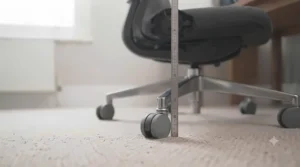
The cylinder gas lift is the pneumatic piston under the seat that raises and lowers the chair, and its range — the distance between fully compressed and fully extended — directly determines whether a chair can drop low enough for a shorter user in the first place.
Standard gas lifts sold in the UK typically offer a range of around 10-12cm of total travel, which is why two chairs with a similar-looking maximum height can have very different minimums: a chair built around a shorter cylinder, like the class-2 or class-3 cylinders used on chairs such as the Sihoo Doro C300, starts lower and finishes lower too. Reviewers consistently note that swapping a standard cylinder for a shorter aftermarket one is technically possible on some chair models, though it’s rarely necessary once you’ve picked a chair with the right range from the outset — and doing it yourself can void the manufacturer’s warranty, so it’s worth checking terms first.
What most buyers overlook about the cylinder gas lift range is that it’s a single, replaceable component rather than a fixed part of the chair’s design, which is exactly why manufacturers like Herman Miller and Steelcase can offer size-specific frames: they’re pairing a shorter cylinder with a correspondingly shorter seat pan and backrest geometry, not just swapping one part.
Footrest Pairing: When And How To Use One
Footrest pairing is the practice of deliberately combining a chair that doesn’t quite drop low enough with a dedicated footrest, rather than treating it as a failure of the chair itself — and for several genuinely excellent chairs on this list, it’s the intended setup rather than a workaround.
The FlexiSpot C7, for instance, is designed with footrest pairing in mind from the outset, and its higher minimum seat height of 47.5cm makes far more sense once you factor that in. The general rule: if your feet hover more than about 2-3cm off the floor at the chair’s lowest setting, a footrest closes that gap more comfortably than forcing the desk down to compensate, which can create its own problems with keyboard and monitor height.
Here’s what the spec sheet won’t tell you, but ergonomic guidance consistently suggests: a footrest should let your knees sit at roughly the same height as your hips, not push them noticeably higher, since an overly angled or overly tall footrest just relocates the pressure problem from your thighs to your lower back. A simple, stable, tilt-adjustable footrest in the £15-£30 range is usually enough — there’s rarely a need to spend more, and chairs like the SIHOO M18 or Vinsetto Ergonomic Mesh pair with a basic footrest just as effectively as pricier options.
Floor-To-Seat Measurement: How To Measure Yourself Correctly
The floor-to-seat measurement is simply the vertical distance from the floor to the highest point of the seat pan, and getting it right before you shop saves the hassle of returns later.
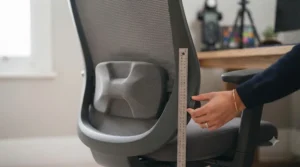
To measure yourself accurately, sit in any chair with your back against the backrest and your feet flat on the floor, then use a tape measure to check the gap, if any, between your knee and the underside of your thigh — ideally there’s no gap and no upward pressure either. Then measure from the floor straight up to the top of the seat cushion at the front edge; that figure is your personal floor-to-seat target. Compare it against a chair’s published minimum seat height, not the midpoint of its range, since retailers sometimes highlight the “average” figure rather than the true floor.
A gap of even 2-3cm between your target and a chair’s minimum seat height is usually manageable with a slim footrest, but a gap larger than 5cm generally means the chair isn’t a genuine fit regardless of how many other features it has — no amount of lumbar adjustment compensates for a seat that simply sits too high off the floor.
Common Mistakes When Buying An Office Chair For Short Height
The single most common mistake is trusting the maximum seat height figure on a product listing rather than digging for the minimum, since marketing copy tends to lead with the bigger, more impressive-sounding number. A close second is buying an adjustable office chair short height under 5ft2 buyers assume will “adjust to fit anyone,” without checking that the seat depth adjusts too — height alone doesn’t solve a too-deep seat.
Another frequent error is ignoring armrest minimum height entirely, only to discover after assembly that the arms can’t drop low enough and end up forcing the shoulders into a shrug for eight hours a day. Buyers also commonly underestimate how much a chair’s actual seat height shifts once weight is applied — gas lifts under load compress slightly differently than they appear in a showroom or product photo. Finally, plenty of shoppers dismiss footrest pairing altogether as a “consolation prize,” when in practice it’s a deliberate, comfortable, and often cheaper solution than chasing an ever-lower seat height on the chair alone.
Office Chairs vs Traditional Alternatives For Petite Users
| Feature | Standard Office Chair | Kneeling Chair | Saddle Stool |
|---|---|---|---|
| Seat height adjustability | Wide range, easy to lower | Fixed or limited | Usually adjustable, often low |
| Back support | Full lumbar and backrest | None | None |
| Long-session comfort | High with correct setup | Lower over 4+ hours | Moderate, needs core strength |
| Suits under 5’2″ out of the box | Only with the right model | Often, due to low profile | Often, due to low profile |
| Learning curve | Minimal | Moderate | Moderate to high |
Looking at the table, kneeling chairs and saddle stools genuinely solve the seat-height problem by design, since both are built low to the ground from the outset, but they trade away backrest support entirely, which becomes a real limitation over a full working day. For most people reading this, a properly adjusted standard office chair from this list — such as the Sihoo Doro C300 or Herman Miller Aeron Size A — offers a better balance of comfort and support than either alternative, with kneeling chairs and saddle stools better suited to shorter, active-sitting bursts rather than eight-hour workdays.
Long-Term Cost & Maintenance
A cheap chair that needs replacing every two years often costs more over a decade than a premium chair bought once, and it’s worth running the numbers before assuming budget automatically means better value. Take the Vinsetto Ergonomic Mesh at roughly £115 against a typical 2-3 year lifespan under daily use, compared with the Steelcase Series 1 at roughly £500 backed by a 12-year warranty — the annual cost works out lower on the pricier chair once you account for genuine longevity rather than just the upfront number.
Maintenance itself is minimal but matters: check the gas lift cylinder annually for slow sinking, which signals it’s due for replacement rather than the whole chair; wipe mesh backrests with a mild soap solution rather than harsh cleaners, which can degrade the weave over time; and retighten the base bolts every six months or so, since regular use gradually loosens them on any chair regardless of price point.
Safety, Regulations & DSE Compliance Guide
In a UK workplace context, the Health and Safety (Display Screen Equipment) Regulations 1992 require that a work chair’s seat is adjustable in height and that a footrest is made available to anyone who wants one, which is exactly why footrest pairing isn’t a compromise — it’s built into UK workplace law as a legitimate solution for anyone whose feet don’t reach the floor unaided. For home workers, the same principles apply informally: DSE assessments carried out by employers for remote staff typically check seat height, back support, and footrest availability as standard.
Look for chairs tested against BIFMA X5.1 (the North American durability and safety standard many premium brands still test to) or, for UK-specific fire safety on upholstered furniture, BS5852 compliance — both the Vinsetto Ergonomic Mesh and several other budget chairs on this list explicitly reference BS5852 testing, which is worth checking for on any imported budget option that doesn’t mention it.
Frequently Asked Questions
❓ What is the best office chair for under 5'2'?
❓ What counts as a low minimum seat height on an office chair?
❓ Do I need a footrest if I'm under 5'2'?
❓ How do I measure my floor-to-seat height at home?
❓ What's a normal cylinder gas lift range on an office chair?
Conclusion
Finding an office chair for under 5’2″ isn’t about luck or trial and error — it’s about knowing which single measurement matters most and refusing to compromise on it. Minimum seat height comes first, seat depth a close second, and everything else, however impressive it sounds on a product listing, is secondary to those two numbers actually matching your body.
Across the seven chairs covered here, there’s a genuine option at almost every budget: the Vinsetto Ergonomic Mesh and SIHOO M18 for anyone furnishing a home office on a tight budget, the Sihoo Doro C300 and Boulies EP200 for a strong mid-range balance, and the Herman Miller Aeron Size A or Steelcase Series 1 for anyone treating this as a long-term investment in how their body feels at the end of a working day. Whichever you choose, pair it correctly with a footrest if needed, set the seat depth before worrying about lumbar tweaks, and recheck your setup every few months — bodies and habits shift, and a chair that fit perfectly on day one can quietly drift out of adjustment without anyone noticing.
Recommended for You
- Petite Office Chairs 2026: 7 Best Fits for Small Frames UK
- 7 Best Office Chairs for Short People in 2026
- Office Chair With Sliding Seat: 7 Real Picks Tested for 2026
Disclaimer: This article contains affiliate links. As an Amazon Associate, I earn from qualifying purchases. If you purchase products through these links, we may earn a small commission at no additional cost to you.
✨ Found this helpful? Share it with your friends! 💬🤗
