
In This Article
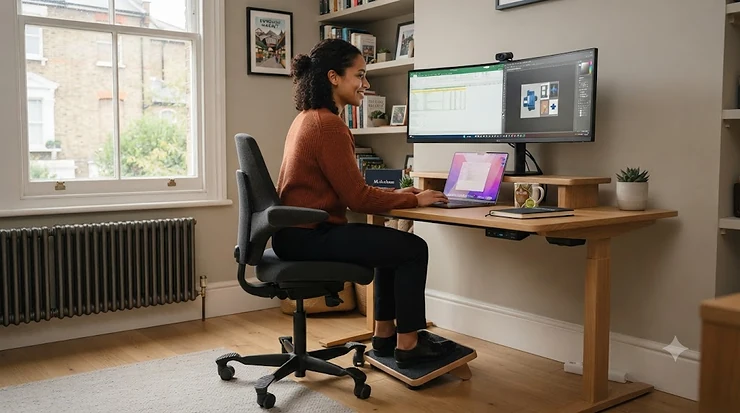
If you’ve ever perched on the edge of an office chair with your toes barely grazing the carpet, you already know the problem with office chairs for short people isn’t comfort — it’s basic physics. Most task chairs are engineered around a seat height that suits someone closer to six foot than five foot two, which means anyone shorter is left with dangling feet, a seat pan digging into the backs of their knees, and lumbar support that lands somewhere around their shoulder blades instead of their lower back. It’s not you. It’s the chair.
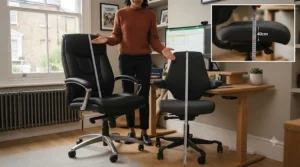
The average UK woman stands around 162cm (5’4″) and the average man around 175cm (5’9″), according to the NHS Digital Health Survey for England, which recorded mean measured heights of 175.5cm for men and 161.7cm for women. Anyone shorter than that “average” is often sold a chair that was never designed with their proportions in mind. The fix isn’t a cushion wedged under your bottom or a stack of reams under your feet, it’s picking a chair with a genuinely low minimum seat height, an adjustable seat depth, and lumbar support that actually sits where a short torso needs it. This guide walks through seven real, currently available chairs, how to size them properly, and the specific adjustments that separate a chair that merely fits from one that disappears beneath you because it’s set up right.
Quick Comparison Table
Before diving into the full breakdown, here’s a snapshot of how the seven chairs stack up on the numbers that matter most for shorter frames: minimum seat height, seat depth adjustment, and price positioning.
| Chair | Min. Seat Height | Seat Depth Adjustable? | Price Range | Best For |
|---|---|---|---|---|
| Hbada Office Task Chair | 40.6cm (16″) | No | Under £130 | Tightest budget |
| IKEA Volmar | 40cm (15.75″) | Fixed, deep recline range | £150-£220 range | High-street convenience |
| FlexiSpot C7 Lite | 41.5cm (16.34″) | Yes, 2.4″ | £180-£250 range | Compact/petite frames |
| SIHOO Doro C300 | 40cm (15.75″) | Yes, 1″ | £280-£340 range | Dynamic lumbar tracking |
| Autonomous ErgoChair Pro | 47cm (18.5″) | Yes, 2″ | £380-£480 range | Sliding lumbar precision |
| Steelcase Leap | 39.4cm (15.5″) | Yes, 3″ | £950-£1,150 range | All-round premium build |
| Herman Miller Aeron (Size A) | 37.5cm (14.75″) | Fixed by size | £1,200-£1,600 range | Very petite sitters |
Looking at the spread, the Herman Miller Aeron in Size A wins outright on minimum seat height, which is exactly why Herman Miller sizes the Aeron by body type rather than offering one universal frame. The Hbada Office Task Chair and IKEA Volmar prove you don’t need to spend four figures to get a genuinely low seat, but they trade away seat depth adjustment, which matters if your thighs are shorter than average relative to your torso. Anyone weighing up mid-range options should note that the FlexiSpot C7 Lite is the only chair here explicitly marketed around a compact frame rather than simply having a lower range as one adjustment among many.
💬 Just one click — help others make better buying decisions too!😊
Top 7 Office Chairs for Short People: Expert Analysis
We’ve researched real specifications, verified availability, and pulled together aggregated review sentiment for each of these seven chairs so you can compare on substance rather than marketing copy. Every chair below has a genuinely low minimum seat height compared with the market average of roughly 43-48cm (17″-19″).
1. Hbada Office Task Chair — best budget pick with folding arms
The standout here is the seat height range of roughly 40.6cm to 50.2cm (16″ to 19.75″), which is unusually low for a chair costing under £130. That low end means someone around 5’0″ to 5’4″ can plant their feet flat without a footrest, something plenty of chairs three times the price fail to manage. The trade-off is limited adjustability elsewhere: there’s no seat depth adjustment and the lumbar support is fixed rather than height-adjustable, so it works best as a general-purpose fit rather than a precision tool. What most buyers overlook about budget chairs like this is that the folding armrests are a genuinely practical feature for smaller desks or shared spaces, letting you tuck the chair further under a desk than fixed arms would allow. Based on the spec comparison with rival budget chairs, this one earns its reputation specifically because of how low that seat drops, not because of any standout ergonomic engineering. Reviewers consistently note that assembly is straightforward and that the chair suits users up to roughly 5’8″, but several mention the cushion firmness varies between production batches, and the recline mechanism has a fairly narrow range compared with pricier alternatives. If you’re a student or someone furnishing a first home office on a tight budget, this is a sensible starting point rather than a long-term ergonomic solution.
Pros:
- ✅ Seat drops low enough for most sub-5’4″ users without a footrest
- ✅ Folding armrests save space under smaller desks
- ✅ Genuinely affordable, widely available on amazon.co.uk
Cons:
- ❌ No seat depth adjustment for shorter thighs
- ❌ Lumbar support isn’t height-adjustable
At under £130, the Hbada Office Task Chair represents strong value if your main requirement is simply getting your feet on the ground, though it won’t satisfy anyone who also needs precise lumbar positioning.
2. IKEA Volmar — lowest-cost high-street option with leather
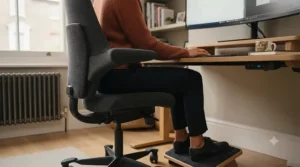
The IKEA Volmar‘s standout feature is a seat height that drops to around 40cm (15.75″), matched with a five-position ratcheted backrest depth adjustment that’s unusual at this price point. In practice, that low minimum height means shorter sitters get proper thigh support without the seat edge cutting into the backs of their knees, while the backrest depth control lets you bring lumbar support forward to meet a smaller frame rather than leaving a gap behind your lower back. Here’s what to weigh: the base model ships without arms, and IKEA charges extra for height-adjustable arms and an optional headrest, so the advertised entry price understates what most people will actually pay once they’ve configured a comfortable setup. What most buyers overlook is that this is one of the few genuinely accessible high-street options for short people, meaning you can sit in it before buying at a UK store rather than gambling on an online-only import. Aggregated customer sentiment highlights the leather upholstery as a pleasant surprise for the price bracket, alongside praise for the tilt-tension control, though some reviewers note the wheels can feel sluggish over time and the seat foam softens faster than premium alternatives.
Pros:
- ✅ Very low 40cm minimum seat height
- ✅ Five-position adjustable backrest depth
- ✅ Available to try in-store before buying
Cons:
- ❌ Arms and headrest cost extra, raising the real price
- ❌ Wheels reported to stiffen with heavier use
For UK buyers who value being able to physically sit in a chair before committing, the IKEA Volmar is one of the only options on this list offering that reassurance, and the price range typically lands around £150 to £220 once arms are added.
3. FlexiSpot C7 Lite — purpose-built compact frame for petite users
Unlike most chairs on this list, which happen to have a low setting somewhere in their range, the FlexiSpot C7 Lite is explicitly built as a smaller-footprint version of FlexiSpot’s popular C7, with a seat height of roughly 41.5cm to 44cm (16.34″ to 17.32″) and a genuinely compact seat pan width. That narrower, shorter design matters because a standard-width seat can leave shorter, smaller-framed users swimming in fabric with poor lateral support, whereas this chair is scaled down rather than simply lowered. The lumbar support here is height-adjustable, which reviewers describe as effective at targeting a lower, shorter torso rather than pressing into the mid-back the way many “one size” lumbar pads do. Based on the spec comparison, the trade for that compact scaling is a reduced maximum height, so taller members of a shared household won’t find it suitable, but for someone specifically shopping as a short adult this is one of the more thoughtfully engineered mid-range picks. Aggregated reviews consistently flag the 3D armrests and recline range as strong points for the price, while a recurring criticism is that the foam seat option runs warmer than mesh alternatives during long summer sessions.
Pros:
- ✅ Genuinely scaled-down frame, not just a lower setting
- ✅ Height-adjustable lumbar support targets a short torso
- ✅ Competitive recline range for the price bracket
Cons:
- ❌ Limited colour options currently available
- ❌ Foam seat variant runs warm versus mesh rivals
Priced in the £180 to £250 range, the FlexiSpot C7 Lite sits in a useful gap between budget flip-arm chairs and full premium ergonomic seating.
4. SIHOO Doro C300 — best dynamic lumbar tracking under £350
The SIHOO Doro C300‘s standout is its dynamic tracking backrest, which flexes automatically as you shift your upper body rather than requiring manual recline adjustment, paired with a seat height starting around 40cm (15.75″). In practice, that automatic tracking means the lumbar contact point moves with you instead of leaving a gap when you lean forward to type, which is a genuine ergonomic upgrade over static lumbar pads at this price. The seat depth is adjustable too, giving roughly an inch of travel to bring the front edge away from the backs of shorter legs. What the spec sheet won’t tell you, but user reports suggest, is that the chair runs narrow through the seat pan, so it suits slighter frames particularly well but may feel snug for broader-hipped users regardless of height. Reviewers consistently praise the breathable mesh and the four-position backrest height adjustment, while a recurring complaint is that the armrests can drift out of position more easily than on pricier chairs, and the unit itself is heavier than expected to lift during assembly.
Pros:
- ✅ Auto-adjusting dynamic lumbar tracking system
- ✅ Seat depth adjustment aids shorter leg length
- ✅ Strong airflow from all-mesh construction
Cons:
- ❌ Narrower seat pan than some rivals
- ❌ Armrests reported to loosen with regular use
Sitting in the £280 to £340 range, the SIHOO Doro C300 is a strong mid-tier pick for short users who specifically want automated lumbar support rather than a manual dial.
5. Autonomous ErgoChair Pro — deepest sliding lumbar adjustment
The headline feature of the Autonomous ErgoChair Pro is a lumbar pad that slides up to 15cm (6″) vertically, the largest range of any chair in this comparison, which matters enormously for short-torso sitters whose lower back curve simply sits lower than the “average” position most chairs are built around. Reviewers who identify as petite specifically call out this sliding range as the single biggest fix for lumbar pain, since it lets you drop support onto the actual small of your back rather than your mid-back. The seat height starts around 47cm (18.5″), which is higher than several chairs on this list, so it suits shorter-but-not-shortest users best, roughly 5’2″ and up, and a footrest is worth budgeting for if you’re below that. Based on the spec comparison, what most buyers overlook is that the seat depth also adjusts by around 5cm, letting you shorten the pan to clear the backs of your knees once the height is dialled in. Aggregated review sentiment is strongly positive on build quality and the two-year warranty, with occasional notes that the recline tension knob requires some trial and error to set comfortably.
Pros:
- ✅ Six-inch sliding lumbar range, the largest here
- ✅ Adjustable seat depth complements the height range
- ✅ Sturdy build with a two-year warranty
Cons:
- ❌ 18.5″ minimum seat height won’t suit the shortest users
- ❌ Recline tension takes some fiddling to set right
Priced around £380 to £480, the Autonomous ErgoChair Pro is best suited to shorter-average sitters who prioritise pinpoint lumbar placement over the very lowest possible seat.
6. Steelcase Leap — most trusted premium ergonomic all-rounder
The Steelcase Leap‘s standout is its LiveBack technology, a backrest that flexes to mimic the natural curve of your spine as you move, combined with a seat height range of roughly 39.4cm to 52cm (15.5″ to 20.5″) on the standard cylinder. Independent testing puts the seat depth range at 15.75 to 18.75 inches, which is a genuinely useful three-inch window for shortening the seat pan to suit shorter thighs. What most buyers overlook is that the Leap’s low-end seat height is only available with the standard cylinder rather than the “tall” option some retailers default to, so it’s worth confirming which cylinder you’re ordering. Honest analysis grounded in the spec sheet suggests this chair earns its premium price through genuinely independent upper-back and lower-back controls, letting shorter sitters dial in firmness separately from taller household members sharing the same chair. Reviewers consistently highlight the comfort and colour range as strengths, while the most common criticism is that it’s noticeably heavier than mesh alternatives and less breathable than the Aeron during warm weather.
Pros:
- ✅ Independently adjustable upper and lower back support
- ✅ Three-inch seat depth adjustment range
- ✅ Backed by Steelcase’s lifetime warranty
Cons:
- ❌ Less breathable than all-mesh premium rivals
- ❌ Heavier to manoeuvre than lighter mesh chairs
Expect to pay in the £950 to £1,150 range for the Steelcase Leap, which places it firmly as a long-term investment rather than an impulse buy.
7. Herman Miller Aeron (Size A) — true Size A frame for the shortest sitters
The Herman Miller Aeron in Size A is built, not merely adjusted, for smaller frames, with a seat height range of roughly 37.5cm to 48cm (14.75″ to 19″), the lowest minimum of any chair in this guide. That matters because Herman Miller offers the Aeron in three distinct frame sizes rather than one frame with a wide adjustment range, so Size A genuinely scales down the seat pan width and depth alongside the height, rather than just lowering a one-size seat. The PostureFit SL lumbar system uses two independently adjustable pads rather than a single pad, which honest analysis of the spec sheet suggests is particularly effective for shorter torsos where standard single-pad lumbar support often sits too high. Reviewers consistently rank the breathable Pellicle mesh as best-in-class for temperature regulation during long sitting sessions, and the size-specific design draws consistent praise from shorter users specifically, though the price is, by a wide margin, the steepest on this list, and some reviewers note the seat itself is firmer than padded foam alternatives, which not everyone finds comfortable during multi-hour sessions.
Pros:
- ✅ True Size A frame, not just a lowered universal seat
- ✅ Independently adjustable dual-pad lumbar system
- ✅ Class-leading mesh breathability
Cons:
- ❌ Highest price point of any chair here
- ❌ Firmer seat feel than foam-cushioned rivals
At around £1,200 to £1,600, the Herman Miller Aeron Size A is the chair to choose if you’re at the shorter end of the scale and treat your desk chair as a genuine long-term investment.
Practical Usage Guide: Setting Up Your Chair for a Short Frame
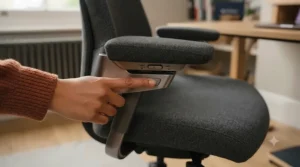
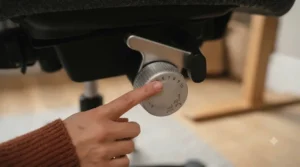
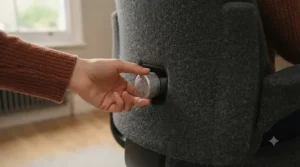
Buying the right chair only solves half the problem; the setup is what actually determines whether you feel the benefit. Start with seat height: sit down, plant your feet flat, and adjust until your knees sit level with or very slightly below your hips, then check that a clenched fist fits between the back of your knees and the seat edge. Next, address seat depth if your chair allows it, sliding the pan so roughly two to three fingers of space remain between the seat edge and the backs of your knees; too deep and it presses into your knees, too shallow and your thighs lack support. Lumbar support comes third: on chairs like the Autonomous ErgoChair Pro or Herman Miller Aeron, slide the pad down until it makes contact with the small of your back, not your ribs, which for most short torsos means positioning it lower than the chair’s default setting. Correct sitting posture at your workstation is essential in helping you avoid neck and back pain, and your chair should be comfortable with controls that are easy to reach, according to NHS trust guidance on seating and ergonomics.
In the first thirty days, the most common mistake is leaving the chair on factory settings and blaming the chair itself for discomfort that’s really a setup issue. Recheck your adjustments weekly for the first month, since foam and mesh both settle slightly with use, subtly shifting the fit. If your chosen chair, such as the Hbada Office Task Chair or IKEA Volmar, lacks seat depth adjustment, a slim lumbar cushion can compensate by effectively shortening the felt depth of the seat. Finally, build a maintenance habit: check caster wheels for hair and dust monthly, retighten armrest bolts every few months as they naturally loosen with movement, and lubricate the gas lift mechanism annually if it starts to feel sticky.
Real-World Scenarios: Which Chair Fits Which Short Sitter
Picture three different short-statured buyers, each with genuinely different priorities, and you’ll see why no single chair tops every list. First, a university student around 5’2″, working from a small bedroom desk on a tight budget, sitting for four or five hours a day between lectures and assignments: the Hbada Office Task Chair or IKEA Volmar covers the essentials without overspending on features that student won’t use daily. Second, a freelance graphic designer around 5’0″ working eight-plus hours a day from a dedicated home office, where lower back pain has become a recurring issue: this is exactly the profile the Autonomous ErgoChair Pro‘s sliding lumbar system or the Herman Miller Aeron Size A was designed to solve, since both let support land precisely on a short lower back rather than the mid-spine. Third, a corporate employee around 5’4″ who splits time between a company office and home, wants a single trusted brand across both, and has employer budget support: the Steelcase Leap makes sense here, since many UK employers already stock Steelcase for office fit-outs, easing procurement and matching a familiar chair at home.
None of these profiles are about height alone, budget, sitting hours, and existing pain all shape the right answer just as much as stature does.
Problem → Solution: Fixing the Most Common Short-Sitter Complaints
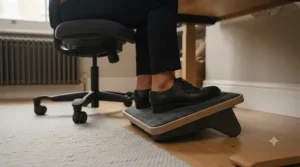
Five problems come up repeatedly among shorter office workers, each with a specific fix rather than a vague “try adjusting it” answer. Dangling feet despite lowering the seat fully signals you need a chair with a genuinely lower minimum height, such as the Herman Miller Aeron Size A or IKEA Volmar, rather than a footrest that can push your knees above hip height and create new strain. Lumbar support that presses into your shoulder blades rather than your lower back means the pad sits too high for your torso; on adjustable chairs like the SIHOO Doro C300, drop it to its lowest setting before judging the chair unsuitable. A seat edge that digs into the backs of your knees points to excess seat depth; chairs with depth adjustment such as the FlexiSpot C7 Lite or Autonomous ErgoChair Pro solve this directly, while fixed-depth chairs need a slim cushion as a workaround. Armrests that force your shoulders up rather than resting naturally usually mean the arm height wasn’t lowered enough, a genuinely common oversight since most people adjust seat height first and forget to revisit the arms afterward. Finally, persistent afternoon slouching despite a “good” chair often reflects a chair set correctly but never revisited as your posture tires, so building in a two-minute stretch and reset every hour matters more than any single spec.
What is an Office Chair for Short People?
An office chair for short people is a task or ergonomic chair with a lower-than-standard minimum seat height, typically starting around 36cm to 41cm (14″-16″) rather than the 43cm-plus common on standard chairs, often paired with adjustable seat depth and repositionable lumbar support so shorter torsos and legs receive proper contact and support without a footrest.
The distinction matters because “ergonomic” and “suitable for short people” aren’t the same thing. A chair can carry every premium ergonomic feature going and still fail a shorter sitter entirely if its lowest setting still leaves feet dangling. That’s why the seat height range, rather than the brand name or feature list, should be the very first number you check.
How to Choose an Office Chair for Short People
- Check the minimum seat height first. Anything above roughly 41cm (16″) is unlikely to let a sub-5’4″ sitter place feet flat without a footrest, so treat this as a hard filter before comparing anything else.
- Prioritise adjustable seat depth. A fixed-depth seat that’s too long presses into the backs of your knees; look for at least two inches of depth travel where your budget allows.
- Confirm the lumbar support actually moves. Health and safety guidance on individual seating recommends hips, knees and ankles sit at roughly 90 degrees while seated, with feet flat on the ground or supported by a footrest, which is only achievable if lumbar support can be repositioned to match a shorter spine.
- Test armrest range, not just height. Armrests that also adjust width and pivot let narrower shoulders sit naturally without hunching to reach the pads.
- Weigh mesh versus foam for your climate and build. Mesh breathes better for warm rooms and longer sessions, while foam can feel more supportive for lighter body weights.
- Factor in delivery weight and assembly. Heavier premium chairs like the Steelcase Leap are genuinely awkward to assemble solo, so budget help or professional assembly if ordering online.
- Read the warranty terms, not just the length. A longer warranty on a budget chair sometimes covers fewer components than a shorter warranty on a premium model, so check what’s actually included.
Office Chair vs Standard Chair for Short People
The core difference between a purpose-considered office chair and a standard task chair isn’t visible in a photo, it’s in the adjustment ranges hidden in the spec sheet. A standard chair, the kind found in most budget office fit-outs, typically offers a seat height range starting around 43cm to 46cm and a single, fixed lumbar curve calibrated for an “average” torso. For someone at or below the 25th percentile of UK height, that translates directly into feet that don’t reach the floor and lumbar support that contacts the wrong part of the spine, both of which contribute to the posterior pelvic tilt and slumping that eventually causes discomfort.
Chairs genuinely suited to shorter frames, from the budget Hbada Office Task Chair through to the Herman Miller Aeron Size A, differ in two measurable ways: a lower minimum seat height and, in the better examples, a shorter or adjustable seat pan depth. The compromise is that many of the lowest-height options sacrifice some adjustability elsewhere to hit that low price point, while chairs offering both a low seat and extensive adjustability, like the Aeron, sit at a materially higher price. In practice, a genuinely short-friendly chair costing £150 will usually outperform a “standard” ergonomic chair costing £400 for a 5’1″ user, purely because the base seat height range is the one spec that can’t be compensated for with extra padding or features.
Common Mistakes When Buying an Office Chair for Short People
The single most common mistake is buying based on brand reputation or star rating without checking the minimum seat height in the spec sheet, since a five-star chair rated by mostly average-height reviewers tells you very little about fit for a shorter frame. A close second is assuming a footrest solves everything; while genuinely useful, a footrest paired with a seat that’s still too high can push your knees above your hips, tipping your pelvis backward and undoing any lumbar support you’ve dialled in. Another frequent error is ignoring seat depth entirely and focusing only on height, when a seat that’s too deep causes just as much discomfort as one that’s too high. Buyers also commonly skip trying a chair with arms extended to full desk height, discovering only after purchase that the armrests can’t drop low enough to slide under a standard-height desk. Finally, many shoppers underestimate how much settling occurs in foam cushions over the first few months, judging a chair as perfect on day one without accounting for how the feel will change once broken in.
Long-Term Cost & Maintenance
Judging office chairs purely on sticker price misses the bigger picture of cost per year of comfortable use. A budget chair like the Hbada Office Task Chair, priced under £130, might need replacing within two to three years of daily use as gas lifts wear and foam compresses, working out to roughly £45-£65 a year. A mid-range pick like the SIHOO Doro C300, backed by a three-year warranty and priced around £280-£340, spreads that cost closer to £95-£115 a year if it lasts its warranty period, which aggregated reviews suggest is realistic for moderate use. Premium options shift the maths again: the Steelcase Leap carries a lifetime warranty on the frame and mechanism, and if it genuinely lasts a decade or more of daily use, as many secondhand and refurbished units on the market suggest it can, the effective annual cost drops below many mid-range chairs despite the much higher upfront price.
| Chair | Price Range | Typical Lifespan | Approx. Cost Per Year |
|---|---|---|---|
| Hbada Office Task Chair | Under £130 | 2-3 years | £45-£65 |
| SIHOO Doro C300 | £280-£340 range | 3-5 years | £65-£115 |
| Steelcase Leap | £950-£1,150 range | 10+ years | Under £115 |
Interpreting this table honestly, the mid-range tier is where value gets murkiest, since a £300 chair that fails in three years can cost more annually than a £1,000 chair backed by a genuine lifetime warranty. Maintenance also affects these numbers directly: retightening bolts, cleaning casters, and avoiding overloading the weight rating all extend a chair’s usable life regardless of price bracket.
✨ Ready to Stop Perching on the Edge of Your Chair?
🔍 Take your home office comfort to the next level with a chair genuinely built for your frame. Click through to check current pricing and availability on any of the picks above, and finally get an evening’s work done without the ache in your lower back.
Features That Actually Matter (And Those That Don’t)
For shorter sitters specifically, three features earn their marketing hype: adjustable seat depth, repositionable lumbar support, and a genuinely low minimum seat height, all covered extensively above. A fourth, adjustable armrest width, matters more than most buyers expect, since narrower shoulders common on smaller frames need arms that pull inward rather than sitting fixed at a width built for broader shoulders.
Several heavily marketed features matter far less than their prominence in listings suggests. Headrests, for instance, look impressive in photos but are genuinely useful only for sitters who spend significant time reclined, and on several budget chairs the fixed headrest angle actually pushes a shorter neck forward rather than supporting it. Multi-coloured LED lighting and “gaming aesthetic” styling common on budget mesh chairs add nothing to ergonomics and typically signal a manufacturer prioritising visual appeal over adjustability engineering. Extremely high weight ratings, often advertised prominently even on budget chairs, are largely irrelevant to shorter, lighter users and shouldn’t influence your decision unless you specifically need that capacity. The lesson: a shorter, focused feature list built around the adjustments that matter for your frame beats a longer spec sheet padded with features aimed at an entirely different buyer.
Safety, Regulations & DSE Compliance Guide
If you’re setting up a home workstation for employed remote work in the UK, it’s worth knowing that official guidance on display screen equipment advises avoiding excess pressure from the edge of seats on the backs of legs and knees, and notes that a footrest may be helpful, particularly for smaller users. Employers have a legal duty under the Health and Safety (Display Screen Equipment) Regulations 1992 to assess home and office workstations, and a chair that doesn’t accommodate a shorter employee’s proportions can form a legitimate part of that assessment. If you work for a UK employer, it’s worth raising seat height and adjustability specifically when requesting home office equipment, since many companies will fund or part-fund a properly fitting chair once the ergonomic gap is documented.
On the safety side, look for chairs certified to recognised standards such as BIFMA or the European EN 1335 seating standard, both of which several chairs in this guide, including the SIHOO Doro C300 and IKEA Volmar, explicitly meet. These standards test structural stability, gas lift safety, and tip-resistance, which matters more than usual for shorter, lighter sitters who might otherwise be seated on castors and bases designed around a heavier average user. For deeper background on why seated posture affects musculoskeletal health more broadly, the Wikipedia entry on ergonomics offers useful further reading on the discipline underpinning all of this guidance.
Frequently Asked Questions
❓ What is the best seat height for a short person's office chair?
❓ Do office chairs for short people need adjustable seat depth?
❓ How low can office chair seat height adjustment go?
❓ Is a footrest better than a low-seat chair for short people?
❓ What is the ideal lumbar support position for a short torso?
Conclusion
Choosing among office chairs for short people ultimately comes down to matching the seat height and depth to your actual proportions rather than trusting a generic “ergonomic” label. Whether that means the budget-friendly Hbada Office Task Chair for a student on a tight budget, the precision lumbar adjustment of the Autonomous ErgoChair Pro for someone managing existing back pain, or the true Size A scaling of the Herman Miller Aeron for the shortest sitters who treat their chair as a long-term investment, the right choice exists across every price bracket covered here. What unites every genuinely good option is a seat that drops low enough for your feet to rest flat and support that lands where your body actually needs it, not where an “average” spec sheet assumes it should.
Take the time to check the numbers, not just the marketing photos, before you buy, and revisit your adjustments over the first month as the chair settles in. Getting this right pays off every single day you sit down to work.
✨ Found the Right Fit? Don’t Settle for Less at Your Desk!
🔍 Browse the full range of picks above and check current pricing and availability today. Your back, hips, and afternoon focus will thank you.
Recommended for You
- 7 Best Office Chair With Removable Headrest UK (2026 Picks)
- Office Chair Adjustable Headrest 2026: 7 Real UK Picks
- Office Chair With Flip-Up Armrests: 7 Best Picks (2026)
Disclaimer: This article contains affiliate links. As an Amazon Associate, I earn from qualifying purchases. If you purchase products through these links, we may earn a small commission at no additional cost to you.
✨ Found this helpful? Share it with your friends! 💬🤗
