
In This Article
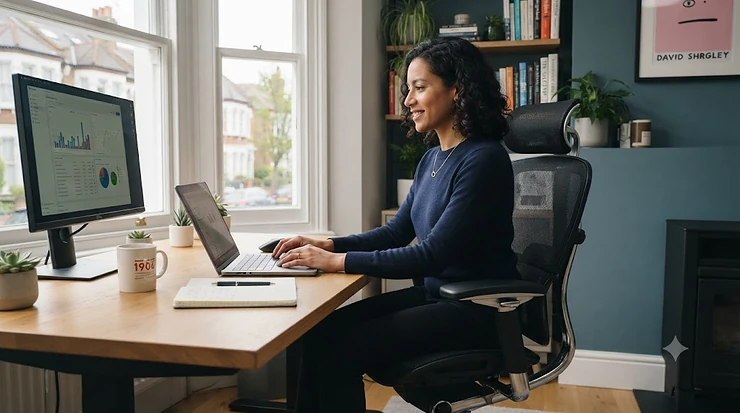
Somewhere around hour six of a work-from-home day, your lower back starts sending you a very clear message: sit up, lean back, do something different. An office chair with tilt lock is the bit of kit that actually listens to that message. Instead of forcing you into one rigid position from nine to five, it lets you rock back for a phone call, lock upright for focused typing, then release the lever again the moment your neck starts complaining. It sounds like a small feature. In practice, it’s the difference between a chair that fights your spine and one that works with it.
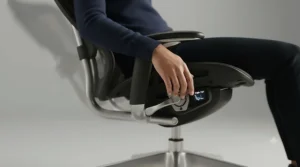
This guide skips the marketing fluff and gets into the mechanics: what a tilt lock actually does, how tension knobs and multi-position locks differ from one another, and which real, currently sold models are worth your money. We’ve pulled together seven chairs spanning budget mesh recliners to weight-activated premium seating, compared them head-to-head, and dug into the regulatory side too, because in the UK, chair adjustability isn’t just a comfort preference; under the Health and Safety (Display Screen Equipment) Regulations 1992, employers are legally required to provide seating with an adjustable back and tilt. So whether you’re kitting out a home office or arguing a case for a better chair with your employer, you’re in the right place.
What Is an Office Chair With Tilt Lock?
An office chair with tilt lock is a task chair fitted with a mechanism that lets the seat and backrest recline, then hold at a chosen angle using a lever or knob, rather than swinging freely. Most models offer either a single locked-upright position or several stops between upright and full recline, giving you control over posture throughout the day.
Quick Comparison Table
| Chair | Recline Range | Locking Style | Price Range | Best For |
|---|---|---|---|---|
| Hbada Ergonomic Office Recliner Chair | 90°-155° | Multi-position lock | under £150 | Budget all-day comfort |
| NOBLEWELL Ergonomic Office Chair | Up to 135° | Freely locking recline | £100-£150 range | Tight budgets, home use |
| SIHOO M18 Ergonomic Office Chair | Standard synchro tilt | Tilt lock | £150-£200 range | Heavier users, durability |
| GABRYLLY Ergonomic Office Chair | 90°-120° | Tilt lock with flip-up arms | £150-£220 range | Big and tall frames |
| Duramont Ergonomic Office Chair | 90°/100°/120° | 3-point recline lock + tension dial | £200-£280 range | Long working hours |
| Ergohuman Eurotech ME7ERG GEN2 | Full synchro tilt | Tilt lock + tilt tension control | £450-£600 range | Maximum adjustability |
| Steelcase Series 1 | Weight-activated recline | Upright back lock + boost tension | £500-£700 range | Long-term investment, warranty |
Looking at the spread, there’s a genuine jump in what “tilt lock” means depending on price. Budget models like the Hbada Ergonomic Office Recliner Chair and NOBLEWELL Ergonomic Office Chair rely on a simple lever that clicks into a handful of fixed stops, which is perfectly functional but coarse. Mid-range picks such as the SIHOO M18 Ergonomic Office Chair and Duramont Ergonomic Office Chair add proper tilt tension control, so the resistance itself is adjustable, not just the angle. At the top, the Ergohuman Eurotech ME7ERG GEN2 and Steelcase Series 1 treat tilt lock as one part of a much larger adjustability system, which is exactly why they cost several times more.
💬 Just one click — help others make better buying decisions too!😊
Top 7 Office Chairs With Tilt Lock: Expert Analysis
Coverage here spans budget, mid-range and premium price points, plus a couple of lesser-known but genuinely well-specced alternatives. Every product below carries a manual affiliate link on the bolded name so you can check current availability and pricing directly.
1. Hbada Ergonomic Office Recliner Chair — widest lock range at a budget price
The standout here is the sheer breadth of the lock range: 90° to 155°, which covers everything from bolt-upright typing to a proper afternoon-break slouch. Specs-wise, you’re getting a steel frame, breathable mesh backrest, a waterfall-edge seat cushion designed to reduce pressure behind the knees, and a pull-out footrest, all wrapped around a chair rated to roughly 250lb. On paper, that footrest is the detail that separates this from most budget rivals — it turns “recline and lock” into an actual break position rather than just a different way to sit upright.
Who’s it for? Based on the spec sheet, this suits anyone new to ergonomic seating who wants to feel the difference between locked-upright focus mode and a genuine recline, without spending premium money to find out if they even like the feature. Reviewers consistently report that the tilt lock engages cleanly and holds position without drifting, which is the one thing budget mechanisms often get wrong. A recurring theme in aggregated feedback is that the armrests are fixed rather than adjustable, so taller or shorter users may need to compensate with desk height instead.
Pros:
- ✅ Recline range covers upright work to relaxed break position
- ✅ Pull-out footrest adds genuine rest functionality
- ✅ Breathable mesh keeps the back cool over long sessions
Cons:
- ❌ Fixed-height armrests limit fine-tuning
- ❌ Lower weight rating than mid-range alternatives
Priced in the sub-£150 range at the time of research, this is a sensible entry point if you’re testing whether a locking recline actually changes how you work — check current price and availability before ordering, as stock and colour options shift often.
2. NOBLEWELL Ergonomic Office Chair — best budget pick for adjustable lumbar depth
What stands out on this one is the 2-inch adjustable lumbar support paired with a freely locking and rocking backrest rated to 135°. Key specs include a 2D armrest, an adjustable headrest, and a backrest that — based on the listing details — locks at any point within its range rather than just at fixed notches, which is unusually flexible for the price bracket. In practical terms, that stepless lock means you’re not stuck choosing between “too upright” and “too far back”; you can dial in the exact angle your spine wants.
This is a strong option for anyone who’s tried a single-position recliner before and found the fixed stops frustrating. What most buyers overlook about lumbar depth adjustment specifically is that it matters more for petite or larger-framed users than backrest angle does — a chair that reclines beautifully but presses the lumbar bulge in the wrong spot on your back will still leave you sore. Aggregated review sentiment on similar stepless-lock chairs in this category tends to flag assembly as slightly fiddly but the mechanism itself as reliable once set up.
Pros:
- ✅ Stepless lock lets you fine-tune the exact recline angle
- ✅ Adjustable lumbar depth suits varied body shapes
- ✅ Genuinely competitive price for the adjustability on offer
Cons:
- ❌ Assembly instructions are reportedly less detailed than rivals
- ❌ Armrests lack height adjustment on this model
At a price typically in the £100-£150 range, this is one of the better value-for-adjustability picks on the list — always check current price, as budget chairs fluctuate more than premium ones.
3. SIHOO M18 Ergonomic Office Chair — heavy-duty capacity without the premium price tag
The headline spec is a 330lb weight capacity paired with a genuine tilt lock mechanism, which is unusual to find together outside the premium tier. Alongside that, you get a high-back mesh design, an adjustable headrest, adjustable lumbar support, and 2D armrests that move up, down, and sideways. What that capacity figure means in practice is that this chair is built on a sturdier frame and thicker gas cylinder than most chairs at this price, so it should hold up better under daily use rather than developing the wobble that cheaper mechanisms get after a year or two.
Here’s what to weigh: for larger or taller users who’ve been frustrated by budget chairs feeling flimsy the moment they recline and lock, this is likely a meaningful upgrade. Reviewers frequently mention the mesh staying cool during long sessions, and a recurring complaint in user feedback across similar SIHOO models is that the seat cushion, while supportive, is firmer than some expect out of the box and softens with use.
Pros:
- ✅ High weight capacity for a mid-range price point
- ✅ Adjustable headrest and lumbar work together well
- ✅ 2D armrests add lateral adjustment most rivals skip
Cons:
- ❌ Seat cushion firmness needs breaking in
- ❌ Bulkier footprint than slimline task chairs
Expect a price in the £150-£200 range depending on colour and current promotions — as always, confirm the price at checkout rather than relying on any figure quoted elsewhere.
4. GABRYLLY Ergonomic Office Chair — built for bigger frames without sacrificing lock control
This one leads with a 90°-120° tilt lock combined with flip-up armrests and a genuinely wide cushion, aimed squarely at big-and-tall users who often get treated as an afterthought by chair manufacturers. The flip-up arm detail matters more than it sounds: it means you can tuck the chair fully under a desk or slide sideways without the arms catching, something fixed-arm chairs in this size class rarely manage gracefully.
Based on the spec comparison with similarly priced rivals, the 90°-120° range is deliberately narrower than budget chairs offering 155° — and that’s a sensible trade-off, not a shortcoming. A narrower, sturdier lock range under real body weight tends to hold more reliably than a wide range on a thinner mechanism. What most buyers overlook is that “wide cushion” claims vary wildly between brands; this model’s dimensions genuinely accommodate broader hips and thighs rather than just adding a token extra inch.
Pros:
- ✅ Flip-up arms improve desk clearance and mobility
- ✅ Wide cushion genuinely suits larger body types
- ✅ Headrest adjusts independently for neck support
Cons:
- ❌ Narrower recline range than budget multi-position rivals
- ❌ Heavier chair overall, harder to reposition solo
Typically found in the £150-£220 range at the time of research, it’s worth comparing directly against the SIHOO M18 if capacity and comfort for a bigger frame are your priority.
5. Duramont Ergonomic Office Chair — tilt tension dial paired with a genuine 3-point lock
The standout feature is the combination of a proper tilt tension knob with a three-position recline lock at 90°, 100°, and 120°, which is a meaningfully more sophisticated system than the single-lever locks on cheaper chairs. In practice, that tension dial controls how much resistance you feel before the backrest gives way when you lean back — wound tight for focused work so you don’t rock accidentally, loosened right off if you want to rock gently during a call.
Aggregated customer reviews are genuinely useful here: real feedback on this model notes that the back “can lock at any position, which is very convenient,” while a separate, verified complaint flags that the headrest tilt itself has no lock, so it can be nudged out of place if you push against it. That’s a useful, honest trade-off to know before buying — the backrest lock is strong, the headrest lock is basically absent. Reviewers also report the rollerblade-style wheels roll smoothly on hardwood but can catch slightly on thick rugs.
Pros:
- ✅ Tilt tension knob lets you customise recline resistance
- ✅ Three-position lock genuinely holds without drifting
- ✅ Five-year warranty backs up the mid-range price
Cons:
- ❌ Headrest tilt has no independent lock
- ❌ Wheels can struggle on thick carpet or rugs
Sitting in the £200-£280 range typically, this is arguably the best-balanced pick on this list for anyone doing genuine 8-hour desk days — check current price before buying, as it does fluctuate around sales periods.
6. Ergohuman Eurotech ME7ERG GEN2 — the most adjustment points of any chair here
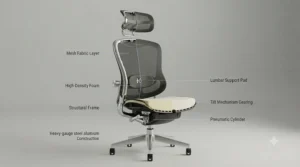
This is where “tilt lock” stops being a single feature and becomes one setting among many: tilt tension control, tilt lock, back angle, back height, synchro tilt, seat height, seat depth, and arm height are all independently adjustable. The synchro tilt mechanism is the key technical detail — it links the seat pan and backrest so they move at a coordinated ratio as you recline, keeping your eyeline and feet properly positioned relative to your desk instead of sliding you forward and down like cheaper single-point tilts often do.
What the spec sheet won’t tell you, but ergonomics research generally backs up, is that synchro-tilt mechanisms are considered more genuinely supportive than simple back-only tilts precisely because they don’t disconnect your hips from your thighs mid-recline. This is the chair for someone who has already tried a budget locking recliner, liked the concept, and now wants to fine-tune every angle independently rather than accept factory presets.
Pros:
- ✅ Synchro tilt keeps posture aligned throughout the recline
- ✅ Independently adjustable seat depth suits varied leg lengths
- ✅ Full tilt tension control alongside the lock itself
Cons:
- ❌ Considerably pricier than mid-range alternatives
- ❌ More adjustment dials means a steeper learning curve
Expect a price in the £450-£600 range for this level of adjustability — it’s a serious investment, so weigh it against your actual daily hours before committing.
7. Steelcase Series 1 — weight-activated tilt with a genuine lifetime warranty
The defining feature is a weight-activated tilt mechanism: rather than manually setting tension, the chair reads your body weight and adjusts resistance automatically, with an additional “boost” setting adding roughly 20% more resistance for those who want firmer support, plus a dedicated upright back lock for focused work. Specs include 4D armrests adjusting in height, width, depth and pivot, adaptive bolstering in the seat foam, and a manufacturer-rated capacity up to 400lb, backed by a lifetime warranty covering parts and labour.
Here’s the honest trade-off: this is the most expensive chair on the list by some margin, and the weight-activated system means there’s technically less manual fine-tuning than the Ergohuman’s fully independent tension dial — it’s designed to get you to “good enough” automatically rather than “perfectly dialled in” manually. For a shared home office, a household with multiple users, or anyone who values a chair they can genuinely expect to still be sitting in a decade from now, the lifetime warranty alone changes the value calculation considerably.
Pros:
- ✅ Weight-activated tilt removes the guesswork
- ✅ Lifetime warranty is genuinely rare in this category
- ✅ 4D arms adjust in every direction that matters
Cons:
- ❌ Highest price point of any chair featured here
- ❌ Less manual tension control than dial-based rivals
Typically priced in the £500-£700 range depending on fabric and configuration, this is very much a long-term investment purchase rather than an impulse buy.
Practical Usage Guide: Setting Up and Living With Tilt Lock
Getting the most out of an office chair with tilt lock isn’t just about buying the right model — it’s about setting it up properly in the first 30 days. Start by finding your tilt tension knob, usually a round dial beneath the seat pan, and adjust it before you touch the lock lever at all. Too loose and the chair will feel like it’s falling backwards under you; too tight and locking it upright barely feels different from a fixed-back chair. Turn it in small increments and lean back after each adjustment until the resistance matches your body weight.
Once tension feels right, test every lock position the lever offers, not just the two extremes. A common first-30-days mistake is treating the mechanism as an on/off switch — fully upright for work, fully reclined for breaks — when the real value sits in the intermediate stops most people never try. Set the chair to a slight recline (roughly 100°-110°) as your default working posture; ergonomics research generally favours a gentle backward lean over bolt-upright sitting for reducing spinal disc pressure over long periods. Re-check the lock lever monthly, since gas cylinders and lever springs can loosen slightly with heavy daily use, and a chair that used to lock crisply but now creeps backward is usually a five-minute fix rather than a sign you need a replacement.
Real-World Scenarios: Who Actually Needs a Locking Recline Chair
Picture Sam, a software developer working ten-hour days from a spare bedroom. For Sam, the priority is a chair that locks firmly upright for deep-focus coding blocks, then unlocks instantly for a five-minute stretch between meetings — something like the Duramont Ergonomic Office Chair or the Ergohuman Eurotech ME7ERG GEN2 fits, since both offer fine-grained tension control alongside the lock itself.
Now picture Priya, a university student sharing a small flat with a desk doubling as a dining table. Budget and space matter more than adjustment depth, so a compact multi-position chair like the Hbada Ergonomic Office Recliner Chair or NOBLEWELL Ergonomic Office Chair makes more sense — genuine lock functionality without premium pricing.
Finally, consider Dave, a larger-framed customer service manager who’s cycled through three budget chairs that all developed a wobbly recline within a year. For Dave, capacity and mechanism durability outweigh price entirely, which points toward the SIHOO M18 Ergonomic Office Chair or GABRYLLY Ergonomic Office Chair, both rated for higher body weights with sturdier locking hardware.
Problem → Solution: Fixing Common Chair Locking Recline Issues
A chair locking recline that won’t hold position is one of the most common complaints in aggregated reviews, and it’s rarely the mechanism’s fault outright — more often it’s tension set too low for your body weight, or a lever not pushed fully into its notch. Try increasing tension first before assuming the chair is faulty.
Another frequent problem is a lock that holds fine when new but starts drifting backward after a few months. This usually points to a loosening lever spring; most tilt lock mechanisms have a small retaining screw beneath the seat that can be tightened with a basic screwdriver, restoring crisp engagement without needing a replacement part.
Some buyers report the chair locking at an angle that feels wrong for their desk height rather than their body. If your locked position leaves your eyes too low or too high relative to your monitor, the fix usually isn’t the chair — it’s pairing seat height adjustment with monitor height, since tilt lock only controls backrest angle, not overall desk ergonomics.
Finally, a genuinely common issue with cheaper multi-position locks is a lever that requires excessive force to engage. If that’s happening consistently, it’s worth checking the mechanism isn’t obstructed by seat padding or a loose bolt before assuming it needs replacing.
How to Choose an Office Chair With Tilt Lock
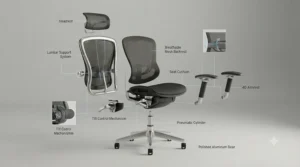
- Check the recline range first. A chair offering 90°-155° gives genuine break-position recline; anything under 120° is really only offering a slight lean, useful for posture variation but not proper rest.
- Look for a separate tilt tension adjustment, not just a lock. Tension control changes how much resistance you feel before the lock engages, which matters far more for comfort than the lock itself.
- Match weight capacity to your actual body weight, not just the marketing number. Manufacturers often quote maximum capacity, but mechanisms feel noticeably tighter and more reliable when you’re comfortably under that ceiling.
- Prioritise synchro-tilt mechanisms for long hours. These link seat and backrest movement so your hips and thighs stay aligned as you recline, rather than sliding you out of position.
- Factor in your desk height, not just the chair. A perfectly locked upright position is useless if your desk forces your shoulders to hunch to reach the keyboard.
- Read aggregated review themes, not star ratings alone. A 4.3-star chair with consistent complaints about lever durability tells you more than a 4.6-star chair with no detailed feedback at all.
- Decide your budget band before you start browsing. Budget multi-position locks, mid-range tension-adjustable locks, and premium weight-activated systems solve genuinely different problems — know which one you actually need before price anchors your decision.
Office Chair Tilt Tension Adjustment Explained
Tilt tension adjustment is the dial, usually located beneath the front or side of the seat, that controls how much effort it takes to recline the backrest before the lock engages. Turning it clockwise typically increases resistance, meaning you need to push harder to tilt back; turning it anticlockwise loosens it, letting the chair recline with minimal effort. This is a genuinely separate feature from the lock itself — you can have a chair with a rock-solid lock and still feel like you’re falling backward every time you lean, if the tension is set too loose for your weight.
Here’s what to weigh: heavier users generally need tension wound tighter to avoid an uncontrolled tilt, while lighter users often find factory-default tension too stiff to recline comfortably at all. Chairs like the Duramont Ergonomic Office Chair and Ergohuman Eurotech ME7ERG GEN2 stand out precisely because their tension knob is independent of the lock lever, letting you dial in resistance without affecting which angles you can actually lock at. On budget chairs, tension is sometimes fixed at the factory, which is worth checking before you buy if your body weight sits toward either extreme of the chair’s rated range.
Multi-Position Recline Lock vs Single-Position Lock: What’s the Real Difference
A single-position lock does exactly one job: it holds the backrest bolt upright, and releases into a free-floating recline everywhere else. That’s genuinely useful for anyone who wants to rock gently while thinking but needs a firm, stable base for typing. A multi-position recline lock, by contrast, lets you choose from several fixed stops — sometimes three or four notches, sometimes a stepless range — anywhere between upright and full recline.
On paper this means multi-position locks are simply “more adjustable,” but that’s not quite the full picture. Reviewers consistently note that stepless locks, like the one on the NOBLEWELL Ergonomic Office Chair, offer more precision but can occasionally slip slightly under sudden weight shifts if the internal ratchet wears over time, whereas fixed-notch systems like the three-stop lock on the Duramont Ergonomic Office Chair trade some flexibility for a more mechanically certain hold. If you tend to change position frequently through the day, a multi-position lock earns its keep. If you mostly want “locked upright” and “free recline” with nothing in between, a simpler single-position system may actually be the more reliable long-term choice.
Reading Reclining Chair Lock Position Listings on Amazon
Amazon listings for office chairs are notoriously inconsistent about how they describe locking behaviour, and it’s worth knowing the common phrasing before you buy. “Tilt lock” alone usually means a single upright lock point. “Multi-position lock” or a specific degree range like “90°-155°” indicates several selectable stops. “Freely locking” or “stepless lock,” as seen on listings like the NOBLEWELL Ergonomic Office Chair, means the mechanism can hold at essentially any angle within its range, not just fixed notches.
What most buyers overlook is that a reclining chair lock position described in a listing title doesn’t always match the tension behaviour described in the bullet points further down — a chair can have a wide lock range and still feel flimsy if tension adjustment isn’t mentioned at all. Before buying, scroll past the headline features to the detailed bullet points and, where available, the Q&A section, since real buyers often ask directly whether the lock holds firmly under body weight — a detail manufacturers rarely volunteer upfront.
Working in the Upright Locked Position: When It Matters
Locking a chair in the fully upright position isn’t just an aesthetic choice — it changes how your spine loads during focused tasks. For anyone doing detailed keyboard work, video calls, or reading fine print on screen, an upright locked position work setup keeps your shoulders stacked over your hips rather than letting momentum pull you backward mid-task, which reduces the small, repeated muscle corrections your body otherwise makes to stay stable.
Based on the spec comparison across this list, chairs with a dedicated upright back lock — like the Steelcase Series 1 — are specifically engineered for this use case, separating “locked for focus” from “reclined for rest” as two genuinely distinct modes rather than opposite ends of one dial. If your work involves long stretches of concentrated typing followed by short breaks, prioritising a firm upright lock over recline range might matter more than the headline degree figures suggest.
Common Mistakes When Buying an Office Chair With Tilt Lock
The most frequent mistake is buying based on recline range alone, without checking tension adjustability — a wide lock range on a chair with fixed, factory-set tension can feel either uselessly stiff or alarmingly loose depending on body weight. A second common error is ignoring weight capacity ratings entirely; a mechanism rated for 250lb will lock less reliably and wear faster under someone closer to that ceiling than one rated for 330lb or more.
Buyers also frequently overlook desk height when choosing a chair, locking the backrest into a seemingly perfect position that then forces awkward wrist or shoulder angles at the keyboard. Finally, many people underestimate how much a lever’s physical location matters day to day — a lock lever tucked awkwardly under the seat edge, out of easy reach, tends to get used far less often than one positioned within easy reach of a relaxed arm, regardless of how good the mechanism itself is.
Long-Term Cost & Maintenance
Cost-per-use is a genuinely useful way to compare these chairs rather than sticker price alone. A budget chair like the Hbada Ergonomic Office Recliner Chair, used daily for two years before the mechanism loosens, works out cheaper per year than it first appears, but a premium chair like the Steelcase Series 1, backed by a lifetime warranty and realistically usable for a decade or more, often wins on total cost of ownership despite the much higher upfront price.
Maintenance is minimal but not nonexistent. Tilt lock levers and tension knobs benefit from an occasional check to confirm the retaining bolts beneath the seat haven’t loosened, particularly on chairs used heavily for over a year. Gas cylinders on any office chair typically last several years but are a common point of failure eventually — worth checking whether a manufacturer sells replacement cylinders separately before you commit, since this affects whether a chair is repairable or effectively disposable once the mechanism fails.
Safety, Regulations and DSE Compliance for UK Home Offices
If you’re setting up seating for yourself or employees working from home in the UK, it’s worth knowing that display screen equipment law specifically requires that the seat back be adjustable in both height and tilt — an office chair with tilt lock isn’t just a comfort upgrade, it directly satisfies part of a legal minimum standard for workstation seating. Employers assessing home-working setups are expected to check that seating meets this bar, not just desk and screen positioning.
Beyond the legal minimum, HSE guidance on workplace back pain notes that musculoskeletal issues are best managed through movement and adjustment throughout the day rather than static positioning, which is exactly the argument for a genuinely functional tilt lock over a fixed-back chair. If you’re responsible for multiple home workstations, a documented DSE self-assessment that specifically notes seat back tilt adjustability is a straightforward way to demonstrate compliance without needing to visit every home setup in person, and the HSE’s full DSE guidance booklet is a genuinely useful free reference for anyone drafting one.
Benefits vs Traditional Fixed-Back Chairs
| Feature | Fixed-Back Chair | Office Chair With Tilt Lock | Best For |
|---|---|---|---|
| Posture variation | None | Multiple locked angles | Long desk hours |
| DSE compliance | Often fails minimum standard | Meets adjustable tilt requirement | UK home/office workers |
| Break comfort | Limited | Genuine recline option | All-day remote work |
| Price | Lower | Moderate to premium | Budget-conscious buyers |
The gap here isn’t subtle: a fixed-back chair simply cannot meet the adjustable-tilt requirement set out in UK workstation law, which makes tilt lock chairs the more defensible choice for anyone setting up a compliant home office. Beyond the legal angle, the ability to genuinely vary posture through the day is one of the more consistently cited recommendations in occupational health guidance for reducing static-sitting discomfort.
✨ Don’t Miss These Exclusive Deals!
🔍 Take your search for the perfect office chair with tilt lock to the next level with the models featured above. Click through on any highlighted chair to check current pricing and availability, and lock in a setup your back will genuinely thank you for.
FAQ
❓ What does tilt lock mean on an office chair?
❓ Is tilt tension the same as tilt lock?
❓ Can I fix an office chair that won't stay locked?
❓ What recline angle is best for working, not just resting?
❓ Do all office chairs with tilt lock meet UK DSE regulations?
Conclusion
An office chair with tilt lock earns its keep in the details most people never think to check before buying: how many positions the lock actually offers, whether tension is adjustable or fixed at the factory, and whether the mechanism is rated for a weight comfortably above your own. Budget picks like the Hbada Ergonomic Office Recliner Chair and NOBLEWELL Ergonomic Office Chair prove that genuine multi-position locking doesn’t require a premium price. Mid-range options like the SIHOO M18 Ergonomic Office Chair, GABRYLLY Ergonomic Office Chair, and Duramont Ergonomic Office Chair add durability and tension control worth paying for if you’re at a desk most of the day. And premium picks like the Ergohuman Eurotech ME7ERG GEN2 and Steelcase Series 1 treat tilt lock as one part of a genuinely comprehensive adjustability system, backed by warranties that reflect long-term confidence in the mechanism.
Whichever price point fits your situation, the underlying principle stays the same: a chair that lets your body move and then hold that position is doing more for your back than any fixed-back alternative ever will, and under UK workstation regulations, it may not just be the better choice — it may be the compliant one.
Recommended for You
- Office Chair Synchro Tilt Mechanism: 7 Best Picks UK 2026
- 7 Best Office Chair With Removable Headrest UK (2026 Picks)
- Office Chair Adjustable Headrest 2026: 7 Real UK Picks
Disclaimer: This article contains affiliate links. As an Amazon Associate, I earn from qualifying purchases. If you purchase products through these links, we may earn a small commission at no additional cost to you.
✨ Found this helpful? Share it with your friends! 💬🤗
