
In This Article
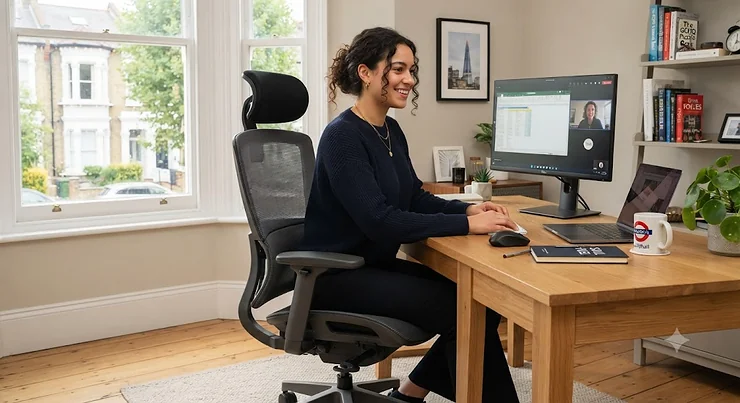
Here’s a confession most furniture guides won’t make: the headrest is the single most divisive part of any desk chair. Some of us can’t work without one propping up the back of our skull during a thinking pause. Others find it jabs into their shoulder blades like an uninvited elbow. An office chair with removable headrest solves this argument before it starts, because you’re not locked into either camp. You get the support when you want it, and a cleaner, lower-back-focused silhouette when you don’t.
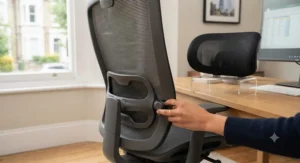
So, what is an office chair with removable headrest? In short, it’s a task or ergonomic chair whose head support attaches via a bracket, clip, or slot rather than being welded into the backrest, meaning you can pop it off entirely, adjust it aggressively, or swap it out if it breaks. That flexibility matters more than the spec sheets let on, particularly if you share a desk, work in a snug home office, or simply change your mind about neck support depending on the task in front of you.
Good posture at a desk isn’t just a comfort issue, either. The Health and Safety Executive’s guidance on display screen equipment makes clear that a properly supportive chair, correctly adjusted, is part of preventing the aches that build up over months of screen work. This guide walks through seven genuinely available chairs, how to weigh them against each other, and where a detachable headrest office chair earns its keep versus where it doesn’t.
Quick Comparison: Office Chairs With Removable Headrest at a Glance
| Chair | Headrest Type | Weight Capacity | Best For |
|---|---|---|---|
| SONGMICS Ergonomic Mesh Chair | Adjustable, clip-fit | Up to 150kg | Tightest budgets |
| TONFARY Ergonomic Office Chair | True removable, snap-off | Around 136kg | Minimalist looks on a budget |
| SIHOO M57 | Adjustable, detachable bracket | Up to 150kg (330lbs) | All-round value |
| GABRYLLY Ergonomic Chair | Adjustable, bracket-mounted | Up to 136kg | Flip-up arm + headrest combo |
| FlexiSpot BIG MAX | Adjustable, removable | Up to 227kg | Larger or taller users |
| Hbada E3 Pro | 4D bi-axial, detachable | Up to 136kg | Fine-tuned neck positioning |
| Nouhaus Ergo3D | 4D adjustable, removable | Up to 136kg | Premium daily use |
A quick scan of that table tells its own story: weight capacity and headrest sophistication climb roughly in step with price, but not always in the direction you’d expect. The FlexiSpot BIG MAX, for instance, undercuts several pricier rivals on capacity precisely because it’s built for bigger frames rather than fussy micro-adjustment. Meanwhile, the TONFARY proves that a genuinely detachable headrest office chair doesn’t have to cost premium money if you’re happy with fewer bells and whistles elsewhere.
💬 Just one click — help others make better buying decisions too!😊
Top 7 Office Chairs With Removable Headrest: Expert Analysis
1. SONGMICS Ergonomic Mesh Chair — best budget entry point
The SONGMICS Ergonomic Mesh Chair keeps things simple, and that’s exactly its appeal. Double-layer breathable mesh covers the back, which matters more than it sounds in a UK summer when a poorly ventilated seat turns into a sauna by mid-afternoon.
On the spec sheet, you’re looking at dynamic lumbar support, a swivel base, and an adjustable headrest rated to around 150kg user weight. What that means in practice is a chair that won’t buckle under an average adult frame, and lumbar support that shifts with you rather than staying rigid in one spot as you lean back to think.
Based on the spec comparison with similarly priced rivals, this is a strong pick for anyone furnishing a first home office or a spare room desk that won’t see eight-hour daily shifts. It’s not trying to be a Steelcase substitute, and it shouldn’t be judged as one.
Reviewers consistently note strong value for money at this price bracket, with the headrest singled out as a pleasant surprise given how often it’s missing entirely on budget chairs. A recurring theme in aggregated feedback is that assembly is straightforward, typically under twenty minutes without specialist tools.
Pros:
- ✅ Genuinely low entry price for a headrest-equipped chair
- ✅ Breathable double-layer mesh suits warmer rooms
- ✅ Dynamic lumbar support moves with your posture
Cons:
- ❌ Padding is thinner than mid-range mesh rivals
- ❌ Armrests are fixed rather than height-adjustable
Price sits in the under-£100 range at the time of research, though prices may vary, so it’s worth checking the current price before assuming that figure holds. For the money, the SONGMICS Ergonomic Mesh Chair is hard to argue with as a starter chair.
2. TONFARY Ergonomic Office Chair — best true click-off headrest
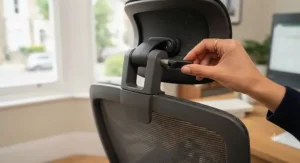
If your priority is a chair where the headrest genuinely detaches rather than merely tilting out of the way, the TONFARY Ergonomic Office Chair is built specifically around that idea, with the manufacturer marketing the removable headrest as a named feature rather than a footnote.
The high-back mesh design pairs with flip-up armrests and a 360-degree swivel base, and the standout here is that the headrest bracket is designed to be lifted clean off the backrest, not just folded flat. That’s a meaningfully different mechanism to chairs where “adjustable” quietly means “always attached, just movable.”
What most buyers overlook about this style of mounting is that it also simplifies cleaning and storage. If you’re rotating the chair between a home desk and, say, a garage workspace, being able to remove the headrest entirely reduces the footprint for transport.
Aggregated review sentiment on this model tends to praise the sturdy swivel action and the ease of the flip-up arms for sliding under a desk, though a minority of users note the mesh seat pan feels firm without a cushion during the first few sittings.
Pros:
- ✅ Headrest is a true snap-off design, not just adjustable
- ✅ Flip-up arms save space when pushed under a desk
- ✅ 360-degree swivel feels solid rather than wobbly
Cons:
- ❌ Seat mesh has minimal give until it’s broken in
- ❌ Lumbar support isn’t independently height-adjustable
Expect a price in the £90-£130 range, though as ever, check the current price at checkout rather than relying on a number printed months ago. For anyone who specifically wants that click-off mechanism, this is one of the clearest matches to the brief.
3. SIHOO M57 — best all-round value pick
The SIHOO M57 has built something of a reputation as one of the most recommended budget-to-mid ergonomic chairs on Amazon UK, and independent testers at outlets including Expert Reviews have singled it out as a best-budget option in their own comparative testing.
Underneath the marketing, the chair offers 3D armrests, adjustable lumbar support, and a detachable headrest bracket, all wrapped in a breathable mesh shell rated to roughly 150kg (330lbs). The 3D armrests are worth dwelling on: unlike the single-position arms on cheaper chairs, these move up, down, and pivot, which matters if you switch between typing and sketching-style tasks through the day.
Here’s what the spec sheet won’t tell you, but reviewers note: the headrest on the M57 is comfortable but sits slightly low for anyone over roughly six feet tall, a pattern that shows up across several SIHOO reviews rather than being a one-off complaint. That’s a useful data point if you’re taller than average and considering this model.
Based on the wider spread of aggregated feedback, the chair is praised for full-day comfort and a surprisingly premium feel given its price bracket, though a subset of buyers report the recline tension knob is stiffer than expected.
Pros:
- ✅ Independently reviewed as a standout budget pick
- ✅ 3D armrests genuinely improve typing and reading comfort
- ✅ Breathable mesh copes well with long sessions
Cons:
- ❌ Headrest sits low for users well above average height
- ❌ Recline tension adjustment can feel stiff out of the box
At the time of research, prices for the SIHOO M57 have ranged from the mid-£100s up to around £230 depending on promotions, so it genuinely pays to check current pricing before buying. As an all-rounder, though, it’s consistently one of the strongest recommendations in this category.
4. GABRYLLY Ergonomic Office Chair — best flip-up arm and headrest combo
The GABRYLLY Ergonomic Office Chair doesn’t have the brand recognition of SIHOO or Hbada, but it’s a genuine lesser-known alternative worth shortlisting, particularly if flip-up armrests are a priority alongside the removable headrest.
Specs-wise, you’re getting a high-back mesh frame, an adjustable and detachable headrest, flip-up arms, and a 90-120 degree tilt lock. That tilt range is narrower than some premium rivals, which cap out closer to 135-155 degrees, and this is worth flagging plainly: if you like reclining nearly flat for a screen break, this isn’t the chair for that habit.
What that tilt limitation means in practice is a chair better suited to focused, upright work than lounging sessions. On the flip side, the narrower range often translates to a firmer, more locked-in feel during active typing, which some users specifically prefer over a chair that rocks too freely.
Reviewers consistently flag the flip-up arms as genuinely useful for anyone squeezing a desk into a small bedroom or box room, since the chair can slide fully under the desk lip when arms are raised. Aggregated sentiment on the headrest itself is mixed but leans positive, with most feedback focused on the fact it exists at all in this price bracket rather than any dramatic complaint.
Pros:
- ✅ Flip-up arms plus removable headrest in one budget chair
- ✅ Firm tilt lock suits focused, upright typing sessions
- ✅ Slides fully under low desks when arms are raised
Cons:
- ❌ Tilt range is narrower than most recline-focused rivals
- ❌ Fewer third-party reviews than the bigger-name brands
Pricing typically sits in the £80-£150 range, subject to change, so treat that as a guide rather than gospel and confirm the current price before ordering. It’s a sensible pick for smaller rooms where space efficiency matters as much as comfort.
5. FlexiSpot BIG MAX — best for larger or taller users
FlexiSpot has built its UK reputation primarily on standing desks, and that engineering background shows up in the FlexiSpot BIG MAX, a heavy-duty ergonomic chair with a 227kg weight capacity that dwarfs most rivals on this list.
The wide seat pan, reinforced base, and adjustable lumbar support are clearly aimed at users who’ve found standard-width chairs uncomfortable or, worse, structurally worrying. On paper, this means a chair that won’t sag or wobble under sustained heavier use, and a gas lift and casters rated for the extra load rather than repurposed from a lighter model.
Based on the spec comparison with the rest of this list, the BIG MAX earns its “Best For” tag on capacity alone, but the removable headrest and breathable mesh back mean it doesn’t sacrifice the ergonomic basics to get there. That combination, wide-format build plus proper adjustability, is genuinely uncommon at this price point.
Aggregated customer sentiment has been notably strong, with early buyers rating build quality and the sense of stability highly; a recurring comment is relief at finding a chair that doesn’t feel undersized for a bigger frame without tipping into “industrial and unstylish” territory.
Pros:
- ✅ 227kg weight capacity, well above typical chair ratings
- ✅ Wide seat pan suits broader or taller body types
- ✅ Reinforced base reduces wobble under heavier loads
Cons:
- ❌ Larger footprint needs more floor space around the desk
- ❌ Less widely available in every colourway at once
At the time of research, the BIG MAX has been seen around the £150-£240 range, sometimes discounted from a higher RRP, so check the current price and any active promotion before purchase. If standard chairs have ever felt undersized, this is worth serious consideration.
6. Hbada E3 Pro — best for fine-tuned neck positioning
The Hbada E3 Pro leans hard into adjustability, and its headline feature, a 4D bi-axial detachable headrest, is genuinely more sophisticated than the single-axis brackets found on most of this list. It slides forward and back by roughly 5.5cm and up and down by around 4.5cm, on top of a 70-degree rotation.
What that spec means in real terms is precision: rather than roughly guessing where the headrest should sit, you can walk it into the exact spot where your neck naturally rests, then lock it there. Paired with 3-zone dynamic lumbar support and a 140-degree recline, this is a chair built for people who’ve tried cheaper options and found the “one-size-fits-most” headrest positioning frustrating.
Here’s what most buyers overlook about this level of adjustability: it takes longer to dial in correctly than a simpler chair, and if you’re sharing the chair with a partner or housemate of a very different height, you’ll be resetting it more often than you’d like.
Aggregated reviews are broadly enthusiastic about comfort and the T-Shape support system, though a genuine and recurring complaint involves the headrest locking mechanism becoming loose or “floppy” on a minority of units after moderate use, an issue serious enough that it’s worth checking your statutory return rights before the window closes if you experience it.
Pros:
- ✅ 4D headrest adjustment is the most precise on this list
- ✅ 3-zone lumbar support genuinely adapts through the day
- ✅ 140-degree recline suits both work and short breaks
Cons:
- ❌ A minority of units report headrest locking mechanism faults
- ❌ Pricing has fluctuated sharply on the marketplace listing
The E3 Pro has been observed anywhere from the mid-£300s to the mid-£400s depending on promotions and listing changes, so this is one where checking the current price immediately before buying really matters. For neck-positioning precision specifically, though, it’s the strongest option here.
7. Nouhaus Ergo3D — best premium all-rounder
Rounding out the list, the Nouhaus Ergo3D brings a genuinely premium feel without stepping into four-figure executive-chair territory. The 4D adjustable armrests and adjustable, removable headrest sit alongside a high-back mesh frame designed for daily, full-time use rather than occasional sitting.
Specs worth dwelling on: the headrest adjusts independently for height and angle, and the mesh back is engineered for airflow across the full width of the backrest rather than just a central panel, which in practice means fewer hot spots on your back during long calls.
Based on the spec comparison with the rest of this list, the Ergo3D sits closest in spirit to the Hbada E3 Pro on adjustability but trades a little of that precision for what reviewers describe as a more forgiving, cushioned sit, better suited to people who want comfort without constant micro-adjustment.
Reviewers consistently note the build quality feels a step above typical Amazon marketplace chairs, with several long-term owners specifically highlighting that the removable headrest has held its position well over months of use, addressing a common weak point seen elsewhere on this list.
Pros:
- ✅ Headrest position holds firm over long-term use
- ✅ 4D armrests genuinely adjust to task, not just height
- ✅ Full-width mesh backrest reduces heat build-up
Cons:
- ❌ Sits at the higher end of the price bracket for this list
- ❌ Wider frame may feel bulky in a compact room
Prices have typically sat in the £300-£400 range at the time of research, though as with every entry here, check the current price before ordering. For anyone treating the chair as a genuine long-term investment, it’s a strong finishing note to this round-up.
Practical Usage Guide: Setting Up and Maintaining Your Detachable Headrest Office Chair
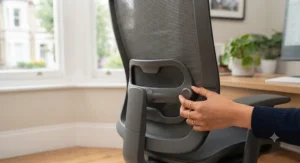
Getting a detachable headrest office chair right isn’t just about unboxing it. Start by setting seat height first, before touching the headrest: your feet should sit flat on the floor with knees roughly level with your hips. Only once that’s locked in should you attach and position the headrest, because adjusting it before the seat is right means you’re aiming at a moving target.
For first use, resist the urge to crank the headrest as high as it will go. Aim for the point where it meets the base of your skull when you’re sitting upright, not your neck or shoulders. If you tend to lean back through the day, angle it slightly forward so it meets your head naturally during recline rather than forcing your chin down.
On maintenance: most detachable brackets use a plastic clip or notched slider, and these are the first thing to wear if you remove and refit the headrest repeatedly. A common mistake in the first 30 days is over-tightening the locking screw, which can crack cheaper plastic housings. Snug is enough; you shouldn’t need tools to reseat it under normal use.
If you’re not using the headrest at all for stretches of time, storing it somewhere dry rather than leaving it loosely clipped on prevents the bracket teeth from slowly rounding off, which is the single most common reason a “removable” headrest eventually stops staying put.
Real-World Scenarios: Who Actually Needs a Convertible Headrest Chair?
Picture three different people at three different desks. The first is a university student in a shared house, working from a bedroom desk that doubles as a dressing table. For her, a convertible headrest chair Amazon shoppers can order and return easily is ideal, because the headrest comes off entirely when she wants the chair to look less “office” and more like normal bedroom furniture during downtime.
The second is a 6’3″ software developer working ten-hour days. He needs the headrest attached and precisely positioned for most of his working hours, but values being able to remove it entirely during focused coding sprints when he leans forward and the headrest simply gets in the way of his shoulder movement. His priority sits squarely on headrest preference flexibility rather than looks.
The third is a couple sharing a home office on alternating days. One partner is 5’2″ and finds any headrest uncomfortable; the other is 6’1″ and relies on one for neck support during video calls. A genuinely detachable design means the chair adapts to whoever’s sitting in it that day, rather than compromising for both or forcing a second chair purchase entirely.
Across all three scenarios, the common thread isn’t budget or brand, it’s that a fixed, non-removable headrest quietly narrows who a chair actually works for. Removability turns a single-user chair into something closer to a shared, adaptable piece of furniture.
Problem → Solution: Fixing Common Headrest Complaints
Problem: the headrest digs into my shoulders, not my neck. This almost always means the headrest is mounted too low or the seat itself is too high relative to your desk. Lower the headrest bracket first before assuming the chair itself is wrong for you; on most of the chairs above, this is a five-second slider adjustment.
Problem: the headrest keeps slipping out of position. As covered in the usage guide above, this is typically a worn bracket from repeated removal, or a locking screw that was never fully tightened at assembly. Check the fixing hardware before assuming the whole unit is faulty.
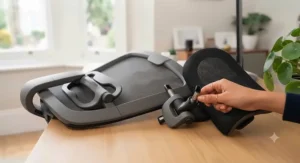
Problem: I don’t want a headrest at all, but the chair only comes with one attached. This is precisely the scenario a removable design solves. On chairs like the TONFARY or GABRYLLY, simply detach it and store it; the backrest is designed to look finished without it, unlike chairs where the headrest is welded on and removing it would leave an obvious gap or exposed bracket.
Problem: two people share the chair and need different headrest heights. Rather than resetting the headrest daily, some users find it faster to remove it entirely for the shorter user and reattach it for the taller one, particularly on chairs with tool-free clip mechanisms like the SONGMICS or SIHOO M57.
Problem: the headrest feels flimsy compared to the rest of the chair. This is a legitimate quality gap on some budget models, since the head support is often the last component engineers cost-optimise. If this is a recurring frustration, prioritise chairs like the Nouhaus Ergo3D, where aggregated reviews specifically praise long-term bracket stability.
How to Choose an Office Chair With Removable Headrest
- Check your height against the headrest’s adjustment range first. A chair with only 3-4cm of vertical travel may simply never reach a comfortable spot if you’re outside the average height band, regardless of price.
- Confirm the mechanism is genuinely removable, not just tilting. Product listings use “adjustable” and “removable” almost interchangeably, so look for language like “detachable,” “snap-off,” or “clip-fit” if full removal matters to you.
- Match weight capacity to your actual body weight with margin, not exactly. A chair rated right at your weight will wear out faster; aim for at least 15-20% headroom above your weight for longevity.
- Prioritise mesh if your room runs warm, padding if it runs cold. This sounds trivial, but it’s one of the most common regret-purchases reviewers mention months into ownership.
- Decide your recline needs before comparing tilt ranges. If you never lean back, a 90-120 degree chair like the GABRYLLY is fine; if you take screen breaks reclined, look toward the 140-degree-plus options like the Hbada E3 Pro.
- Read aggregated reviews specifically for the headrest bracket, not just overall ratings. A chair can average 4.5 stars overall while having a known, recurring headrest fault buried in the detail.
- Factor in return policy generosity, not just price. Because headrest comfort is genuinely subjective, being able to trial the chair for a fortnight matters more here than on almost any other furniture purchase.
Detachable Headrest vs Fixed Headrest vs No Headrest at All
It’s worth being honest about the alternatives, because a detachable headrest office chair isn’t automatically the right answer for everyone. Fixed-headrest chairs are typically slightly cheaper to manufacture and, because there’s no moving bracket, marginally less prone to that “floppy after six months” complaint that shows up in reviews of adjustable models. If you know your ideal headrest height and never plan to change it, a well-fitted fixed design can outlast a removable one.
No-headrest chairs, meanwhile, are the choice of a specific camp of ergonomics enthusiasts who argue that a well-designed high-back mesh chair supports the upper back and neck through posture alone, making a headrest largely decorative for anyone who isn’t actively reclining. There’s a reasonable case here: a headrest used incorrectly, propping the head too far forward, can arguably do more harm than good.
Where removable designs win decisively is flexibility across people, tasks, and moods. You get the option to test both states without buying two chairs, which matters given how personal headrest preference genuinely is. The trade-off is a slightly higher failure point at the bracket itself, and, on some budget models, a small amount of wobble in the headrest that a fixed unit wouldn’t have. For most home workers weighing this up, the flexibility outweighs that minor mechanical compromise, but it’s a real trade-off rather than a free upgrade.
Chair Optional Neck Rest: When Less Support Is Actually More
There’s a growing minority view among ergonomics-focused buyers that an optional neck rest, one you can remove rather than one that’s simply low-profile, suits certain working styles better than permanent support. If you spend most of your day leaning forward toward a keyboard rather than reclining, a headrest sitting unused behind your head does nothing functional and can even encourage a habit of pushing your chin forward to avoid contact with it.
For this group, the appeal of a chair optional neck rest setup isn’t about avoiding headrests altogether, it’s about choosing when they’re present. Removing the headrest during intensive typing sessions and reattaching it for video calls or reading breaks, when leaning back is more natural, is a genuinely practical middle ground that a fixed-headrest chair simply can’t offer.
This is also relevant for anyone with a smaller frame, where a standard headrest sits awkwardly high regardless of adjustment range. Removing it entirely and relying on a well-shaped high-back mesh panel for upper-back support, as tested favourably by Which?’s independent office chair testing, can be a more comfortable long-term solution than fighting with a headrest that never quite reaches the right spot.
Minimalist Ergonomic Chair Design: The Case for Going Headrest-Free
Not every home office wants to look like a corporate call centre, and this is where a minimalist ergonomic chair identity genuinely matters to buyers, not just aesthetically but functionally. Several of the chairs on this list, once the headrest is detached, present a noticeably cleaner silhouette: a simple curved back, no protruding bracket, and a lower overall profile that suits open-plan living spaces or smaller rooms where a tall headrest visually dominates.
The TONFARY and GABRYLLY in particular were designed with this dual identity in mind, functioning as a full-support chair with the headrest attached and a leaner, more streamlined seat without it. That’s a meaningfully different design philosophy to chairs where the headrest is a permanent structural element and removing it, even if technically possible, would leave an obviously unfinished-looking gap.
What most buyers overlook about minimalist design in this context is that it’s not purely cosmetic. A lower visual profile often means a chair tucks further under a desk, which matters in genuinely small UK box rooms where every centimetre of clearance counts. If you’ve ever measured a home office and found a standard high-back chair simply looks oversized in the space, this dual-mode approach is worth prioritising over pure ergonomic spec-chasing.
Common Mistakes When Buying a Detachable Headrest Office Chair
The most frequent mistake is buying based on the headrest photo alone rather than checking the stated adjustment range in centimetres. Listings often show the headrest in its most flattering, mid-range position, which tells you nothing about whether it will reach a genuinely comfortable spot for your specific height.
A second common error is ignoring weight capacity because “it looks sturdy enough.” Photos can’t convey gas-lift quality or base reinforcement, and a chair rated below your actual body weight will not just feel unstable, it can genuinely fail prematurely, voiding warranty claims in the process.
Buyers also frequently overlook return windows on chairs specifically because of headrest comfort, assuming that if the rest of the chair feels fine in the room, the headrest will “settle in.” Unlike a seat cushion, which does soften with use, a headrest bracket’s geometry doesn’t change over time, so if it’s uncomfortable on day one, it’s likely to stay that way.
Finally, a subtler mistake is assuming all “adjustable” headrests are removable, and vice versa. As covered earlier, these are genuinely different mechanisms, and conflating them leads directly to disappointment if full removal was the actual priority behind the purchase.
Desk Chair Versatility: One Chair, Multiple Jobs
Desk chair versatility is arguably the most underrated selling point of the removable headrest category, because modern home offices rarely stay purely “office.” The same chair might host a work call at 9am, a gaming session at 7pm, and double as extra seating when guests visit at the weekend, and each of those roles benefits from a slightly different headrest configuration.
For gaming or extended reclined sessions, an attached, well-positioned headrest genuinely helps, supporting the skull during backward tilt in a way a bare mesh back can’t replicate. For focused work, particularly typing-heavy tasks, many users find the headrest entirely unnecessary and, as discussed above, occasionally counterproductive if it encourages forward head posture.
This is where models like the Hbada E3 Pro and Nouhaus Ergo3D earn their keep beyond the spec sheet: their headrests are quick enough to detach and reattach that switching modes through the day is genuinely practical, not a five-minute wrestle with an Allen key. If your desk chair needs to flex between roles, prioritise ease of removal specifically, not just the presence of a removable option somewhere in the listing.
Long-Term Cost & Maintenance of Removable Headrest Chairs
It’s worth thinking about total cost of ownership rather than sticker price alone. A £90 chair that needs replacing within eighteen months because the gas lift or castors fail works out more expensive per year of use than a £250 chair that lasts five years, even before factoring in the hassle of reordering and reassembling.
Replaceable headrest parts are, ironically, one of the better cost-saving features on this list. Several manufacturers, including Duramont in the wider market and some SIHOO listings, have confirmed via customer service channels that snapped or worn headrest components can be replaced individually rather than requiring a whole new chair, a detail worth checking before you buy if long-term repairability matters to you.
Maintenance costs stay low across this category generally: mesh backs need only occasional vacuuming, and the moving parts, gas lift, tilt mechanism, castors, rarely need anything beyond an occasional check that bolts haven’t worked loose. Where cost genuinely creeps in is with heavier daily use chairs like the FlexiSpot BIG MAX, where the reinforced components justify a higher upfront price precisely because they’re built to avoid the wear that shortens cheaper chairs’ lifespans.
Safety, Regulations and DSE Compliance for UK Home Offices
For anyone working from home in the UK, it’s worth knowing that the Health and Safety (Display Screen Equipment) Regulations 1992 place duties on employers to assess home workstations, chairs included, where staff use screens for continuous or near-continuous periods of an hour or more. A chair that can’t be height-adjusted, or that fails to give adequate back support, technically fails that assessment regardless of how comfortable it looks.
While most of the chairs on this list are consumer purchases rather than employer-provided equipment, the same underlying principles apply for anyone self-employed or simply trying to protect their own long-term health. Persistent poor posture is a genuine contributor to the kind of musculoskeletal discomfort covered in NHS guidance on back pain, and a correctly fitted chair, headrest included where relevant, is one of the more straightforward preventative steps available.
If you work for an employer and your home setup falls short, it’s also worth knowing that support may be available; the government’s Access to Work scheme can, in some circumstances, help fund workplace adjustments including seating for people whose health condition affects how they work. It’s a route worth investigating rather than assuming a comfortable chair has to come entirely out of your own pocket.
Frequently Asked Questions
❓ Is a removable headrest office chair worth it over a fixed one?
❓ Can I fit a detachable headrest to any office chair?
❓ Do office chairs with removable headrests cost more than standard chairs?
❓ What height should the headrest sit at on an ergonomic office chair?
❓ Will removing the headrest damage the chair or void the warranty?
Conclusion
An office chair with removable headrest isn’t a niche preference, it’s a genuinely practical answer to how differently people actually sit, work, and share their spaces. Across the seven chairs covered here, from the budget-friendly SONGMICS through to the premium-feeling Nouhaus Ergo3D, the common thread is that removability turns a single-fit product into something closer to adjustable furniture, capable of suiting more than one body, mood, or task without a second purchase.
If you take one thing away from this guide, let it be this: check the mechanism, not just the marketing word. “Adjustable” and “removable” aren’t the same promise, and knowing which one you actually need before you buy will save more comfort headaches than any single spec on the page. Whichever of these seven you land on, prioritising a chair that adapts to you, rather than the other way around, remains the whole point of ergonomic seating in the first place.
✨ Don’t Miss These Exclusive Deals!
🔍 Take your home office setup to the next level with these carefully selected chairs. Click on any highlighted item to check current pricing and availability on Amazon. A properly supportive, adaptable chair is one of the simplest upgrades you can make to your working day!
Recommended for You
- Office Chair With 4D Armrests: 7 Best Picks Tested for 2026
- Best Office Chair Dynamic Lumbar Support: 7 Picks for 2026
- Office Chair Adjustable Lumbar Support: 7 Best Picks 2026
Disclaimer: This article contains affiliate links. As an Amazon Associate, I earn from qualifying purchases. If you purchase products through these links, we may earn a small commission at no additional cost to you.
✨ Found this helpful? Share it with your friends! 💬🤗
