
In This Article
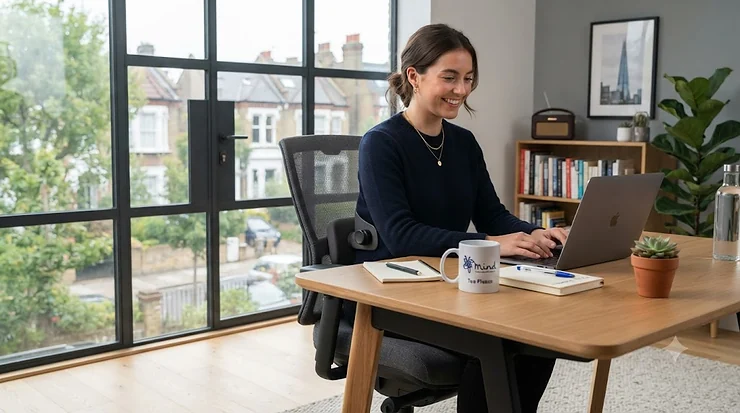
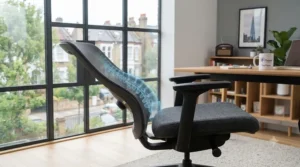
An office chair dynamic lumbar support system is a backrest mechanism that continuously adjusts to your lower spine as you move, rather than staying fixed in one spot. Instead of a static pad that only supports you correctly when you sit perfectly still, a dynamic mechanism tracks your recline, your lean, your fidgeting, and keeps contact with your lower back throughout. It’s a small distinction on paper, but anyone who has felt a “gap” open up between their sacrum and a cheap mesh chair mid-afternoon knows exactly why it matters.
We’ve dug through spec sheets, aggregated review sentiment, and real UK retail listings to find seven genuinely different takes on this idea, from Steelcase’s engineering-heavy Core Equalizer down to budget mesh chairs under £250 that borrow the same principle. According to NHS guidance on back pain, sitting in a chair that doesn’t provide enough back support is a recognised trigger for lower back discomfort, and with UK office workers spending the bulk of a working day seated, the mechanism behind your lumbar support arguably matters more than almost any other spec on the chair.
This guide covers active lumbar support chairs, live lumbar mechanism chairs, and responsive lumbar ergonomic chairs across three price tiers — budget mesh options for a first home office upgrade, mid-range picks that balance genuine engineering with sensible pricing, and premium models built for people who sit eight-plus hours a day and want the mechanism to disappear into the background entirely. We’ve also covered the practical side: how to actually set one of these chairs up correctly, common buying mistakes, and what UK workplace regulations say about seating in the first place.
Quick Comparison Table
| Product | Best For | Lumbar Mechanism | Weight Capacity | Price Range |
|---|---|---|---|---|
| Steelcase Gesture | Widest range of postures, premium build | Core Equalizer + 3D LiveBack | 190kg | £1,100-£1,400 |
| Herman Miller Sayl | Flexible, lightweight all-rounder | Elastomer suspension back | 136kg | £700-£900 |
| X-Chair X2 K-Sport | Automatic, self-adjusting lumbar | Dynamic Variable Lumbar (DVL) | 158kg | £700-£900 |
| FlexiSpot ErgoX Pro | Maximum manual fine-tuning | 5D adjustable dynamic lumbar | 250kg | Around £399 |
| SIHOO Doro C300 Pro V2 | Full-body adaptive tracking | DynaCore + SyncroFlex 2.0 | 136kg | £400-£450 |
| FlexiSpot C7 | Balanced mid-range value | Self-adaptive lumbar cushion | 136kg | £280-£380 |
| SIHOO Doro C300 | Budget entry point | Self-adaptive BM Tracking | 150kg | £220-£280 |
Scanning across the mechanism column, there’s a genuine split in engineering philosophy here. Chairs like the X-Chair X2 and SIHOO Doro C300 aim for full automation — the lumbar reads your weight and movement and adjusts itself with no input from you. Others, like the FlexiSpot ErgoX Pro, lean into manual precision, giving you five points of control so you dial in exactly where and how firmly the support sits. Neither is objectively superior; it depends whether you’d rather set it once and forget it, or fine-tune it to the millimetre.
💬 Just one click — help others make better buying decisions too! 😊
Top 7 Office Chairs With Dynamic Lumbar Support: Expert Analysis
1. Steelcase Gesture — the widest posture range with a genuine live lumbar mechanism
The Steelcase Gesture built its reputation on a simple observation: modern desk work involves far more postures than a chair designed decades ago ever accounted for. Its Core Equalizer connects the backrest and seat into a single responsive system, so lumbar contact doesn’t disappear the moment you recline, lean sideways to grab a mouse, or twist to answer a phone. Steelcase calls this 3D LiveBack, and it’s genuinely one of the more sophisticated live lumbar mechanism chairs on the market, built following a global posture study of over 2,000 people.
What most buyers overlook about the Gesture is that its headline feature isn’t actually the lumbar support in isolation — it’s the 360-degree armrests, engineered to mimic the human arm’s range of motion, which reviewers consistently single out as best-in-class for supporting phone and tablet use without slouching. Based on the spec comparison, the trade-off is that several independent reviewers, including TechRadar’s testing team, note that the Gesture’s dedicated lumbar firmness is comparatively subtle through the padded backrest compared with mesh-backed rivals — it’s there, but it’s not an aggressive push into your lower back the way some competitors are.
Aggregated feedback consistently praises the 12-year mechanism warranty and lifetime frame cover, reflecting genuine confidence in long-term durability, though several owners note the unlabelled adjustment levers take a session or two to learn.
Pros:
- ✅ Core Equalizer keeps lumbar contact through the deepest recline
- ✅ Industry-leading 360-degree armrest articulation
- ✅ Lifetime frame warranty, 12 years on mechanisms
Cons:
- ❌ Lumbar firmness feels subtle compared with mesh rivals
- ❌ Unlabelled controls take time to learn
At roughly £1,100-£1,400 for the base configuration, the Gesture sits at the top of this list on price, but for anyone switching constantly between desktop work, phone calls, and tablet use, the breadth of postural support genuinely justifies the outlay.
2. Herman Miller Sayl — the flexible spine support mechanism built like a suspension bridge
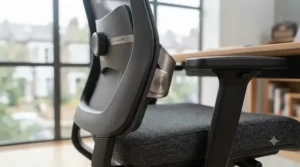
The Herman Miller Sayl takes an unusual engineering approach: rather than a rigid frame with a lumbar pad bolted on, its backrest is built from flexible elastomer strands, inspired directly by suspension bridge cabling, with tension that varies across the back to naturally echo your spine’s curve. It’s one of the more distinctive flexible spine support mechanisms available, and paired with Herman Miller’s Harmonic Tilt, it lets you dial in exactly how much resistance you feel on recline without a separate lumbar dial to fuss with.
Based on the spec comparison, what most buyers overlook is that the Sayl was originally designed as an affordable, lighter-weight alternative to Herman Miller’s flagship Aeron and Embody chairs, which shows in its lower weight capacity and simpler seat cushioning. Reviewers consistently describe the flexible back as “firm and flexible at once,” a combination that’s hard to replicate with a conventional pad-and-frame design, and it particularly suits people who dislike the sensation of a distinct lumbar bump pressing into their back.
A recurring theme in aggregated sentiment is that taller users, particularly those over 6’2″, sometimes find the fixed-height backrest doesn’t reach quite high enough, since unlike some rivals here it doesn’t offer independent lumbar height adjustment — the flex simply follows your natural curve wherever you sit.
Pros:
- ✅ Elastomer back flexes naturally with your spine’s shape
- ✅ Distinctive, lightweight design that suits smaller home offices
- ✅ Harmonic Tilt lets you fine-tune recline resistance easily
Cons:
- ❌ No independent lumbar height adjustment
- ❌ Taller users may find backrest height limiting
Typically found in the £700-£900 range (Herman Miller runs periodic promotions worth watching for), the Sayl remains one of the more design-forward entries here, trading raw adjustability for an elegantly simple flexible support system.
3. X-Chair X2 K-Sport — genuine self-adjusting back support with zero manual input
The X-Chair X2 is built entirely around its patented Dynamic Variable Lumbar (DVL) system, which X-Chair markets as needing no adjustment at all — it responds automatically to your weight, height, seated position, and the pressure you place on it every time you move. This makes it one of the purest examples of self-adjusting back support on this list; where most rivals require you to lock in a lumbar position, the X2’s DVL simply tracks you continuously.
What the spec sheet won’t tell you, but aggregated reviewer sentiment consistently confirms, is that the DVL takes some acclimatisation if you’re coming from a chair with a fixed lumbar bump — several reviewers note it feels noticeably different underfoot (or rather, under-back) for the first week before it starts to feel invisible. Based on the spec comparison, X-Chair’s Extensive Variable Recline (EVR) and 4-dimensional armrests round out a genuinely premium adjustment package, and the mesh-backed model breathes considerably better than fully upholstered rivals like the Gesture.
Reviewers consistently note that X-Chair sells primarily direct from the US, so UK buyers should factor in import costs and potentially longer delivery windows compared with UK-stocked brands, which is worth checking directly with the retailer before ordering.
Pros:
- ✅ DVL genuinely requires zero manual lumbar adjustment
- ✅ 4-dimensional armrests among the most adjustable available
- ✅ Breathable flex mesh performs well in warm rooms
Cons:
- ❌ Primarily sold direct from the US; factor in import logistics
- ❌ DVL sensation takes a week or so to feel natural
Expect to pay in the £700-£900 range including shipping to the UK, positioning it as a genuine automatic-lumbar alternative to the Gesture at a somewhat lower price point.
4. FlexiSpot ErgoX Pro — the most precisely responsive lumbar ergonomic chair for manual tuning
Where the X-Chair automates everything, the FlexiSpot ErgoX Pro goes the other direction: five-dimensional lumbar adjustment that lets you control height, depth, and angle independently, which reviewers consistently flag as the standout feature of the range. This is a genuinely responsive lumbar ergonomic chair in the sense that it responds precisely to however you configure it, rather than reading your body automatically — a meaningful difference worth understanding before you buy.
Based on the spec comparison, the reinforced steel frame and 250kg weight capacity put the ErgoX Pro in a different structural category to most chairs at this price, and the built-in retractable footrest is a genuinely useful inclusion rather than a gimmick, according to UK reviewer coverage. What most buyers overlook is that this level of manual precision has a real learning curve: getting the lumbar dialled in correctly took deliberate trial and error according to aggregated feedback, rather than working perfectly on the first sit.
A recurring theme in reviewer commentary is that the ErgoX Pro prioritises structure and adjustability over plush comfort — this isn’t a chair that feels soft or forgiving out of the box, and it suits people who specifically want firm, correctable support over a cushioned, sink-in feel.
Pros:
- ✅ 5D lumbar control offers genuinely precise fine-tuning
- ✅ Reinforced frame supports up to 250kg
- ✅ Built-in retractable footrest included as standard
Cons:
- ❌ Takes real trial and error to find your ideal lumbar setting
- ❌ Firm, structured feel rather than plush comfort
At around £399 in the UK, the ErgoX Pro undercuts the premium tier substantially while offering adjustment depth that arguably rivals chairs costing two or three times as much.
5. SIHOO Doro C300 Pro V2 — movement-responsive lumbar tracking at a mid-range price
The SIHOO Doro C300 Pro V2 is built around what SIHOO calls Self-Adaptive Dynamic Lumbar Support 2.0, paired with a DynaCore system that coordinates the seat, backrest, and lumbar zone together rather than as separate adjustable parts. It’s a genuinely movement-responsive lumbar design: when you recline, the lumbar pad slides downward with your centre of gravity, specifically engineered to eliminate the sacrum gap that plagues cheaper mesh chairs during recline.
What most buyers overlook is that the V2 offers three distinct lumbar modes — firm, gentle, and an extended sacrum-support setting — rather than a single fixed tracking behaviour, which is more configurability than most chairs in this price bracket offer. Based on the spec comparison against the standard C300 below, the V2’s 8-dimensional “bionic” armrests are a genuine step up, tilting to support forearms during reclined use and rotating a full 360 degrees, a feature typically reserved for chairs costing considerably more.
Reviewer commentary consistently flags that the V2’s warranty runs shorter than the standard Doro line — three years rather than five — a trade-off for the additional engineering, and one worth weighing if long-term coverage matters more to you than the extra adjustability.
Pros:
- ✅ Lumbar tracks centre of gravity through the full recline arc
- ✅ Three selectable lumbar support modes
- ✅ 8D armrests tilt to support reclined positions
Cons:
- ❌ Shorter three-year warranty than the standard Doro C300
- ❌ Headrest sits low for users over roughly 6’3″
Priced around £400-£450 in the UK, the Pro V2 positions itself as a genuine mid-tier rival to considerably pricier automated-lumbar chairs, without quite reaching premium-tier pricing.
6. FlexiSpot C7 — the balanced active lumbar support chair for most home offices
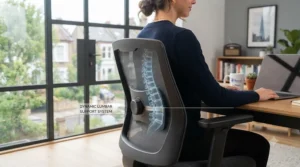
The FlexiSpot C7 has built a strong reputation as one of the more balanced active lumbar support chairs available, combining a self-adaptive lumbar cushion with genuinely comprehensive adjustment across seat depth, armrests, tilt tension, and headrest. Independent UK reviewers, including Expert Reviews and T3, consistently rate it as comfortable and supportive, even while flagging that some of its adjustment mechanisms feel less intuitive than the price might suggest.
Based on the spec comparison, what sets the C7 apart from cheaper mesh chairs is that its lumbar mechanism moves with your micro-adjustments throughout the day, consistently maintaining contact rather than losing it the moment you stop sitting perfectly upright — precisely the behaviour that defines a genuinely dynamic system rather than a marketing label. Reviewers consistently note the lumbar adjustment switch is awkwardly positioned behind the mesh, requiring a bit of blind reaching until you learn its location, though the tilt adjustment lever nearby is much more accessible.
A recurring theme in aggregated feedback is that the C7’s build quality, while solid, doesn’t match the precision glide and premium materials of Steelcase or Herman Miller chairs — a fair trade-off most reviewers consider reasonable given the price gap involved.
Pros:
- ✅ Lumbar mechanism tracks micro-adjustments throughout the day
- ✅ Comprehensive adjustability including seat depth and 4D armrests
- ✅ 10-year warranty reflects genuine build confidence
Cons:
- ❌ Lumbar adjustment switch is awkwardly positioned
- ❌ Build quality trails premium brands noticeably
At £280-£380 depending on configuration and current promotions, the C7 remains one of the strongest all-round value picks in this entire roundup.
7. SIHOO Doro C300 — the budget entry point with genuine self-adaptive lumbar tracking
The standard SIHOO Doro C300 is the budget anchor of this list, and reviewers consistently note it punches well above its price for a chair with genuine self-adaptive lumbar tracking rather than a simple fixed pad. Its BM Tracking System follows your movement and continuously adjusts the lumbar zone to align with your spine’s curve, a meaningfully more sophisticated approach than most chairs under £300 attempt.
What most buyers overlook is that the C300 holds twelve patents and carries German TÜV certification alongside EU REACH and EN1335 compliance, which is unusually thorough documentation for a budget-tier chair. Based on the spec comparison with its pricier Pro V2 sibling above, the standard C300 drops the eight-directional armrests down to a simpler three-way adjustment and removes the multi-mode lumbar selector, but retains the core self-adaptive tracking that defines the range.
Aggregated reviewer sentiment does flag that the armrests are a genuine weak point — several owners describe them as too loosely locked, shifting position when nudged rather than staying firmly set, which is worth testing carefully if precise arm positioning matters to your setup.
Pros:
- ✅ Genuine self-adaptive lumbar tracking well under £300
- ✅ TÜV-certified with EN1335 compliance documentation
- ✅ Five-year warranty, longer than its own Pro V2 sibling
Cons:
- ❌ Armrests shift position too easily when nudged
- ❌ Fewer lumbar modes than pricier siblings
Typically listed around £220-£280 (watch for regular promotional pricing), the standard Doro C300 is the sensible starting point for anyone curious whether dynamic lumbar tracking is worth the upgrade before committing to a pricier model.
Full Spec Comparison: Adjustment Range and Build
| Product | Armrest Adjustment | Recline Range | Frame Material | Warranty |
|---|---|---|---|---|
| Steelcase Gesture | 360° full articulation | Deep synchronised recline | Steel/composite | Lifetime frame, 12yr mechanism |
| Herman Miller Sayl | 2D height/width | Harmonic Tilt, adjustable tension | Recycled polymer/aluminium | 12-year |
| X-Chair X2 K-Sport | 4D | Extensive Variable Recline | Steel frame, mesh back | 5-year mechanism |
| FlexiSpot ErgoX Pro | 3D | Multi-position tilt lock | Reinforced steel | Multi-year (region dependent) |
| SIHOO Doro C300 Pro V2 | 8D bionic | 135° auto-calibrating | Steel/PA fibre | 3-year |
| FlexiSpot C7 | 4D, 360° rotation | 5 locking positions | Steel/mesh | 10-year |
| SIHOO Doro C300 | 3D | 110°-130° tilt | PA + fibre | 5-year |
Reading across the armrest and warranty columns together, a clear pricing logic emerges: the two chairs offering the widest armrest articulation — the Steelcase Gesture and SIHOO Doro C300 Pro V2 — sit at opposite ends of the price spectrum, which shows that sophisticated engineering doesn’t automatically require flagship pricing, just a different set of trade-offs elsewhere in the build.
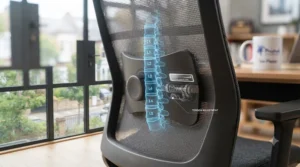
Setting Up Your Dynamic Lumbar Chair: A Practical Adjustment Guide
Getting a chair with dynamic lumbar support delivered is only the first step — most people never actually configure the mechanism correctly, which defeats the point of paying for it. Start by sitting fully back in the seat with your feet flat on the floor, then adjust seat height so your knees sit at roughly a right angle, in line with HSE guidance for display screen equipment. Only after that’s set should you touch the lumbar controls, since seat height changes where your lower back naturally meets the backrest.
For automatic systems like the X-Chair’s DVL or SIHOO’s self-adaptive tracking, resist the urge to manually force the lumbar into a fixed position during the first week — these mechanisms are designed to calibrate to your movement pattern over repeated use, and constantly overriding them defeats the adaptive behaviour. For manually adjustable systems like the FlexiSpot ErgoX Pro’s 5D lumbar, start with the pad roughly at belt height, then adjust depth in small increments over several sitting sessions rather than trying to nail the perfect position in one sitting.
A common mistake in the first 30 days is judging the lumbar support too quickly — several reviewers across this list note that genuinely dynamic mechanisms feel unusual for the first few sessions simply because they behave differently to whatever fixed-pad chair came before. Give it a proper working week before deciding whether the mechanism suits you, and register any warranty promptly, since several brands here only offer full coverage if you do so within a set window after delivery.
Which Dynamic Lumbar Chair Buyer Are You? Real-World Scenarios
The all-day desk worker with existing back discomfort. If you’re managing recurring lower back tension across long working days, an automated system that maintains contact regardless of how often you shift position — the X-Chair X2 or SIHOO Doro C300 Pro V2 — removes the need to consciously readjust throughout the day, which matters when concentration is already stretched thin by discomfort.
The precision-focused user who likes control. If you’d rather dial in exact settings and leave them alone, the FlexiSpot ErgoX Pro‘s 5D manual lumbar system offers a level of granular control that automated mechanisms simply can’t replicate, at a fraction of premium pricing.
The first-time upgrader on a tight budget. If you’re moving away from a basic dining chair or unsupportive gaming chair for the first time, the standard SIHOO Doro C300 proves genuinely dynamic lumbar tracking doesn’t require four-figure spending, making it a sensible first step before committing to pricier models.
The multi-device hybrid worker. If your day involves constant switching between a desktop monitor, a tablet, and phone calls held in hand, the Steelcase Gesture‘s combination of live lumbar tracking and exceptionally articulate armrests handles that postural variety better than any single-purpose chair on this list.
How to Choose an Office Chair With Dynamic Lumbar Support
Narrowing this down comes to six practical criteria worth weighing before checkout:
- Automated versus manual mechanism. Decide honestly whether you want the chair to adjust itself (X-Chair, SIHOO) or whether you’d rather control it precisely yourself (FlexiSpot ErgoX Pro).
- Weight capacity relative to your build. Several budget and mid-range chairs here cap out around 136kg, while the Gesture and ErgoX Pro extend considerably further.
- Armrest articulation for your work style. If you use a tablet or phone regularly at your desk, prioritise 4D or higher armrests that track natural arm movement.
- Mesh versus upholstered back. Mesh backs, common across the mid-range and budget picks here, breathe better in warm rooms; upholstered options like the Gesture feel warmer but often plusher.
- Warranty depth on the mechanism specifically. A long frame warranty means little if the moving lumbar mechanism itself is only covered for a year or two — check the fine print.
- UK stock versus import logistics. Brands like X-Chair ship primarily from the US; UK-stocked brands like FlexiSpot and SIHOO typically offer faster delivery and simpler returns.
According to HSE guidance on display screen equipment posture, a properly supportive chair back should provide good lower back support with a small gap between the front of the seat and the back of the knee — a genuinely dynamic lumbar mechanism makes maintaining that position throughout the day considerably easier than a fixed pad that only lines up correctly in one posture.
Active Lumbar Support vs Fixed Lumbar Pads: What’s the Real Difference?
The terms get used loosely in marketing copy, so it’s worth being precise. A fixed lumbar pad sits at one height and one depth, set once and left alone; it supports you correctly only in the specific posture it was adjusted for, and loses contact the moment you shift, recline, or lean forward. An active lumbar support chair, by contrast, tracks your movement continuously — whether through a mechanical linkage like the Gesture’s Core Equalizer, an elastomer flex like the Sayl’s backrest, or a weight-sensing system like the X-Chair’s DVL — and maintains contact through that entire range of motion.
Based on the spec comparison across this list, the practical difference shows up most clearly during recline: on a fixed-pad chair, leaning back typically creates a gap between your lower back and the support, exactly the “sacrum gap” that several reviewers specifically call out as a design flaw in cheaper mesh chairs. What most buyers overlook is that this distinction matters more for people who shift position frequently throughout the day than for those who sit relatively still — if you rarely recline or change posture, the practical benefit of a genuinely dynamic system narrows considerably.
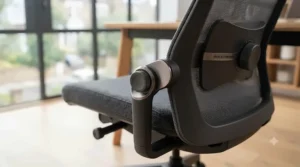
Self-Adjusting Back Support vs Manual Lumbar Dials: Which Wins?
This is genuinely a matter of personal preference rather than one system being objectively better. Self-adjusting back support, as used on the X-Chair X2 and both SIHOO Doro models, reads your weight and movement automatically and requires no ongoing input — you simply sit down and it responds. Movement-responsive lumbar systems in this category are particularly well suited to shared desks or households where multiple people use the same chair, since there’s no manual setting to reconfigure between users.
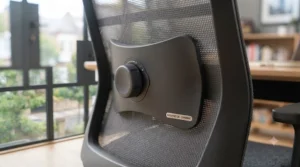
Manual lumbar dials, as used on the FlexiSpot ErgoX Pro and, to a lesser extent, the FlexiSpot C7, require more upfront effort to configure correctly but reward that effort with precision that automated systems can’t quite match — you can position the pad at an exact height and depth rather than trusting an algorithm to interpret your movement correctly. Reviewers consistently note that automated systems take longer to “feel right” initially, since your body needs to adjust to a support that’s constantly moving rather than staying put, while manual systems feel more immediately familiar to anyone who’s used a conventional office chair before.
Common Mistakes When Buying a Responsive Lumbar Ergonomic Chair
The most common mistake, based on aggregated retailer and reviewer commentary, is buying based on the word “dynamic” appearing in the product listing without checking what mechanism actually delivers it — some budget chairs use the term loosely to describe a simple tilt-adjustable pad, which is meaningfully different from the tracking systems used on chairs like the SIHOO Doro range or X-Chair’s DVL. Reading beyond the headline spec into how the mechanism actually behaves during recline is worth the extra five minutes of research.
A second recurring pitfall is ignoring weight capacity when comparing across this list — several mid-range and budget chairs here cap around 136kg, considerably lower than the 190-250kg capacity of the Gesture or ErgoX Pro, and exceeding a chair’s rated capacity can compromise both comfort and the mechanism’s ability to track movement correctly. Equally common is underestimating the adjustment period: buyers who judge a genuinely dynamic system within the first sitting or two, rather than giving it a full working week, sometimes return chairs that would have suited them fine once broken in.
Finally, buyers regularly overlook armrest quality when focused entirely on the lumbar mechanism — as flagged repeatedly in reviews of the standard SIHOO Doro C300, loosely locking armrests can undermine an otherwise excellent chair, so it’s worth checking armrest-specific feedback separately from lumbar reviews before committing.
Flexible Spine Support Mechanisms Explained: Elastomer, Air, and Mechanical Systems
Not every dynamic lumbar system works the same way underneath, and understanding the mechanism helps set realistic expectations. Elastomer suspension, used on the Herman Miller Sayl, relies on woven strands under variable tension that flex naturally with your spine’s shape — there’s no motor or mechanical linkage, just material engineering doing the work. Mechanical linkage systems, like Steelcase’s Core Equalizer, physically connect the seat and backrest so they move as a coordinated unit, which is more complex to engineer but allows for precise, repeatable support through a full range of recline.
Weight-sensing systems, used on the X-Chair’s DVL and both SIHOO Doro models, take a different approach entirely: internal mechanisms respond to the pressure and position you place on them in real time, effectively reading your body rather than relying on a fixed physical structure. Based on the spec comparison, none of these approaches is inherently superior — elastomer systems tend to feel the most “invisible” once set up correctly, mechanical linkages offer the most precise and repeatable support, and weight-sensing systems require the least manual input but the longest acclimatisation period.
Long-Term Cost & Maintenance of Dynamic Lumbar Chairs
The upfront price only tells part of the story with any of these chairs. Mesh backs, common across the budget and mid-range picks here, generally need less maintenance than upholstered fabric but can develop slack over several years of heavy use, at which point the lumbar mechanism’s tracking becomes less precise even if the mechanism itself still functions. Gas lift cylinders, the component responsible for seat height adjustment, typically last five to ten years under normal home-office use but are usually replaceable separately rather than requiring a whole new chair.
Warranty length varies considerably across this list, from three years on the SIHOO Doro C300 Pro V2 up to a lifetime frame warranty on the Steelcase Gesture, and it’s worth checking specifically what the mechanism itself is covered for rather than assuming the headline warranty figure applies to every moving part. Basic upkeep extends any of these chairs considerably: keep casters clear of dust and hair to prevent rolling resistance building up, periodically check that armrest and lumbar locking mechanisms haven’t loosened with regular use, and avoid leaving mesh-backed chairs in direct sunlight for extended periods, which can degrade the material’s elasticity over time.
Safety, Posture and UK Workplace Regulations
For anyone working from home under an employer’s arrangement, it’s worth knowing that the Health and Safety (Display Screen Equipment) Regulations 1992 specifically require that a work chair be stable, allow easy freedom of movement, and provide a seat back adjustable in both height and tilt — requirements every chair on this list meets and comfortably exceeds. Employers assessing home workstations are expected to consider whether existing furniture achieves a comfortable, sustainable posture, and a chair with a genuinely dynamic lumbar mechanism makes that considerably easier to maintain across a full working day than a fixed-pad alternative.
Beyond regulatory minimums, sensible setup habits matter regardless of which mechanism you choose: position your chair so your feet sit flat on the floor or a footrest, keep roughly a two-to-three centimetre gap between the front of the seat and the back of your knees, and avoid relying entirely on the lumbar mechanism to correct posture that’s otherwise compromised by an incorrectly positioned monitor or keyboard. No mechanism, however sophisticated, fully substitutes for standing up and moving periodically throughout the day.
Frequently Asked Questions
❓ What does 'dynamic lumbar support' actually mean?
❓ Is dynamic lumbar support worth paying extra for?
❓ Do I need to adjust a dynamic lumbar mechanism myself?
❓ How long does a dynamic lumbar mechanism typically last?
❓ Can a dynamic lumbar chair fix existing back pain?
Conclusion
There’s no single best office chair dynamic lumbar support system, only the mechanism that suits how your body actually moves through a working day. If you want zero-effort automation, the X-Chair X2 and SIHOO Doro C300 Pro V2 track your movement without asking anything of you. If precision control matters more, the FlexiSpot ErgoX Pro offers genuinely granular manual adjustment at a fraction of premium pricing. And if budget is the primary constraint, the standard SIHOO Doro C300 proves that a genuinely responsive lumbar mechanism doesn’t require four-figure spending.
Whichever you land on, give the mechanism a proper week to settle in before judging it — dynamic systems, almost by definition, feel different to whatever fixed-pad chair came before, and that difference is usually the point, not a flaw.
✨ Don’t Miss These Exclusive Deals!
🔍 Take your home office comfort to the next level with these carefully selected chairs. Click on any highlighted product to check current pricing and availability. A properly supportive chair is one of the smartest, longest-lasting upgrades your workday can get!
Recommended for You
- Office Chair for Pregnancy: 7 Best Picks Reviewed for 2026
- Best Office Chair to Improve Blood Flow to Legs: 7 Top UK Picks (2026)
- Best Office Chair for Poor Circulation: 7 Top UK Picks (2026)
Disclaimer: This article contains affiliate links. As an Amazon Associate, I earn from qualifying purchases. If you purchase products through these links, we may earn a small commission at no additional cost to you.
✨ Found this helpful? Share it with your friends! 💬🤗
