
In This Article
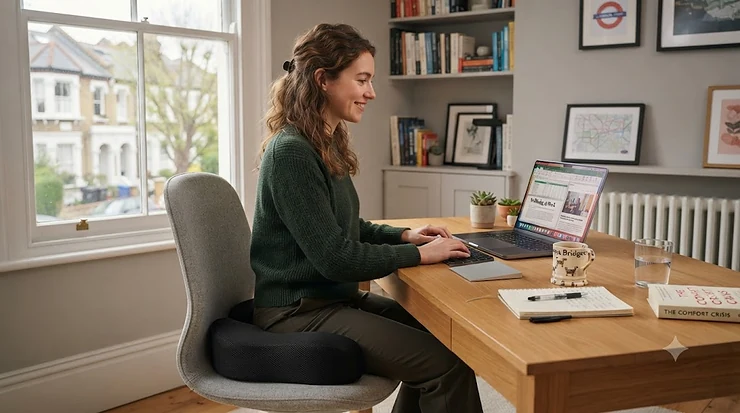
Tailbone pain has a way of ruining things that shouldn’t be ruinable — a train journey, a Sunday roast at your nan’s dining chair, a perfectly ordinary Tuesday at your desk. If you’ve ever shifted your weight forty times in an hour trying to find the one angle that doesn’t hurt, you already know why a coccyx cushion for tailbone pain isn’t a luxury item. It’s closer to a small mercy.

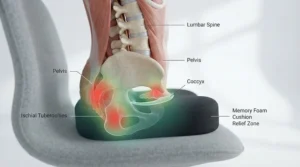
A coccyx cushion is a shaped seat pad — usually with a cut-out or a U-shaped channel at the back — designed to lift the tailbone away from direct contact with the seat while your sit bones carry the weight instead. That’s the whole trick, in one sentence. It sounds almost too simple to work, and yet NHS guidance on tailbone (coccyx) pain notes that it usually improves with self-care, though it can sometimes take longer than a few weeks to settle — which makes a good cushion one of the most useful things you can do while your body does the slow work of healing.
This guide walks through seven genuinely available cushions sold on amazon.co.uk, spanning budget, mid-range and premium options, with honest analysis of who each one suits — whether you’re recovering from a fall, managing sciatica, driving for a living, or just spending too many hours in a chair that was clearly designed by someone who has never sat in it.
Quick Comparison Table
| Cushion | Cut-Out Style | Material | Best For |
|---|---|---|---|
| Putnams Sero Pressure Relief Cushion | Deep coccyx cut-out | High-density profiled foam | Physiotherapist-style support, British-made |
| ComfiLife Gel-Enhanced Coccyx Cushion | U-shaped cut-out | Gel-topped memory foam | All-round comfort and value |
| Cushion Lab Pressure Relief Seat Cushion | No cut-out (contoured) | Extra-dense memory foam | Premium, ergonomist-designed support |
| iamcomfi Coccyx Cushion | U-shaped cut-out | Medium-firm memory foam | Budget-friendly first-time buyers |
| Everlasting Comfort Gel-Infused Cushion | U-shaped cut-out | Gel-infused ComfortFoam | Hot sitters who overheat on foam |
| 5 STARS UNITED Ergonomic Cushion | U-shaped cut-out | Cooling gel memory foam | Best-seller value pick |
| Aylio Coccyx Seat Cushion | Classic wedge cut-out | Memory foam with handle | Travel, driving, portability |
Looking at the spread here, the pattern that jumps out is that “best” genuinely depends on your situation rather than a single winner. The Putnams Sero Pressure Relief Cushion leans clinical and structured, which suits people who want something closer to what a physiotherapist might issue, while the Cushion Lab Pressure Relief Seat Cushion skips the cut-out entirely in favour of a contoured shape that some coccyx-pain sufferers actually prefer once the acute stage has passed. Budget shoppers gravitate toward the iamcomfi Coccyx Cushion and 5 STARS UNITED Ergonomic Cushion, both of which do the essential job without the premium price tag.
💬 Just one click — help others make better buying decisions too!😊
Top 7 Coccyx Cushions for Tailbone Pain: Expert Analysis
1. Putnams Sero Pressure Relief Cushion — physiotherapist-style, British-made support
The Putnams Sero Pressure Relief Cushion is the closest thing on this list to a clinical prescription product, and that pedigree shows the moment you sit on it. Putnams has been manufacturing pressure-relief seating in the UK since 1979, and the Sero range comes in a genuine coccyx cut-out plus alternative cut-outs (Bonyparts, Polo, Dr Huff) depending on where your pain actually sits — not every case of “tailbone pain” is purely coccygeal, and this range acknowledges that. The high-density profiled foam is noticeably firmer than the gel cushions on this list, which in practice means less sinking and more genuine load transfer onto the sit bones rather than a soft compression that still lets you touch down on the coccyx.
Based on the spec comparison, this is a cushion built for people who need structured support for extended periods — office workers, wheelchair users, and anyone whose GP or physio has specifically mentioned pressure redistribution. Reviewers consistently note the firmness as a strength for genuine pain relief, though a handful mention it takes a session or two to adjust to, since it’s less plush than the memory-foam-and-gel combinations elsewhere on this list.
Pros:
- ✅ Firm, structured foam gives genuine pressure redistribution
- ✅ Multiple cut-out styles for different pain locations
- ✅ British-made with a 30-plus-year manufacturing track record
Cons:
- ❌ Firmer feel takes some adjustment versus gel cushions
- ❌ Premium positioning means a higher price than basic foam pads
Typically priced in the £35-£45 range, the Putnams Sero Pressure Relief Cushion earns its premium through genuine build quality rather than marketing gloss — worth it if you want something closer to clinical-grade support.
2. ComfiLife Gel-Enhanced Coccyx Cushion — best all-round gel and memory foam combo
The ComfiLife Gel-Enhanced Coccyx Cushion is one of the most widely bought coccyx cushions on Amazon for a reason: it hits a genuine sweet spot between softness and support. The cool-gel top layer sits over a memory foam base, so you get initial plushness without the “sinking to the seat pan” problem that plagues cheaper all-foam pads after a few months of use. The U-shaped cut-out is generous enough to fully clear the tailbone for most adult body shapes.
What most buyers overlook about this model is the non-slip rubber base and built-in carry handle — small details, but they matter enormously if the cushion is moving between your office chair, the car, and the dining table, which is exactly how most people with chronic coccyx pain actually use one. Reviewers consistently report that the gel layer stays supportive for months without flattening, which is the single most common complaint about cheaper memory-foam-only alternatives.
Pros:
- ✅ Gel-and-foam combo resists flattening over time
- ✅ Non-slip base and handle make it genuinely portable
- ✅ Machine-washable velour cover for easy cleaning
Cons:
- ❌ Gel layer adds noticeable extra weight to carry around
- ❌ Firmer underneath the gel than the surface feel suggests
At around £20-£30, this sits in accessible mid-range territory and offers strong value-for-money — arguably the safest “just buy this one” pick if you want a single all-purpose cushion.
3. Cushion Lab Pressure Relief Seat Cushion — premium ergonomist-designed, no cut-out
The Cushion Lab Pressure Relief Seat Cushion takes a genuinely different approach from everything else on this list: no cut-out at all. Instead, it’s a scientifically contoured shape — designed by in-house ergonomists — that cradles the thighs and hips to encourage upright posture and redistribute weight away from the tailbone indirectly, rather than removing contact entirely. The extra-dense memory foam is noticeably firmer underfoot (or under-seat) than typical off-the-shelf pads, which is precisely what stops it compressing flat under sustained pressure through a full working day.
Here’s what to weigh: cut-out cushions work brilliantly for acute coccyx pain where any direct contact is agony, but some people find a cut-out actually increases discomfort once swelling has settled, because the edges of the cut-out itself become a new pressure point. The Cushion Lab Pressure Relief Seat Cushion is the pick for that second group — people managing chronic, lower-grade tailbone sensitivity who want posture support more than total pressure elimination. Aggregated review sentiment is strongly positive on durability and posture improvement, with the most common critique being the relatively high price for a single cushion.
Pros:
- ✅ Contoured design encourages better sitting posture
- ✅ Extra-dense foam resists long-term flattening
- ✅ Doubles as general hip and lower-back support
Cons:
- ❌ No cut-out, so it won’t suit acute, severe coccyx pain
- ❌ Among the pricier options in this category
Expect to pay in the £40-£55 range, positioning this firmly as the premium choice — a strong long-term investment if your pain has moved from acute to chronic and you’re prioritising posture over pure pressure removal.
4. iamcomfi Coccyx Cushion — best budget entry point for first-time buyers
If you’ve never used a coccyx cushion before and aren’t sure whether it’ll actually help, the iamcomfi Coccyx Cushion is a sensible low-risk starting point. It’s a straightforward medium-firm memory foam pad with the standard U-shaped cut-out, a removable, machine-washable cover, and — slightly unusually for this price bracket — a bundled video guide explaining correct positioning, which genuinely matters more than most buyers expect.
The spec sheet won’t tell you this, but user reports suggest correct placement (cut-out at the back, cushion pulled forward so you’re sitting mostly on the front two-thirds) makes a bigger difference to comfort than the foam density itself, which is exactly why that included guide earns its place. This is a lightweight, compact cushion, so it travels well between a home desk and a commute, though the trade-off for that portability is a thinner foam profile than some of the pricier options here, meaning less cushioning for anyone over roughly 16 stone.
Pros:
- ✅ Genuinely low price point for first-time buyers
- ✅ Included positioning guide improves real-world results
- ✅ Lightweight and compact for desk-to-commute use
Cons:
- ❌ Thinner foam profile than premium alternatives
- ❌ Less support for higher body weights over long sessions
Usually available under £20, the iamcomfi Coccyx Cushion represents strong entry-level value — a smart way to test whether a cut-out design actually helps your particular pain before spending more.
5. Everlasting Comfort Gel-Infused Coccyx Cushion — best for hot sitters who overheat on foam
Standard memory foam has one well-documented flaw: it traps body heat, and after two or three hours that warmth turns mildly unpleasant. The Everlasting Comfort Gel-Infused Coccyx Cushion addresses this directly with gel-infused ComfortFoam that draws heat away from the sitting surface, which reviewers consistently flag as the standout difference versus their previous all-foam cushion.
Based on the spec comparison, the U-shaped coccyx cutout and doctor-recommended positioning are broadly in line with the category standard, so this isn’t reinventing the cushion — it’s refining the thermal comfort layer, which matters enormously if you’re in a warm office, a car in summer, or simply someone who runs hot. Aggregated customer sentiment is particularly strong from people using it for long-haul flights and multi-hour drives, where heat build-up compounds the pressure discomfort rather than replacing it.
Pros:
- ✅ Gel infusion genuinely reduces heat build-up during long sits
- ✅ Breathable, washable cover suited to daily use
- ✅ Doctor-recommended positioning for coccyx and sciatica relief
Cons:
- ❌ Gel cooling effect is most noticeable in warmer environments
- ❌ Bulkier than slimmer travel-focused alternatives
Typically priced in the £25-£35 range, this is the pick if temperature — not just pressure — has been part of your discomfort story.
6. 5 STARS UNITED Ergonomic Seat Cushion — best-selling value pick
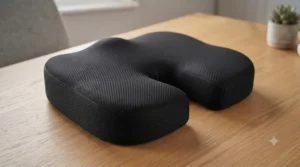
The 5 STARS UNITED Ergonomic Seat Cushion has become one of the most consistently repurchased coccyx cushions on Amazon, and the reason isn’t glamorous: it does the fundamentals competently at a genuinely accessible price. Cooling gel sits over memory foam, the cut-out is a standard U-shape sized for most adults, and the cover is removable for washing — nothing exotic, but nothing missing either.
What most buyers overlook is that “best-selling” in this category usually correlates with broad body-type compatibility rather than peak performance for any single use case — this is a cushion built to be adequate for almost everyone rather than exceptional for a narrow group. Reviewers consistently report reliable, if unremarkable, pressure relief for office and car use, with the most common criticism being that the foam softens noticeably faster under heavier, more frequent use than the pricier gel-and-foam hybrids further up this list.
Pros:
- ✅ Genuinely affordable entry into cooling gel cushions
- ✅ Broad size compatibility across most office and car seats
- ✅ Large volume of real-world usage data behind it
Cons:
- ❌ Foam softens faster than premium alternatives under heavy use
- ❌ Cooling effect is milder than dedicated gel-infused designs
At under £20-£25, it’s hard to argue with the value here — a sensible default if you want proven popularity over specialised features.
7. Aylio Coccyx Seat Cushion — best for travel, driving and portability
The Aylio Coccyx Seat Cushion has quietly built a loyal following among people managing coccyx pain specifically around travel and driving, and forum communities dedicated to tailbone and coccyx conditions repeatedly mention it as a trusted starting recommendation. It’s a classic memory-foam wedge shape with a built-in carry handle and a non-slip zip-off cover, sized to fit into a car seat, an aeroplane seat, or a desk chair without dominating the space.
Here’s what to weigh: this isn’t the plushest or most technically advanced cushion on this list, but its wedge profile — slightly thicker at the back, tapering forward — genuinely helps posture during driving specifically, encouraging a straighter seated position rather than a slouch that increases coccyx pressure over a long journey. Aggregated review sentiment from long-distance drivers and frequent flyers is particularly consistent on this point, with less emphasis on office-desk use compared with some rivals on this list.
Pros:
- ✅ Wedge shape actively supports posture while driving
- ✅ Compact and portable with a built-in carry handle
- ✅ Strong reputation among long-distance travellers specifically
Cons:
- ❌ Less office-desk-focused than some rivals here
- ❌ Simpler foam construction than the premium gel hybrids
Generally found in the £25-£35 range, the Aylio Coccyx Seat Cushion is the one to grab if your pain flares up specifically on long car journeys or flights rather than at a desk.
Practical Usage Guide: Getting the Setup Right
Buying the right cushion is honestly only half the job — positioning is where most people quietly sabotage their own comfort. The cut-out needs to sit at the very back of the cushion, and the cushion itself needs to be pulled forward on the chair seat so your sit bones land on the dense, supportive front two-thirds rather than the thinner rear edges either side of the cut-out. Get this backwards, and even the best cushion on this list will feel disappointing.
For the first week, expect an adjustment period rather than instant relief — new foam needs a few sittings to soften into your shape, and your body needs a few days to recalibrate to a genuinely different pressure pattern. A common early mistake is switching back to a normal chair “just for five minutes” and undoing the consistency that actually drives improvement. It’s also worth checking your desk and chair height alongside the cushion itself: HSE posture guidance for display screen equipment recommends keeping the top of your screen level with your eyes and your keyboard just below elbow height, since slouching forward to reach a badly positioned screen quietly reintroduces the exact tailbone pressure your cushion is trying to remove. Wash the cover roughly every two to three weeks with regular use, and rotate between two cushions if you split time between a home desk and an office one — it genuinely extends foam life.
Real-World Scenarios: Who Needs Which Cushion
The desk-bound office worker, eight hours a day, five days a week: durability and posture matter more than portability here. The Cushion Lab Pressure Relief Seat Cushion or Putnams Sero Pressure Relief Cushion suit this profile well, since both are built for sustained daily loading rather than occasional use.
The postnatal recovery case, healing from childbirth-related coccyx strain: softness and gentle pressure relief take priority in the early weeks. The iamcomfi Coccyx Cushion or ComfiLife Gel-Enhanced Coccyx Cushion offer accessible, forgiving support without demanding a big upfront spend during a period when priorities are elsewhere entirely.
The long-distance commuter or professional driver, spending three-plus hours behind the wheel daily: the Aylio Coccyx Seat Cushion‘s wedge shape and portability are built precisely for this scenario, while the Everlasting Comfort Gel-Infused Coccyx Cushion adds a genuine advantage if the car heats up during summer driving.
Matching the cushion to the scenario rather than simply buying the highest-rated option overall tends to produce far better real-world satisfaction, since “best” genuinely shifts depending on how many hours, in what environment, and at what stage of recovery you’re buying for.
How to Choose a Coccyx Cushion for Tailbone Pain
Choosing well comes down to working through a short list of genuinely decision-relevant factors, in roughly this order:
- Identify where the pain actually sits. Pure coccyx pain responds best to a full cut-out; pain spread across the sit bones may suit a contoured, no-cut-out design like the Cushion Lab Pressure Relief Seat Cushion instead.
- Consider how long you’ll sit at a time. Sessions under two hours can usually get away with a lighter, cheaper foam pad; anything longer benefits from denser, gel-topped construction that resists flattening.
- Factor in your environment’s temperature. Warm offices, cars, or summer travel make gel-infused options meaningfully more comfortable than standard memory foam alone.
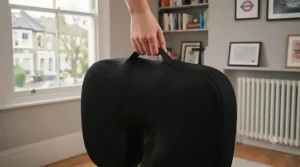
- Check portability needs honestly. If the cushion moves between locations daily, a built-in handle and non-slip, washable cover stop becoming “nice-to-haves” and start being essential.
- Match firmness to your body weight. Lighter users often prefer softer foam; heavier users typically need firmer, higher-density foam to avoid “bottoming out” through to the seat pan.
- Confirm the cut-out size fits your frame. A cut-out that’s too narrow can still press against the coccyx edges; too wide, and support drops off around the sides.
- Set a genuine budget band rather than chasing the cheapest option. Coccyx cushions in the £20-£45 range cover almost every serious use case — anything drastically cheaper tends to compress within months.
✨ Ready to Find Your Fit?
🔍 Check current pricing on any of the seven picks above and match one to your specific sitting pattern — the right cushion earns its keep within the first week.
Cut-Out Cushion Design Explained: Why the Shape Matters
The cut-out is the entire point of a coccyx cushion, and yet it’s the detail most listings gloss over. According to Wikipedia’s overview of coccydynia, sitting on the affected area can aggravate the condition, which is why a cushion with a cut-out at the back under the coccyx is generally recommended. The mechanism is straightforward: a U-shaped or keyhole-shaped gap removes direct downward pressure from the tailbone itself, redirecting your body weight onto the ischial tuberosities — the “sit bones” either side — which are built to bear load in a way the coccyx simply isn’t.
Not every cut-out is equal, though. A shallow cut-out on a cheap, thin cushion often fails to clear the coccyx fully once you sink into the foam, meaning you still make light contact — enough to keep the pain simmering rather than settling. Deeper, better-defined cut-outs, like those on the Putnams Sero Pressure Relief Cushion, maintain clearance even under sustained weight because the surrounding foam is dense enough not to compress flat around the gap. Positioning also interacts directly with cut-out design: sit too far back, and even a well-made cut-out won’t reach the right spot; sit correctly forward, and a modest cut-out on something like the iamcomfi Coccyx Cushion performs perfectly well for lighter, shorter-duration use.
Coccyx Cushion vs Standard Seat Cushion
| Factor | Coccyx Cushion (Cut-Out) | Standard Seat Cushion |
|---|---|---|
| Tailbone pressure | Redirected away from coccyx | Full, direct contact retained |
| Best for | Coccydynia, tailbone injury, post-surgery | General comfort, no specific pain |
| Sit bone loading | Increased, by design | Even, undifferentiated |
| Typical price | £20-£45 | £10-£25 |
A standard, uncontoured seat cushion adds general softness but does nothing to actively redirect pressure away from the tailbone specifically, which is precisely why people with genuine coccydynia often report only marginal improvement from a generic cushion before switching to a purpose-built one. On paper this means the extra cost of a proper cut-out design buys you a mechanism, not just extra padding — and for anyone with a diagnosed tailbone injury or ongoing coccydynia, that mechanism is the entire reason the product category exists.
Seat Cushion for Sciatica: What Actually Changes
Sciatica and coccyx pain often get lumped together, but the mechanics differ in a way that affects which cushion features actually help. Sciatic pain typically stems from pressure or irritation along the sciatic nerve, which runs from the lower back through the buttocks and down the leg — meaning relief depends more on even weight distribution across the hips and thighs than on tailbone-specific clearance. This is exactly why cushions with a broader, contoured design, such as the Cushion Lab Pressure Relief Seat Cushion, often perform well for sciatica sufferers even without a coccyx cut-out, since the priority is reducing localised nerve compression rather than removing pressure from one small bone.
That said, plenty of people manage both sciatica and coccyx pain simultaneously, particularly after childbirth or a fall, in which case a cushion offering both a cut-out and broader hip support — like the ComfiLife Gel-Enhanced Coccyx Cushion or Everlasting Comfort Gel-Infused Coccyx Cushion — tends to cover more bases than a specialist design tuned to just one condition.
Tailbone Injury: Recovery Timeline and Where a Cushion Fits In
A genuine tailbone injury — a bruise, a fracture, or a strain from a fall or childbirth — follows a fairly predictable, if frustrating, recovery arc. Acute pain and swelling typically dominate the first one to two weeks, during which a soft, deep cut-out cushion like the iamcomfi Coccyx Cushion or ComfiLife Gel-Enhanced Coccyx Cushion does the most work, since any contact at all can be genuinely painful during this stage. From roughly weeks two to six, discomfort usually shifts from sharp to dull and achy, and this is often when firmer, more structured cushions such as the Putnams Sero Pressure Relief Cushion start to feel more appropriate as swelling subsides and a bit more direct support becomes tolerable and even helpful for posture.
Beyond six weeks, if pain persists or worsens rather than gradually easing, that’s a signal worth taking seriously rather than pushing through. Tailbone pain generally does improve over time, but the NHS specifically advises getting medical help if it hasn’t improved after a few weeks — a cushion is genuine, evidence-aligned self-care, not a substitute for that kind of clinical check-in if things aren’t trending the right way.
Physiotherapist Recommendation: What the Experts Actually Say
Coccyx cushions sit firmly within mainstream physiotherapy advice for tailbone pain rather than being a fringe or purely commercial product category. The Chartered Society of Physiotherapy — the UK’s professional body for physiotherapists, working alongside NHS England and Arthritis UK on shared self-management guidance — frames pressure offloading and postural support as core, evidence-based components of managing musculoskeletal pain at home, alongside movement and gradual return to normal activity rather than prolonged rest.
What most buyers overlook is that a cushion recommended by a physiotherapist isn’t necessarily the most expensive or the most heavily marketed one — it’s simply one matched correctly to the specific pain pattern, sitting duration, and recovery stage described above. In clinical and rehabilitation settings, firmer, structured designs similar to the Putnams Sero Pressure Relief Cushion are commonly favoured for their consistency and durability under daily institutional use, while softer gel-foam hybrids tend to suit shorter-term home recovery. If you’re working with a physiotherapist directly, it’s genuinely worth asking them to feel the specific cut-out depth and firmness of your shortlisted cushion, since individual pain presentation varies more than any single product description can capture.
Common Mistakes When Buying a Coccyx Cushion
The single most common mistake is buying purely on price without checking cut-out depth and foam density, then blaming the concept of coccyx cushions entirely when a genuinely underspecified product fails to help. A close second is skipping correct positioning — as covered in the usage guide above — which can make even a well-reviewed cushion feel useless. Buyers also frequently overlook portability needs, purchasing a bulky premium cushion for a use case (commuting, travel) where a lighter, more compact option like the Aylio Coccyx Seat Cushion would genuinely serve them better day to day. Finally, expecting instant, total pain elimination rather than gradual, meaningful improvement over one to two weeks sets up disappointment that the product itself didn’t actually earn.
Long-Term Cost & Maintenance
A decent coccyx cushion in the £20-£45 range typically holds its supportive shape for twelve to eighteen months under regular daily use, longer with lighter or occasional use, and considerably longer if you rotate between two cushions rather than relying on one continuously. Compared with the cumulative cost of ongoing discomfort — lost focus at work, disrupted sleep, or simply avoiding activities you’d otherwise enjoy — the total cost of ownership here is genuinely modest. Washable covers extend usable life meaningfully by keeping the foam itself cleaner and reducing the sweat and oil breakdown that speeds up foam degradation, so a cushion with a removable, machine-washable cover, like most on this list, tends to outlast a fixed-cover equivalent even at a similar underlying foam quality.
Frequently Asked Questions
❓ What is the best cushion for tailbone pain?
❓ How long does it take for a coccyx cushion to help?
❓ Can a coccyx cushion make tailbone pain worse?
❓ Do doctors recommend coccyx cushions?
❓ What's the difference between a coccyx cushion and a donut cushion?
Conclusion
Tailbone pain rarely has one dramatic fix — it tends to respond to a handful of unglamorous, consistent changes, and the right cushion is genuinely one of the highest-value ones available. Whether that’s the clinically structured Putnams Sero Pressure Relief Cushion, the reliably balanced ComfiLife Gel-Enhanced Coccyx Cushion, or the travel-ready Aylio Coccyx Seat Cushion, matching the design to your specific pain pattern, sitting duration and recovery stage matters more than chasing whichever option has the flashiest marketing. Start with correct positioning, give it a genuine week or two, and don’t hesitate to check in with a GP or physiotherapist if things aren’t trending the right way — the cushion supports the recovery, but it isn’t a substitute for it.
✨ Found the Right Cushion for You?
🔍 Compare current prices and stock across all seven picks on Amazon UK, and give your tailbone the support it’s genuinely been asking for.
Recommended for You
- Seat cushions for office chair: 7 Picks That Actually Fix Your Back (2026)
- 7 Best Office Chairs for Broad Shoulders in 2026 (Tested Picks)
- Office Chairs For Large Frames: 7 Genuinely Supportive Picks 2026
Disclaimer: This article contains affiliate links. As an Amazon Associate, I earn from qualifying purchases. If you purchase products through these links, we may earn a small commission at no additional cost to you.
✨ Found this helpful? Share it with your friends! 💬🤗
