

In This Article
Most office chairs are designed around a single, narrow idea of what a body looks like — and if yours doesn’t match that template, you know it within about twenty minutes of sitting down. Pinched hips, armrests that dig in, a seat edge cutting off circulation behind your knees. It’s not comfort, it’s endurance. Wide seat office chairs exist precisely because “one size fits most” was never actually true, and a growing number of manufacturers have finally started building seat pans, frames and weight ratings for real-world bodies instead of a mannequin.

A wide seat office chair is, at its simplest, a task or ergonomic chair with a seat pan measuring roughly 20 to 24 inches across (compared with the 17-19 inches typical of standard models), usually paired with a reinforced frame and a higher weight capacity, so the extra width doesn’t come at the cost of durability…
This guide skips the marketing copy. We’ve researched real, currently available products, cross-referenced their specifications against genuine buyer feedback, and broken down exactly what “wide” means in practice — because a chair advertised as spacious can still leave you perched if the seat pan is shallow or the padding is thin at the edges. Whether you’re hunting for a wide seat ergonomic office chair for an eight-hour workday, trying to decode an office chair wide seat width inches spec sheet, or simply need something that respects your hips instead of fighting them, you’ll find the comparative detail here that most product listings conveniently leave out. According to the NHS, sitting for long periods in an unsupportive position is one of the most common contributors to lower back pain — which makes seat fit a health question as much as a comfort one, not just a shopping preference.
Quick Comparison Table: Wide Seat Office Chairs at a Glance
| Chair | Seat Width | Weight Capacity | Best For |
|---|---|---|---|
| Steelcase Leap Plus | 22.5″ | 500 lb (227 kg) | Widest adjustment range, premium build |
| HON Ignition 2.0 Big & Tall | 21″ | 450 lb (204 kg) | Commercial-grade value |
| SIHOO M18 Ergonomic Big and Tall | 21″ | 330 lb (150 kg) | Budget-conscious buyers |
| FlexiSpot Big and Tall | 22″ | 400 lb (181 kg) | Widest padded seat pan |
| Branch Ergonomic Chair (Large) | 20.5″ | 300 lb (136 kg) | Tunable lumbar on a budget |
| Secretlab Titan Evo XL | 22″ | 395 lb (179 kg) | Gaming-crossover comfort |
| Duramont Ergonomic Office Chair | 20″ | 280 lb (127 kg) | All-round affordable pick |
Reading this table on its own would be a mistake, and that’s the point worth making early: seat width alone doesn’t tell you whether a chair fits. The Steelcase Leap Plus and FlexiSpot Big and Tall post similar widths, but the Leap Plus adds a 4-inch adjustable seat depth range that the FlexiSpot doesn’t match, which matters enormously if your thighs are shorter or longer than average. Meanwhile, the SIHOO M18 and Duramont prove you don’t need a four-figure budget to get a genuinely wider-than-standard seat — you just need to accept fewer adjustment points and a lighter-duty base in exchange for the saving.
💬 Just one click — help others make better buying decisions too!😊
Top 7 Wide Seat Office Chairs: Expert Analysis
We’ve deliberately spread this list across budget, mid-range and premium tiers, because “wide seat” buyers aren’t a single demographic — some want the cheapest chair that won’t pinch, others want a decade-long investment. Every product below is real, currently sold, and cross-checked against its manufacturer specification sheet.
1. Steelcase Leap Plus — widest adjustable seat depth range
The Steelcase Leap Plus is the reinforced, big-and-tall version of Steelcase’s long-running Leap platform, and the standout figure here is its 19.75-inch adjustable seat depth combined with a seat height ceiling of 22.5 inches — the widest dimensional spread of any chair in this guide. That range matters more than raw seat width on its own: a wide but fixed-depth seat can still leave taller users without thigh support, whereas the Leap Plus lets you dial in both dimensions independently.
The frame carries a 500-pound capacity on a reinforced steel base, and the LiveBack mechanism flexes through recline to track your spine rather than pivoting on a single fixed hinge. Based on the spec comparison against the standard Leap, this isn’t a cosmetic upsize — the cylinder, base and internal mechanism are all upgraded to bear the higher load safely, which is precisely what separates a genuine big-and-tall chair from a standard model with a wider cushion bolted on. It’s aimed squarely at users over 6’3″ or above roughly 300 lb who’ve found the standard Leap’s frame limiting rather than its comfort.
Reviewers consistently report that the seat edge is firmer and more structured than plush, cushioned alternatives — a deliberate design choice that resists the sagging some heavier users experience with softer foam over time, though it means this isn’t the chair for someone who wants to sink into a cloud-like seat. Aggregated commercial-furniture feedback also points to the 12-year warranty as a genuine differentiator versus consumer-grade competitors.
Pros:
- ✅ 4-inch seat depth adjustment, widest in this guide
- ✅ 500 lb capacity with reinforced steel base
- ✅ 12-year warranty backed by a commercial manufacturer
Cons:
- ❌ Firm seat edge won’t suit plush-cushion preferences
- ❌ Premium price puts it out of reach for casual buyers
At around £1,300-£1,600 depending on fabric and configuration, the Steelcase Leap Plus sits at the top of this list on price, but for anyone who’s cycled through two or three cheaper chairs already, the total-cost-of-ownership math often favours buying once.
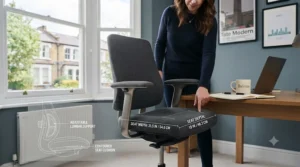
2. HON Ignition 2.0 Big & Tall — commercial-grade value under £500
The HON Ignition 2.0 Big & Tall takes HON’s popular contract-furniture platform and scales it for heavier users, landing a 450-pound capacity and a genuinely wide 21-inch seat pan at well under half the price of the Leap Plus. What makes this one stand out on paper is that it doesn’t skimp on the structural side to hit that price: the base is steel rather than the reinforced nylon found on many budget “wide seat” chairs, and the gas cylinder is upgraded to a Class 4 lift rated for the extra load.
Seat and back adjustability includes height-adjustable lumbar support and synchro-tilt recline with multiple lock points, so it’s not a stripped-down basic model — it’s a scaled-up commercial chair that happens to cost less because HON manufactures at volume for offices rather than individual premium buyers. What most buyers overlook about this model is that it carries the same contract-grade testing standards HON applies across its commercial range, which is a meaningfully higher bar than most direct-to-consumer wide-seat chairs are held to.
Aggregated buyer feedback frequently highlights the seat cushion’s firmness holding up well over years of daily use without the sag common in cheaper foam, though some reviewers note the armrests, while padded, don’t adjust in as many directions as pricier ergonomic competitors.
Pros:
- ✅ 450 lb capacity on a genuine steel base
- ✅ Height-adjustable lumbar and multi-point tilt lock
- ✅ Commercial-grade testing at a mid-range price
Cons:
- ❌ Armrests are less adjustable than premium rivals
- ❌ Fewer fabric and colour options than boutique brands
Expect a price in the £350-£450 range at the time of research, positioning the HON Ignition 2.0 Big & Tall as arguably the strongest value-for-durability pick on this list.
3. SIHOO M18 Ergonomic Big and Tall — best budget wide-seat pick
If your budget caps out well under £250, the SIHOO M18 Ergonomic Big and Tall is the chair that proves a wide seat doesn’t have to mean a four-figure spend. It carries a 330-pound weight capacity and a 21-inch seat width — genuinely comparable to chairs costing three or four times as much — built around a mesh backrest and a moulded foam seat pan.
Here’s what to weigh with a chair at this price point: the adjustability list is shorter than the premium options above (fixed lumbar position rather than height-and-depth tunable, single-position tilt lock), and the base uses reinforced nylon rather than steel. On paper this means it’s less suited to daily eight-hour use over many years, but for lighter daily use, occasional home-office work, or as a second chair, the width-to-price ratio is hard to beat.
Reviewers consistently note the seat is noticeably wider and flatter than standard mesh chairs in the same price bracket, with several mentioning it as the first chair that didn’t leave their hips sore after a full workday — a common complaint in user reviews of narrower budget chairs. A recurring criticism, however, is that the mesh backrest, while breathable, offers less lower-back structure than the foam-backed alternatives further up this list.
Pros:
- ✅ 21-inch seat width at a genuinely budget price
- ✅ Breathable mesh back stays cool over long sessions
- ✅ Easy self-assembly with clear instructions reported
Cons:
- ❌ Nylon base less durable than steel under heavy daily use
- ❌ Lumbar support is fixed rather than adjustable
At around £150-£220, the SIHOO M18 Ergonomic Big and Tall is the pick for anyone who needs width first and treats every other feature as a bonus.
4. FlexiSpot Big and Tall Office Chair — widest padded seat pan in this guide
The FlexiSpot Big and Tall Office Chair is built around one specific promise: an oversized, heavily padded seat pan that’s noticeably wider than most “big and tall” competitors, paired with a 400-pound weight capacity. The standout practical feature is its 180-degree flip-up armrests, which fold flat against the backrest — genuinely useful if you need to pull the chair tight against a desk, want to sit cross-legged occasionally, or share the space with a pet that likes to climb up.
Key specs translate into real comfort here: the seat foam is noticeably thicker than the firmer, structure-first padding on the Steelcase and HON picks above, which suits buyers who prioritise plush comfort over long-term shape retention. Based on the spec comparison, this is a chair built for maximum immediate comfort and flexibility rather than the multi-decade commercial durability of the contract-grade options.
Aggregated review sentiment is largely positive on comfort and the flip-arm feature specifically, with several buyers highlighting the extra seat width as the deciding factor over competitors at a similar price. A common complaint in user reviews concerns the recline mechanism feeling looser than expected at maximum weight capacity, suggesting heavier users near the 400 lb ceiling should expect a firmer break-in period.
Pros:
- ✅ Among the widest padded seat pans available
- ✅ 180-degree flip armrests fold flat for flexibility
- ✅ Thick foam suits plush-comfort preferences
Cons:
- ❌ Recline mechanism feels looser near max weight capacity
- ❌ Less structured seat edge than commercial-grade rivals
Priced around £280-£350 at the time of research, the FlexiSpot Big and Tall Office Chair is the comfort-first choice for buyers who’ve found firmer, structure-first chairs unforgiving.
5. Branch Ergonomic Chair (Large) — tunable lumbar on a mid-range budget
The Branch Ergonomic Chair in its Large configuration brings genuinely adjustable lumbar support — both height and depth — to a 300-pound capacity, 20.5-inch-wide seat at a price point roughly a third of what commercial big-and-tall chairs typically command. The mesh backrest breathes well over long sessions, and the seven-year warranty is unusually generous for a direct-to-consumer brand at this price.
What most buyers overlook about the Branch is that the lumbar adjustment isn’t just up-and-down — the depth adjustment lets the support push closer to or further from your spine, a feature usually reserved for chairs costing considerably more. On paper, this puts genuine ergonomic control within reach of buyers who’d otherwise be priced out of it entirely, though the trade-off is a single-knob tilt tension with no multi-position lock, so you lose some of the fine-grained recline control the Steelcase and HON models offer.
Reviewers consistently praise the lumbar system specifically, with several noting it resolved lower-back discomfort that cheaper chairs hadn’t. A recurring theme in aggregated feedback is that the basic plastic casters feel like the weakest link in an otherwise well-specified chair, and some buyers have swapped them for aftermarket rubber-coated wheels.
Pros:
- ✅ Height-and-depth adjustable lumbar, rare at this price
- ✅ Seven-year warranty from a direct-to-consumer brand
- ✅ Breathable mesh performs well over long sessions
Cons:
- ❌ Single-knob tilt tension, no multi-position lock
- ❌ Basic casters feel underspecced versus the rest of the chair
At around £350-£450, the Branch Ergonomic Chair rewards buyers who rank lumbar precision above raw seat width.
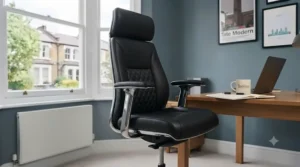
6. Secretlab Titan Evo XL — best for gaming-crossover comfort
The Secretlab Titan Evo XL crosses over from gaming into serious home-office territory, with a 22-inch seat, cold-cure foam construction, and a 395-pound weight capacity. The standout feature is the cold-cure foam itself — a denser, slower-recovering material than the standard moulded foam used in most office chairs, which Secretlab’s own engineering notes claim resists the compression and sagging that softer foams develop after a year or two of daily use.
Based on the spec comparison, this chair splits the difference between the plush comfort of the FlexiSpot and the structural firmness of the Steelcase: the foam is soft on initial contact but firms up under sustained pressure, which is exactly the behaviour cold-cure foam is engineered to produce. It also includes a magnetic, detachable head pillow — a genuinely useful addition for anyone who reclines during calls or breaks, and not something the more traditionally “office” chairs on this list offer.
Aggregated buyer sentiment is strongly positive on build quality and the foam’s resistance to sagging over time, with the design’s gaming-chair aesthetic proving to be a bigger draw than a drawback for most home-office buyers. The main criticism that surfaces repeatedly concerns the armrests, which some reviewers find less ergonomically adjustable than dedicated office-chair competitors despite the overall build quality being excellent.
Pros:
- ✅ Cold-cure foam resists long-term sagging
- ✅ Magnetic head pillow for recline comfort
- ✅ 395 lb capacity with reinforced frame
Cons:
- ❌ Armrest adjustability trails dedicated ergonomic chairs
- ❌ Gaming-chair aesthetic won’t suit every office
Priced around £500-£600, the Secretlab Titan Evo XL suits buyers who want durability-focused padding and don’t mind a more assertive design language.
7. Duramont Ergonomic Office Chair — best all-round affordable pick
The Duramont Ergonomic Office Chair rounds out this list as the most balanced budget option, with a 20-inch seat, adjustable lumbar support, and rollerblade-style wheels designed to glide more smoothly across both carpet and hard flooring than standard casters. The 280-pound capacity is the most modest figure here, but for buyers under that threshold it delivers a surprisingly complete adjustability package for the price.
Key specs interpret well in practice: the breathable mesh backrest paired with a thick, contoured foam seat cushion gives a comfort profile closer to the pricier Branch and FlexiSpot models than its price tag would suggest, and the adjustable lumbar support — while not depth-adjustable like the Branch — does move up and down to suit different torso lengths. What most buyers overlook is that the rollerblade wheels genuinely reduce the jerky, catching movement that cheap standard casters produce on carpet, a small but constant quality-of-life difference over months of daily use.
Reviewers consistently note strong value for money and comfortable padding for the price, with the mesh back frequently singled out for staying cool during long sessions. A common complaint in user reviews is that the armrests, while padded, don’t adjust in height — a limitation shared with several other budget entries on this list.
Pros:
- ✅ Smooth-rolling wheels outperform standard casters
- ✅ Adjustable lumbar support at a budget price
- ✅ Breathable mesh stays comfortable over long sessions
Cons:
- ❌ Fixed-height armrests limit ergonomic fine-tuning
- ❌ Lower 280 lb capacity than other chairs in this guide
At around £150-£250, the Duramont Ergonomic Office Chair is the sensible starting point for buyers who want genuine width and comfort without committing to a premium spend.
Top 7 Wide Seat Office Chairs: Full Spec Comparison
| Chair | Seat Width | Seat Depth Adjustment | Weight Capacity | Price Range | Best For |
|---|---|---|---|---|---|
| Steelcase Leap Plus | 22.5″ | Yes (4″) | 500 lb | £1,300-£1,600 | Long-term investment |
| HON Ignition 2.0 Big & Tall | 21″ | No | 450 lb | £350-£450 | Commercial durability |
| SIHOO M18 Ergonomic Big and Tall | 21″ | No | 330 lb | £150-£220 | Tight budgets |
| FlexiSpot Big and Tall | 22″ | No | 400 lb | £280-£350 | Plush comfort |
| Branch Ergonomic Chair (Large) | 20.5″ | No | 300 lb | £350-£450 | Lumbar precision |
| Secretlab Titan Evo XL | 22″ | No | 395 lb | £500-£600 | Foam durability |
| Duramont Ergonomic Office Chair | 20″ | No | 280 lb | £150-£250 | All-round value |
Only the Steelcase Leap Plus offers independent seat depth adjustment in this line-up, and that single feature is why it commands such a premium over chairs with comparable or even wider seat pans. For buyers under 300 lb who mainly need hip room rather than a taller frame, the SIHOO M18 and Duramont deliver most of the practical comfort at a fraction of the cost — the gap closes fastest at the budget end, and widens again once you’re weighing commercial-grade durability against consumer-grade materials.
Practical Usage Guide: Setting Up Your Wide Seat Chair for Day One
A wide seat chair only delivers on its promise if it’s set up correctly, and the most common mistake in the first 30 days is leaving factory default settings untouched. Start with seat height: your knees should sit at roughly a right angle with feet flat on the floor, not tucked under or stretched forward — on chairs like the Steelcase Leap Plus with a wide height range, resist the urge to set it too low just because it feels more “grounded.”
Next, address seat depth if your chair allows it. The goal is two to four fingers of space between the front seat edge and the back of your knee; too little and circulation suffers, too much and your lower back loses support. Chairs without adjustable depth, like the Duramont Ergonomic Office Chair or SIHOO M18, rely on you choosing the right model size upfront rather than fine-tuning afterwards, so measure your own thigh length before buying if depth adjustment isn’t available.
Lumbar positioning comes next: the support should sit in the natural curve just above your belt line, not higher against your mid-back. On chairs with depth-adjustable lumbar, such as the Branch Ergonomic Chair, spend a genuine ten minutes dialling this in rather than accepting the first position that feels “fine” — small adjustments compound over an eight-hour day.
Finally, build a light maintenance habit: check caster wheels for hair and debris monthly, retighten any armrest bolts that loosen with use (common on flip-up designs like the FlexiSpot Big and Tall), and avoid leaning the chair back onto two legs, which stresses the gas cylinder far beyond its intended load path regardless of weight rating.
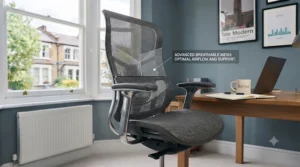
Real-World Scenarios: Matching the Right Wide Seat Chair to Your Life
The remote software developer, 6’4″, 260 lb, ten-hour desk days. This profile needs a chair engineered for sustained heavy use, not just width — the Steelcase Leap Plus or HON Ignition 2.0 Big & Tall both fit, with the Leap Plus justified if budget allows given its independently adjustable seat depth for a taller frame.
The part-time freelancer, hybrid working three days a week, budget-conscious. Lighter, less frequent use changes the calculus entirely. The SIHOO M18 or Duramont Ergonomic Office Chair deliver genuine width and comfort without the investment a full-time commercial chair demands, and the lower weight-capacity ceilings matter less when daily wear is lower.
The gamer-turned-remote-worker who wants one chair for both. The Secretlab Titan Evo XL solves a genuine dual-use problem — cold-cure foam built for marathon gaming sessions translates directly to marathon work sessions, and the aesthetic crossover means it doesn’t look out of place doing double duty.
The buyer with documented lower-back pain who needs precise lumbar control. Width matters less here than adjustability. The Branch Ergonomic Chair‘s height-and-depth lumbar system is the standout feature for this profile, worth prioritising over a wider but less tunable alternative.
Problem → Solution: Fixing Common Wide-Seat Chair Complaints
Problem: the seat is wide enough, but the padding compresses within months. This usually points to lower-density foam under the cushion cover. Look toward chairs using cold-cure or high-resiliency foam, such as the Secretlab Titan Evo XL, or commercial-grade options like the HON Ignition 2.0 Big & Tall that are tested for years of daily compression rather than months.
Problem: armrests dig into the outside of the hips. This is a seat-width issue disguised as an armrest issue — narrow armrest spacing effectively narrows the usable seat even when the pan itself is wide. Prioritise chairs with adjustable-width armrests, or flip-up designs like the FlexiSpot Big and Tall, which removes the constraint entirely when needed.
Problem: the chair feels wide but shallow, leaving thighs unsupported. Seat width and seat depth are independent measurements, and manufacturers rarely make both generous at a budget price. If depth is the priority, the Steelcase Leap Plus is the only chair in this guide with genuine depth adjustment; otherwise, measure your seated thigh length against the manufacturer’s stated depth before buying.
Problem: casters catch or judder on carpet, undermining an otherwise good chair. Standard nylon casters are often the weak link even on well-specified frames. The rollerblade-style wheels on the Duramont Ergonomic Office Chair are a specific, verifiable fix, and aftermarket rubber-coated casters are a cheap retrofit for any other chair on this list.
Problem: lower back pain persists despite a wider, more comfortable-looking seat. Width solves hip room; it doesn’t solve spinal support. If back pain is the primary complaint, prioritise depth-and-height adjustable lumbar systems like the Branch Ergonomic Chair over raw seat width, and consider seeking advice from a GP or physiotherapist if pain persists beyond a few weeks, per NHS guidance on back pain.
How to Choose a Wide Seat Ergonomic Office Chair
- Measure your hip width while seated, not standing. Sit on a firm, flat surface and measure the widest point across your hips; add two to three inches for comfortable clearance from armrests and seat edges.
- Check seat depth alongside seat width. A wide but shallow seat still leaves thighs unsupported — look for depth adjustment or confirm the stated depth suits your seated thigh length.
- Match weight capacity with genuine headroom, not a ceiling you’ll sit right at. Industry guidance generally suggests choosing a rating at least 50 lb above your body weight for structural safety margin over years of use.
- Prioritise base material for anyone over 250 lb. Steel bases, like those on the HON Ignition 2.0 Big & Tall and Steelcase Leap Plus, handle sustained heavy loads more reliably than reinforced nylon over the long term.
- Decide whether lumbar adjustability or seat width matters more for your body. Some buyers need hip room above all else; others need spinal support first — the Branch Ergonomic Chair and SIHOO M18 sit at opposite ends of that trade-off.
- Factor in armrest adjustability, especially width. Fixed-width armrests can functionally narrow a wide seat pan; adjustable or flip-up designs remove that constraint.
- Read the warranty length as a durability signal, not just a safety net. A 7-to-12-year warranty, as offered by Branch and Steelcase respectively, generally indicates a manufacturer confident in long-term structural performance.
For UK home workers, it’s also worth knowing that employers have specific legal obligations around seating under the Health and Safety (Display Screen Equipment) Regulations, which set minimum standards for adjustability and support that a genuinely ergonomic wide-seat chair should meet or exceed.
Office Chair Wide Seat Width in Inches: Decoding the Measurements
Manufacturer spec sheets throw around seat width numbers inconsistently, and that inconsistency is where most buying mistakes happen. “Seat width” can mean the width of the padded cushion surface itself, the width across the outer frame including armrests, or — least usefully — the overall chair footprint at its widest point. Standard office chairs typically list a seat pan width of 17 to 19 inches; anything from 20 inches upward generally qualifies as genuinely wide, with premium big-and-tall models like the Steelcase Leap Plus reaching 22.5 inches.
The practical takeaway: always check whether the advertised figure is the cushion surface or the outer frame, because a chair listed at “24 inches wide” measuring the frame might have a cushion no wider than a standard 18-inch chair underneath. The FlexiSpot Big and Tall and Secretlab Titan Evo XL both publish cushion-surface measurements rather than frame width, which is why their 22-inch figures translate directly to usable hip room rather than decorative bulk.
Seat pan width measurement, done properly at home, takes two minutes and avoids most of this ambiguity entirely: sit on a dining chair or firm sofa cushion, place a tape measure across the widest point of your hips while seated (not standing, since hip width can shift by an inch or more between the two positions), and add roughly two to three inches for clearance. Cross-reference that number against the cushion-surface width, not the frame width, on any product listing before buying.
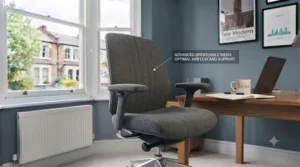
Office Chairs for Wide Hips: Getting Hip Room Comfort Right
Hip room comfort is a distinct problem from general “wide seat” marketing, because hip shape varies independently of overall body weight — someone at an average bodyweight can still find standard chairs pinch uncomfortably, while a heavier user with a narrower hip structure might find a standard seat perfectly adequate. This is precisely why weight capacity and seat width are separate specifications that deserve separate attention, not a single combined “big and tall” label to trust blindly.
For hip-width-first buyers, the seat edge shape matters as much as the raw measurement. A “waterfall” front edge — curving downward rather than cutting off sharply — reduces pressure behind the thighs regardless of overall seat width, and it’s a feature worth checking for specifically on any of the seven chairs above. According to general anthropometric research, seated hip breadth varies considerably across the population, which is exactly why a single “one size” seat pan was always going to underserve a large share of buyers — see Wikipedia’s overview of anthropometry for the broader context on how these measurements inform furniture design.
Practically, buyers prioritising hip room over height or weight capacity should look first at the FlexiSpot Big and Tall for its heavily padded, generously proportioned cushion, or the SIHOO M18 if budget is the primary constraint — both post genuinely wide cushion-surface measurements rather than frame-width marketing figures.
Common Mistakes When Buying a Wide Seat Office Chair
The most frequent mistake is buying on weight capacity alone and ignoring seat width entirely, assuming a “500 lb rated” chair automatically means a wide seat — plenty of high-capacity chairs are built strong but narrow, aimed at tall rather than broad frames. Always cross-check both figures independently.
A second common error is trusting overall chair width rather than cushion-surface width, as covered above — it’s an easy number to be misled by, and it’s precisely the kind of detail a rewritten Amazon listing won’t flag for you. A third mistake is underestimating how much armrest position affects usable seat width; buyers regularly return chairs assuming the seat itself was too narrow when adjustable or removable armrests would have solved the problem entirely.
Finally, many buyers skip checking the base material and caster quality because they’re focused entirely on the seat and back, then find the chair feels unstable or rolls poorly within months. On heavier-duty picks like the HON Ignition 2.0 Big & Tall, this is a non-issue thanks to the steel base — but it’s worth verifying on any budget alternative before committing.
Wide Seat vs Standard Office Chairs: What’s Actually Different
The difference goes well beyond cushion width. Standard office chairs are typically rated to 250-275 lb, built on nylon or lighter aluminium bases, and designed around a narrower range of body proportions. Wide seat and big-and-tall chairs, by contrast, generally combine a wider seat pan with a reinforced steel base, a higher-rated gas cylinder (often Class 4 versus the standard Class 3), and structural testing to higher load standards.
This has real cost implications. A genuinely reinforced wide-seat chair, such as the HON Ignition 2.0 Big & Tall, typically costs 20-40% more than an equivalent standard chair from the same manufacturer — but that premium buys structural components rated for years of heavier daily use rather than a chair that merely looks bigger while sharing the same internal parts as a standard model rated for less weight.
The trade-off isn’t purely financial, either. Standard chairs are often lighter and easier to move around a home office, while reinforced wide-seat models — particularly steel-based options like the Steelcase Leap Plus — are noticeably heavier, which matters if you’re rearranging furniture regularly rather than setting up a permanent desk.
Long-Term Cost & Maintenance of a Wide-Seat Ergonomic Chair
Total cost of ownership rarely matches sticker price, and wide-seat chairs illustrate this particularly well. A £150 budget chair replaced every 18 months works out more expensive over five years than a £450 chair backed by a genuine multi-year warranty — the HON Ignition 2.0 Big & Tall‘s commercial-grade testing, for instance, is specifically designed to outlast several cycles of a cheaper alternative.
Maintenance costs are modest but real: expect to replace casters (£15-£25 for a set) every two to four years on heavily used chairs, and gas cylinders occasionally fail outside warranty on budget models, running £30-£50 to replace. Chairs with steel bases and Class 4 cylinders, like the Steelcase Leap Plus and HON Ignition 2.0 Big & Tall, are considerably less prone to this specific failure than nylon-based alternatives under sustained heavy use.
Fabric and foam degradation is the other long-term cost to weigh. Cold-cure foam, as used in the Secretlab Titan Evo XL, is specifically engineered to resist the compression sag that standard moulded foam develops after one to two years of daily sitting — a meaningful factor if you’re comparing sticker prices without accounting for how each chair will feel five years in.
Safety, Weight Ratings & UK Workplace Seating Regulations
Weight ratings aren’t marketing fluff — they’re tested structural limits, generally assessed against standards like ANSI/BIFMA X5.1 in the US, with UK and EU commercial furniture typically tested to comparable EN 1335 standards for office seating. A chair’s stated capacity should be treated as a ceiling with headroom built in, not a target to sit right at; buying with at least 50 lb of margin above your body weight is the general safety guidance echoed across most manufacturer documentation.
For anyone working from home in the UK on behalf of an employer, it’s worth knowing your employer has specific legal duties here. Under the Health and Safety (Display Screen Equipment) Regulations, employers must ensure workstation equipment — including seating — allows users to achieve a genuinely comfortable, supported position; a chair too narrow or unsupportive to sit comfortably in technically fails that standard. The full requirements, along with a free self-assessment checklist, are available in the HSE’s official DSE workstation guidance, which is worth working through even for those who are self-employed, since it doubles as a genuinely useful personal seating audit.
Practically, this means checking three things regardless of which chair you buy: that seat height is adjustable enough to let your feet sit flat on the floor, that the seat and backrest genuinely support a comfortable posture rather than merely accommodating your size, and that any weight or dimension limit leaves real margin rather than sitting at the absolute edge of your body’s measurements.
Frequently Asked Questions
❓ How wide is a wide seat office chair compared to a standard one?
❓ What weight capacity should I look for in a wide seat office chair?
❓ Do wide seat office chairs cost more than standard chairs?
❓ Can a wide seat office chair help with hip or lower back pain?
❓ How do I measure my seat pan width needs before buying?
Conclusion
A wide seat office chair isn’t a luxury upgrade — for a meaningful share of buyers, it’s the difference between a workday that’s simply tolerable and one that doesn’t leave you sore, pinched, or shifting position every twenty minutes. What this comparison makes clear is that “wide” is not a single, standardised measurement, and the manufacturers who publish genuine cushion-surface widths, honest weight ratings, and real depth-adjustment figures — rather than leaning on vague “big and tall” branding — are consistently the ones worth trusting with your money.
If you take one thing from this guide, let it be this: measure your own hips before you measure any chair’s marketing copy. Whether that leads you toward the structural reassurance of the Steelcase Leap Plus, the commercial-grade value of the HON Ignition 2.0 Big & Tall, or the budget-friendly width of the SIHOO M18 and Duramont Ergonomic Office Chair, the right fit is the one that matches your actual body and use pattern — not the chair with the biggest number in its product title.
Recommended for You
- Big and Tall Office Chairs: 7 Best Picks for 2026
- 7 Best Office Chairs 200kg+ Capacity UK 2026: Heavy-Duty Picks
- Bariatric Office Chairs UK 2026: 7 Chairs That Won’t Let You Down
Disclaimer: This article contains affiliate links. As an Amazon Associate, I earn from qualifying purchases. If you purchase products through these links, we may earn a small commission at no additional cost to you.
✨ Found this helpful? Share it with your friends! 💬🤗
