
In This Article
If you’ve ever stood up after a three-hour quilting session with a back that feels like it’s been twisted into origami, you’re not alone. Most crafters and sewists underestimate the single piece of equipment that determines whether their hobby remains a joy or becomes a source of chronic pain: their chair for sewing and crafts.
Here’s what most people overlook — your dining room chair wasn’t designed for precision work at a sewing machine. Neither was that wooden stool gathering dust in the garage. The repetitive forward lean, the constant foot pedal operation, the need to pivot between your machine and cutting mat — these demands require purpose-built seating that supports your spine whilst allowing fluid movement. According to research from Cambridge University Hospitals NHS Foundation Trust, poor seating posture can aggravate back and neck pain significantly, particularly during extended periods of concentrated work.
The British climate adds another wrinkle to the equation. Damp autumn evenings spent in an unheated spare room or garden studio mean your chair needs to provide warmth and support without trapping moisture. Compact UK homes also demand storage solutions that traditional office chairs simply don’t offer. Whether you’re embroidering in a Cotswolds cottage or running a small Etsy business from a Manchester flat, the right craft room chair with wheels transforms your workspace from a source of frustration into a productive haven. This guide examines seven chairs available on Amazon.co.uk that actually deliver on their ergonomic promises, with honest assessments of what works for British crafters in 2026.
Quick Comparison: Top Chairs at a Glance
| Chair Model | Price Range (GBP) | Height Range (cm) | Key Feature | Best For |
|---|---|---|---|---|
| Arrow Hydraulic Sewing Chair | £180-£220 | 47-57 cm | Under-seat storage | Quilters needing organisation |
| BOLISS Ergonomic Drafting Chair | £150-£180 | 60-83 cm | Adjustable footring | Standing-height tables |
| Sewing Online Hydraulic Chair | £100-£150 | 47-57 cm | Lumbar support | Budget-conscious sewists |
| Lessmore Adjustable Craft Chair | £90-£130 | 45-55 cm | Back support storage | Small UK craft rooms |
| Serta Armless Task Chair | £60-£90 | 44-54 cm | Breathable mesh | Hot studio spaces |
| Generic Ergonomic Office Chair | £40-£70 | 42-52 cm | 360° swivel | Occasional crafters |
| Premium Ergonomic Mesh Chair | £200-£280 | 45-58 cm | Full adjustability | Professional makers |
From this comparison, the sweet spot for most British hobbyists sits in the £100-£180 range, where you’re getting hydraulic height adjustment, proper lumbar support, and wheels that actually glide across carpet without requiring a Herculean shove. Budget options under £70 make sense if you’re sewing less than five hours weekly, but the lack of adjustable back support becomes painful during marathon quilting sessions. The premium tier justifies its cost only if you’re spending 20+ hours weekly at your machine — at that point, the investment in your spine’s longevity pays dividends within months.
💬 Just one click — help others make better buying decisions too! 😊
✨ Don’t Miss These Exclusive Deals!
🔍 Take your creative workspace to the next level with these carefully selected products. Click on any highlighted item to check current pricing and availability on Amazon.co.uk. These picks will help you find exactly what you need!
Top 7 Chair for Sewing and Crafts: Expert Analysis
1. Arrow Adjustable Height Hydraulic Sewing Chair
The Arrow Hydraulic Sewing Chair remains the gold standard amongst serious British quilters, and for good reason — it’s specifically engineered for the unique demands of machine sewing rather than being a repurposed office chair with craft marketing slapped on. The hydraulic lift mechanism adjusts seat height from roughly 47 to 57 cm, which positions you perfectly at most domestic sewing machine tables without the wobble that cheaper gas lifts develop after six months of daily use.
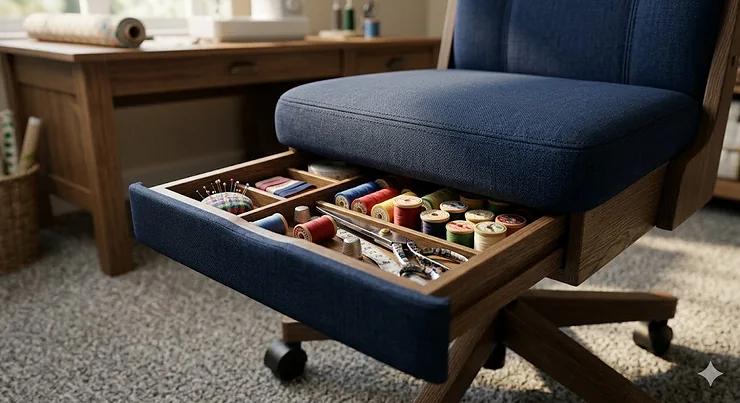
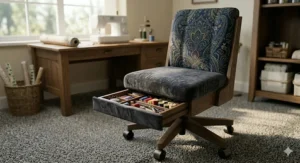
What sets this apart is the under-seat storage compartment (approximately 39 cm wide by 34 cm deep by 5 cm high), which in a compact British home is worth its weight in gold. You can stash bobbins, thread, scissors, and seam rippers right where you need them, eliminating the constant chair-shuffling to reach storage baskets. The seat cushion measures 46 cm wide by 41 cm deep — generous enough that you’re not perched on the edge like a nervous sparrow, but not so oversized that it overwhelms a small craft room in a terraced house.
The lumbar support is positioned correctly for someone between 157 and 178 cm tall, which covers most British women comfortably. Taller sewists may find the backrest height (ranging from 72 to 83 cm from floor to top) leaves their shoulders unsupported, whilst petite crafters under 152 cm might need a footrest to maintain proper posture. The five-caster base rolls smoothly on both carpet and laminate — crucial when you’re pivoting between your sewing machine, serger, and pressing station without standing up seventeen times per hour.
UK buyers consistently praise the chair’s stability during foot pedal operation. Unlike flimsy office chairs that scoot backwards every time you press the pedal, the Arrow’s weighted base keeps you anchored. The fabric upholstery comes in various patterns (sewing motifs, patchwork designs, solid colours), though the novelty prints fade faster than solid fabrics when exposed to sunlight streaming through south-facing windows — a consideration if your craft room doubles as a sun trap.
Pros:
✅ Purpose-built storage eliminates clutter in small UK homes
✅ Hydraulic lift stays firm after years of adjustment
✅ Weighted base prevents backward sliding during pedal use
Cons:
❌ Backrest height inadequate for sewists over 178 cm
❌ Novelty fabric patterns fade in direct sunlight
Around £180-£220 depending on fabric choice, the Arrow represents solid value if sewing occupies more than 10 hours of your week. It’s an investment that prevents the £40 chiropractor sessions that cheaper seating inevitably necessitates.
2. BOLISS Ergonomic Drafting Chair
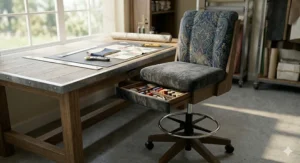
For crafters who’ve embraced standing-height or adjustable tables — increasingly popular in British maker spaces and home studios — the BOLISS Ergonomic Drafting Chair solves the problem of finding seating that reaches those elevated surfaces. The seat height adjusts from approximately 60 to 83 cm, positioning you correctly at tables ranging from 91 to 107 cm tall. This addresses a genuine gap in the UK market, where most “tall” office chairs tap out around 65 cm and leave you still craning your neck downward.
The chrome footring sits at a comfortable height for resting your feet without dangling, which matters enormously during those four-hour embroidery sessions when circulation becomes an issue. British sewists with standing desks rave about the flip-up armrests (check your specific model carefully — not all BOLISS variants include this feature), which slide out of the way when you need to get close to your machine, then flip back down when you’re hand-sewing or doing layout work.
The mesh back provides excellent breathability, a genuine advantage in unheated garden studios during summer or poorly ventilated spare bedrooms where a padded fabric chair becomes uncomfortably clammy. The seat cushion uses high-density foam that maintains its shape rather than developing the sad pancake effect that budget chairs exhibit after six months. At nearly 23 kg, this is a substantial piece of furniture — not something you’re casually carrying up to the loft for storage, but that heft translates to stability when you’re operating a foot pedal.
The weight capacity reaches 181 kg, making this one of the few genuinely inclusive options for larger sewists who’ve been failed by flimsy chairs with suspiciously vague weight ratings. The wide seat (approximately 51 cm) doesn’t pinch your thighs or force you into an unnaturally narrow posture.
UK reviews note that assembly takes roughly 25 minutes and requires only the included Allen key — refreshingly straightforward compared to flat-pack furniture that demands three hours and a engineering degree. The wheels work equally well on carpet and hard floors, though on deep-pile carpets you might want to invest in rollerblade-style casters for truly effortless gliding.
Pros:
✅ Genuinely reaches standing-desk heights unlike “tall” office chairs
✅ Mesh back prevents clamminess in poorly ventilated UK craft rooms
✅ Inclusive 181 kg weight capacity with wide, supportive seat
Cons:
❌ Heavy (23 kg) — not practical for frequent storage/moving
❌ Not all BOLISS models include flip-up armrests (verify before purchasing)
At around £150-£180, this sits in the mid-range but delivers premium performance for anyone working at elevated surfaces. The price reflects genuine build quality rather than marketing fluff.
3. Sewing Online Hydraulic Chair with Lumbar Support
The Sewing Online Hydraulic Chair represents the sweet spot between affordability and functionality for British crafters who sew regularly but aren’t running a commercial operation. Priced in the £100-£150 bracket, it delivers the core features that matter — hydraulic height adjustment (approximately 47-57 cm), proper lumbar support, and a five-star wheeled base — without the premium pricing of specialist sewing brands.
The lumbar support is adjustable both vertically and in depth, which is rarer than it should be in this price range. Most budget chairs offer fixed lumbar padding that either hits your lower back perfectly or misses entirely with no middle ground. The ability to customise means sewists between 150 and 185 cm can achieve proper spinal alignment, though very petite or very tall users may still find the adjustment range limiting.
The padded fabric seat comes in several designs (multicolour patchwork, plain colours, button patterns), with the patchwork proving surprisingly popular amongst British quilters who appreciate the whimsy. The seat measures approximately 46 cm wide by 41 cm deep — a hair smaller than the Arrow but still comfortable for extended sessions. What you sacrifice compared to premium models is the under-seat storage; this chair lacks that feature, which may or may not matter depending on your studio’s layout.
UK buyers working in compact spaces appreciate the chair’s relatively modest footprint. The five-caster base provides stability without the sprawling diameter of some office chairs that overwhelm small rooms. The 360-degree swivel operates smoothly, making it easy to pivot between your machine and cutting mat without performing an awkward chair-shuffle.
The hydraulic mechanism uses a standard gas lift rather than a premium hydraulic cylinder, which means it will gradually lose firmness over 2-3 years of daily use. Not a deal-breaker if you’re sewing 5-10 hours weekly, but power users might find themselves replacing the gas lift or upgrading to a sturdier model within a few years. For occasional crafters or those just setting up their first dedicated sewing space, this represents excellent value without committing to £200+ specialist equipment.
Pros:
✅ Adjustable lumbar support rare at this price point
✅ Compact footprint suits small UK craft rooms and flats
✅ Good value for occasional-to-regular sewists
Cons:
❌ Standard gas lift loses firmness after 2-3 years of daily use
❌ No under-seat storage compartment
Around £100-£150 depending on fabric selection, this chair delivers honest performance for hobbyists who need ergonomic support without specialist features like storage or extreme height adjustment.
4. Lessmore Adjustable Height Sewing and Crafting Chair
The Lessmore Adjustable Craft Chair emerged as a budget-friendly alternative that doesn’t immediately fall apart like the £30 catastrophes littering online marketplaces. Sitting in the £90-£130 range, it targets British crafters who want basic ergonomic features without specialist bells and whistles. The hydraulic height adjustment (approximately 45-55 cm) covers standard sewing table heights comfortably, though it lacks the upper range needed for standing-height desks.
What makes this model interesting is the under-seat storage basket, a feature typically reserved for more expensive specialist sewing chairs. The storage isn’t as spacious as the Arrow’s compartment (roughly 33 cm wide by 28 cm deep), but it’s sufficient for essential notions — thread, scissors, measuring tape, and that packet of biscuits that mysteriously appears during afternoon sewing sessions. For British homes where every cubic centimetre of storage matters, this is a genuinely useful inclusion at this price point.
The back support adjusts in height, allowing you to position lumbar cushioning where your spine actually needs it rather than where the manufacturer arbitrarily decided. The padding is adequate rather than luxurious — you’re not sinking into cloud-like comfort, but neither are you perched on a plank. The fabric upholstery comes in various patterns including floral, geometric, and plain colours that won’t clash violently with your existing décor.
UK reviewers note that assembly is straightforward (approximately 15 minutes), though the instruction diagrams could be clearer. The wheels work acceptably on carpet and laminate, though they’re not as smooth-rolling as premium casters — you’ll notice slightly more resistance when pivoting, which becomes relevant during intensive projects. The chair’s overall build feels solid enough for regular use, though power sewists putting in 20+ hours weekly might find it lacks the robust construction of more expensive models.
The weight capacity sits around 113 kg, which is lower than premium options but adequate for many users. Larger crafters should verify this capacity meets their needs before purchasing.
Pros:
✅ Under-seat storage rare at this price point
✅ Adjustable back height accommodates various body types
✅ Straightforward assembly takes under 20 minutes
Cons:
❌ Wheels less smooth than premium casters on deep carpet
❌ Lower weight capacity (113 kg) excludes some users
At around £90-£130, the Lessmore offers reasonable value for crafters who need storage and basic ergonomic features without investing in premium specialist equipment. It’s the sensible middle ground between throwaway office chairs and professional-grade sewing seating.
5. Serta Essential Armless Task Chair
The Serta Essential Armless Task Chair approaches craft seating from a different angle — prioritising breathability and minimalist design over specialist features. Priced in the £60-£90 bracket, it’s not marketed specifically to sewists, but British crafters have discovered its advantages for summer studio work or poorly ventilated spare bedrooms where padded fabric chairs become uncomfortably sticky.
The mesh back allows genuine airflow rather than the token ventilation of cheaper mesh chairs that might as well be solid plastic. During those rare British heatwaves when your south-facing craft room turns into a greenhouse, the difference between mesh and padded fabric becomes painfully obvious. The faux leather seat cushion might seem counterintuitive for breathability, but it wipes clean easily — handy when you’re working with messy materials like fabric paint, dyes, or that inevitable cup of tea that tips over.
The armless design is polarising. Some sewists love the freedom to approach their machine from any angle without armrests blocking their movement. Others miss having somewhere to rest their elbows during hand-sewing or when taking breaks. The advantage in compact UK homes is undeniable — the chair tucks completely under your sewing table when not in use, reclaiming valuable floor space in that 3-by-2.5-metre spare bedroom you’re calling a studio.
Height adjustment ranges from approximately 44-54 cm, covering standard sewing tables but not taller work surfaces. The gas lift mechanism is basic rather than premium, which means it’ll start losing firmness after 18-24 months of regular use — but at this price point, you’re not expecting decade-long durability. The five-caster base rolls adequately on most surfaces, though it lacks the effortless glide of more expensive chairs.
UK buyers working in small spaces appreciate the minimal footprint and the ability to slide the chair completely out of sight when not needed. It’s not the most ergonomically sophisticated option, but it solves specific problems (heat, space constraints, easy cleaning) that matter more than lumbar adjustability for certain users.
Pros:
✅ Mesh back provides genuine airflow in hot UK studios
✅ Armless design allows complete table tuck-away in small spaces
✅ Faux leather seat wipes clean easily after messy craft projects
Cons:
❌ No armrests — miss them during hand-sewing breaks
❌ Basic gas lift loses firmness within 18-24 months
Around £60-£90, the Serta represents good value for crafters prioritising breathability and space efficiency over specialist sewing features. It’s the practical choice for summer use or space-constrained studios.
6. Generic Ergonomic Office Chair with Adjustable Height
The category of Generic Ergonomic Office Chairs (various brands including SONGMICS, naspaluro, T-THREE) available on Amazon.co.uk for £40-£70 won’t win design awards, but they serve occasional crafters adequately without requiring a substantial financial commitment. These chairs share common features: basic height adjustment (typically 42-52 cm), fabric or mesh upholstery, five-caster base, and 360-degree swivel.
What you’re getting at this price point is fundamentally functional seating that keeps you off a dining chair but doesn’t provide the refined ergonomics of specialist options. The lumbar support, where it exists, is usually a fixed pad that either aligns with your spine or doesn’t — there’s no adjustability to accommodate different body types. The seat cushioning uses standard-density foam that will compress and develop the dreaded “bottom imprint” after 6-12 months of regular use.
The advantage is minimal financial risk. If you’re just starting to explore sewing as a hobby and aren’t sure whether you’ll stick with it beyond the initial enthusiasm, investing £50 rather than £200 makes pragmatic sense. British crafters can assess whether they actually need features like under-seat storage or premium hydraulic lifts without committing serious money upfront. If you discover you’re only sewing two hours monthly, this chair serves perfectly well. If you become a dedicated hobbyist, you can upgrade with confidence knowing exactly which features matter to you.
The wheels are typically adequate on laminate but struggle on carpet, particularly deep-pile. The gas lift mechanism loses firmness faster than premium models — expect to be readjusting height more frequently after a year. Assembly quality varies wildly between brands; some arrive with clear instructions and fit together in 20 minutes, others come with cryptic diagrams and mysteriously spare parts.
UK reviews are mixed but realistic — people buying £50 chairs understand they’re not getting Herman Miller quality. What frustrates buyers is when these chairs are marketed as “professional ergonomic seating” with features they manifestly don’t possess. Approach with appropriate expectations (basic functional seating for occasional use) and they deliver acceptable value.
Pros:
✅ Minimal financial commitment for exploring sewing hobby
✅ Adequate for occasional crafters (under 5 hours weekly)
✅ Allows you to identify which features matter before investing seriously
Cons:
❌ Fixed lumbar support doesn’t accommodate all body types
❌ Foam cushioning compresses rapidly with regular use
Around £40-£70, these chairs serve as practical entry-level seating whilst you’re determining how seriously you’ll pursue crafting. They’re the sensible first step, not the permanent solution.
7. Premium Ergonomic Mesh Chair with Full Adjustability
At the top end sits the category of Premium Ergonomic Mesh Chairs (brands like Herman Miller-inspired models, high-end office chairs) in the £200-£280 range available on Amazon.co.uk. These aren’t marketed specifically to crafters, but British professional makers and serious hobbyists have discovered they offer the most comprehensive ergonomic support for extended sewing sessions.
The defining characteristic is adjustability — everything from seat height (typically 45-58 cm) to lumbar depth, armrest position (height, width, angle), headrest tilt, and back recline tension can be customised precisely to your body. For sewists spending 20+ hours weekly at their machines, this level of personalisation transforms long-term comfort and prevents the chronic pain that rigid seating inevitably causes. According to NHS guidelines on seating and ergonomics, proper adjustability allowing users to maintain neutral spine position is crucial for preventing musculoskeletal disorders during prolonged sitting.
The mesh construction provides excellent breathability whilst maintaining structured support — you’re not sinking into padding that eventually compresses, but neither are you perched on a rigid surface. The mechanisms use premium components (typically German or Japanese gas lifts, reinforced aluminium frames) designed for 8-hour daily office use, which translates to decade-long durability for home crafters. UK buyers investing at this level consistently report their chairs functioning perfectly after 5+ years of daily use.
The trade-offs are cost and sometimes space. These chairs typically have larger footprints than compact sewing chairs, which matters in a small British craft room. They also lack features like under-seat storage that specialist sewing chairs offer. You’re paying for ergonomic engineering and durability rather than craft-specific conveniences.
For professional sewists, alterations specialists, or dedicated hobbyists who’ve suffered through £50 chairs that left them visiting osteopaths, the premium tier represents a genuine investment in long-term health. The cost-per-use calculation works out favourably when you’re sitting 20+ hours weekly — £250 spread across five years is £1 per week, far less than the ongoing costs of treating preventable back pain.
Pros:
✅ Comprehensive adjustability achieves proper ergonomic positioning
✅ Premium mechanisms and materials offer decade-long durability
✅ Mesh construction provides breathability with structured support
Cons:
❌ Larger footprint overwhelms small UK craft rooms
❌ Premium pricing (£200-£280) only justified for serious/professional use
Around £200-£280, these chairs deliver professional-grade ergonomics for serious crafters who spend substantial weekly hours at their machines. The investment prevents long-term health costs whilst providing superior comfort.
How to Choose the Perfect Chair for Your UK Craft Space
Selecting a comfortable chair for hobbies involves more considerations than simply clicking “add to basket” on the first result that looks acceptable. British crafters face unique challenges — compact living spaces, varied heating situations, and the need to balance storage with comfort in ways that spacious American craft rooms simply don’t encounter. Here’s how to navigate the decision systematically.
1. Measure Your Actual Working Height
Most British sewists skip this step and regret it. Sit at your sewing machine in your current chair (even if it’s dreadful) and measure from the floor to the underside of your bent elbow — that’s your ideal seat height. Standard sewing tables range from 71-76 cm tall, requiring seat heights of approximately 45-53 cm for average-height users. Taller crafters need chairs reaching 55-58 cm, whilst petite sewists may need the lower end of adjustment ranges (42-47 cm). If your measurement falls outside typical adjustment ranges, you’ll need specialist seating or table modifications — better to discover this before purchasing.
2. Account for Your Actual Floor Surface
The wheels that glide effortlessly in showroom demonstrations often struggle on British carpet. If you’re working on deep-pile carpet (common in older British homes with concrete floors), standard plastic casters will resist rolling, forcing you to either stand constantly or strain your back reaching for materials. Rollerblade-style casters (available separately for around £15-£25) transform mobility on carpet. Conversely, if you’re on laminate or vinyl, standard casters work fine but may be too mobile — consider locking casters if you’re doing precise machine work.
3. Evaluate Your Studio’s Climate Reality
That unheated spare bedroom or garden studio where you craft means temperature matters more than manufacturers acknowledge. Mesh chairs excel in summer but feel uncomfortably cold during winter evenings. Padded fabric retains warmth but becomes sticky during rare heatwaves. Faux leather wipes clean easily but can feel clammy in humid conditions. British crafters often benefit from seasonal seating — a breathable mesh chair for May-September, a cushioned fabric option for October-April — if storage space permits.
4. Consider Storage Integration
In compact UK homes where craft rooms are typically repurposed spare bedrooms (often 3 by 2.5 metres), every storage solution matters. Chairs with under-seat compartments eliminate the need for separate storage furniture, reclaiming valuable floor space. However, storage compartments reduce seat padding thickness — accept this trade-off consciously rather than discovering it’s uncomfortable after purchase.
5. Match Weight Capacity to Your Reality
Many budget chairs list suspiciously optimistic weight capacities (150 kg) that bear little relation to their actual structural limits. Premium chairs with honestly stated capacities typically start at 113 kg for standard models, reaching 181+ kg for inclusive designs. If you’re near a chair’s stated limit, experience suggests moving to the next capacity tier for actual durability and comfort.
Common Mistakes British Crafters Make When Buying Seating
Assuming All “Sewing Chairs” Are Actually Designed for Sewing
The term “sewing chair” appears on products ranging from purpose-built hydraulic seating with under-storage to barely-modified office chairs with sewing-themed fabric. Marketing departments discovered that slapping a notion-print pattern on a standard office chair commands a £20 premium over the identical chair in plain black. Genuine sewing-specific features include appropriate height ranges for machine work (not computer desks), under-seat storage, and stability during foot pedal operation. Everything else is standard office chair engineering with craft-themed upholstery.
Ignoring UK Plug and Assembly Requirements
Some chairs sold on Amazon.co.uk ship from EU or international sellers with different assembly hardware (metric versus imperial fasteners) or instructions in languages other than English. This isn’t necessarily problematic — screws are screws — but it adds frustration to assembly. Check seller location and customer reviews mentioning assembly before purchasing.
Overlooking Long-Term Maintenance Reality
Gas lifts fail. Casters wear out. Upholstery develops tears. Budget chairs under £80 are essentially disposable — when something breaks, replacement parts cost nearly as much as buying new. Mid-range chairs (£100-£180) sometimes offer replacement parts, but tracking down compatible components for discontinued models frustrates many UK buyers. Premium chairs typically provide 5+ year warranties and readily available spare parts. Factor total cost of ownership, not just initial purchase price.
Choosing Based on Photos Rather Than Dimensions
Online product photos make all chairs look roughly the same size. The difference between a 46 cm seat width and a 51 cm seat width appears negligible in photographs but dramatically affects comfort during four-hour sessions. Always check stated dimensions against your workspace measurements and body proportions. British homes with narrow doorways and compact staircases also need to verify assembled chair dimensions actually fit through access routes.
Assuming Adjustable Means Comfortable
Five adjustment points sound impressive until you realise they’re all positioned for someone 175 cm tall. Genuine adjustability means wide ranges accommodating varied body types — lumbar support moving 10+ cm vertically, seat depth adjusting 5+ cm, armrests moving in multiple planes. Budget chairs often tout “adjustable lumbar” that shifts perhaps 3 cm, effectively useless for most users. Check adjustment ranges in specifications, not just the presence of adjustment features.
Real-World Scenario: Matching Chairs to British Crafters
The London Flat Quilter
Sophie works in finance Monday to Friday, quilting most weekend afternoons in her Camden flat’s second bedroom (2.8 by 2.3 metres). She needs seating that tucks completely under her table when not in use, provides lumbar support for her 163 cm height, and doesn’t overwhelm the tiny room visually. Budget: around £120.
Recommended: Lessmore Adjustable Craft Chair or Serta Armless Task Chair. The armless Serta tucks completely away, whilst the Lessmore’s under-seat storage eliminates the need for separate storage furniture. Both suit her height range and budget. The Serta wins if she prioritises space reclamation; the Lessmore wins if she values integrated storage.
The Rural Yorkshire Power Sewer
Margaret runs a small alterations business from her converted barn in the Dales, working 25-30 hours weekly at her machines. She’s 170 cm tall, appreciates not having to stand repeatedly for storage, and needs durability for daily commercial use. Budget: up to £220.
Recommended: Arrow Adjustable Height Hydraulic Sewing Chair. The under-seat storage keeps frequently-used notions accessible, the hydraulic mechanism withstands daily professional use, and the height range suits her perfectly. The investment pays dividends through reduced back pain and enhanced productivity. At her usage level, premium build quality justifies the higher price.
The Scottish Student Embroiderer
Callum studies textile design in Edinburgh, embroidering and sewing in his shared flat’s small single room. He’s 178 cm tall, works at a standing-height desk (101 cm), and needs something that won’t bankrupt his student budget. Maximum spend: £180.
Recommended: BOLISS Ergonomic Drafting Chair. It’s one of the few options reaching his elevated desk height whilst providing proper ergonomic support at a price that doesn’t require him to skip meals. The mesh back suits his poorly-heated student flat (won’t feel cold like padded fabric during winter evenings), and the flip-up armrests (verify model) accommodate his machine work.
Chair Setup Guide: Getting It Right from Day One
Proper setup transforms adequate seating into comfortable, ergonomic support. Most British crafters never adjust their chairs beyond the initial height setting, missing crucial positioning that prevents long-term pain.
Step 1: Establish Neutral Sitting Position
Sit with your back against the backrest, feet flat on the floor (or footrest), thighs parallel to the floor. Your knees should sit level with or slightly lower than your hips — never higher, which compresses circulation. If your feet don’t reach the floor comfortably, you need a footrest (available for £15-£30) rather than perching on the seat edge.
Step 2: Adjust Seat Height for Machine Work
With your hands on your sewing machine’s work surface, your elbows should bend at approximately 90-100 degrees. This positions your shoulders in neutral alignment rather than hunched upward (too low) or strained downward (too high). Most British sewists set their chairs too low, causing shoulder strain during extended sessions.
Step 3: Position Lumbar Support
The lumbar curve should contact your lower back approximately where your belt line sits, not at waist level or mid-back. Many sewists position lumbar support too high, providing zero actual lower back support. If your chair offers depth adjustment, position the support to maintain contact whilst allowing your shoulders to rest against the upper backrest.
Step 4: Test Wheel Mobility
Roll the chair in all directions. You should move smoothly with minimal effort — if you’re straining to shift position, you’ll unconsciously avoid moving and develop static posture problems. Upgrade casters if needed; it’s a £20 fix that dramatically improves usability.
Step 5: Verify Stability During Foot Pedal Use
Operate your machine’s foot pedal vigorously. The chair should remain stationary rather than scooting backward. If it slides, you need either a heavier base, a chair mat with locking position, or a different chair with better stability. This isn’t a minor inconvenance — constantly repositioning your chair disrupts concentration and increases fatigue.
Long-Term Costs: The Real Price of Craft Seating in the UK
The sticker price tells only part of the ownership story. British crafters benefit from understanding total cost calculations, particularly when comparing budget versus premium options.
Budget Chair Lifecycle (£50 initial purchase):
- Year 1-2: Gas lift begins losing firmness (£15-£25 replacement if you can find compatible parts, or more likely, repurchase)
- Year 2: Foam cushioning compresses, developing uncomfortable bottom imprint
- Year 3: Casters fail or upholstery tears (repair parts often unavailable)
- Total 3-year cost: £50 initial + £50 replacement = £100, or approximately £33 annually
Mid-Range Chair Lifecycle (£150 initial purchase):
- Year 1-4: Normal operation with minimal maintenance
- Year 4-5: May need caster replacement (£15-£30) or gas lift service
- Year 6-8: Continued reliable service with possible upholstery wear
- Total 8-year cost: £150 initial + £30 maintenance = £180, or approximately £22.50 annually
Premium Chair Lifecycle (£250 initial purchase):
- Year 1-7: Normal operation, virtually maintenance-free
- Year 7-10: Possible minor part replacement (casters, fabric)
- Year 10+: Continued reliable service; many users report 12-15 year lifespans
- Total 10-year cost: £250 initial + £40 maintenance = £290, or approximately £29 annually
The mid-range category offers the best cost-per-year value for most British hobbyists, delivering durability without premium pricing. Budget chairs make sense only if you’re genuinely uncertain whether you’ll continue crafting beyond initial enthusiasm. Premium chairs justify their cost for professional use or serious hobbyists spending 15+ hours weekly at their machines — the annual cost becomes negligible spread across a decade, whilst the health benefits from superior ergonomics save money on prevented medical costs.
Don’t overlook running costs: chairs requiring frequent readjustment waste time, uncomfortable seating reduces productive session length, and poor ergonomics necessitate chiropractor or physio visits that cost far more than the initial chair purchase. A £180 chair that allows pain-free four-hour sessions delivers better value than a £50 chair limiting you to 90 minutes before discomfort forces breaks.
Craft Room Chair with Wheels: Why Mobility Matters
British craft spaces rarely offer the generous square meterage of American sewing rooms. That 3-by-2.5-metre spare bedroom you’re using doubles as guest room, storage area, and creative studio — efficiency matters enormously. Mobile seating transforms limited space from frustrating to functional.
The Real-World Workflow
Consider a typical quilting session: you cut fabric at your table, move to the sewing machine, pivot to the ironing board, return to the machine, shift to the serger. Without wheels, you’re standing 15-20 times per hour, which fractures concentration and accelerates fatigue. With smooth-rolling casters, you glide between work areas maintaining focus. This isn’t laziness — it’s workflow optimisation that lets you complete projects efficiently rather than abandoning them half-finished because the constant standing has exhausted you.
Caster Types for UK Surfaces
Standard plastic casters work adequately on laminate and vinyl but struggle on carpet. British homes built pre-2000 often feature carpet throughout, including spare bedrooms. Rollerblade-style casters (soft rubber wheels approximately 5-6 cm diameter) reduce rolling resistance by roughly 60% on carpet whilst protecting hard floors from scratches. They cost £15-£30 for a set of five and transform chair mobility — genuinely one of the best value upgrades available.
Locking casters add stability during machine work, preventing unwanted backward drift during foot pedal operation. You lock the wheels whilst sewing, unlock to reposition. Most British crafters don’t realise locking casters exist, suffering through constant chair repositioning when a £20 upgrade would solve the problem entirely.
Storage Access Benefits
Mobile seating allows you to position your chair exactly where you need it for accessing storage rather than contorting your spine to reach materials whilst remaining seated. This seems minor until you’re trying to grab thread from a shelf behind you for the seventeenth time in an hour — the ability to simply roll backward, grab what you need, and roll forward again eliminates dozens of awkward stretches per session. Over months and years, this prevents the cumulative strain that develops into chronic pain.
Adjustable Height Chair for Crafting: Why One Size Fails Everyone
The cruellest myth in craft furniture is that “standard” height suits most people. It doesn’t. British crafters range from 152 cm to 188+ cm tall, with proportional variations in leg length, torso height, and arm reach. Fixed-height seating inevitably positions someone incorrectly, forcing compensatory posture that causes long-term problems.
The Height-Pain Connection
The NHS outlines that proper posture maintains our spine’s natural shallow S-shape, placing joints and soft tissues in neutral position. Seats positioned too low force your shoulders upward into a hunched posture, straining the trapezius muscles and causing neck pain that radiates into headaches. Too high, and your feet dangle or rest on tiptoes, compressing thigh circulation and causing numbness. Either scenario becomes painful within 60-90 minutes and causes lasting damage with repeated exposure.
According to research from Cambridge University Hospitals NHS Foundation Trust, maintaining neutral spinal curves during sitting requires appropriate seat height allowing feet flat on floor, thighs parallel to ground, and elbows at roughly 90-100 degrees when hands are at working height. Fixed-height chairs cannot accommodate this range of body proportions — adjustability becomes essential rather than optional luxury.
Hydraulic Versus Gas Lift Mechanisms
Hydraulic mechanisms use fluid pressure providing smooth, controlled adjustment that maintains position reliably for years. Gas lifts use pressurised nitrogen, cheaper to manufacture but prone to gradual pressure loss. After 18-24 months of regular adjustment, budget gas lifts begin settling — you set your height, it slowly sinks during your session, requiring readjustment mid-work.
Premium gas lifts (typically German or Japanese manufacture) last considerably longer, offering 5-7 years before noticeable settling. Check product specifications; if they don’t mention gas lift quality, assume budget components. Hydraulic mechanisms cost more initially but eliminate the gradual settling frustration.
Adjustment Range Matters
A chair adjusting from 44-54 cm covers most standard sewing table users. Standing-height or adjustable tables require 60-85 cm ranges. Petite sewists (under 157 cm) often need chairs starting at 42 cm; very tall crafters (over 180 cm) may need upper ranges reaching 58+ cm. Verify the adjustment range suits your specific height before purchasing — “adjustable” is meaningless without knowing the actual range.
FAQ: Your Craft Seating Questions Answered
❓ What's the ideal seat height for sewing machines in the UK?
❓ Are sewing chairs worth the extra cost compared to office chairs?
❓ Can I use a gaming chair for crafts and sewing?
❓ How do I stop my chair rolling backward during foot pedal use?
❓ What's the best chair for UK crafters with back pain?
Conclusion: Investing in Your Creative Comfort
Your chair for sewing and crafts represents more than furniture — it’s the foundation of sustainable, enjoyable creative practice. British hobbyists who’ve suffered through years of inappropriate seating, developing chronic pain that interrupts their passion, consistently wish they’d invested in proper ergonomic support sooner. The false economy of £40 chairs that last 18 months and cause ongoing discomfort costs far more than the upfront investment in mid-range or premium seating.
For most UK crafters, the sweet spot sits between £100-£180, where brands like Arrow, BOLISS, and Sewing Online deliver genuine ergonomic features, durable construction, and craft-specific functionality without demanding premium pricing. Budget options under £70 serve entry-level hobbyists adequately whilst you’re determining whether sewing becomes a lasting pursuit. Premium chairs (£200-£280) justify their cost only for serious hobbyists or professionals spending substantial weekly hours at their machines.
The common thread amongst satisfied British sewists isn’t the specific brand they chose — it’s that they measured their workspace carefully, assessed their actual height and body proportions honestly, and matched features to their genuine needs rather than marketing claims. Whether you’re quilting in a Edinburgh flat, running an alterations business in rural Wales, or embroidering in a London spare bedroom, appropriate seating transforms your craft from a source of pain into sustained creative joy. Your spine will thank you for the investment, your projects will benefit from improved focus and reduced fatigue, and your creative practice will flourish without the physical limitations that inappropriate seating inevitably imposes.
✨ Don’t Miss These Exclusive Deals!
🔍 Take your sewing and crafts to the next level with these carefully selected products. Click on any highlighted item to check current pricing and availability on Amazon.co.uk. These picks will help you find exactly what you need!
Recommended for You
- 7 Best Homework Chair for Teenagers UK 2026
- 7 Best Study Chair for Adults UK 2026
- 7 Best Designer Office Chair Affordable UK 2026
Disclaimer: This article contains affiliate links. As an Amazon Associate, I earn from qualifying purchases. If you purchase products through these links, we may earn a small commission at no additional cost to you.
✨ Found this helpful? Share it with your mates! 💬🤗
