
In This Article
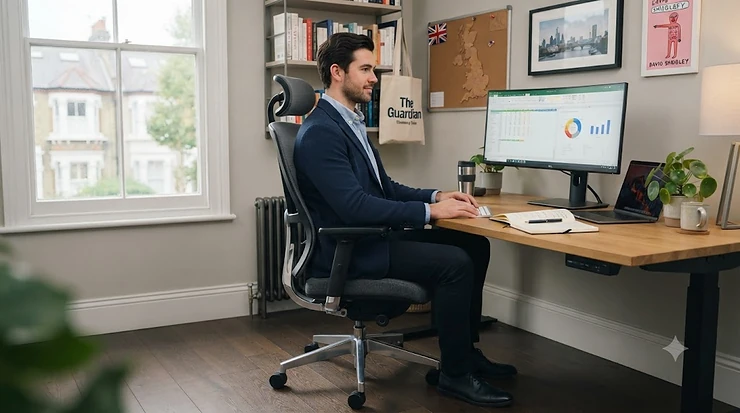
Stand a six-foot-two frame next to a “one size fits all” office chair and the mismatch is obvious within about thirty seconds — knees higher than hips, backrest stopping somewhere around your shoulder blades, armrests you have to reach down for rather than rest on. If you’re hunting for an office chair for over 6ft, you’ve probably already discovered that most chairs on the market are calibrated for users between roughly 5’4″ and 5’11”, which leaves anyone taller compromising on comfort every single working day. An office chair for over 6ft is essentially a chair engineered around a taller frame’s three critical dimensions: a seat height range that reaches high enough for a proper 90-degree knee angle, a backrest long enough to support the full spine up to the shoulder blades, and a gas lift cylinder rated to extend beyond the standard range without losing stability. This guide compares seven genuinely available chairs — from a solid budget mesh option through to the Herman Miller Aeron in its tallest configuration — with honest analysis of who each one actually suits. We’ll also dig into the numbers that matter most: maximum seat height, maximum gas lift height, and backrest length for a tall spine, because these three specifications decide fit far more than price or brand name ever will.
Quick Comparison Table
Here’s the fast-scan version before the full breakdown. “Best For” reflects genuine use-case fit, not a generic sales pitch.
| Product | Max Seat Height | Backrest Height | Best For |
|---|---|---|---|
| Herman Miller Aeron Size C | Around 53-56cm | Around 66cm | Premium all-day ergonomic support |
| SIHOO Doro C300 | Around 52cm, class 4 lift | Adjustable, mid-tall | Best value for adjustable seat depth |
| Autonomous ErgoChair Ultra 2 | Up to roughly 58cm (23″) | Tall, adjustable | Widest seat height range on this list |
| FLEXISPOT 600LBS Big and Tall | Extended, class 4 lift | High back, reclining | Heavier tall users needing extra frame strength |
| FLEXISPOT OC3-Pro Air | Extended big-and-tall range | High back, 8-level lumbar | Budget-conscious big-and-tall buyers |
| SIHOO M57 | Standard-plus, ~52cm | High back mesh | Lean tall users on a tighter budget |
| Amazon Basics Ergonomic High-Back | Standard-plus range | High back | Entry-level occasional tall-user seating |
A pattern worth noticing straight away: the widest seat height ranges cluster at the premium and mid-premium end, while the backrest length gap between budget and premium options is actually smaller than the price difference suggests. If you’re 6ft to 6ft2, several of the mid-range options here will genuinely fit; it’s really only past 6ft4 that the field narrows sharply toward the Herman Miller Aeron Size C and Autonomous ErgoChair Ultra 2, both of which push seat height meaningfully further than the rest.
💬 Just one click — help others make better buying decisions too!😊
Top 7 Office Chairs for Over 6ft: Expert Analysis
Each of these chairs was chosen to cover a genuine gap for taller buyers — from lean budget picks to full big-and-tall builds. Every spec below comes with the practical translation, because “class 4 gas lift” means nothing until you know what it actually changes for a six-foot-plus frame.
1. Herman Miller Aeron Size C — the tallest backrest and seat height on this list
The standout feature is sheer scale: in its largest configuration, the Aeron reaches a seat height in the region of 53-56cm and a backrest around 66cm tall, built specifically to accommodate users up to roughly 6’6″. In practical terms, that backrest height means support actually reaches the shoulder blades rather than stopping mid-spine, which is precisely where most standard chairs give up on a tall user. The PostureFit SL lumbar system adjusts both depth and height independently, letting you dial support in exactly where your lower back curves rather than relying on a fixed pad positioned for an average-height torso. Based on the spec comparison with every other chair here, this is the option for someone who sits for the full working day and wants the adjustability to match — it’s not a chair you set once and forget, it’s one you fine-tune as your posture shifts through the day. Aggregated review sentiment across retailers consistently praises the mesh construction for staying cool over long sessions, with a recurring theme in feedback being that first-time buyers underestimate how much adjustment range there is and need a proper fitting session to get the most from it.
Pros:
- ✅ Backrest reaches the shoulder blades on tall frames
- ✅ Independently adjustable lumbar depth and height
- ✅ Breathable mesh stays cool over long sessions
Cons:
- ❌ Steep learning curve to dial in all adjustments
- ❌ Premium price point puts it out of reach for casual buyers
Prices typically sit well over £1,000 at the time of research, reflecting its position as the benchmark premium choice — genuinely justified for anyone spending eight-plus hours a day at a desk.
2. SIHOO Doro C300 — class 4 gas lift with genuine seat depth adjustment
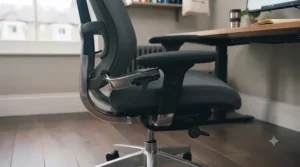
What immediately stands out here is the SGS-certified class 4 pneumatic gas lift, a detail most budget chairs skip entirely in favour of a lower-rated cylinder — class 4 lifts are built to handle greater extension and heavier loads without the sag or instability that cheaper lifts develop after a year of daily use. Paired with genuine seat depth adjustment, this chair addresses a problem taller users hit constantly: standard seats are too shallow for longer femurs, leaving the backs of the knees pressed against the seat edge. Here’s what most buyers overlook about seat depth: it’s arguably as important as seat height for tall users, since a seat that’s the right height but too shallow still forces an awkward, forward-perched posture. The dynamic lumbar support tracks your movement rather than sitting fixed in one spot, which reviewers consistently flag as the standout comfort feature compared to chairs with a static lumbar pad. A common complaint in aggregated feedback is that the backrest height adjustment, while present, tops out lower than premium chairs like the Aeron — fine for users up to around 6’3″, tighter for anyone taller.
Pros:
- ✅ Class 4 SGS-certified gas lift for extended durability
- ✅ Genuine seat depth adjustment for longer femurs
- ✅ Dynamic lumbar support that moves with you
Cons:
- ❌ Backrest height adjustment tops out lower than premium rivals
- ❌ Weight limit around 150kg may not suit every big-and-tall buyer
At roughly £250-£400, it represents strong mid-range value, particularly for buyers in the 6ft to 6ft3 range rather than the very tallest users.
3. Autonomous ErgoChair Ultra 2 — the widest seat height range on this list
The headline spec is seat height adjustment reaching up to roughly 23 inches (around 58cm), a noticeably wider range than the typical 17-19 inch ceiling on standard chairs. For anyone 6ft2 or taller, that extra few inches is often the single difference between knees sitting comfortably at 90 degrees and knees riding higher than hips — the latter tilts the pelvis backward and flattens the lower spine, which is exactly the posture problem tall users complain about most. What the spec sheet won’t tell you, but user feedback consistently notes, is that reaching this maximum height sometimes requires an upgraded or longer gas cylinder depending on configuration, so it’s worth checking the exact model variant before ordering if you’re at the very top of the height range. Based on the spec comparison with the SIHOO Doro C300, the Ultra 2 pulls ahead specifically on raw height ceiling, while running a close second on backrest length and lumbar adjustability. Reviewers managing a 6’3″-6’5″ frame specifically call out the seat height range as the deciding factor over competing chairs in a similar price bracket.
Pros:
- ✅ Seat height range extends to roughly 23 inches
- ✅ Genuinely suits 6ft2-6ft5 frames without a specialist order
- ✅ Strong lumbar and armrest adjustability to match the height range
Cons:
- ❌ Reaching maximum height may need a specific cylinder variant
- ❌ Backrest slightly shorter than the Aeron’s tallest configuration
Typically priced in the £400-£600 range, it sits as a genuine mid-premium alternative to far pricier chairs for buyers whose main issue is seat height specifically.
4. FLEXISPOT 600LBS Big and Tall Office Chair — built for frame strength as much as height
The standout advantage here isn’t just height, it’s structural capacity — this chair combines a class 4 certified pneumatic lift with a heavy-duty metal base and an extra-wide 24 x 20.1 inch cushion, built for taller users who also need a wider, sturdier frame beneath them. In practical terms, the reinforced base and rubber wheels matter more than they sound: a lighter-duty base under a tall, heavier frame is where instability and premature wear actually show up first, not in the seat cushion itself. The reclining range of 90 to 130 degrees gives genuine flexibility between focused desk work and a break-time recline, and the padded lumbar support is adjustable rather than fixed. Here’s what to weigh: this chair prioritises width and load capacity over the tallest possible backrest, so it suits a broader, heavier tall frame better than it suits someone who’s simply very tall but leaner-built. Aggregated customer sentiment consistently praises the seat width as genuinely spacious compared to standard-width “tall” chairs, while a recurring theme in feedback flags the PU leather as running warmer over long sessions than mesh alternatives.
Pros:
- ✅ Class 4 lift paired with a heavy-duty reinforced base
- ✅ Extra-wide 24-inch seat cushion for broader frames
- ✅ 90-130 degree recline range for flexible use
Cons:
- ❌ PU leather runs warmer than mesh over long sessions
- ❌ Backrest height prioritises width over maximum reach
Expect to pay in the £300-£450 range, positioning it as a strong option specifically for taller users who also need a wider, higher-capacity frame.
5. FLEXISPOT OC3-Pro Air — budget-conscious big-and-tall with 8-level lumbar adjustment
The standout feature at this price point is the 8-level lumbar adjustment paired with flip-up armrests, giving a genuinely wide range of fine-tuning that budget chairs often skip in favour of a single fixed setting. Built specifically under FlexiSpot’s big-and-tall line, it extends both seat height and backrest beyond the brand’s standard mesh chairs, aimed at taller users who don’t need the absolute ceiling of the Aeron or Ultra 2 but do need meaningfully more than a generic office chair offers. Based on the spec comparison with pricier options on this list, the trade-off is clear and honest: this chair covers the 6ft to 6ft3 range comfortably but isn’t the pick for anyone at the very top end of the height spectrum. Reviewers consistently highlight the flip-up armrests as genuinely useful for sliding closer to a desk, a small detail that larger frames appreciate more than average-height users tend to. A common complaint in aggregated feedback is that the mesh backrest, while breathable, feels less substantial under sustained recline pressure than the padded options further up this list.
Pros:
- ✅ 8-level lumbar adjustment at a mid-budget price
- ✅ Flip-up armrests for easier desk access
- ✅ Extended seat height beyond standard mesh chairs
Cons:
- ❌ Not suited to users at the very top of the height range
- ❌ Mesh backrest feels less substantial under sustained recline
At around £180-£280, this is a genuinely accessible entry into properly tall-rated seating without stretching into premium pricing.
6. SIHOO M57 — high-back mesh with a genuine 330lb weight rating
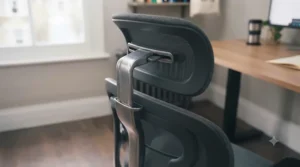
The standout here is straightforward: a high-back mesh design combined with 3D armrests and an adjustable headrest, rated to 330lbs, at a price point considerably below most of this list. For a leaner tall user — someone over six foot but not needing the widest seat or heaviest-duty base — this chair’s high-back design gets meaningfully closer to shoulder-blade support than a standard mid-back chair, without paying premium prices for width and load capacity that aren’t actually needed. What most buyers overlook about this segment of chairs is that “high back” and “tall-person chair” aren’t quite the same claim — a high back genuinely helps, but seat height range is still the more important number to check first, and this chair’s seat height ceiling is closer to standard-plus than to the true tall-specific ranges of the Aeron or Ultra 2. Aggregated review sentiment is consistently positive on comfort-for-price, with the adjustable headrest specifically praised by users around the 6ft mark, while feedback from taller reviewers around 6ft4 and above notes the seat height still falls short of their needs.
Pros:
- ✅ High-back mesh design with adjustable headrest
- ✅ Genuine 330lb weight rating at a budget price
- ✅ 3D armrests add useful fine adjustment
Cons:
- ❌ Seat height ceiling suits 6ft-6ft2 better than taller users
- ❌ Lumbar support is less sophisticated than pricier dynamic systems
Priced around £150-£220, it’s a smart budget pick specifically for users at the lower end of the “over 6ft” range.
7. Amazon Basics Ergonomic High-Back Office Chair — the accessible entry point
The standout advantage is simplicity and price: a breathable mesh high-back design with height adjustment and flip-up armrests, positioned as a genuinely low-cost way to trial whether a taller-profile chair improves your setup before committing to a bigger spend. In practical terms, this chair’s seat height and backrest sit at the upper end of “standard” rather than in true tall-specific territory, so it’s honestly best suited to users just over six foot, or as a secondary chair for occasional use, rather than a primary all-day seat for someone at 6ft4 or beyond. Based on the spec comparison with the rest of this list, the value case is straightforward: at this price, it’s a reasonable stopgap or budget-conscious pick, not a competitor to the dedicated tall-person builds further up. Reviewers consistently describe the assembly process as quick and the mesh as adequately breathable, with a recurring theme in feedback noting that taller users around 6ft3 and up find the backrest height limiting after extended use.
Pros:
- ✅ Genuinely low entry price for trial or occasional use
- ✅ Breathable mesh with flip-up armrests
- ✅ Quick, straightforward assembly
Cons:
- ❌ Backrest and seat height suit standard-plus, not true tall frames
- ❌ Limited lumbar adjustability compared to the rest of this list
At roughly £90-£140, it’s the cheapest chair on this list — reasonable value for a lighter-use setup, but not the pick for a primary all-day chair past 6ft3.
Top 7 Products: Specs, Price Range & Rating Snapshot
| Product | Max Seat Height | Backrest | Price Range | Aggregated Rating Trend |
|---|---|---|---|---|
| Herman Miller Aeron Size C | ~53-56cm | ~66cm | £1,000+ | Consistently strong on long-session comfort |
| SIHOO Doro C300 | ~52cm | Adjustable mid-tall | £250-£400 | Praised for seat depth and dynamic lumbar |
| Autonomous ErgoChair Ultra 2 | ~58cm | Tall, adjustable | £400-£600 | Favoured specifically for seat height range |
| FLEXISPOT 600LBS Big and Tall | Extended | High, reclining | £300-£450 | Liked for width and frame strength |
| FLEXISPOT OC3-Pro Air | Extended | High, 8-level lumbar | £180-£280 | Good value, mixed on backrest substance |
| SIHOO M57 | Standard-plus | High-back mesh | £150-£220 | Strong for price, limited for very tall users |
| Amazon Basics Ergonomic High-Back | Standard-plus | High-back | £90-£140 | Solid entry chair, limited past 6ft3 |
Reading across this table, the clearest signal is that price correlates most strongly with seat height ceiling and backrest reach, not with general build quality — several budget chairs here are perfectly well made, they simply don’t extend far enough for the tallest users. The Autonomous ErgoChair Ultra 2 and Herman Miller Aeron Size C are the two genuine options once you’re past 6ft4, while everything else on this list comfortably serves the 6ft to 6ft3 range at a noticeably lower price.
Benefits vs Standard Office Chairs
| Factor | Tall-Person Office Chair | Standard Office Chair |
|---|---|---|
| Typical Max Seat Height | 52-58cm+ | 45-50cm |
| Backrest Height | 60-66cm | 45-55cm |
| Gas Lift Rating | Often class 4 | Often class 3 or unrated |
| Best For | Users over 6ft needing full spine and knee support | Users under 5’11” with average proportions |
The difference isn’t cosmetic — a standard chair maxed out to its highest setting for a tall user puts far more sustained strain on the gas lift than the same chair used within its intended range, which is part of why cheaper cylinders fail faster under a taller, heavier frame. Reviewers and ergonomics guides alike consistently note that buying a genuinely tall-rated chair from the outset, even at a higher price, tends to outlast a standard chair pushed to its limits by a wide margin, both in comfort and in mechanical durability.
Practical Usage Guide: Setting Up Your Tall-Person Chair Correctly
Buying the right chair solves half the problem; setting it up correctly solves the rest. Start with seat height: sit with feet flat on the floor and adjust until your thighs run roughly parallel to the ground and your knees sit at approximately 90 degrees — for most users over 6ft, this means the gas lift needs to be extended well beyond its midpoint, which is exactly why a genuinely tall-rated cylinder matters more than it might seem from the spec sheet alone. Next, set seat depth if your chair allows it: there should be a two-to-three finger gap between the back of your knee and the seat edge, since a seat that’s too deep pushes you to perch forward and lose backrest contact entirely.
Backrest and lumbar support come next — position the lumbar curve at the point where your lower back naturally arches, not at a fixed default height, and if your chair has adjustable backrest height, raise it until the top genuinely reaches your shoulder blades rather than stopping mid-back. A common mistake in the first 30 days is adjusting armrests too low, forcing shoulders to hunch to reach the desk; armrests should support the forearm with shoulders relaxed, elbows close to 90 degrees. Finally, revisit the whole setup after a week of use — what feels right on day one at a static desk can feel different once you’re moving through a real working day, and small readjustments in the first fortnight typically make the biggest long-term difference.
Real-World Scenarios: Matching the Chair to the Person
Consider three genuinely different situations, because “office chair for over 6ft” covers more ground than the search term suggests.
First, someone at 6ft1, lean build, working from a home office desk five days a week, whose main complaint is a backrest that stops mid-spine. For him, the SIHOO M57‘s high-back mesh design solves the immediate problem without stretching into premium pricing he doesn’t need.
Second, someone at 6ft5, broader build, spending upwards of nine hours a day at a desk and increasingly bothered by lower back fatigue by mid-afternoon. For her, the Autonomous ErgoChair Ultra 2 or Herman Miller Aeron Size C genuinely earn their higher price — the seat height range and backrest length are built for exactly this scenario, and skimping here tends to cost more in discomfort than it saves in pounds.
Third, someone at 6ft2 who’s also on the heavier side and needs a chair that combines height with genuine structural width and load capacity, rather than height alone. For him, the FLEXISPOT 600LBS Big and Tall Office Chair addresses both dimensions at once, where a taller-but-narrow chair would solve only half the problem.
The lesson across all three: height alone doesn’t determine the right chair — build, hours seated, and specific discomfort points matter just as much.
Problem → Solution: Common Tall-User Chair Issues
Problem: Knees sit higher than hips even at maximum seat height. Solution: check the chair’s actual maximum seat height figure against your own measured seated-to-floor knee height before buying — the Autonomous ErgoChair Ultra 2‘s roughly 58cm ceiling solves this for most users up to 6ft5.
Problem: The backrest stops well below the shoulder blades. Solution: look specifically for backrest length figures over 60cm, such as the Herman Miller Aeron Size C‘s roughly 66cm backrest, rather than relying on “high-back” marketing language alone.
Problem: The seat is too shallow, pressing into the back of the knees. Solution: prioritise chairs with genuine seat depth adjustment, like the SIHOO Doro C300, rather than a fixed-depth seat regardless of overall height range.
Problem: The gas lift feels unstable or sags at maximum extension. Solution: check for a class 4 certified lift specifically — both the SIHOO Doro C300 and FLEXISPOT 600LBS Big and Tall Office Chair use class 4 hardware built for extended, heavier-duty use.
Problem: A tall chair fits height-wise but feels too narrow for a broader frame. Solution: look at seat width alongside height, where the FLEXISPOT 600LBS Big and Tall Office Chair‘s 24-inch cushion addresses width directly rather than treating height as the only variable.

How to Choose an Office Chair for Over 6ft
- Check the maximum seat height figure first. This single number filters out most unsuitable chairs faster than any other spec, since a chair that doesn’t reach high enough fails regardless of every other feature.
- Measure your own seated knee height. Sit on a firm surface at your usual desk height and measure floor-to-knee; the chair’s maximum seat height needs to comfortably exceed this figure.
- Confirm the backrest length, not just “high-back” branding. Look for an actual centimetre or inch figure, aiming for support that reaches your shoulder blades.
- Prioritise seat depth adjustment if your femurs are proportionally long. A chair can have the right height and still feel wrong if the seat pan is too shallow.
- Check the gas lift class. Class 4 lifts are built for greater extension and heavier sustained loads than class 3, which matters more for taller, heavier frames pushing the cylinder toward its limit daily.
- Match seat width to build, not just height. A tall, broader frame needs width alongside height — don’t assume “tall-rated” automatically means “wide enough.”
- Reassess after the first fortnight of use. Initial comfort at a static desk can shift once you’re moving through a real working week — small readjustments early on make the biggest difference.
Office Chair for 6ft 5 Man: What Changes at the Top End of the Height Range
Past roughly 6ft3, the field of genuinely suitable chairs narrows sharply, and it’s worth being honest about why. Most “tall-rated” or “big and tall” marketing covers users comfortably up to around 6ft2-6ft3 without much difficulty — it’s the jump beyond that where seat height ceilings, backrest lengths and armrest reach all start running out of adjustment simultaneously. For an office chair for 6ft 5 man specifically, the two chairs on this list that genuinely extend far enough are the Herman Miller Aeron Size C, rated up to roughly 6’6″ with its tallest backrest and seat height combination, and the Autonomous ErgoChair Ultra 2, whose roughly 58cm seat height ceiling is built specifically to reach this range without needing a specialist custom order. What most buyers overlook at this height is that armrest reach becomes a real issue too, not just seat and backrest — longer arms need armrests that adjust higher than the standard range most chairs offer, so it’s worth checking armrest height adjustment specifically rather than assuming a “tall chair” automatically solves every dimension at once.
Office Chair High Seat Height Over 6ft: Why Maximum Seat Height Is the First Filter
Here’s what most buyers overlook about seat height specifically: it’s not just about comfort, it’s the single spec that determines whether every other adjustment on the chair can even be used correctly. If the seat can’t reach high enough for your knees to sit at roughly 90 degrees with feet flat on the floor, no amount of lumbar adjustment or backrest tuning fixes the resulting pelvic tilt — the whole chair is working against your posture from the base up. That’s why, for anyone specifically searching for an office chair high seat height over 6ft, the sensible approach is to check maximum seat height before comparing anything else, treating it as a pass/fail filter rather than one factor among many. On this list, the Autonomous ErgoChair Ultra 2 and Herman Miller Aeron Size C clear this bar most comfortably, while the SIHOO Doro C300 and both FlexiSpot options sit a step below — genuinely fine for 6ft to 6ft3, tighter beyond that.
Office Chair Maximum Seat Height and Maximum Gas Lift Height Explained
These two specifications sound interchangeable but describe slightly different things, and understanding the distinction avoids a common buying mistake. Maximum seat height is the measurement from floor to the top of the seat cushion at full extension — the figure that determines whether your knees sit correctly. Maximum gas lift height refers to the cylinder’s own extension capacity, which sets the ceiling that the seat height figure can’t exceed; a chair advertised with a tall backrest but a standard-class gas lift will still top out at a disappointingly average seat height, regardless of how tall the rest of the chair looks. This is precisely why the class 4 lifts fitted to the SIHOO Doro C300 and FLEXISPOT 600LBS Big and Tall Office Chair matter beyond just durability — a higher-rated lift class typically also permits greater extension range than a standard class 3 cylinder. Based on the spec comparison across this list, always check both figures together: a chair with an excellent maximum seat height claim but a vague or unstated gas lift class is worth a closer look before ordering, since the two numbers should align.
Backrest Length for Tall Spine: Why Most Chairs Stop Too Short
A standard office chair backrest typically runs somewhere between 45 and 55cm — adequate for an average torso, but for a tall spine, that length simply runs out before reaching the shoulder blades, leaving the upper back and shoulders entirely unsupported for hours at a time. What the spec sheet won’t tell you, but posture research consistently suggests, is that unsupported upper-back positioning during long sitting encourages a forward-slumped posture that compounds over a working day, since there’s nothing to lean back into once the backrest ends. Backrest length for tall spine support genuinely needs to reach into the 60-66cm range to make contact at the shoulder blades, which on this list means looking specifically at the Herman Miller Aeron Size C or the taller-adjustable configurations of the Autonomous ErgoChair Ultra 2 and SIHOO Doro C300. Reviewers consistently describe the practical difference as immediately noticeable — a backrest that actually reaches the shoulder blades changes how naturally the upper back rests during recline, compared with a shorter backrest that leaves the shoulders unsupported regardless of how good the lumbar section is.
Tall-Person Posture Support: Beyond Just Seat Height
It’s tempting to treat seat height as the whole story, but tall-person posture support is really a combination of four things working together: seat height, seat depth, backrest length, and lumbar positioning that tracks where a taller spine’s natural curve actually sits, which is often higher up the backrest than on a standard-height frame. A chair that nails seat height but has a fixed, low-positioned lumbar pad can end up pressing into the wrong part of the back entirely — this is why dynamic or height-adjustable lumbar systems, like those on the SIHOO Doro C300 and Herman Miller Aeron Size C, matter more for tall users than for average-height ones. Genuinely good tall-person posture support also depends on armrest height and reach, since longer arms sitting on armrests set for a shorter frame forces the shoulders to hunch upward, undoing whatever the backrest and lumbar system are achieving. The practical takeaway: don’t evaluate posture support on lumbar quality alone — check that seat depth, backrest length and armrest reach are all adjustable together, because a tall frame needs all four dimensions working in concert, not just one impressive spec.
Common Mistakes When Buying an Office Chair for Over 6ft
The most common mistake is buying based on general height alone without checking the chair’s actual maximum seat height figure against a real seated measurement — “rated for tall users” is marketing language, and the number underneath it is what actually matters. A close second is assuming “high-back” automatically means “long enough backrest for a tall spine” — as this guide has shown, backrest length varies meaningfully even among chairs marketed similarly, so check the centimetre figure directly. Buyers also frequently focus entirely on height while ignoring seat width and build compatibility, which matters just as much for broader tall frames as height does. Finally, a genuinely common mistake is treating gas lift class as an afterthought — a chair with excellent seat height on paper but a standard, unrated cylinder is more likely to sag or wear prematurely under sustained daily extension than one built with a class 4 lift from the start.
Long-Term Cost & Value: DSE Compliance and Workplace Duty of Care
For employees working from a desk, UK employers carry specific legal duties under the Display Screen Equipment Regulations, which require a suitable workstation assessment for habitual screen users — full detail is available directly from the HSE’s display screen equipment guidance. A chair that can’t be adjusted to fit a taller user’s actual dimensions can, in practice, fail to meet the Schedule’s minimum ergonomic requirements, which is worth raising with an employer if a workplace-provided chair simply doesn’t extend far enough — the HSE’s DSE workstation checklist is a genuinely useful practical tool for flagging exactly where a chair falls short. Beyond compliance, there’s a straightforward cost argument too: a £150 chair that needs replacing within two years because a standard-class gas lift has worn out under daily extension past its intended range often costs more over time than a £350 chair built with tall-specific, class 4 hardware from the outset. Persistent poor sitting posture is also a genuine contributor to lower back discomfort over time, and the NHS’s guidance on back pain is a useful starting point for anyone whose current setup may already be contributing to ongoing discomfort, alongside — not instead of — sorting the chair itself.
Buyer’s Decision Framework
If you’re 6ft to 6ft3 and your main complaint is a short backrest, choose the SIHOO M57 or FLEXISPOT OC3-Pro Air, because both extend backrest length meaningfully beyond standard chairs without premium pricing. If you’re past 6ft4 and seat height is the limiting factor, choose the Autonomous ErgoChair Ultra 2 or Herman Miller Aeron Size C, because these are the two options on this list genuinely built to extend that far. If you’re tall and broader-built and need width alongside height, choose the FLEXISPOT 600LBS Big and Tall Office Chair, because it addresses structural capacity directly rather than treating height as the only variable. If budget is the primary constraint and you’re at the lower end of the “over 6ft” range, choose the Amazon Basics Ergonomic High-Back Office Chair as a genuinely reasonable entry point, with the understanding that it’s a starting chair rather than a long-term premium solution. And if seat depth for longer femurs is your specific issue, choose the SIHOO Doro C300, because its adjustable depth solves a problem that seat height alone can’t.
FAQ
❓ What seat height should an office chair for over 6ft have?
❓ What's the difference between maximum seat height and maximum gas lift height?
❓ How long should the backrest be for a tall spine?
❓ Is a class 4 gas lift worth paying extra for?
❓ What's the best office chair for a 6ft 5 man specifically?
Conclusion
There’s no single “best” office chair for over 6ft, because the honest answer depends on exactly where in the tall-user range you sit, whether width matters alongside height, and how many hours a day you’re actually seated. What’s consistent across every chair covered here is that maximum seat height and backrest length matter more than brand name or general marketing claims — check the actual centimetre figures before anything else. If you’re closer to 6ft than 6ft6, several genuinely good mid-range and budget options on this list will serve you well without a premium price tag. If you’re past 6ft4, the field narrows, and it’s worth accepting that the Herman Miller Aeron Size C and Autonomous ErgoChair Ultra 2 earn their higher prices through genuine, measurable range that cheaper chairs simply can’t match. Whichever chair you land on, set it up properly and revisit the adjustments after a couple of weeks of real use — the right chair on paper still needs the right setup to actually deliver on tall-person posture support day to day.
✨ Don’t Miss These Exclusive Deals!
🔍 Take your search for the right office chair for over 6ft to the next level with the picks above. Click through to check current pricing and availability, and confirm the seat height and backrest figures match your exact frame before you buy.
Recommended for You
- 7 Best Tall Office Chairs UK 2026: Mesh vs Executive Tested
- 7 Best Office Chairs for Tall People UK: 2026
- Office Chair For Under 5’2″: 7 Genuinely Comfortable Picks (2026)
Disclaimer: This article contains affiliate links. As an Amazon Associate, I earn from qualifying purchases. If you purchase products through these links, we may earn a small commission at no additional cost to you.
✨ Found this helpful? Share it with your friends! 💬🤗
