
In This Article
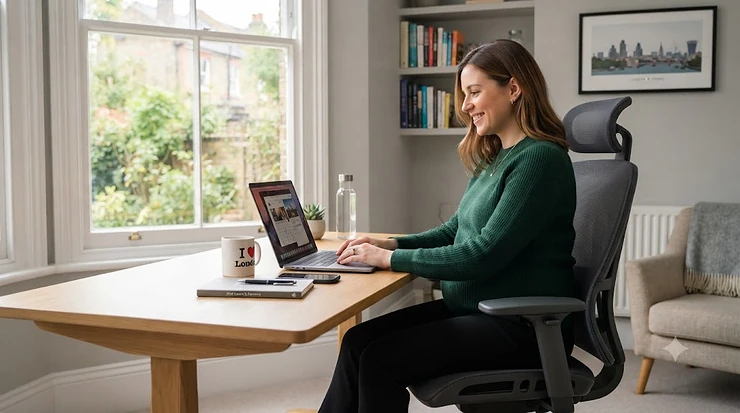
Somewhere around week 20, your favourite desk chair quietly turns against you. The seat that used to feel perfectly fine now digs into your hips after twenty minutes. Your lower back starts sending increasingly urgent memos. And that little swivel you used to do without thinking? Suddenly it feels like negotiating a three-point turn in a car park that’s shrinking by the week. A maternity office chair isn’t a novelty item or a “nice to have” — it’s the piece of furniture doing the most work to keep you upright, focused, and pain-free for the eight-or-so hours a day you’re glued to a screen.
Here’s the short version: a proper maternity office chair combines a wider, deeper seat pan, adjustable lumbar and sacral support, and a stable, easy-to-exit frame — features that accommodate a shifting centre of gravity and a growing bump without forcing you to perch, slouch, or wedge a cushion behind your back to compensate. It’s not a medical device, but it’s arguably the cheapest, most effective piece of preventative kit you can buy for a desk-based pregnancy.
Over the next few thousand words, we’ll walk through seven real chairs currently sold on Amazon UK, spanning budget to premium, and we’ll get properly nerdy about why seat depth, lumbar geometry, and armrest range matter more in the third trimester than they ever did before. We’ll also dig into the trickier stuff — office chair third trimester adjustments, SPD-friendly seating, and how to protect your sacroiliac joints — because a spec sheet alone won’t tell you which chair actually earns its keep. According to the NHS, pelvic girdle pain affects up to one in five pregnant women, and prolonged static sitting is one of the everyday habits that can make it worse. So let’s get your workstation sorted properly, one honest comparison at a time.
Quick Comparison Table
Before the deep dive, here’s the at-a-glance version. Prices shown are broad ranges only — always check the live listing, since Amazon pricing shifts constantly.
| Chair | Best For | Seat Width | Weight Capacity | Price Range |
|---|---|---|---|---|
| SIHOO M18 | Budget wide-seat pick | Extra-wide cushion | 330 lbs | £150-£200 |
| FelixKing Ergonomic Desk Chair | Budget reclining option | Standard-wide | 300 lbs | £120-£170 |
| GABRYLLY Ergonomic Office Chair | Easiest in-and-out access | Wide cushion | 280-300 lbs | £150-£220 |
| TRALT Ergonomic Office Chair | Best budget flip-arm pick | Standard-wide | 330 lbs | £130-£190 |
| Duramont Ergonomic Office Chair | Mid-range all-rounder | Wide + thick cushion | 350 lbs | £200-£280 |
| Autonomous ErgoChair Pro | Mid-premium adjustability | Wide backrest | 300 lbs | £300-£400 |
| Autonomous ErgoChair Ultra 2 | Premium full-body support | Extra-wide, breathable | 320 lbs | £450-£600 |
The pattern worth noticing here is that weight capacity and seat width don’t automatically move together — the FelixKing, for instance, has a narrower seat pan despite a respectable 300 lb rating, which matters more for hip-width comfort than raw load-bearing figures ever will. Budget doesn’t strictly correlate with support quality either: the sub-£200 SIHOO and TRALT both punch well above their price bracket on adjustability, while some pricier chairs spend their premium on materials rather than the specific features pregnancy demands. If sacroiliac stability is your priority, weight capacity is a red herring — seat depth adjustment and lumbar range matter more, and we’ll unpack exactly why in the sections ahead.
💬 Just one click — help others make better buying decisions too! 😊
Top 7 Maternity Office Chairs: Expert Analysis
Right, let’s get into it properly. Each of these chairs is a real, currently-listed product, and each earns its place here for a specific reason rather than a generic “it’s ergonomic” hand-wave. I’ve grounded the commentary in published specs and the aggregated sentiment from verified buyer reviews — where I couldn’t confirm a claim, I’ve said so rather than making it up.
1. SIHOO M18 Ergonomic Office Chair — widest budget seat cushion on this list
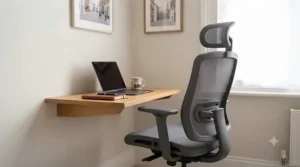
The M18’s standout feature is blunt but effective: it’s built around one of the widest seat cushions you’ll find under £200, and that extra few centimetres of hip room becomes genuinely valuable once a bump starts changing how you sit. The chair pairs that wide base with an adjustable headrest, 2D armrests, and a 330 lb weight capacity — numbers that translate to real-world flexibility rather than just marketing filler, since the wider load rating means the frame isn’t creaking under the additional postural shifting that pregnancy brings. Tilt lock lets you stop the recline exactly where you want it, which matters when “exactly where you want it” changes twice a day as your bump grows.
Based on the spec comparison against similarly priced rivals, the M18 is best suited to anyone in the first half of pregnancy who wants to get ahead of discomfort before it becomes a problem, or to a smaller-framed user who’s found most “wide” chairs still feel tight. Reviewers consistently report that the cushion holds its shape well over months of daily use, and the mesh backrest keeps things cool during longer stretches at the desk — a common complaint about foam-only alternatives is overheating, which this design sidesteps.
Pros:
- ✅ Extra-wide seat cushion suits a growing frame
- ✅ 330 lb capacity with sturdy tilt-lock mechanism
- ✅ Breathable mesh back reduces overheating
Cons:
- ❌ Lumbar support is fixed rather than fully adaptive
- ❌ Armrests only adjust in two directions
Sitting in the £150-£200 range, the M18 represents strong value if wide-seat comfort is your priority over deep customisation — check current price before buying, as third-party sellers can vary.
2. FelixKing Ergonomic Desk Chair — best reclining budget pick
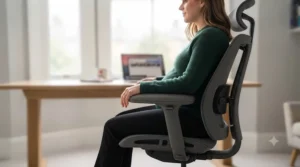
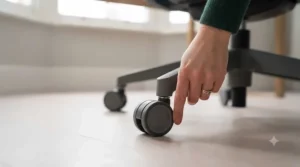
The FelixKing’s headline trick is a properly adjustable recline mechanism paired with roller-blade-style wheels that glide rather than judder across hard flooring — small detail, but one that matters when getting up from a chair fifteen times a day to stretch your legs. Key specs here include a curved, degree-adjustable headrest and separately adjustable lumbar and backrest panels, which the manufacturer notes are designed as two distinct pieces so the chair can adapt to different body shapes rather than forcing one fixed curve on everyone. In practice, that separated design means you can dial in more support low down (where a pregnant lower back typically needs it) without cranking the whole backrest forward.
What most buyers overlook about this model is that the front edge of the seat cushion is deliberately tilted to reduce thigh pressure — a feature that sounds minor until you’re six months pregnant and every extra millimetre of circulation matters. Reviewers frequently mention that assembly is refreshingly simple for a chair at this price, and the 300 lb capacity holds up under sustained daily use rather than sagging within weeks, which is a common failure point for budget chairs generally.
Pros:
- ✅ Adjustable recline with reliable roller-blade wheels
- ✅ Separated lumbar and backrest design for tailored support
- ✅ Tilted front seat edge reduces thigh pressure
Cons:
- ❌ Seat pan is narrower than others on this list
- ❌ Armrest padding is thin for long sessions
At around £120-£170, this is one of the cheapest genuinely adjustable options here — a sound pick if you’re outfitting a home office on a tight budget rather than a company expense account.
3. GABRYLLY Ergonomic Office Chair — easiest chair to get in and out of
GABRYLLY’s standout trick is the flip-up armrests, which sound like a small convenience until you’re seven months pregnant and trying to swivel sideways out of a chair without catching your bump on a fixed arm. The wide, extra-thick cushion supports a 90-120° tilt-lock range, so you can recline gently backward during a call without the chair fighting you, and the high back with integrated headrest gives full support up through the neck — useful for the upper-back tension that tends to creep in once your posture compensates for extra weight up front.
Based on aggregated buyer feedback, this chair earns particular praise for combining that wide cushion with genuinely smooth recline hardware, rather than the stiff, resistant mechanisms found on some similarly priced competitors. Reviewers consistently note that the breathable mesh back keeps things cool, and several specifically highlight how much easier the flip-up arms make getting in and out during later pregnancy — exactly the kind of practical, non-obvious detail a spec sheet alone won’t flag.
Pros:
- ✅ Flip-up arms make entry and exit far easier
- ✅ Smooth 90-120° tilt-lock recline range
- ✅ Wide, thickly padded cushion with headrest
Cons:
- ❌ Lumbar adjustment is less granular than premium rivals
- ❌ Some users report a firmer initial break-in period
Typically priced in the £150-£220 range, this is a strong mid-budget pick specifically for the third trimester, when mobility in and out of a seated position becomes the daily challenge.
4. TRALT Ergonomic Office Chair — best value flip-arm alternative
TRALT is the lesser-known name on this list, but it earns its spot with a genuinely wide seat and flip-up armrests at a price that regularly undercuts the bigger brands. The standout here is straightforward: solid stability and a properly wide seat pan for the money, without the premium mark-up that brand recognition usually adds. Adjustable lumbar support and breathable mesh keep the fundamentals covered, while the flip-up arms — much like the GABRYLLY above — make sitting closer to a desk (or exiting the chair entirely) noticeably easier as your bump grows.
Here’s what the spec sheet won’t tell you, but user reports suggest: assembly takes a bit more patience than some rivals, and the seat cushion itself could be plusher for very long sitting stretches. That said, reviewers who bought it specifically for lower back pain consistently flag the adjustable lumbar support as the standout feature, and the sturdy build quality holds up well against the wobble some ultra-budget chairs develop within months.
Pros:
- ✅ Genuinely wide seat pan at a budget price
- ✅ Flip-up armrests ease entry and exit
- ✅ Adjustable lumbar support eases lower back pain
Cons:
- ❌ Assembly is fiddlier than most competitors
- ❌ Seat cushion is firmer than some users prefer
Expect to pay somewhere in the £130-£190 range — genuinely excellent value if flip-up arms and lumbar adjustment are your two non-negotiables.
5. Duramont Ergonomic Office Chair — best mid-range all-rounder
Duramont’s calling card is its thick memory foam seat cushion, paired with a high-density breathable mesh back — a combination that manages to deliver plush comfort without the overheating that pure-foam chairs are notorious for. The frame carries a 350 lb capacity, reinforced with an aluminium base and smooth-rolling casters, and the whole thing is backed by a five-year warranty, which is unusually generous for this price bracket and suggests the manufacturer has real confidence in the build.
On paper this means a chair engineered for durability over years of use rather than months, and that’s exactly the kind of investment worth making when you’re likely to keep using the chair well past maternity leave — through the newborn-fog era of one-handed typing and beyond. What most buyers overlook about this model is that the memory foam cushion actively contours around a shifting body shape, which matters more in pregnancy than a static foam block that holds one fixed contour regardless of how your weight distribution changes month to month.
Pros:
- ✅ Thick memory foam seat contours to changing body shape
- ✅ 350 lb capacity with reinforced aluminium base
- ✅ Five-year warranty signals genuine build confidence
Cons:
- ❌ Assembly involves more steps than budget rivals
- ❌ Bulkier footprint suits larger home offices better
Sitting around £200-£280, the Duramont is the pick if you want genuine mid-range durability without stepping into premium pricing territory.
6. Autonomous ErgoChair Pro — best mid-premium adjustability
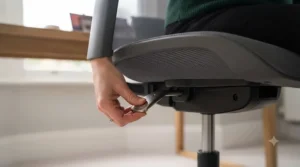
The ErgoChair Pro’s standout is its unusually wide backrest paired with fully adjustable armrests and headrest — a combination that gives you far more granular control than most chairs at this price point. Key specs include a durable frame rated to 300 lbs, thickly padded seat foam, and a breathable woven mesh back designed specifically to prevent the overheating that comes with long work sessions. That mesh-and-foam split matters practically: the seat stays supportive under sustained weight while the back stays cool, rather than forcing a compromise between the two.
Based on the spec comparison against similarly priced ergonomic chairs, the Pro is particularly well suited to anyone who’s found generic “one-size” ergonomic chairs too narrow through the shoulders or lower back — the wide backrest specifically accommodates postural shifts that come with a growing bump. Reviewers who’ve used it for extended stretches consistently praise the lumbar support and comfort of the mesh backrest and headrest combination, and several specifically note it holds up well across genuinely long sitting sessions rather than only feeling good for the first hour.
Pros:
- ✅ Unusually wide backrest for shoulder and lower-back room
- ✅ Fully adjustable armrests, headrest, and lumbar support
- ✅ Breathable mesh back prevents overheating on long days
Cons:
- ❌ No seat-depth adjustment on this specific model
- ❌ Recline mechanism feels stiffer than the Ultra 2
Priced roughly £300-£400, this is the pick for buyers who want serious adjustability without stepping all the way up to a flagship-tier chair.
7. Autonomous ErgoChair Ultra 2 — best premium full-body support
The Ultra 2 is Autonomous’s flagship, and its standout feature is genuinely maximal adjustability: lumbar support, headrest, and reclining functions all work together, backed by a 320 lb capacity and a frame built from eco-friendly, sustainable materials. The breathable design uses a spring-supported structure beneath a thinner foam layer, rather than relying purely on dense padding — a build choice that, according to independent reviewers, delivers a noticeably different, more responsive seated feel than traditional foam-block chairs.
Here’s what most spec sheets won’t spell out: that spring-and-mesh hybrid construction is specifically why the chair maintains support and airflow even during multi-hour sessions, rather than compressing flat the way cheaper foam chairs do after a few months of daily use. One independent tester who sat in the chair for six consecutive hours described the comfort as genuinely surprising for a mesh-based design — a useful data point precisely because it comes from someone with no financial stake in the review. For anyone entering the third trimester who’s already tried cushions, lumbar pillows, and footrests without lasting relief, this is the chair built to solve the problem at the structural level rather than patching around it.
Pros:
- ✅ Maximal adjustability across lumbar, headrest, and recline
- ✅ Spring-supported structure stays responsive over long sessions
- ✅ Sustainable, eco-friendly frame materials
Cons:
- ❌ Highest price point on this list
- ❌ Larger footprint needs adequate desk clearance
Expect to pay in the £450-£600 range — a genuine investment, but one that pays off if you’re spending eight-plus hours daily at your desk through the third trimester and beyond.
What Is a Maternity Office Chair?
A maternity office chair is a standard ergonomic desk chair adapted or specifically chosen for pregnancy, featuring a wider and deeper seat pan, adjustable lumbar and sacral support, easy-exit armrests, and a stable, supportive frame that accommodates a shifting centre of gravity, reduced hip mobility, and the postural changes that accompany a growing bump throughout each trimester.
It isn’t a distinct product category with its own dedicated manufacturing line — with a couple of niche exceptions, most “maternity” recommendations are simply well-specified ergonomic chairs that happen to tick the right boxes: seat width, adjustable depth, and genuine lumbar range. That’s actually good news, because it means you’re shopping from a huge, competitive pool of ergonomic office furniture rather than a small, marked-up niche market.
How to Choose an Office Chair for the Third Trimester
By the third trimester, comfort stops being a preference and becomes a daily necessity — here’s how to choose one that actually works, step by step.
- Prioritise seat depth adjustment first. As your bump grows, you’ll need to sit further back for lumbar contact while still keeping your knees at the right angle — a fixed-depth seat can’t do both.
- Check the weight capacity with headroom to spare. Look for a rating comfortably above your current weight, since pregnancy weight gain plus mobility changes both affect how a chair performs under load.
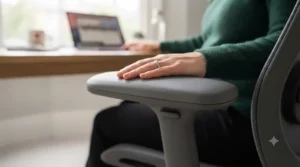
- Test the armrest range, or read reviews carefully if buying online. Flip-up or fully retractable arms make a measurable difference to comfort once you’re navigating a desk with a bump in the way.
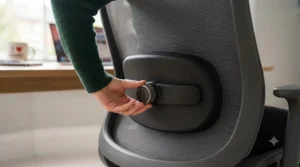
- Favour adjustable over fixed lumbar support. A chair that lets you shift support lower, toward the sacrum, adapts far better across trimesters than one fixed lumbar curve.
- Look for breathable mesh over dense foam-only builds. Pregnancy raises core body temperature for many women, and a chair that traps heat compounds an already uncomfortable problem.
- Confirm the base is stable and low to the ground. A wider five-point base reduces tip risk when you’re using the chair to help push yourself upright.
- Budget for the whole pregnancy, not just today. A chair bought at 12 weeks needs to still work at 36 weeks — buying with adjustability headroom now saves a second purchase later.
Third Trimester Office Chair vs Standard Office Chair
The difference between a standard office chair and one properly suited to the third trimester isn’t cosmetic — it’s structural, and it shows up exactly where you’d expect: seat geometry and support range.
A standard chair is designed around an average, static adult frame, with fixed or narrowly adjustable seat depth and a lumbar curve calibrated for a body that isn’t changing shape month to month. A third-trimester-ready chair, by contrast, needs a wider range of seat depth adjustment specifically to manage the “2-3 finger gap” ergonomists recommend behind the knee — too little space restricts circulation, too much removes lumbar contact entirely. Standard chairs also tend to fix lumbar support at a single height, whereas pregnancy specifically benefits from being able to shift that support lower, toward the sacrum, as the pelvis tilts forward under the bump’s weight.
| Feature | Standard Office Chair | Third Trimester Chair |
|---|---|---|
| Seat depth | Fixed or minimal adjustment | Wide adjustable range |
| Lumbar support | Fixed height | Height-adjustable, sacral-capable |
| Armrests | Fixed or basic 2D | Flip-up or fully retractable |
| Exit ease | Not a design factor | Explicit design priority |
Reading across the table, the gap isn’t about luxury features — it’s about whether the chair can move with your body rather than forcing your body to compensate for the chair. A £150 chair with genuine seat-depth and lumbar adjustability will outperform a £400 designer chair that’s rigidly fixed in those two areas, which is exactly why price alone is a poor proxy for suitability here.
Setting Up Your Chair for Every Trimester
Buying the right chair is only half the job — setup determines whether you actually get the benefit day to day.
In the first trimester, focus on getting the fundamentals right early: seat height so your feet sit flat on the floor, and lumbar support positioned at your natural lower back curve. It’s tempting to skip this stage since discomfort hasn’t started yet, but establishing good habits now pays off later. By the second trimester, expect to start adjusting seat depth roughly every few weeks as your centre of gravity shifts forward — the “sit back, feel the pressure, ease off one click” method that ergonomists recommend works well here, since it’s a physical feedback loop rather than a guess. Common mistakes in these first months include leaving armrests too high, which forces shoulders up into a hunched position, and forgetting to recheck monitor height after adjusting seat height, which quietly reintroduces neck strain you thought you’d fixed.
By the third trimester, shift your priority toward the sacral region rather than the mid-back, since the pelvis has typically tilted further forward by this point, and add a tilted footrest if edema in the ankles becomes noticeable by afternoon. Optimisation tricks worth knowing: loosen the tilt tension slightly so standing up requires less forward effort, and set a recurring 30-minute reminder to stand, stretch, or walk — static sitting compounds every other issue on this list, and movement genuinely helps circulation and comfort more than any single chair feature can.
Real-World Scenarios: Matching Chairs to Situations
Different working patterns call for different priorities, so here’s how three common scenarios map onto the chairs above.
The freelancer on a tight budget, first trimester, working from a small home office: the FelixKing or TRALT make the most sense here — both offer genuine lumbar and recline adjustability without a big upfront cost, and neither demands a large footprint. Given a modest budget and a body that hasn’t yet needed major accommodation, spending £600 on a flagship chair this early doesn’t offer proportional value yet.
The office-based employee working full days at a desk, second trimester, moderate budget: the GABRYLLY or Duramont fit well, combining flip-up arms or contouring memory foam with a mid-range price that reflects a genuine step up in adjustability and durability. Since this scenario involves sustained daily hours rather than occasional use, the extra investment in build quality earns its keep.
The remote professional working long hours through the third trimester, higher budget, prioritising long-term comfort: the Autonomous ErgoChair Pro or Ultra 2 justify their price here, since maximal adjustability and spring-supported comfort become genuinely valuable across eight-hour days when mobility and comfort are both diminishing. A chair that will still be useful well past maternity leave — through months of one-handed feeding-and-typing — is worth the premium for someone using it daily for years.
Problem → Solution: Fixing Common Pregnancy Sitting Problems
Most pregnancy-related sitting discomfort traces back to one of a handful of recurring issues — here’s how to solve each one directly.
Problem: lower back pain building through the afternoon. Solution: shift lumbar support lower toward the sacrum rather than the mid-back, and pair it with a chair offering height-adjustable lumbar, such as the SIHOO M18 or FelixKing.
Problem: legs feeling numb or swollen by end of day. Solution: check the “2-3 finger gap” behind the knee and adjust seat depth accordingly; a tilted footrest paired with a chair like the Duramont, which has genuine seat cushioning depth, helps circulation noticeably.
Problem: struggling to get in and out of the chair comfortably. Solution: switch to flip-up armrests, as found on the GABRYLLY and TRALT, which remove the physical obstacle a fixed arm creates against a growing bump.
Problem: overheating during long sitting sessions. Solution: prioritise breathable mesh backrests over dense foam-only builds — the Autonomous ErgoChair Ultra 2’s spring-and-mesh hybrid construction is specifically built to address this.
Problem: shoulder and upper-back tension from compensating posture. Solution: look for a genuinely wide backrest and properly adjustable armrests, such as the Autonomous ErgoChair Pro offers, so your shoulders aren’t held in a fixed, elevated position all day.
SPD-Friendly Seating: Features That Actually Matter
If you’re dealing with SPD, also now more commonly called pelvic girdle pain, chair shopping shifts from “nice to have” to genuinely necessary, and it’s worth knowing which features actually help versus which are marketing noise.
What matters: adjustable seat depth that lets you sit without your knees spread awkwardly wide, a stable, low-to-the-ground base that doesn’t require twisting to exit, and lumbar support that can shift toward the sacrum rather than staying fixed at mid-back height. According to RCOG guidance, pelvic girdle pain is commonly aggravated by uneven joint movement, which is exactly why a chair that forces asymmetric twisting to stand up or turn can make daily symptoms measurably worse.
What doesn’t matter nearly as much: gaming-chair-style aesthetics, built-in massage functions, or maximal weight capacity beyond what you actually need — these are comfort extras rather than SPD-specific support. Reviewers consistently note that flip-up or fully retractable armrests, like those on the GABRYLLY and TRALT, make the single biggest practical difference for anyone managing pelvic joint discomfort, since they remove the twisting motion that a fixed-arm chair otherwise forces during every entry and exit.
Sacroiliac Joint Pregnancy Support and Workplace Safety
The sacroiliac joints — where your pelvis meets the base of your spine — come under particular strain during pregnancy as the hormone relaxin loosens surrounding ligaments in preparation for birth, and prolonged static sitting is one of the everyday habits that can aggravate that instability. A supportive chair helps by keeping the pelvis in a more neutral position rather than allowing it to tilt forward unsupported for hours at a stretch.
There’s also a workplace safety angle worth knowing about. Under UK law, employers have a legal duty to carry out an individual risk assessment once notified of a pregnancy, and posture-related workstation issues are explicitly listed among the common risks the Health and Safety Executive expects employers to address. In practice, that means requesting an appropriate chair isn’t an imposition — it’s a reasonable adjustment your employer is legally expected to consider, and it’s worth raising directly with HR or your line manager rather than quietly working through discomfort.
Wide Seat Pregnancy Chairs for Different Body Types
Not every pregnant body needs the same seat width, and “wide seat” as a marketing term covers a surprisingly broad range in practice.
For smaller-framed users, an extra-wide seat can sometimes feel unsupportive without the right bolstering — the SIHOO M18 strikes a good balance here, offering width without sacrificing the structured edges that keep smaller frames from sliding around. For larger-framed or taller users, weight capacity and seat depth become just as important as raw width; the Duramont’s 350 lb rating and thick cushion depth accommodate a wider range of body types without the seat pan feeling cramped. For users managing SPD or pelvic pain specifically, the priority shifts again toward ease of exit over sheer seat width, making the flip-up-armed GABRYLLY and TRALT particularly relevant regardless of body size.
The broader point is that “one-size-fits-most” doesn’t really apply here — matching seat width to your specific frame and stage of pregnancy matters more than chasing the single widest option on the market.
Long-Term Cost and Maintenance
A maternity office chair is rarely a single-use purchase, and thinking about cost-per-use rather than sticker price alone tends to produce better decisions.
A £150 chair used daily for two years works out to roughly 20 pence a day, while a £500 chair used daily for five years — a realistic lifespan for something like the Autonomous ErgoChair Ultra 2 — works out to around 27 pence a day, a far smaller gap than the upfront price difference suggests. Maintenance-wise, mesh-backed chairs generally need less upkeep than foam-only builds, since foam compresses and needs replacing sooner under sustained daily weight, whereas mesh tends to retain its tension for years with only occasional tightening of the frame bolts. Budget chairs with a shorter warranty, such as the one-year cover typical of entry-level SIHOO and FelixKing models, are worth factoring into total cost of ownership if you expect years of continued use — a five-year warranty, like Duramont’s, effectively insures against the most common failure points (gas lift, casters, and cushion compression) for considerably longer.
Features That Actually Matter (And Those That Don’t)
Marketing copy on office chairs tends to bury the genuinely useful features under a pile of impressive-sounding but marginal ones, so here’s an honest filter.
What actually matters: adjustable seat depth, height-adjustable lumbar support, a stable and appropriately wide base, breathable materials, and easy-exit armrests. These five features directly address the specific physical changes pregnancy brings, and skimping on any one of them tends to show up as discomfort within weeks rather than months.
What matters far less than the marketing suggests: built-in massage functions, excessive weight capacity beyond your actual needs, headrests with elaborate multi-directional pivoting, and premium leather upholstery, which tends to trap heat rather than help. None of these are actively bad, but they’re comfort-and-aesthetics extras rather than pregnancy-specific necessities, and paying a significant premium for them over genuinely functional adjustability is usually a poor trade.
Buyer’s Decision Framework
If you’re still weighing options, this simple framework should get you to a decision quickly.
If you’re in your first or second trimester and working to a tight budget, choose the FelixKing or TRALT, because genuine lumbar and recline adjustability matters more right now than premium materials. If you’re managing SPD or pelvic girdle pain specifically, choose the GABRYLLY or TRALT, because flip-up armrests directly reduce the twisting motion that aggravates joint discomfort. If you’re working full eight-hour days through the third trimester and can invest more, choose the Autonomous ErgoChair Pro or Ultra 2, because maximal adjustability and spring-supported comfort pay off proportionally with daily use. And if you simply want the widest, most forgiving seat pan at the lowest realistic price, the SIHOO M18 remains the straightforward answer.
Frequently Asked Questions
❓ Is a maternity office chair worth it in the first trimester?
❓ What's the best chair for pregnancy back pain specifically?
❓ Can a wide seat chair help with SPD?
❓ How often should I adjust my chair during pregnancy?
❓ Do employers have to provide a suitable chair for pregnant staff?
Conclusion
A maternity office chair won’t make pregnancy comfortable, exactly — nothing quite manages that — but it removes one entirely avoidable source of daily pain from a season of life that already has enough discomfort built in. The seven chairs above cover a genuinely wide spread, from the budget-friendly SIHOO M18 and TRALT through to the maximally adjustable Autonomous ErgoChair Ultra 2, and the right pick depends far more on your specific trimester, budget, and body than on chasing the single “best” option on paper.
If there’s one takeaway worth remembering, it’s that seat depth and lumbar adjustability matter more than almost any other spec on the list — width and cushioning help, but a chair that can genuinely move with your changing body across nine months will outperform a static, fixed one every time. And if discomfort persists despite a good setup, it’s always worth raising with your midwife, GP, or a physiotherapist rather than assuming furniture alone will solve it; organisations like Acas also offer clear, practical guidance if you need to raise workplace adjustments with an employer. Your back — and the small person currently borrowing your ribcage as a footrest — deserve the support.
✨ Don’t Miss These Exclusive Deals!
🔍 Take your workspace comfort to the next level with these carefully selected maternity office chairs. Click on any highlighted pick to check current pricing and availability. The right chair could make the rest of your pregnancy at your desk genuinely comfortable!
Recommended for You
- Office Chair for Pregnancy: 7 Best Picks Reviewed for 2026
- Best Office Chair to Improve Blood Flow to Legs: 7 Top UK Picks (2026)
- Best Office Chair for Poor Circulation: 7 Top UK Picks (2026)
Disclaimer: This article contains affiliate links. As an Amazon Associate, I earn from qualifying purchases. If you purchase products through these links, we may earn a small commission at no additional cost to you.
✨ Found this helpful? Share it with your friends! 💬🤗
