
In This Article
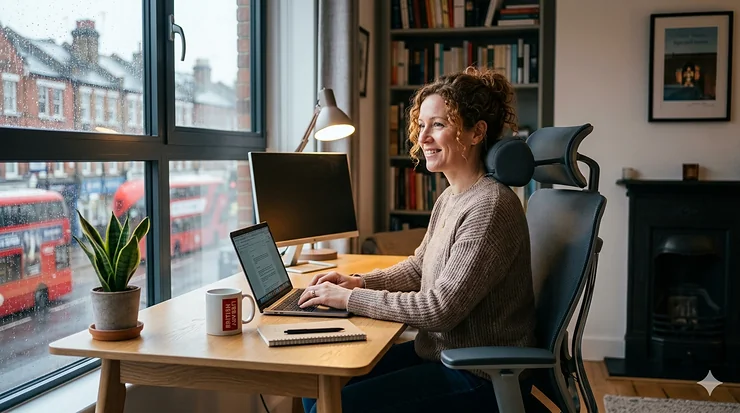
You know that feeling. It’s 3pm. You’ve been staring at a spreadsheet since nine. Your shoulders are somewhere around your earlobes, your head is drifting forward like a satellite losing orbit, and there’s a dull, insistent ache radiating from the base of your skull down into your trapezius muscles. Lovely.
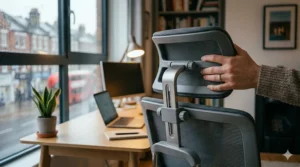
Here’s the uncomfortable truth: that pain almost certainly isn’t your fault — it’s your chair’s. A poorly designed seat forces your spine into a C-slump, and when your lower back collapses, your cervical spine has to compensate. Suddenly, your neck is doing the structural work of your entire back. It’s exhausting. It’s also entirely preventable.
Finding the right office chair for neck pain isn’t as simple as buying the most expensive thing with “ergonomic” printed on the box. The word has been stretched so thin it barely means anything anymore. What actually matters is a combination of adjustable cervical support, proper lumbar engagement, and armrest positioning that lets your shoulders drop where they belong — rather than hovering anxiously at ear height. According to research published by the British Medical Journal, musculoskeletal disorders are among the leading causes of work-related absence in the UK, and poor sitting posture is a significant contributing factor.
In this guide, I’ve pulled together seven chairs available right now on Amazon.co.uk — verified UK stock, Prime-eligible where noted — spanning from sensible budget picks to premium engineering. Every one of them has been selected specifically for cervical spine alignment and neck pain relief, not just because they look tidy in a home office.
Whether you’re working from a Victorian terrace in Bristol, a modern flat in Manchester, or an attic conversion in Edinburgh, this guide has something for you.
💡 What is an office chair for neck pain? It’s a chair designed with an adjustable headrest, proper lumbar support, and ergonomic backrest geometry that collectively keeps the cervical spine in neutral alignment — reducing the muscular strain that causes neck and shoulder pain during long working hours.
Quick Comparison: 7 Best Office Chairs for Neck Pain UK
| Chair | Headrest Type | Lumbar Support | Armrests | Price Range (GBP) | Best For |
|---|---|---|---|---|---|
| SONGMICS OBN53BKUK | 2D Adjustable | Fixed lumbar pad | Adjustable | Under £90 | Budget home workers |
| SONGMICS OBN91BK | 2D Adjustable | Adjustable pad | Height-adj. | £80–£120 | Value seekers, smaller frames |
| SIHOO M57 | 2D Adjustable + neck contour | 3D adjustable | 3D | £120–£170 | Everyday workers, best value |
| SIHOO M56B | 3D dual-joint headrest | 3D dynamic | 3D | £200–£280 | Serious desk workers, all-day sitters |
| FlexiSpot BS8 | Arch-shaped full coverage | 9-level adj. | Lift armrests | £160–£230 | UK home office setups |
| Hbada E3 Air | 3D biaxial headrest | 3-zone dynamic | 3D | £220–£300 | Tall users, chronic neck issues |
| Hbada E3 Pro | 4D biaxial headrest | 8-way dynamic | 6D | £300–£400 | Power users, premium ergonomics |
All seven chairs are currently available and dispatched from Amazon.co.uk. Prime members can typically expect next-day delivery on most of these.
From the table above, the clear pattern is this: as you move up the price range, headrest adjustability improves significantly — from basic up/down movement to full biaxial rotation that can cradle the exact curve of your cervical spine. Budget buyers should note that the SONGMICS options sacrifice dynamic lumbar for their lower price, which means they work well for lighter users or mixed-use scenarios, but may not provide adequate support for those with existing neck or back conditions. For chronic neck pain, the Hbada E3 Pro’s 4D headrest genuinely justifies the premium.
💬 Just one click — help others make better buying decisions too! 😊
✨ Don’t Miss These Exclusive Deals!
🔍 Take your neck health to the next level with these carefully selected chairs. Click any highlighted product to check current pricing and availability on Amazon.co.uk. These picks will help you find exactly what you need!
Top 7 Office Chairs for Neck Pain: Expert Analysis
1. SONGMICS OBN53BKUK Ergonomic Mesh Office Chair
The SONGMICS OBN53BKUK is the one to buy if you want a genuinely capable ergonomic chair without spending a penny over £90. It won’t have you writing odes to its lumbar support, but it gets the fundamentals right in a way that most chairs in this price bracket frankly don’t bother with.
The headrest adjusts both in height and angle — up/down movement and rotational tilt — which is surprisingly functional for the money. The mesh backrest is breathable and high-resilience, meaning it won’t compress into a useless pancake after six months of British working-from-home endurance. The steel frame carries up to 150 kg and the chair has passed the BIFMA X5.1 safety test, so structurally at least, it’s not messing about.
What most budget-chair buyers overlook: this chair’s adjustable lumbar pad is basic, which means it suits those with mild discomfort rather than chronic cervical spine issues. If you’re a teacher doing evening marking, a student grinding through deadlines, or a part-time remote worker, it delivers excellent value. However, if you’re sitting eight-plus hours daily and already have a diagnosed neck condition, you’ll want to invest more.
UK reviewers consistently mention the ease of assembly (no swearing required — quite rare in flatpack furniture) and the solid feeling of the steel base. One UK customer on Amazon noted it handles someone 6’5″ comfortably, which is encouraging.
✅ Pros:
- Excellent value under £90
- BIFMA X5.1 tested — proper safety credentials
- Adjustable headrest and lumbar at this price point
❌ Cons:
- Lumbar support is basic; not ideal for chronic pain
- Armrests offer limited adjustability
Price range: Under £90 — strong entry-level value.

2. SONGMICS OBN91BK Ergonomic Mesh Chair
The SONGMICS OBN91BK steps the brand’s game up a notch. It keeps the same reliable BIFMA X5.1 certification and 150 kg capacity, but adds four reclining positions and a more structured headrest that moves up and down to meet necks of various heights.
The seat height range of 47–55 cm works well for most UK desk setups — particularly important if you’re working at one of those slightly-too-high kitchen tables that became a “home office” in 2020 and never really stopped. The breathable mesh won’t have you peeling yourself off the seat after lunch, which matters more in a centrally heated British flat than people give it credit for. The frame is steel, the castors are smooth on both carpet and hardwood (a genuine consideration for older UK homes), and the overall build quality punches above its price.
Where this chair earns its spot on this list is the headrest-reclining combination. When you lean back to think — or to stare at the ceiling wondering why you agreed to that 4pm call — the headrest follows your head rather than jabbing you in the back of the skull. It’s a small thing that makes a tangible difference during long days.
This chair suits shorter to average-height users (roughly 5’3″ to 5’11”) best, and it’s particularly sensible for UK home offices where you want something that looks tidy, assembles easily, and doesn’t announce itself as a gaming chair to visiting relatives.
✅ Pros:
- Four reclining positions for varied working postures
- Adjustable headrest suits average-height users well
- Clean aesthetic for home office or flat
❌ Cons:
- Not the best for very tall users (above 6’1″)
- Armrest height adjustment is limited
Price range: £80–£120 — solid mid-budget choice.
3. SIHOO M57 Ergonomic Mesh Office Chair
This is, without much competition, the best-value office chair for neck pain currently on Amazon.co.uk. Over 5,800 UK ratings and Amazon’s Choice status aren’t just marketing gloss — the M57 has genuinely earned its reputation through sheer reliability.
The S-shaped backrest is engineered to follow the natural double-curve of the spine from lumbar to cervical, meaning the headrest actually lands in the right place rather than being a decorative cushion that misses your neck entirely. The 3D armrests adjust in three directions — height, forward/back, and rotation — and this matters enormously for neck pain. When your elbows are properly supported, your shoulders drop, and when your shoulders drop, the trapezius muscles finally stop doing their impression of tightened bolts. The breathable mesh backrest uses recycled material certified to Global Recycled Standard (GRS), so it carries its sustainability credentials legitimately.
Where the M57 genuinely impresses is in its longevity. The spec sheet won’t tell you this, but the chair is consistently rated by UK buyers as maintaining its structural integrity and support quality well beyond 18 months of daily use — which puts it well ahead of many cheap alternatives that begin to sag conspicuously by Christmas.
This is the chair for the UK professional who sits 6–8 hours daily, wants proper ergonomic credentials without spending over £170, and would rather buy something reliable once than replace a flimsy budget option every year.
✅ Pros:
- 5,800+ UK ratings; proven long-term reliability
- S-shaped backrest genuinely supports cervical and lumbar curve
- 3D armrests help relieve shoulder and neck strain
❌ Cons:
- Headrest is 2D only; less flexible than premium options
- Larger framed users (over 6’3″) may find the fit modest
Price range: £120–£170 — outstanding value. Currently in stock and dispatched from Amazon.
4. SIHOO M56B Ergonomic High-Back Office Chair
The SIHOO M56B is what the M57 graduates into when your neck decides it’s done being politely ignored. This is a more seriously engineered chair, and it shows.
The headrest on the M56B features dual-joint adjustability — meaning it rotates around two axes rather than just sliding up and down. In practice, this means you can position it to cradle the exact curve of your cervical spine whether you’re sitting upright typing, leaning back on a call, or resting your head sideways during a moment of existential contemplation. The 3D dynamic lumbar support is the headline feature: it flexes and self-adapts as you move, rather than being a fixed pad you set once and hope for the best. The ultra-wide backrest (51.5 cm) wraps around both sides of the thoracic spine, which takes significant strain off the neck by supporting the whole posterior chain.
The M56B holds TÜV, REACH, and EN1335 certifications — the latter being the European standard for office chairs — along with US SGS BIFMA compliance, and the pneumatic lift carries its own SGS certification. For UK buyers, this means you’re getting a chair that has been independently verified for safety and ergonomic standards, not just self-certified. It comes with a three-year warranty, and the three tilt positions (110°, 120°, 130°) give you proper reclining options without feeling like you’ve fallen into a dentist’s chair.
If you sit eight or more hours a day, suffer from upper back tightness that radiates into the neck, or simply want a properly engineered chair that will last, the M56B is the sweet spot between price and quality.
✅ Pros:
- Dual-joint 3D headrest adapts precisely to cervical curve
- Self-adapting dynamic lumbar — proper engineering
- TÜV/EN1335/SGS certified; three-year warranty
❌ Cons:
- Assembly takes some patience (30–40 minutes)
- Pricier than M57; may require budgeting
Price range: £200–£280 — premium value for serious desk users.
5. FlexiSpot BS8 Ergonomic Mesh Office Chair
FlexiSpot is the brand behind some of Britain’s best-regarded standing desks, and the BS8 applies the same ergonomic thoughtfulness to its seating. This chair is sold directly through FLEXISPOTUK on Amazon — which means UK warranty support, UK-dispatched stock, and a brand that actually has a track record with British customers.
The BS8’s signature feature for neck pain sufferers is its arch-shaped, full-coverage headrest. Rather than a narrow pad that supports a small strip of the skull base, it wraps around to support the back of the head and both sides of the neck. For anyone with upper cervical tension — the kind that starts between the shoulder blades and works its way up by lunchtime — this broader contact area is genuinely meaningful. The contoured lumbar support adjusts vertically by 5 cm and adapts to the natural curvature of the spine, with the 9-level adjustable backrest giving you fine-grained control over how upright or reclined the chair sits.
The lift armrests fold up when not in use, which is a thoughtful feature for smaller UK home offices where desk space is at a premium — particularly useful in a study room or box room setup where the chair needs to tuck neatly under a compact desk. The S-shaped backrest design follows FlexiSpot’s 20-year ergonomics heritage. Available in grey and black, it looks smart without being ostentatious.
This chair particularly suits the UK buyer who already uses a FlexiSpot standing desk (the combination is well-documented among UK remote workers), or who simply wants a reliable ergonomic option from a brand with proper UK customer support.
✅ Pros:
- Arch-shaped headrest provides broad cervical coverage
- 9-level adjustable backrest for precise positioning
- Sold directly by FlexiSpotUK — strong after-sales support
❌ Cons:
- Headrest isn’t as dynamically adjustable as Hbada alternatives
- Lift armrests suit some users better than 3D options
Price range: £160–£230 — strong mid-range option.
6. Hbada E3 Air Ergonomic Office Chair
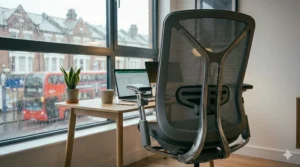
The Hbada E3 Air is where neck pain relief starts to get seriously technical. This isn’t just a chair with a headrest bolted on as an afterthought — it’s a system designed around the principle that neck discomfort almost always traces back to poor support at multiple points simultaneously.
The E3 Air’s T-Shape Support System is Hbada’s own design, and it’s clever: rather than treating the neck, back, and shoulders as separate problems, it integrates support across all three zones. The 3-zone dynamic lumbar support uses 8-way adjustability, meaning you can tune it to precisely the right position for your lower back curvature — and when your lower back is genuinely supported, your upper spine follows suit without the compensatory tension that typically ends up in your neck muscles. The 3D biaxial headrest rotates through a 70° dual-axis range, adjusts 4.5 cm up and down, and slides 5.5 cm forward and back, which is a genuinely impressive range for this price tier.
The gravity-sensing chassis is worth highlighting for UK buyers who sit in varied postures throughout the day — it adjusts its resistance based on your weight, so the recline feels natural whether you weigh 60 kg or 100 kg. The 140° reclining range, breathable mesh, and adjustable seat depth make this a complete ergonomic package. The E3 Air has been certified by IGR, BIFMA, SGS, and TÜV, and won a London Design Award — which means it’s been independently verified by bodies relevant to UK buyers.
This chair is particularly well-suited to taller UK users (up to about 195 cm) and anyone who has tried cheaper options and found them inadequate for proper neck support.
✅ Pros:
- T-Shape System addresses neck, back, and shoulders together
- 3D biaxial headrest with 70° dual-axis rotation
- London Design Award winner; BIFMA and TÜV certified
❌ Cons:
- Takes time to dial in all the adjustments correctly
- Larger footprint than entry-level options
Price range: £220–£300 — excellent value for the engineering on offer.
7. Hbada E3 Pro Ergonomic Office Chair
If you take neck pain seriously — and after months of wincing through meetings, you really should — the Hbada E3 Pro is the chair that takes the engineering of the E3 Air and pushes it further still. This is the most comprehensively adjustable chair on this list, and at its price point, it genuinely competes with chairs costing significantly more from premium brands.
The headline upgrade is the 4D biaxial headrest. Where the E3 Air gives you 3D movement, the Pro adds a fourth dimension: the headrest bracket and cushion each rotate independently, providing 70° of dual-axis rotation that can accommodate almost any head position without strain. The 5.5 cm front/back slide and 4.5 cm height adjustment mean that whether you’re 5’3″ or 6’4″, the headrest will actually find your neck rather than hovering somewhere in the approximate vicinity of it. The 6D adjustable armrests go further still — front/back by 3 cm, up/down by 7.5 cm, left/right by 3 cm, 70° rotation, 40° flip, and 6° dynamic tilt. In short, they move in every direction human anatomy could plausibly demand.
The backrest has a 9-position liftable adjustment covering 7 cm of vertical range, making it genuinely suitable across a wide range of body sizes — a practical consideration for households where the same chair might be used by multiple people. The 8-way dynamic lumbar support wraps comprehensively around the lower back. It reclines to 140° with a lockable tilt tension.
UK reviewers consistently describe this as a transformative upgrade from mid-range alternatives, with several specifically noting a reduction in neck and upper back pain within the first two weeks of use. It’s certified by IGR, BIFMA, SGS, TÜV, and SGS — independently verified ergonomic credentials, not just self-declared. Available in black and grey, Prime-eligible on Amazon.co.uk.
✅ Pros:
- 4D biaxial headrest — the most adjustable on this list
- 6D armrests provide exceptional shoulder and neck relief
- Comprehensively certified; suits users from 155–195 cm
❌ Cons:
- Premium price; requires a considered budget
- The sheer number of adjustments can feel overwhelming initially
Price range: £300–£400 — the definitive investment for chronic neck pain sufferers.
How to Set Up Your Chair Correctly: A Practical Guide for UK Home Workers
Buying the right chair is only half the battle. The other half — the part most people skip entirely — is actually setting it up properly. A £400 chair adjusted incorrectly will hurt you just as effectively as a £40 one.
Step 1: Start from the floor up. Adjust seat height first. Your feet should rest flat on the floor (or on a footrest), with your thighs roughly parallel to the ground. If you’re working at a typical UK kitchen table or home office desk (around 75 cm high), this usually means a seat height of roughly 45–50 cm for average-height adults.
Step 2: Set lumbar support before anything else. The lumbar support should sit at your belt line — the inward curve of your lower back, not your mid-back. Press it gently into your spine so you feel support without pressure. This single adjustment does more for neck pain than any headrest, because it’s what allows the entire spine to stack correctly.
Step 3: Position armrests so shoulders can actually drop. Raise or lower armrests until your elbows rest at 90° with your shoulders completely relaxed. Not slightly relaxed — properly dropped. If your shoulders are even slightly elevated to reach the armrests, you’re feeding tension directly into the trapezius and from there into the neck. This is where 3D and 4D armrests earn their keep.
Step 4: Adjust the headrest for reclining, not upright posture. This surprises people. The headrest is designed to support your head when you lean back — during calls, thinking time, or rest breaks — not to contact your head while you’re sitting bolt upright. Position it so it meets the base of your skull at about 100–110° recline. If you set it too far forward to contact your head upright, it will actually push your head into forward head posture and make neck pain worse.
Step 5: Check monitor height. Your eyes should naturally land on the top third of your screen with your head in neutral position. In many UK home setups — particularly those using a laptop on a desk — the screen is far too low, forcing a chin-down posture that no chair can fix. A monitor riser or adjustable arm costs very little and makes an enormous difference. The NHS specifically advises on workstation setup as part of its guidance on preventing musculoskeletal disorders.
Common UK-specific pitfall: In older British homes with lower ceilings and compact rooms, people often choose chairs that are slightly too short to avoid feeling cramped. If this is you, prioritise a footrest over compromising seat height — your spine will thank you.
Real UK Users, Real Scenarios: Which Chair Works for You?
Profile 1: The London Commuter–Turned–Remote Worker You used to commute 90 minutes a day on the Overground, which is no longer destroying your back. Now you sit at a desk in a one-bedroom flat in Zone 3 for nine hours straight, and somehow you’ve traded train-shoulder for desk-neck. Budget: around £150–£200. Space: compact. Priority: something that fits under a small desk and doesn’t look like gaming equipment. → The SIHOO M57 is your answer. It’s compact, folds its armrests, looks clean, and has the 3D armrests and S-curve backrest to actually address the problem. Its 5,800+ UK ratings tell you it’s been tested by people in exactly your situation.
Profile 2: The Part-Time Home Worker in a Terraced House in Sheffield You work from home three days a week in a study that doubles as a guest bedroom. You’re 5’10”, 45 years old, and your neck has started making its dissatisfaction known with an impressive repertoire of clicks and aches. Budget: £180–£280. → The SIHOO M56B or FlexiSpot BS8 fits perfectly here. Both offer proper dynamic lumbar, a solid headrest, and UK-based customer support. The BS8 in particular suits the home office aesthetic without screaming “ergonomics enthusiast.”
Profile 3: The Senior Developer in a Manchester Home Office Working Eight-Hour Days You’re tall (6’2″), sit all day, and your neck pain is no longer occasional — it’s a full-time colleague. You need the engineering to match the hours. Budget: £280–£400. → The Hbada E3 Pro is built for you. The 4D headrest adjusts to your height without compromise, the 6D armrests handle all-day typing, and the T-Shape support system addresses your neck, shoulders, and back as an integrated unit rather than three separate problems.

How to Choose the Right Office Chair for Neck Pain: 6 Criteria That Actually Matter
Choosing an office chair for neck pain in the UK is not, despite what the marketing suggests, about finding the chair with the most adjustment points. It’s about finding the right adjustments for your specific body and working habits. Here’s what genuinely makes the difference.
1. Headrest adjustability — beyond just height. A headrest that only moves up and down is better than nothing, but only marginally. What you need is a headrest that adjusts both height and angle (tilt), and ideally also forward/back depth. Most cheaper chairs skip the depth adjustment, which means the headrest either touches your neck at the wrong angle (pushing your head forward) or misses you entirely. Look for chairs labelled “2D” (height + tilt) at minimum; “3D” or “4D” if your pain is significant.
2. Dynamic lumbar support, not a static pad. A fixed lumbar pad is set once and stays put. It helps when you’re sitting in one position. The moment you shift, lean, or adjust, it stops doing its job. Dynamic lumbar — the kind found in the Hbada E3 series and SIHOO M56B — moves with your body. This keeps your lower spine supported in all positions, and because the lumbar directly influences cervical alignment, it matters as much as the headrest.
3. Armrest positioning — specifically 3D or 4D. Standard armrests move only up and down. But your elbows aren’t static — you type, you think, you rest, you reach. Armrests that can’t follow these movements force your shoulders into a constant low-grade shrug. That tension travels up to the neck. Invest in at least 3D armrests (height, forward/back, rotation) if you’re serious about neck pain relief.
4. Seat depth adjustment. Often overlooked entirely. If the seat is too deep, you either sit forward (losing lumbar support) or jam your knees against the front edge (cutting off circulation). Both lead to compensatory postures that eventually hurt the neck. Look for at least 4–5 cm of seat depth adjustment.
5. Recline with tension control. Being able to lean back slightly — not fully recline, just 100–110° — takes significant load off the cervical spine and intervertebral discs. A good recline tension control means the chair resists appropriately for your body weight. Too loose and you’re flopping; too stiff and you never actually use it.
6. Weight and height suitability. Most UK chairs are designed for users between 155–195 cm. If you’re outside that range — shorter or taller — always check the manufacturer’s stated range before buying. A chair that doesn’t fit your frame cannot support your spine regardless of how many adjustment options it has. The Health and Safety Executive (HSE) provides free online guidance on display screen equipment (DSE) workstation assessments, which many UK employers are legally required to offer.
Common Mistakes UK Buyers Make When Choosing a Chair for Neck Pain
Buying for looks, not fit. The home office market has exploded with sleek Scandi-minimalist chairs that photograph beautifully and adjust barely at all. Aesthetics are nice. Cervical disc health is nicer.
Assuming “ergonomic” means something. The word is unregulated. Any manufacturer can put it on any chair. What actually certifies ergonomic quality are independent standards: BIFMA X5.1, EN1335, TÜV certification. Check for these before trusting the label.
Ignoring the lumbar because the neck hurts. The spine is a chain. If your lower back slumps, your mid-back rounds, and your neck extends forward to compensate. Treating neck pain by buying a better headrest while ignoring lumbar support is like taping over your oil warning light. The M57, M56B, and both Hbada models address this by combining proper lumbar with headrest support.
Setting the headrest to contact the head while sitting upright. As noted in the setup guide above, a headrest positioned to touch your head while you’re vertical actually pushes the head into forward flexion — making neck pain worse. Set it for reclining.
Buying without checking Amazon.co.uk availability. Several popular ergonomic chair brands sell US-voltage accessories (think heated cushions, massage units) that are incompatible with UK 230V/50Hz. The chairs themselves are generally fine, but accessories sold as bundles may not be. All seven chairs on this list are confirmed UK-stock items with no voltage concerns.
Office Chair vs Traditional Executive Chair for Neck Pain: What’s the Difference?
| Feature | Ergonomic Mesh Chair | Traditional Executive Chair |
|---|---|---|
| Headrest | Usually adjustable | Often fixed or absent |
| Lumbar support | Dynamic, adjustable | Fixed cushion or none |
| Breathability | Mesh — excellent | Leather/fabric — poor |
| Posture correction | Active, via adjustment | Passive at best |
| Long-term neck pain | Significantly reduces | Limited effect |
| Price range (UK) | £90–£400 | £80–£500+ |
| Best for | Daily desk workers | Meeting rooms, occasional use |
The traditional high-back executive chair — the padded leather throne that still dominates many UK offices — looks authoritative. It is not, however, your cervical spine’s friend. Most have fixed headrests positioned for someone of specific height (usually not you), foam that compresses after six months into something resembling a used sponge, and no mechanism for adapting to movement during the day.
The ergonomic mesh options on this list offer superior breathability (important in centrally heated UK homes), active support that responds to posture changes, and headrests that can actually be positioned correctly. For managing neck pain specifically, the evidence consistently favours properly adjusted ergonomic chairs over traditional executive models — a finding supported by the Chartered Society of Physiotherapy.
Long-Term Cost & Maintenance: What UK Buyers Should Know
The most expensive chair on this list — the Hbada E3 Pro at around £300–£400 — might seem a significant outlay. Consider, though, the cost of its alternatives. A physiotherapy session in the UK runs at approximately £50–£90 per visit. A cheap chair that exacerbates neck pain until you need regular treatment pays for the Hbada E3 Pro within a few months, without the appointments.
Maintenance for all seven chairs is straightforward: mesh backs need occasional vacuuming (UK homes generate more dust in winter when windows are closed — it matters). Gas cylinders are the most common failure point in any office chair; replacements cost £10–£25 on Amazon.co.uk and take ten minutes to swap. All chairs on this list use standard-diameter cylinders (Class 4, 50 mm) — widely available.
Warranty coverage: SIHOO and Hbada both offer three-year warranties on these models. FlexiSpot’s BS8 comes with its standard UK warranty via FLEXISPOTUK on Amazon. Under the Consumer Rights Act 2015, you are additionally entitled to repair, replacement, or refund if a product develops a fault within six years (Scotland: five years). This applies regardless of the manufacturer warranty and is worth knowing when making a higher-value purchase.
Parts availability: All brands on this list have UK customer service channels and spare parts available via Amazon.co.uk. Post-Brexit, some EU-manufactured products carry slightly adjusted UK prices, but you benefit from UK consumer protection, local warranty processing, and no import duty complications on these Amazon-fulfilled items.
FAQ: Office Chair for Neck Pain UK
❓ What features should I look for in an office chair for neck pain?
❓ How high should I set the headrest on an office chair for neck pain?
❓ Are expensive ergonomic chairs worth it for neck pain in the UK?
❓ Can I get an ergonomic chair for neck pain on Amazon.co.uk with Prime delivery?
❓ Does my employer have to provide a suitable chair for neck pain in the UK?
Conclusion: Your Neck Has Been Patient Enough
The average British office worker spends somewhere between six and nine hours a day in a chair. That’s more time than most people spend in bed. And yet the chair receives a fraction of the consideration that goes into choosing a mattress, a sofa, or even a decent pair of shoes.
The chairs on this list range from a sensible under-£90 entry point to a genuinely premium ergonomic system approaching £400. What they share is a commitment to doing the actual job: supporting the cervical spine, releasing shoulder tension, and keeping the lumbar curve where it belongs so the neck doesn’t have to compensate.
If budget is the primary constraint, start with the SIHOO M57 — 5,800 UK reviews can’t all be wrong, and at under £170 it’s the strongest value-to-performance ratio on the market. If you’ve been managing chronic neck pain for months, step up to the Hbada E3 Pro. The 4D headrest and T-Shape support system are genuinely different in kind, not just in degree.
Whatever you choose, pair it with a correctly positioned monitor and the setup advice in this guide. The chair can only do so much if your screen is six inches below eye level. But with the right chair, properly adjusted? Your 3pm ache has had its last good day.
✨ Find Your Perfect Chair Today!
🔍 Click any highlighted chair in this guide to check current pricing and availability on Amazon.co.uk. Your neck deserves better than whatever you’re sitting in right now.
Recommended for You
- Best Office Chair to Prevent Sciatica: 7 Top UK Picks (2026)
- Best Office Chair for Sciatic Nerve Pain Relief UK 2026
- Best Office Chair for Sciatica UK 2026: 7 Expert Picks to End the Pain
Disclaimer: This article contains affiliate links. As an Amazon Associate, I earn from qualifying purchases. If you purchase products through these links, we may earn a small commission at no additional cost to you.
✨ Found this helpful? Share it with your mates! 💬🤗
