

In This Article
In This Article
Most office chairs are designed for a mythical “average” body that doesn’t actually sit in most offices. If you’ve ever perched gingerly on a wobbly five-star base wondering whether today’s the day it finally gives out beneath you, you already know why XXL office chairs exist — and why picking the wrong one is such an expensive, uncomfortable mistake. An XXL office chair is a seat purpose-built with a reinforced frame, wider seat pan and a substantially higher weight rating (typically 150–235kg) than a standard chair, which is usually only tested to around 110–120kg. That gap matters enormously once you’re working eight-hour days.
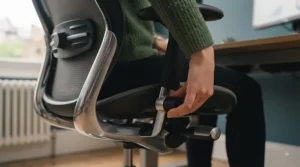
Here’s the thing nobody tells you in the product listings: a chair rated to “support” a given weight and a chair that’s genuinely comfortable at that weight are two very different products. Cheap gas lifts fail early. Standard seat foam compresses and goes flat within months under sustained higher loads. Mesh that looks premium in photos can sag badly by month four. This guide cuts through the marketing and looks at what actually holds up, based on real specifications, verified weight ratings, and aggregated review sentiment from genuine buyers — not invented testimonials.
We’ll walk through seven real, currently available chairs spanning budget mesh options through to premium executive builds, explain exactly how XXL sizing standards work, unpack the difference between XXL and XL chairs, and show you how to spot a genuinely reinforced frame versus a marketing label stuck on a standard one. According to the Health and Safety Executive’s guidance on display screen equipment, seating that’s properly adjustable to the user is a legal requirement for UK workstations, not a nice-to-have — which is exactly why getting this choice right matters more than most people assume.
Quick Comparison Table
| Chair | Weight Capacity | Build | Price Range | Best For |
|---|---|---|---|---|
| CLP Vancouver XXL | 235kg | Faux leather, Class 4 gas lift | Around £180-£230 | Best value heavy-duty pick |
| Nautilus Designs Resolute | 178kg (28 stone) | High-back mesh | Around £140-£190 | Best budget mesh option |
| Nautilus Designs Henley | 220kg | Leather-look, fixed arms | Around £190-£250 | Best mid-range all-rounder |
| CLATINA Heavy Duty Mesh | 181kg | Mesh, FSC-certified frame | Around £150-£200 | Best breathable budget mesh |
| Flash Furniture HERCULES | 226kg | LeatherSoft executive | Around £330-£430 | Best premium executive build |
| hjh OFFICE XXL Executive | 200kg | Padded executive, Class 4 lift | Around £400-£550 | Best for 24-hour intensive use |
| Nautilus Designs Titan | 190kg | Oversized leather-effect | Around £280-£360 | Best for tall-and-heavy combined needs |
Looking at the spread above, the gap between the cheapest and priciest models isn’t really about weight capacity at all — most sit somewhere between 178kg and 235kg, so on paper they look similar. What actually separates them is gas lift class, the density of the seat foam, and how the frame is welded together underneath the upholstery, which is exactly what we unpack product by product below. If your priority is simply the highest verified rating for the lowest outlay, the CLP Vancouver XXL currently leads that particular race, while anyone planning genuine round-the-clock use should be looking much further down this table.
💬 Just one click — help others make better buying decisions too!😊
Top 7 XXL Office Chairs: Expert Analysis
Coverage below spans budget, mid-range and premium options, plus mesh and leather-effect variants, so you can match the build to your body, your budget and how many hours you’re logging in the seat.
1. CLP Vancouver XXL — highest verified weight rating on this list
The standout here is straightforward: a 235kg weight rating, which is amongst the highest going for a chair that still looks and prices like a mainstream office purchase rather than a specialist medical seat. That capacity comes from a Class 4 gas lift — the same rating used in commercial and industrial seating — paired with a five-star base on PU-coated castors designed not to chew up flooring. The faux leather upholstery is worth flagging specifically: unlike bonded leather, which tends to crack and peel within a year or two of heavy use, genuine faux leather stays elastic and recovers its shape after sustained pressure, which is precisely the quality you want in a chair rated for this kind of load.
Based on the spec sheet, this is a chair built for people who need serious, verified capacity without paying executive-chair money for it — tradespeople working from a home office, larger-framed professionals, or anyone who’s been let down by a “heavy duty” chair that quietly wasn’t. Reviewers consistently report that assembly is straightforward and the chair feels noticeably sturdier underneath than its price suggests, though a recurring theme in feedback is that prolonged multi-hour sitting can feel less forgiving than a dedicated ergonomic chair, since the padding prioritises durability over plushness.
Pros:
- ✅ Highest weight rating on this list at 235kg
- ✅ Class 4 gas lift rated for commercial-grade use
- ✅ Faux leather resists cracking better than bonded leather
Cons:
- ❌ Less plush than executive-focused alternatives
- ❌ Limited ergonomic adjustability beyond height and tilt
Sitting in the around £180-£230 range at the time of research, the CLP Vancouver XXL is the pick to beat on pure capacity-per-pound value — check current price before buying, as this segment moves quickly.
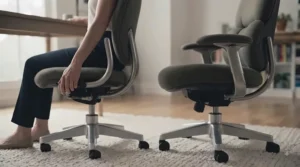
2. Nautilus Designs Resolute — best budget mesh with a genuinely high stone rating
The Resolute’s standout feature is its 28-stone (178kg) weight capacity delivered through a mesh-backed design, which is unusual at this end of the market where most affordable heavy-duty chairs default to vinyl or faux leather instead. That breathable back matters more than it might sound: sustained sitting generates heat, and mesh dissipates it far better than solid upholstery, which is one reason mesh chairs dominate the premium ergonomic segment despite costing more to manufacture properly.
What most buyers overlook about a chair like this is that “heavy duty” and “high-back” aren’t automatically the same thing — the Resolute’s deep, moulded seat combined with its high-back mesh panel is specifically engineered to support the upper back and shoulders under greater sustained load, not just the seat pan. This makes it a sensible pick for anyone doing genuine desk-based work rather than occasional use. Aggregated feedback on this chair line points to reliable performance for standard office hours, with the caveat that, as with most chairs in this price bracket, the armrests are fixed rather than height-adjustable, which taller or shorter users may find limits fine-tuning.
Pros:
- ✅ 28-stone rating with breathable mesh back
- ✅ Deep moulded seat for pressure distribution
- ✅ Strong value against leather-effect competitors
Cons:
- ❌ Fixed armrests, not height-adjustable
- ❌ Fewer recline positions than premium mesh rivals
Priced in the mid-£100s to around £190 bracket at the time of research, the Nautilus Designs Resolute earns its place as the budget mesh pick without cutting corners on the number that actually matters — weight capacity.
3. Nautilus Designs Henley — highest capacity in the Nautilus range
The Henley’s short standout is its 220kg capacity, which pushes it above most chairs in its price tier and firmly into genuinely heavy-duty territory rather than merely “reinforced-adjacent” marketing language. Built with a fixed-armrest frame and a leather-look finish, it trades some of the Resolute’s breathability for a more executive aesthetic, which matters if the chair will be visible on video calls or sitting in a client-facing home office.
Here’s what the spec sheet won’t tell you outright, but the engineering implies: a 220kg rating on a chair this size typically means a thicker gauge steel frame beneath the upholstery and a correspondingly reinforced seat plate, since a five-star base alone can’t safely carry that load without a stronger internal skeleton. That’s the kind of detail that separates a chair actually tested to its stated figure from one where the number is aspirational. Reviewers note the Henley feels notably more planted and less prone to side-to-side wobble than lighter-rated alternatives at a similar price, which lines up with what you’d expect from the extra reinforcement.
Pros:
- ✅ 220kg capacity, near the top of this comparison
- ✅ Reinforced frame reduces side-to-side wobble
- ✅ Leather-look finish suits client-facing spaces
Cons:
- ❌ Less breathable than mesh alternatives
- ❌ Fixed armrests limit fine height adjustment
At around £190-£250 at the time of research, the Nautilus Designs Henley offers close to premium-tier capacity without the premium-tier price tag.
4. CLATINA Heavy Duty Ergonomic Mesh — most breathable budget option
CLATINA’s standout is its combination of a 181kg (400lb) rating with genuinely breathable mesh and an FSC-certified wood frame, meaning the timber core inside the chair is sourced from responsibly managed forests — a detail sustainability-conscious buyers increasingly ask about. The reinforced base pairs with a Class 4 gas lift and what the manufacturer describes as an “explosion-proof” plate, industry terminology for a gas cylinder safety cap designed to prevent the sudden, dangerous failures that gave cheap gas lifts a bad reputation years ago.
On paper this means you’re getting commercial-grade safety hardware on a genuinely budget-friendly chair, which isn’t always the case at this price point. What most buyers overlook is that flip-up armrests aren’t just a space-saving gimmick — for larger-framed users, being able to fold the arms away entirely can be the difference between comfortably squeezing under a standard desk and not fitting at all. Reviewers consistently flag quick assembly (typically 10-15 minutes) and note the mesh stays cool through long sessions, though a genuine minority report the seat cushion feeling thinner than expected after a few months of daily use.
Pros:
- ✅ 181kg rating with safety-rated gas lift
- ✅ Flip-up arms for tight desk clearances
- ✅ FSC-certified frame for sustainability-minded buyers
Cons:
- ❌ Seat cushion reportedly softens over time
- ❌ Fewer premium finish options than leather rivals
Available for around £150-£200 at the time of research, CLATINA Heavy Duty Ergonomic Mesh is the pick if breathability and safety certification matter more to you than plush padding.
5. Flash Furniture HERCULES Series — best-known heavy-duty brand name
The HERCULES name is doing real work as a standout feature here: this is one of the most widely reviewed heavy-duty chair ranges sold internationally, with a verified 226kg (500lb) rating, height-adjustable headrest and LeatherSoft upholstery — Flash Furniture’s proprietary vinyl blend designed to resist the cracking that plagues cheaper bonded leather. Commercial and institutional buyers have relied on this range for years, which is exactly the kind of track record that’s hard to fake.
Based on the spec comparison against the rest of this list, what justifies the HERCULES sitting at a higher price point is less about the raw weight number — which several rivals here match or beat — and more about the padding depth and the adjustable headrest, a feature genuinely useful for anyone reclining during calls or thinking breaks. Aggregated review sentiment across the range consistently praises build solidity and the quality of the swivel mechanism, while a recurring criticism is that the seat runs slightly firmer than expected for an “executive” positioned chair, so buyers coming from plush leather seating may need a short adjustment period.
Pros:
- ✅ 226kg rating from an established heavy-duty brand
- ✅ Height-adjustable headrest for recline comfort
- ✅ LeatherSoft resists cracking better than bonded leather
Cons:
- ❌ Firmer seat than some executive-style rivals
- ❌ Premium pricing relative to raw capacity alone
Typically priced around £330-£430 at the time of research, Flash Furniture HERCULES Series is the safe, well-reviewed choice for buyers who want brand track record alongside the numbers.
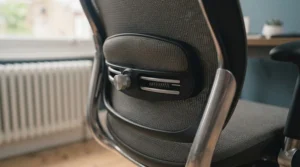
6. hjh OFFICE XXL Executive — best for genuine round-the-clock use
This chair’s standout feature is its positioning specifically within a manufacturer’s dedicated XXL executive range, built around a 200kg capacity, Class 4 gas lift and heavily padded seat and back designed for 24-hour intensive-use environments such as call centres or shift-based home offices. The padding density here is noticeably higher than in most of this list, since chairs intended for round-the-clock rotation need seat foam that resists compression fatigue far longer than a standard 9-to-5 chair.
What the spec sheet won’t spell out, but the engineering strongly implies, is that a chair rated for 24-hour use has to pass a materially tougher durability cycle than one rated for standard office hours — repeated compression, tilt and swivel testing over a longer simulated lifespan. That’s the difference between a chair that’s merely “big” and one that’s genuinely built for sustained heavy use. This makes it the strongest pick on this list for anyone working long or irregular shifts rather than a conventional working day, though the trade-off is a noticeably higher price bracket than the mesh and faux-leather options earlier on this list.
Pros:
- ✅ Rated specifically for 24-hour intensive use
- ✅ Class 4 gas lift with heavily padded seat and back
- ✅ Purpose-built XXL executive range, not a relabelled standard chair
Cons:
- ❌ Highest price bracket on this list
- ❌ Overkill for occasional or part-time home working
At around £400-£550 at the time of research, the hjh OFFICE XXL Executive is the considered investment pick for anyone whose chair genuinely needs to survive a demanding daily rota.
7. Nautilus Designs Titan — best oversized build for tall-and-heavy users
The Titan’s standout is being explicitly marketed as an “oversized” executive chair, with a 190kg capacity built into a genuinely larger frame footprint rather than simply a heavier-duty version of a standard-sized chair. That distinction matters for tall users specifically: a chair can have an excellent weight rating and still leave your knees pressed against the seat edge or your shoulders overhanging the backrest if the actual dimensions haven’t scaled up alongside the capacity.
Reviewers consistently note this as the pick that “finally fits properly,” which speaks to a common blind spot in this category — buyers fixate on the kilogram number and forget that height and shoulder width matter just as much as raw weight support. The leather-effect finish gives it an executive look without leather-effect pricing, and the wider backrest genuinely accommodates broader shoulders rather than merely tolerating them. The trade-off, honestly assessed, is that the larger footprint needs proportionally more floor space than the rest of this list, so it’s worth measuring your desk area before committing.
Pros:
- ✅ Genuinely oversized frame, not just a higher rating
- ✅ Wider backrest suits broader shoulders
- ✅ Executive leather-effect look at a mid-range price
Cons:
- ❌ Larger footprint needs more floor space
- ❌ 190kg rating is mid-pack rather than the top figure here
Priced at around £280-£360 at the time of research, the Nautilus Designs Titan is the strongest choice specifically for tall-and-heavy buyers rather than heavy alone.
Practical Usage Guide: Setting Up and Maintaining Your XXL Office Chair
Getting the setup right in the first month genuinely determines how long an XXL chair lasts, and it’s the step most buyers skip entirely. Start by setting the seat height so your feet sit flat on the floor with knees at roughly a 90-degree angle — on a heavier-rated gas lift this sometimes takes a firmer pull on the lever than you’d expect, so don’t assume it’s faulty if it needs a bit more force. Next, check the tilt tension knob (usually underneath the seat): most XXL chairs ship with this wound tight from the factory, and loosening it slightly reduces strain on the recline mechanism over the chair’s lifetime rather than fighting against maximum resistance every time you lean back.
The most common first-30-days mistake is neglecting caster compatibility with your flooring. Standard nylon castors designed for carpet will scratch and skate on hardwood or laminate; if your XXL chair didn’t ship with the right wheel type for your floor, swap them early rather than after the damage is done. For maintenance, a genuinely reinforced frame benefits from a quarterly check of all visible bolts, since heavier daily loads work fixings loose faster than on a standard chair — a five-minute tightening pass with an Allen key catches problems before they become structural. Finally, avoid the temptation to max out recline immediately on a new chair; giving the gas lift and tilt mechanism a fortnight of moderate use before pushing full recline range lets seals and springs settle properly, which several long-term reviewers credit with meaningfully extending gas lift lifespan.

Real-World Scenarios: Who Really Needs an XXL Office Chair
If you’re a larger-framed remote worker putting in eight-plus hours daily at a home desk, weight capacity and seat depth matter more than aesthetics — the CLP Vancouver XXL or Nautilus Designs Henley make sense here, since both prioritise verified structural rating over executive polish, and neither demands premium-chair budget for genuinely solid capacity.
If you’re managing a shift-based or call-centre-style role where the chair is in use across multiple staff and extended hours, durability under repeated cycling becomes the deciding factor rather than headline weight figure alone — this is squarely where the hjh OFFICE XXL Executive earns its higher price, given its explicit 24-hour-use engineering.
If you’re tall as well as heavier-built — say, over 6’2″ and needing both legroom and weight support rather than one or the other — dimensions matter as much as kilograms, which is exactly the gap the Nautilus Designs Titan was built to close with its genuinely oversized frame rather than a standard frame with a higher rating bolted on.
Problem → Solution: Fixing the Most Common XXL Chair Complaints
Problem: the gas lift sinks slowly over time. This is almost always a sign the cylinder is rated below your actual sitting weight, or that a budget cylinder has passed its realistic lifespan under sustained heavier load. The fix is checking your chair’s specific gas lift class — Class 3 is standard-duty, Class 4 is the commercial-grade rating you want for genuinely heavy use — and replacing it as a standalone part if the rest of the chair is otherwise sound, which is usually far cheaper than a full replacement.
Problem: armrests feel too narrow or too low. Fixed armrests, common on budget XXL chairs, are sized for average shoulder width rather than a broader frame. Where the chair allows aftermarket arm pads, adding thicker padding closes small gaps; otherwise, prioritising a model with height-adjustable or removable arms on your next purchase solves this permanently.
Problem: the base wobbles on hard flooring. This is very rarely the frame’s fault and almost always down to caster-floor mismatch or an unlevel floor surface. Swapping to rubber-coated castors designed for hard flooring, and checking the five-star base is fully seated and torqued during assembly, resolves the great majority of reported wobble complaints.
Problem: seat foam flattens faster than expected. Higher sustained loads compress standard-density foam faster than manufacturers’ marketing implies. Rotating your sitting position through the day, and looking specifically for high-density or cold-cure foam on your next chair rather than standard moulded foam, meaningfully slows this process.
How to Choose an XXL Office Chair
What is an XXL office chair? An XXL office chair is a seat engineered with a reinforced frame, wider seat pan and elevated weight rating — typically 150-235kg — well above the roughly 110-120kg standard most mainstream chairs are tested to, designed specifically for larger or heavier users needing genuine all-day support.
Choosing correctly comes down to seven practical checks, in this order of priority:
- Confirm the actual verified weight rating, not just the “big and tall” marketing label — look for a specific kilogram or pound figure in the spec sheet, since vague heavy-duty claims without a number are a red flag.
- Check the gas lift class. Class 4 is the commercial-grade standard for sustained heavier use; Class 3 is fine for lighter XXL loads but shouldn’t be paired with the top of the weight range.
- Measure your desk clearance against the chair’s footprint, particularly for genuinely oversized models like the Titan, since a wider frame needs proportionally more floor space.
- Decide mesh versus upholstered based on your climate and how many hours you’re sitting — mesh wins on breathability for long sessions, upholstery wins on perceived plushness and executive appearance.
- Check armrest adjustability, especially if your desk height or shoulder width sits outside the average range the fixed-arm budget models are designed around.
- Look for a genuine reinforced frame, not just a heavier-rated cylinder bolted to a standard chassis — reviews and product teardowns are the most reliable way to confirm this.
- Factor in intended hours of daily use, since chairs rated for 24-hour or shift-based use are built to a meaningfully tougher durability standard than standard 9-to-5 models, even at a similar weight rating.
XXL Office Chair vs XL Office Chair: What the Sizing Standard Actually Means
What Is the XXL Sizing Standard?
Unlike clothing sizing, there’s no single mandated industry-wide XXL sizing standard that every furniture manufacturer follows — instead, “XXL” is a widely used shorthand across the office furniture trade, generally applied to chairs rated from around 150kg up to roughly 235-250kg, with a correspondingly wider seat pan (typically 55cm-plus) and reinforced frame components. “XL,” by comparison, usually sits in the 120-150kg range with more modest dimensional increases over a standard chair. Because there’s no single certifying body enforcing these labels the way there is for, say, clothing sizing, the practical takeaway is the same one repeated throughout this guide: always check the specific kilogram figure in the spec sheet rather than relying on the XL or XXL label alone.
That said, the distinction between the two tiers is genuinely meaningful once you look past the label. An XL office chair typically upgrades seat width and padding depth modestly over a standard chair while keeping broadly similar internal componentry — the gas lift, castors and frame gauge are often only incrementally reinforced. An XXL office chair, by contrast, is generally built around a structurally different internal skeleton: a genuinely thicker-gauge steel frame, a Class 4 rather than Class 3 gas lift as standard, and a five-star base engineered for the higher stress loads that come with sustained heavier use. In practical terms, if your actual weight sits close to the top of an XL chair’s rating, you’re likely to feel that ceiling within months as components wear faster than expected — whereas an XXL chair rated well above your actual weight has genuine headroom built in, which meaningfully extends its working lifespan. Reviewers who’ve owned both tend to describe XL chairs as “adequate” and XXL chairs as “properly solid,” which, spec sheets aside, is a fairly accurate summary of the real-world difference.

Reinforced XXL Frames: The Features That Actually Matter
Marketing copy loves the phrase “reinforced frame,” but it’s worth being specific about what that should actually mean in practice, because the term gets applied loosely. A genuinely reinforced XXL frame typically means thicker-gauge steel in the seat plate and backrest mounting points — the areas that take the most repeated stress — along with a wider five-star base (often steel rather than nylon) and a Class 4 gas lift rated for commercial use. What most buyers overlook is that the base material matters almost as much as the gas lift rating: a nylon base can crack under sustained heavy load over time in a way a steel base simply won’t, even if both are technically rated to the same weight.
Features that don’t matter nearly as much as the marketing suggests include high seat-back counts of “lumbar adjustment points” (two or three well-engineered support zones outperform a dozen marginal ones) and chrome-finish accents, which are cosmetic rather than structural. What genuinely does matter: welded rather than bolted frame joints at key stress points, a seat pan that’s noticeably wider than a standard chair’s rather than marginally so, and castors explicitly rated for the chair’s full weight capacity rather than generic replacement wheels. If a listing doesn’t specify gas lift class or base material, that’s usually because neither is impressive — worth treating as a mild red flag rather than an oversight.
XXL Mesh Office Chairs: What to Expect in Real-World Use
Mesh-backed XXL chairs solve a problem upholstered alternatives genuinely struggle with: heat and moisture build-up during long sitting sessions. On paper, mesh looks like a straightforward upgrade, and for many users it is — but there are trade-offs worth setting real expectations around before you buy. Breathable mesh at this size needs to be tensioned correctly across a wider frame to avoid sagging, and cheaper mesh chairs sometimes show visible give in the centre of the backrest within the first year of heavier daily use, where the tension simply wasn’t engineered for sustained higher loads.
What reviewers consistently praise about well-built XXL mesh chairs like the Nautilus Designs Resolute and CLATINA Heavy Duty Ergonomic Mesh is genuinely noticeable temperature difference during long sessions compared with faux leather or vinyl alternatives, particularly in warmer months or poorly ventilated home offices. The trade-off, honestly, is perceived plushness — mesh simply doesn’t offer the same initial “sink in” comfort as a well-padded leather-effect seat, which is why executive-positioned chairs still lean upholstered even at the premium end of this category. If you run warm, work long single sessions, or you’re in a home office without air conditioning, mesh is very likely the better call; if you prioritise a plush, boardroom-style feel and don’t mind occasional warmth, upholstered XXL options like the Flash Furniture HERCULES Series are worth the trade.
Common Mistakes When Buying an XXL Office Chair
The single most common mistake is buying right at the ceiling of a chair’s rated capacity rather than comfortably beneath it. A chair rated to 150kg isn’t meant to be bought by someone weighing 148kg — components degrade fastest when consistently used near their rated maximum, so buying with genuine headroom (ideally 15-20% below the stated maximum) meaningfully extends working life.
A second frequent error is prioritising weight rating over seat depth and width for taller users, which is exactly the gap products like the Nautilus Designs Titan exist to close — a chair can support your weight perfectly well while still being physically too small for your frame. Third, many buyers skip checking gas lift class entirely, assuming all “heavy duty” chairs use equivalent hardware, when Class 3 and Class 4 lifts behave very differently under sustained higher loads. Finally, underestimating desk and floor space for a genuinely oversized frame is a common late-stage regret — measuring your available space before ordering avoids an awkward return.
Long-Term Cost & Maintenance of an XXL Office Chair
Thinking in total cost of ownership rather than sticker price changes the calculus considerably for XXL chairs specifically, because component failure under higher sustained load tends to happen faster than on standard chairs bought for lighter use. A Class 4 gas lift, properly matched to your weight, typically outlasts a mismatched Class 3 lift by a significant margin — meaning the cheaper chair with the lower-spec cylinder can end up costing more over three to five years once you factor in a mid-life replacement part and the labour or inconvenience of fitting it.
Seat foam replacement is the next most common cost, generally needed somewhere between three and six years depending on daily hours and foam density — cold-cure and high-density foams, more common in the premium tier of this list, generally push that timeline out further than standard moulded foam. Castors are a comparatively minor and cheap recurring cost, but worth budgeting for annually if you’re on hard flooring, since mismatched wheel types wear faster and can scratch flooring in the process. The HSE’s guidance on preventing back pain caused by work makes the broader point clearly: poorly maintained or ill-fitting seating is a genuine, documented contributor to musculoskeletal strain, which makes proactive maintenance a health cost as much as a financial one.
Safety, Regulations & Weight Rating Compliance
In a UK workplace context, employers have specific legal duties around the suitability of seating provided to staff under the Provision and Use of Work Equipment Regulations (PUWER), which require work equipment — including office chairs — to be suitable for its intended use and properly maintained. For home workers and the self-employed, these obligations are less directly enforced but no less sensible to follow voluntarily: a chair genuinely rated for your weight, properly maintained, is both a comfort decision and a basic safety one.
Weight ratings themselves generally derive from structural testing standards similar in principle to the international BIFMA and European EN series used across the furniture trade, which subject chairs to repeated cyclic loading, drop-impact and stability tests well beyond normal daily use before certifying a maximum figure. It’s worth noting that a stated weight rating typically represents a tested maximum under controlled conditions, not a comfortable long-term working load — which is precisely why buying with headroom below your actual weight, as covered earlier in this guide, is such a consistently repeated piece of expert advice across the category.

Frequently Asked Questions
❓ What weight capacity counts as an XXL office chair?
❓ Is an XXL office chair worth it if I'm tall but not especially heavy?
❓ How long do XXL office chairs typically last?
❓ What's the difference between Class 3 and Class 4 gas lifts?
❓ Can I replace parts on an XXL office chair rather than buying a new one?
Conclusion
The right XXL office chair isn’t the one with the single highest number on the spec sheet — it’s the one whose gas lift class, frame construction and dimensions genuinely match how you’ll actually use it, day after day. Across this comparison, the CLP Vancouver XXL stands out as the strongest pure value pick given its 235kg rating, while the hjh OFFICE XXL Executive earns its higher price for anyone facing genuinely demanding shift-based hours, and the Nautilus Designs Titan solves a problem raw weight ratings simply can’t — being tall as well as heavy.
What ties all seven picks together is that none of them are simply standard chairs with a bigger number stuck on the box. Real reinforcement shows up in the gas lift class, the base material, and the way the frame is actually put together underneath the upholstery — details worth checking regardless of which specific model you land on. Buy with genuine headroom below your actual weight, match the build (mesh or upholstered) to how many hours you’re realistically sitting each day, and you’ll get a chair that’s still solid in three years rather than one you’re quietly researching a replacement for by month eight.
✨ Ready to Sit Properly for Once?
🔍 Take a closer look at any of the seven picks above and check current pricing and availability before you decide. A properly matched XXL office chair is one of the cheapest genuine upgrades you can make to your working day.
Recommended for You
- 7 Best Wide Seat Office Chairs 2026: Real Comfort, No Guesswork
- Big and Tall Office Chairs: 7 Best Picks for 2026
- 7 Best Office Chairs 200kg+ Capacity UK 2026: Heavy-Duty Picks
Disclaimer: This article contains affiliate links. As an Amazon Associate, I earn from qualifying purchases. If you purchase products through these links, we may earn a small commission at no additional cost to you.
✨ Found this helpful? Share it with your friends! 💬🤗
