
In This Article
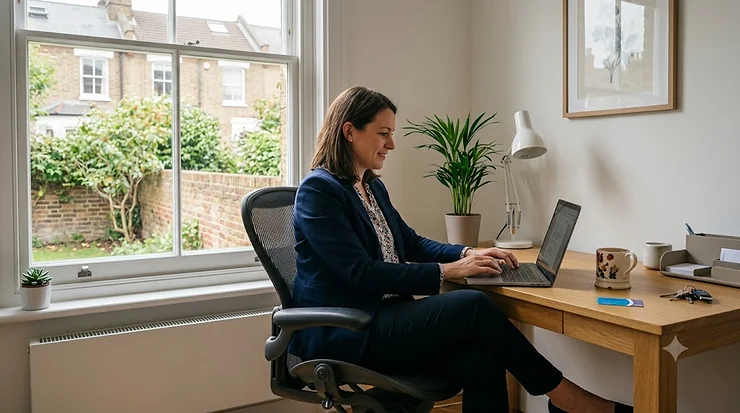
Here’s an uncomfortable truth, quite literally. The dull throb you feel in your hip by mid-afternoon usually isn’t your hip’s fault at all. It’s the slab of foam you’ve been perched on since nine.
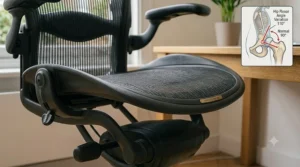
A good office chair for hip pain doesn’t “cure” anything — it stops your seat from quietly sabotaging a perfectly healthy joint. Sit at 90 degrees for eight hours straight and you pin your hip flexors in their most compressed position all day, every day. Add a hard front edge digging into the back of your thighs and a pelvis tipped backwards by a sagging cushion, and you’ve engineered an ache where there needn’t be one. Physios see this constantly: fix the chair, and a surprising chunk of “hip pain” simply evaporates.
This matters more than ever in Britain, where we sit for a frankly absurd portion of our lives. Musculoskeletal disorders affected 543,000 workers across Great Britain and accounted for 7.8 million lost working days in a single year, according to HSE data — and prolonged, unsupported sitting is a well-known contributor.
Below, I’ve pulled together seven chairs available right now on Amazon.co.uk, across every budget from “student overdraft” to “I’ve finally given up and bought the proper one.” No spec-sheet copy-paste, no fictional models — just what actually helps a sore hip, and what’s marketing fluff dressed up as ergonomics.
Quick Comparison: The Shortlist at a Glance
| Chair | Best For | Seat Type | Price Range (approx.) | Max Load |
|---|---|---|---|---|
| Sihoo M57 | Budget buyers | Waterfall mesh | £130–£170 | ~150 kg |
| HOLLUDLE Ergonomic | First proper chair | Padded waterfall | £90–£140 | ~150 kg |
| Sihoo Doro C300 | Most people | Waterfall mesh | £250–£330 | ~100 kg |
| Sihoo Doro S100 | Taller/larger frames | Enlarged waterfall | £300–£380 | ~120 kg |
| FlexiSpot C7 | Tinkerers who adjust everything | Latex-topped mesh | £340–£400 | ~136 kg |
| HÅG Capisco | Fidgeters & posture-shifters | Saddle | £500–£700 | ~110 kg |
| Herman Miller Aeron | Buy-it-for-life | 8Z Pellicle mesh | £600–£1,500+ | ~150 kg |
Prices shift constantly, so treat these as rough brackets and check current pricing on Amazon.co.uk. The pattern worth noticing: the cheapest chairs here nail the one feature that matters most for hips — a waterfall seat edge — while the dear ones simply give you more independent control over fit. You’re paying for adjustability and longevity, not for some secret hip-healing technology.
💬 Just one click — help others make better buying decisions too! 😊
The 7 Best Office Chairs for Hip Pain — Honest Verdicts
A note before we dive in. The four features I keep coming back to — the ones that genuinely unload the hip joint — are an open hip angle, a waterfall seat edge, independent lumbar adjustment, and a seat pan you can actually fit your backside into. Notice what’s missing: massage modes, gaming-chair wings, headrests the size of dinner plates. None of those touch hip pain. Keep that filter in mind as you read.
1. Sihoo M57 — The Sensible Budget Champion
Sihoo M57 Ergonomic Mesh Office Chair is the one I point most people towards when they tell me their budget and then wince. TechRadar’s testers, who’ve sat in over a hundred chairs, crowned it their “best cheap” pick — and that’s high praise for something this affordable.
The waterfall front edge is the headline here. It lets your thighs slope gently away rather than getting guillotined by a hard lip, which keeps the blood flowing and the pressure off. You get a breathable mesh back, a sliding lumbar support, 3D armrests, and a frame rated to around 150 kg. The spec sheet won’t tell you this, but the mesh back is the unsung hero for British homes — six months of damp, stuffy winter and you’ll be grateful for something that doesn’t trap heat like a leather throne.
Real UK reviewers are warm on it. One couple reported using their Sihoo chairs seven to ten hours a day with no discomfort, one chair going strong after four years.
Pros: Excellent waterfall edge for the money; cool mesh back; genuinely adjustable lumbar.
Cons: Build quality is “fine,” not heirloom; armrest padding is on the thin side.
Best for: students, first-jobbers, and anyone who refuses to spend Aeron money on a hunch. Around the £130–£170 range and frequently Prime-eligible for next-day delivery.
2. HOLLUDLE Ergonomic Office Chair — The Padded Alternative
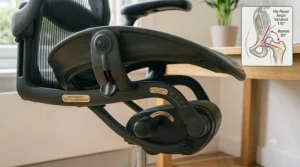
If mesh seats leave you cold — some people find them too firm under the sit bones — the HOLLUDLE is the padded cousin worth a look. It pairs a cushioned waterfall seat with a 3D lumbar system and flip-up armrests, and it routinely undercuts even the M57 on price.
The flip-up arms deserve a quick word, because they’re quietly brilliant for hip pain. Fixed armrests force a static pelvis. Lose the arms (or flip them up) and you naturally micro-shift in your seat — which is exactly what a grumpy hip wants. Flip-up arms also let the chair tuck right under a low desk, handy in a cramped spare-room office or a terraced-house box room where every centimetre counts.
Pros: Cushioned seat for mesh-haters; flip-up arms encourage movement; tucks under low desks.
Cons: Foam can soften over heavy long-term use; less refined recline than pricier rivals.
Best for: the buyer wanting their first proper chair without raiding the savings. Roughly the £90–£140 range — about as cheap as “ergonomic” gets while still being honest about it.
3. Sihoo Doro C300 — The One Most People Should Buy
Sihoo Doro C300 Ergonomic Office Chair is where Sihoo stops feeling budget and starts feeling clever. The waterfall seat genuinely earns its keep, spreading pressure across the thighs and hips so you feel close to weightless, and the self-adaptive lumbar quietly tracks your spine as you shift — no fiddling with knobs.
It’s certified to a sensible standard too. The C300 carries BIFMA, SGS and TÜV certification, with three recline angles at 110°, 120° and 130°. That recline range matters more than it sounds: nudging the backrest past 100° opens the hip angle and takes the load off those compressed flexors. One caveat worth flagging — it’s designed around users from 155 cm to 190 cm and roughly 50 kg to 100 kg, so very tall or heavier folk should size up (see the S100 below).
UK reviewers, including desk-bound software engineers, repeatedly call it the most comfortable chair they’ve owned for long sessions.
Pros: Genuinely supportive auto-lumbar; weightless waterfall seat; solid certifications.
Cons: Tighter size envelope; headrest is fixed-ish rather than fully floating.
Best for: the average British desk worker who just wants one well-judged chair and to never think about it again. Around the £250–£330 range.
4. Sihoo Doro S100 — For Taller and Larger Frames
If you’re six foot plus and most chairs leave your thighs hanging off the edge like a child at the grown-ups’ table, the Sihoo Doro S100 is the answer. It takes the C300 formula and supersizes it: an enlarged, upgraded waterfall seat cushion designed for larger users, plus a dual dynamic lumbar support system and 4D armrests.
The dual lumbar is the real differentiator. Two independently moving support zones mean your lower back gets cradled whether you’re hunched over a spreadsheet or reclined to its 135° maximum. A deeper seat pan also stops that horrible front-edge dig that taller people know all too well — the one that quietly throttles circulation and, yes, aggravates the hip.
Pros: Roomy seat for bigger frames; dual lumbar genuinely helps; generous recline.
Cons: Bulky in a small room; overkill if you’re petite.
Best for: taller users, broader builds, and anyone who’s spent years being an awkward fit. Roughly the £300–£380 range.
5. FlexiSpot C7 — The Tinkerer’s Delight
The FlexiSpot C7 is for people who genuinely enjoy dialling in every setting until the fit is millimetre-perfect. Expert Reviews found it comfortable and supportive, with a spacious seat around 51 cm wide at the front and a cushioned, adjustable lumbar — though they did grumble that the lumbar adjuster sits in a maddeningly awkward spot behind the mesh.
Its hip-relevant trick is a latex-topped seat that’s firm without being punishing, plus genuine seat-depth adjustment to set that all-important gap behind your knees. For context, the NHS recommends sitting back fully so the spine and pelvis are supported, with hips slightly higher than knees — and the C7’s depth slider makes hitting that position far easier. Worth knowing before you buy: the footrest is a roughly £20 optional extra, and one reviewer found assembly fiddly, with casters that “click” in rather than screw.
Pros: Vast adjustability; firm-but-fair seat; smart looks.
Cons: Lumbar adjuster is awkwardly placed; pricey once you add the footrest.
Best for: control freaks and home-workers who want office-grade fit at home-office prices. Around the £340–£400 range.
6. HÅG Capisco — The Saddle Wildcard
Right, this one looks peculiar. The HÅG Capisco is a saddle chair — you sit astride it like a horse, and the backrest works either behind you or pulled round the front as a chest rest. Once you’re past how odd it looks, it’s rather wonderful.
The whole point is movement. A saddle perch opens the hip angle naturally and nudges you to keep shifting position, which is precisely what an arthritic or stiff hip craves. This isn’t just wellness-blog hand-waving, either: the design draws on research including a Cardiff University study on saddle seating and back posture, and the style has long been a favourite among dentists and surgeons who stand-sit all day. The NHS itself notes that open-hip-angle seating can help reduce posture-related strain.
A practical note on availability: the Capisco is widely sold across UK retailers and appears via select third-party listings on Amazon.co.uk, so check stock and seller ratings before committing.
Pros: Brilliant for chronic shifters; opens the hips; discreet, low-profile look.
Cons: Genuinely not for everyone; no plush all-day “sink-in” comfort.
Best for: fidgeters, posture-shifters, and anyone who’s tried every conventional chair and made peace with none. Roughly the £500–£700 range.
7. Herman Miller Aeron — The Buy-It-For-Life Option
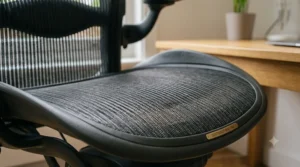
And here’s the one everyone’s heard of. The Herman Miller Aeron is the chair lurking in every glossy office and tech-bro home setup, and there’s a reason it’s endured for decades. Its unique 8Z Pellicle mesh distributes support more evenly than the nylon mesh on budget chairs, which means pressure spreads rather than pooling under one tender spot.
For hip pain specifically, the magic is independent control — lumbar firmness, recline tension and tilt all move separately, so you can build a fit around your exact ache rather than a one-size-fits-most compromise. The honest snag is the price. Even a renewed Aeron sits at the top of this list, and on Amazon.co.uk you’ll often find refurbished “renewed” models sold and warrantied by third-party specialists like Chairorama — a smart way in, though one reviewer warned the aftermarket headrest add-on can pop off under a proper stretch.
Pros: Superb pressure distribution; endlessly adjustable; lasts the better part of a working lifetime.
Cons: Eye-watering price; no headrest as standard; an investment, not an impulse buy.
Best for: serious all-day sitters doing the cost-per-hour maths over a ten-year horizon. Anywhere from the £600 range (renewed) to well past £1,500 new.
✨ See one that fits your back, your room, and your budget?
🔍Tap through to check live pricing and availability on Amazon.co.uk before stock shifts.
How to Choose an Office Chair for Hip Pain (The 5 Things That Actually Matter)
Forget the marketing waffle. When you’re choosing a chair for hip flexor pain or trochanteric bursitis, work through these in order:
- Waterfall seat edge — non-negotiable. The front of the seat should curve gently down. A hard, flat edge compresses the back of your thighs, throttles circulation and tilts your pelvis. This single feature does more for hips than anything else, which is why a £140 chair with one beats a £1,000 chair without.
- Seat depth you can adjust. Aim for a gap of one to two inches (roughly two to three fingers) between the seat edge and the back of your knees, as NHS occupational health guidance advises. Too deep and your pelvis tucks under; too shallow and your thighs hang.
- Tilt that opens the hip angle. A flat 90° all day keeps the hip joint in its most loaded position. Look for a seat or synchro tilt that lets you open to around 100–110°.
- Independent, height-adjustable lumbar. It doesn’t touch your hip directly, but a supported lumbar curve stops your pelvis rotating backwards — and pelvic position is everything for hip comfort.
- A seat pan that fits you. Measure your hip width and don’t squeeze into something narrow. Larger or taller? Size up. Petite? A vast seat will swallow you and ruin the fit.
Setting Up Your Chair: The Bit Everyone Skips
Here’s the dirty secret of ergonomics — the best chair in Britain set up badly is worse than a cheap one set up well. So spend ten minutes getting this right.
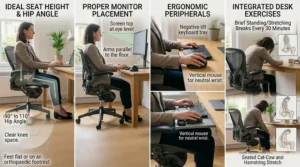
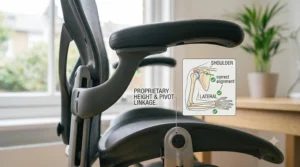
Start with height. Set the seat so your hips sit slightly higher than your knees — the NHS and Chelsea & Westminster physios both recommend this gentle downward slope of the thighs, with feet flat on the floor. If your feet dangle, get a footrest; don’t let your legs hang and strangle the circulation behind your knees.
Next, the pelvis. Sit right back into the chair so the lumbar support meets the small of your back — don’t perch on the front edge like you’re about to leg it. A useful trick from UK physiotherapy guidance: rock your pelvis fully forward, then fully back, a few times, and settle in the middle — or a whisker forward of it.
Then comes the part no chair can do for you: move. Even the cleverest seat is, in the words of one ergonomics team, no substitute for not being static. Get up every 20 to 30 minutes — a few paces to the kettle counts. British winters make this harder (who wants to leave a warm desk in January?), but a quick stand-and-stretch resets the hips far better than any gadget. The Chartered Society of Physiotherapy publishes simple desk exercises if you want a routine.
A Quick Real-World Steer
Because abstract advice only goes so far, here’s how I’d actually match these chairs to real British setups.
The London renter in a Zone 3 box room working from a tiny desk wants the Sihoo M57 or the HOLLUDLE — flip-up arms, tucks under a low desk, kind to the overdraft. The Manchester hybrid worker splitting time between office and a spare-room desk should land on the Doro C300: forgiving, certified, sets up in minutes. A six-foot-three software developer in a Bristol terrace doing ten-hour days needs the Doro S100’s deeper seat — anything smaller and their thighs hang. And the retired Cotswolds couple with a stubborn arthritic hip and a “this is the last chair I’m buying” attitude should look hard at the Aeron or the Capisco, depending on whether they want to sink in or stay mobile.
Mesh vs Padded: Which Is Actually Better for Hips?
Counterintuitively, softer isn’t always kinder. A plush, sofa-like seat feels gorgeous for ten minutes, then lets your sit bones sink and your pelvis rotate — and that’s where the ache creeps in. TechRadar’s testers put it bluntly: a softer chair without proper support causes the hips to sink and the spine to misalign, leading to more pain the longer you sit.
Firm, structured mesh or high-density foam holds your pelvis where it belongs and distributes weight evenly. The trade-off is that very firm mesh can press uncomfortably on bony sit bones — which is exactly why a padded waterfall option like the HOLLUDLE exists. There’s no universal winner; there’s only the one that fits your backside. If you can, take advantage of return windows: under the UK’s Consumer Contracts Regulations, online purchases come with a 14-day cooling-off period, and many sellers offer 30-day returns on top. Use them. A hip ache rarely shows up in a five-minute test sit; it shows up at 3pm on day three.
FAQ
❓ What is the best office chair for hip pain in the UK?
❓ Does an expensive chair really help hip pain more than a cheap one?
❓ Are these chairs available with fast UK delivery?
❓ Is mesh or a cushioned seat better for hip pain?
❓ Can a chair alone fix my hip pain?
The Bottom Line
If you take one thing from all this, make it this: the waterfall edge is king. Get that right and you’ve solved most of the problem before you’ve spent a penny on bells and whistles. For the majority of British desk workers, the Sihoo Doro C300 is the sweet spot — supportive, sensibly priced, and sized for most. Budget-conscious? The Sihoo M57 punches absurdly above its weight. Big spender after a chair for the next decade? The Herman Miller Aeron is the grown-up choice. And if you’re the restless sort who never sits still, the HÅG Capisco might just be the strange-looking saviour you didn’t know you needed.
Whatever you pick, set it up properly and keep moving. Your hips will thank you long before the next dreary British winter rolls round.
✨ Ready to stop wincing at 3pm?
🔍 Tap through to check current pricing and availability on Amazon.co.uk — your future self will be grateful.
Recommended for You
- Best Chair After Coccyx Injury: 7 Top UK Picks for 2026
- Best Office Chair for Coccyx Pain: 7 UK Picks That Work (2026)
- Best Office Chair to Improve Posture: Top 7 UK Picks (2026)
Disclaimer: This article contains affiliate links. As an Amazon Associate, I earn from qualifying purchases. If you buy through these links, I may earn a small commission at no extra cost to you. Prices and availability were accurate at the time of research and change frequently — always check current details on Amazon.co.uk. This article is for general information only and isn’t a substitute for medical advice; if hip pain persists, please see a GP or physiotherapist.
✨ Found this helpful? Share it with your mates! 💬
