
In This Article
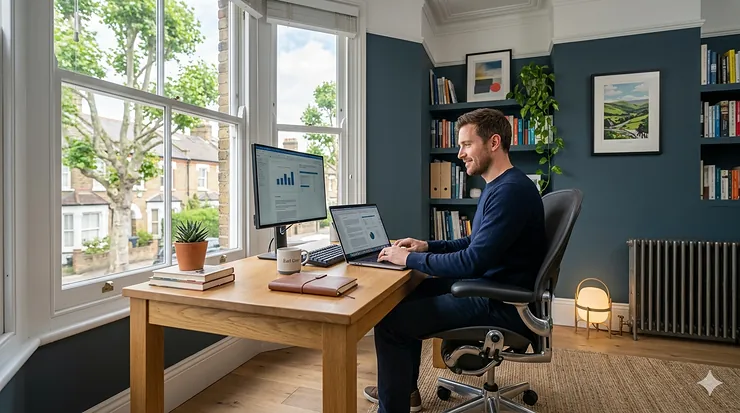
There’s a particular kind of misery that arrives uninvited around 2pm on a Tuesday — a dull, nagging burn that starts somewhere in your lower back and then, seemingly out of spite, shoots straight down your left leg. If you know, you know. Sciatica is one of the most common complaints among desk workers in the UK, and in an era where many of us are clocking eight, nine, or ten hours a day in a home office, the chair you’re sitting in is either part of the solution or — more likely — a significant part of the problem.
An office chair to prevent sciatica isn’t merely about comfort. It’s about science. The sciatic nerve is the longest in the human body, running from the lower lumbar spine, through the buttocks, and all the way down each leg. When you slouch in a badly designed chair, tilt your pelvis incorrectly, or compress your thighs on a hard seat edge, you’re putting direct or indirect pressure on that nerve. Do it for months or years, and you’ll end up Googling “why does my leg feel like it’s on fire.”
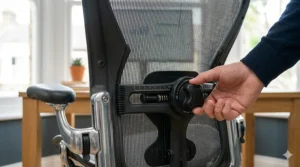
The good news? The right ergonomic seating can genuinely prevent sciatic nerve pain from developing — or stop it getting worse if it’s already arrived. According to NHS guidance on back pain, maintaining a neutral spinal posture during prolonged sitting is one of the key preventive measures for lower back and nerve-related conditions. That means lumbar support, correct seat depth, a waterfall seat edge that doesn’t cut off circulation, and the ability to fine-tune hip angle and pelvis tilt to find what ergonomists call a “neutral position.”
This guide covers seven real, currently available chairs on Amazon.co.uk — tested, researched, and assessed for their sciatica-prevention credentials. Whether your budget is tight or you’re ready to splash out on something genuinely life-changing, there’s a chair here that will make your working day considerably less painful.
Quick Comparison: Top 7 Office Chairs to Prevent Sciatica (UK, 2026)
| Chair | Best For | Lumbar Type | Seat Depth Adj. | Approx. Price (GBP) |
|---|---|---|---|---|
| SIHOO M57 | Budget buyers | Adjustable (height + depth) | No | Under £200 |
| Hbada E3 Pro | Mid-range all-rounder | 3-Zone Dynamic | Yes (5 cm) | £200–£280 |
| SIHOO Doro C300 | Home office WFH users | Self-adaptive dynamic | No | £250–£310 |
| FlexiSpot ErgoX | Compact spaces, smaller budgets | Adaptive T-shaped | Yes (6 cm) | £170–£230 |
| FlexiSpot C7 Air | Long hours, serious adjustability | Adaptive (3-variable) | Yes | £280–£360 |
| SIHOO Doro C300 V2 | Tinkerers, customisation lovers | Rotating adaptive | Yes | £300–£390 |
| Herman Miller Aeron | Premium, long-term investment | PostureFit SL | No (but 3 sizes) | £1,000–£1,500+ |
The table above reveals a clear pattern: the features that matter most for sciatica prevention — dynamic lumbar support and seat depth adjustment — are no longer exclusive to eye-wateringly expensive chairs. The mid-range bracket between £200 and £360 is now genuinely competitive. That said, the Herman Miller Aeron remains the gold standard for a reason: its size-specific design (A, B, or C) means the entire chair geometry is calibrated to your body, which is something no amount of adjustment knobs on a cheaper model can fully replicate. For most UK buyers working from a terrace house spare room, though, the Hbada E3 Pro or FlexiSpot C7 Air will do the job beautifully.
✨ Don’t Miss These Exclusive Deals!
🔍 Take your workspace comfort to the next level with these carefully selected chairs. Click any highlighted product name to check current pricing and availability on Amazon.co.uk. These picks will help you find exactly what your back needs!
💬 Just one click — help others make better buying decisions too! 😊
Top 7 Office Chairs to Prevent Sciatica: Expert Analysis
1. SIHOO M57 Ergonomic Office Chair
The SIHOO M57 is the chair that proved budget ergonomics doesn’t have to be an oxymoron, and it’s been quietly popular on Amazon.co.uk for years for good reason. It features a full-mesh construction, dual-adjustable lumbar support (both height and depth), 3D armrests, and a waterfall seat edge — all the fundamentals for sciatica prevention in one sensibly priced package.
The lumbar support is genuinely adjustable rather than decorative. You can slide it up and down to find the L3-L5 lumbar region it needs to cradle, then push it further into your lower back for firmer support. That waterfall seat edge is worth paying attention to: it slopes downward at the front, reducing pressure on the underside of your thighs and therefore improving circulation — which matters enormously for anyone whose sciatica flares after prolonged sitting.
The M57 suits people of average build (up to around 150 kg) working five-to-eight hours a day. It’s not going to challenge a Herman Miller at hour ten, but for the price — comfortably under £200 — it’s remarkable value. What most UK buyers overlook is that this chair works particularly well for WFH setups where the room is small; its relatively compact footprint fits neatly into a box bedroom turned office without dominating the space. UK reviews on Amazon consistently praise the straightforward assembly and the quality of the mesh.
✅ Genuinely adjustable lumbar support (height + depth)
✅ Waterfall seat edge for improved leg circulation
✅ Compact enough for smaller British home offices
❌ Seat depth is not adjustable — problematic for shorter or longer legs
❌ 3D armrests lack the precision of pricier 4D options
Available on Amazon.co.uk, sold and fulfilled by Amazon. Under £200 range — strong value verdict.
2. Hbada E3 Pro Ergonomic Office Chair
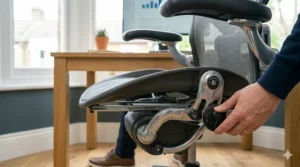
The Hbada E3 Pro is something of a shapeshifter. It looks sleek and modern, adjusts to an almost obsessive degree, and its 3-zone dynamic lumbar support system is one of the most genuinely sciatica-conscious designs in its price bracket. The lumbar unit doesn’t just sit static behind your spine — it tracks and flexes as you shift, lean forward to type, or recline to think.
Crucially for sciatica sufferers, the E3 Pro offers seat depth adjustment of 5 cm, which means you can position the seat pan so your thighs are fully supported without the edge biting into the back of your knees. Get this wrong and you’re compressing the very soft tissue through which the sciatic nerve runs. The 4D headrest is a thoughtful addition; when your neck is correctly supported, you’re less likely to compensate by hunching your lower back, which cascades down to the pelvis and sciatic nerve path.
This is a superb choice for taller UK buyers — it comfortably accommodates heights from 155 cm to 195 cm — which rules out a surprising number of cheaper chairs. UK reviewers on Amazon note it’s particularly well-suited to people who already have mild sciatica symptoms and need something that moves with them rather than forcing them into a single posture. It holds certifications from BIFMA, SGS, and TUV, and has earned the London Design Award for what that’s worth.
✅ 3-zone dynamic lumbar tracks body movement — excellent for sciatica
✅ Seat depth adjustment included (5 cm range)
✅ Accommodates a wide height range up to 195 cm
❌ Assembly takes around 45–60 minutes and isn’t the most intuitive
❌ Premium features push it to the upper end of the mid-range budget
Available on Amazon.co.uk. £200–£280 range — well worth it for taller buyers.
3. SIHOO Doro C300 Ergonomic Office Chair
The SIHOO Doro C300 is the chair that changed the conversation about what “affordable ergonomics” actually means. It uses a self-adaptive dynamic lumbar system — a flexible unit that automatically adjusts to your spine’s position as you move — and pairs it with a BM Tracking System that responds to twisting and lateral shifting. For someone with sciatica, this is significant: the nerve often gets irritated not just when you’re sitting still, but when you fidget.
The C300 holds 12 patents and passes both EU REACH and EN1335 standards (the latter being the European benchmark for office seating quality), alongside German TÜV certification. It also holds a 3-year warranty, and SIHOO UK is based here in Britain, so parts and support aren’t a transatlantic headache. The 3D armrests are exceptionally soft — more so than most competitors — which helps keep your shoulders relaxed and prevents the upper-body tension that can feed back into lower back compression.
One honest caveat: the seat depth is fixed, which means it suits people of average leg length best. If you’re particularly short or tall, check the specifications carefully before buying. The C300 is ideal for the typical UK home office worker — someone of average build, spending six to eight hours a day at a desk, who wants sciatica prevention without spending a fortune. Multiple UK reviewers describe noticeably reduced lower back pain within a week or two.
✅ Self-adaptive dynamic lumbar — no manual fussing required
✅ TÜV and EN1335 certified, UK-based seller
✅ Ultra-soft 3D armrests reduce shoulder-related back tension
❌ Seat depth not adjustable — check fit before buying
❌ May feel slightly snug for users with a larger frame
Available on Amazon.co.uk, sold by SIHOOUK. £250–£310 range — arguably the sweet spot.
4. FlexiSpot ErgoX Ergonomic Office Chair
The FlexiSpot ErgoX is the mid-range option that keeps quietly surprising people. Positioned below the flagship C7 Air but above the entry-level market, it features an adaptive T-shaped lumbar support system that automatically moves with your body, plus 6 cm of seat depth adjustment — the most generous of any chair in this price band. For active sitting posture and hip angle seating, that seat depth flexibility is genuinely meaningful.
The ErgoX uses a weight-sensing intelligent recline system: lean back (up to 135°) and it self-balances according to your body weight, supporting up to 136 kg. This matters because uncontrolled reclining can cause the pelvis to tilt posteriorly, flattening the lumbar curve and increasing sciatic nerve tension. Here, the chair manages that load for you. The German-manufactured mesh provides excellent breathability — relevant when you’re spending long hours in a compact British home office where heating tends to be either off entirely or inexplicably tropical.
The ErgoX is the right pick for buyers who want a proper ergonomic chair without climbing past the £250 mark — especially after Amazon’s frequent voucher deals that bring the effective price down further. It suits people in smaller flats or terrace houses where a bulky gaming-style chair would look absurd. UK buyers note relatively easy assembly (around 30 minutes) and appreciate the 3-year warranty and free accessories commitment from FlexiSpot.
✅ 6 cm seat depth adjustment — best in class at this price
✅ Weight-sensing recline prevents harmful pelvic tilt
✅ Compact, office-appropriate design suits smaller British rooms
❌ Lumbar support, while adaptive, lacks the refinement of the C7 Air
❌ Armrests are 3D rather than 4D — less precise positioning
Available on Amazon.co.uk. Under £230 range — exceptional value, particularly with voucher deals.
5. FlexiSpot C7 Air Ergonomic Office Chair
The FlexiSpot C7 Air is the chair that serious home office workers recommend to each other in whispered tones. It uses a patented three-variable adaptive lumbar system — adjusting horizontally, vertically, and in depth simultaneously — that tracks your body continuously throughout the day. Combine that with 4D armrests, seat depth and height adjustment, and a forward tilt mechanism, and you have a chair that addresses nearly every known risk factor for sciatic nerve compression.
The forward tilt function deserves a special mention for anyone managing sciatica. Tilting the seat slightly forward (around 5–8°) increases the hip angle beyond 90°, which naturally achieves a neutral pelvis position without conscious effort. This takes pressure off the lumbar discs and, consequently, off the nerve roots that feed into the sciatic pathway. It’s the kind of feature that’s absent from most chairs in this category and that physios have been advocating for years.
The C7 Air has passed SGS BIFMA standards through 120,000+ performance tests, and FlexiSpot backs it with a 3-year warranty and free replacement accessories. It’s recommended by CNET and consistently praised in UK ergonomics communities. This is the chair for someone who has tried a cheaper option, felt the difference fall short, and is now ready to do the job properly. Budget: £280–£360. Not cheap, but not unreasonable when you consider you’ll likely use it for five or more years.
✅ Three-variable adaptive lumbar — the most sophisticated in this price range
✅ Forward tilt function encourages natural pelvis tilt neutral position
✅ 4D armrests allow precise shoulder and elbow positioning
❌ Setup takes 60+ minutes and the manual could be clearer
❌ Pricier than most mid-range options — you’re paying for the lumbar engineering
Available on Amazon.co.uk. £280–£360 range — best mid-range pick for sciatica prevention.
6. SIHOO Doro C300 V2 Ergonomic Office Chair
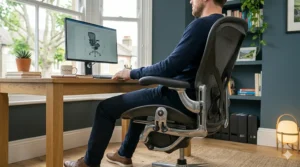
Think of the SIHOO Doro C300 V2 as the C300 with a degree in adjustability. Where the original relies on self-adaptive passive movement, the V2 introduces 8D armrests and a rotating lumbar support unit that can be oriented to match individual spinal curves with considerably more precision. It also adds explicit seat depth adjustment — a notable upgrade for anyone who found the original C300’s fixed seat a limiting factor.
The high-elasticity mesh covers the headrest, backrest, and seat, creating a fully breathable surface that matters more than it sounds during a British winter in a poorly ventilated home office. The SGS-certified gas lift and PU casters are both quiet and smooth — useful if you live in a flat and the floor below is occupied. The 350° steel base adds stability for larger frames, and the build quality feels noticeably more substantial than the original model.
This chair rewards the methodical type — the buyer who will spend thirty minutes on first setup getting every adjustment precisely right. Do that, and you’ll have a chair that holds a genuinely customised neutral posture for your specific spine. Rush the setup and you’ll miss half the benefit. SIHOO UK sells and ships from the UK, so delivery times are swift (Prime-eligible), and the 3-year warranty is backed by a responsive UK support channel. This is the chair for detail-oriented WFH professionals who want every millimetre dialled in.
✅ 8D armrests and rotating lumbar offer exceptional customisation
✅ Seat depth adjustment — upgrade over the original C300
✅ Fully breathable mesh across headrest, back, and seat
❌ Requires thorough setup time to unlock its full benefit
❌ Slightly higher price than the C300 — assess whether you need the upgrade
Available on Amazon.co.uk, sold by SIHOOUK. £300–£390 range — worth the step up if seat depth matters to you.
7. Herman Miller Aeron Ergonomic Chair (Size B)
The Herman Miller Aeron is the benchmark by which every other ergonomic chair on this list is judged — and has been for over thirty years. It’s not cheap. At the premium end of what’s available on Amazon.co.uk, it’s a significant investment. But for anyone dealing with genuine, recurring sciatica, it represents something the others can only approximate: a chair designed with total body geometry in mind, available in three sizes (A, B, and C) so the entire proportional relationship between seat pan, backrest, lumbar support, and armrests is calibrated from the outset.
The PostureFit SL lumbar system is particularly relevant for sciatica prevention. Unlike a standard lumbar pad, PostureFit SL supports both the lumbar curve and the sacrum — the triangular bone at the base of your spine — simultaneously. This dual-point support stabilises the pelvis in a neutral tilt position without any conscious effort, which is precisely what’s needed to decompress the sciatic nerve pathway during prolonged sitting. The 8Z Pellicle mesh eliminates pressure points across the seat and backrest, keeping circulation healthy throughout long working sessions.
The Aeron comes with a 12-year warranty. Over a twelve-year horizon, the cost-per-year is not actually unreasonable when compared with mid-range chairs you’ll replace every two or three years. It’s the right choice for anyone with serious, diagnosed sciatica; for those spending ten or more hours daily at a desk; or for those who simply want to buy once and never think about their chair again. UK buyers should note that multiple variants are available on Amazon.co.uk, including refurbished options at a lower price point.
✅ PostureFit SL supports both lumbar and sacral region — gold standard for sciatica
✅ Three sizes ensure whole-chair geometry matches your body
✅ 12-year warranty — genuinely exceptional long-term value
❌ Very high upfront cost — a significant commitment for most buyers
❌ No seat depth adjustment; sizing (A/B/C) must be correct from purchase
Available on Amazon.co.uk in multiple size and colour variants. £1,000–£1,500+ range — premium but unmatched.
How to Sit to Avoid Sciatica: A Practical Setup Guide
Buying the right chair is only half the battle. Setting it up correctly — and then actually using it correctly — is where the real sciatica prevention happens. Here’s how to get it right from day one.
Step one: Set seat height first. Your feet should sit flat on the floor with your knees at roughly 90°, or very slightly below hip height. If you’re short and the lowest setting still has you dangling, a footrest costs very little and makes an enormous difference to pelvic position.
Step two: Adjust seat depth. Slide the seat pan (where available) so there’s approximately two to three fingers’ worth of space between the back of your knees and the front of the seat. Too little, and the edge compresses your thigh; too much, and your lower back loses contact with the lumbar support.
Step three: Position lumbar support at the L3–L5 region. Your lumbar curve is roughly at belt height — that’s where the support needs to be. It should press gently into your back rather than pushing you forward.
Step four: Set armrests so your elbows are at 90° and your shoulders are relaxed (not shrugged). Armrests that are too high cause shoulder tension that eventually pulls on the lower back.
Step five: Use the forward tilt (if available). A slight 5° forward seat tilt opens the hip angle beyond 90°, naturally aligning the pelvis and reducing lumbar disc pressure.
Finally — and this is the part nobody wants to hear — stand up and move for at least five minutes every hour. Research from the British Journal of Sports Medicine consistently shows that no chair, however excellent, fully compensates for completely static sitting. Micro-breaks matter.
UK User Profiles: Which Chair is Right for You?
The WFH professional in a one-bedroom flat in Leeds. You’ve converted the spare corner of your living room into a desk space, and you spend around seven hours a day there. Budget is a genuine consideration — you don’t want to spend £1,000 on a chair that dominates the room. The SIHOO Doro C300 is your answer. Compact, self-adaptive lumbar, UK-based seller, Prime delivery, and genuinely effective for sciatica prevention without requiring a second mortgage.
The hybrid worker in a detached house in the Midlands. You’re in the office three days a week and home two, you’ve got a proper spare room, and you’re willing to spend properly. You want something that adjusts to you, not something you have to fight. The Hbada E3 Pro or FlexiSpot C7 Air deserves serious consideration. Both offer seat depth adjustment and dynamic lumbar — the two features most linked to sciatic nerve decompression. The C7 Air’s forward tilt gives it a slight edge if you’re managing existing sciatica.
The senior professional or chronic sciatica sufferer anywhere in the UK. You’ve already tried two cheaper chairs. You’ve done the physio. You need something that will genuinely work for the next decade without compromise. Stop looking at anything else and consider the Herman Miller Aeron. Buy the correct size (measure your height and weight against Herman Miller’s size guide), and you’ll understand within a week why ergonomists keep recommending it. The sacral support alone is worth the investment.
What to Look for in an Office Chair to Prevent Sciatica
Not all ergonomic features are created equal when it comes to sciatica prevention specifically. Here’s what actually matters — and what’s mostly marketing.
1. Lumbar support quality. A foam pad that presses a fixed point into your back is not lumbar support; it’s a bump. What you need is either a dynamic/adaptive system that tracks your movement, or something like Herman Miller’s PostureFit SL that supports the sacral region as well. Height and depth adjustability are the minimum acceptable standard.
2. Seat depth adjustment. This is the most underrated feature for sciatica sufferers. A seat that’s too long forces you to sit forward, losing lumbar support; too short and you’re unsupported. Adjustable seat depth — available on the Hbada E3 Pro, FlexiSpot ErgoX, FlexiSpot C7 Air, and SIHOO Doro C300 V2 — lets you tailor the fit precisely.
3. Waterfall seat edge. The front of the seat should curve downward, not cut horizontally into your thighs. A hard seat edge compresses the soft tissue above the sciatic nerve pathway. All seven chairs on this list feature this design to varying degrees.
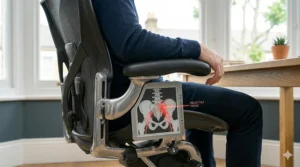
4. Hip angle and pelvis tilt control. Features like forward tilt mechanisms, seat angle adjustment, and correctly positioned lumbar support all work together to hold the pelvis in a neutral position. This is the biomechanical foundation of how to sit to avoid sciatica.
5. Armrest adjustability. At minimum, height-adjustable armrests. Ideally 4D (height, width, depth, and pivot). Armrests positioned correctly reduce shoulder tension, which prevents compensatory hunching that loads the lower spine.
Common Mistakes When Buying an Ergonomic Chair for Sciatica
Choosing purely by price. The £80 “ergonomic” chairs flooding Amazon aren’t ergonomic in any meaningful sense. They use the word as decoration. A chair with no lumbar depth adjustment, no seat depth control, and a flat seat edge will not help your sciatica — and may worsen it.
Buying without checking size compatibility. This catches out a surprising number of UK buyers. Seat height ranges vary significantly between models. If you’re under 165 cm or over 185 cm, always check the minimum and maximum seat height before ordering. A chair set too high forces your pelvis into a posterior tilt; too low and your knees are above your hips — both positions increase sciatic nerve tension.
Ignoring the importance of setup. A £400 chair set up incorrectly will do less for your sciatica than a £150 chair set up properly. Spend thirty minutes getting the adjustments right when your chair arrives. Every adjustment exists for a reason — read the manual.
Expecting instant results. Ergonomic chairs prevent sciatic nerve pain over time, partly by allowing the soft tissue and discs around the nerve to decompress gradually. If you’ve had sciatica for months, don’t expect one week in a new chair to fix it. Give it four to six weeks and combine it with gentle movement and the NHS-recommended stretches for sciatica.
Overlooking return policies. Most chairs on Amazon.co.uk come with the standard 30-day return window under Consumer Contracts Regulations. Use that. If the chair isn’t right for your body after two weeks of proper use, return it without guilt.
Ergonomic Chair vs Standard Office Chair: The Real Difference for Sciatica
A standard office chair offers height adjustment, a fixed backrest, and perhaps a lumbar cushion tacked on as an afterthought. That’s roughly equivalent to giving someone a plaster for a broken leg. It’s not nothing, but it isn’t treatment.
An ergonomic chair to prevent sciatica addresses the actual mechanisms of nerve compression. The lumbar support holds the natural S-curve of the spine, preventing the disc bulging that often irritates the L4–S1 nerve roots. The seat depth and edge design reduce thigh compression, maintaining blood flow along the sciatic nerve’s peripheral pathway. The armrests and headrest work together to prevent the compensatory postures — rounding, hunching, asymmetric loading — that gradually shift mechanical stress onto the lower lumbar region.
According to research published by the British Medical Journal, sedentary desk work is strongly associated with musculoskeletal disorders including lower back pain and radiculopathy (of which sciatica is the most common form). The chair is not the only intervention needed — standing desks, movement habits, and core strengthening all contribute — but it is the most constant one. You spend more time in your chair than in any other single piece of furniture in your life. It deserves proper attention.
Long-Term Cost and Value: Is Spending More Worth It?
A common British instinct is to find the sensible middle ground — not extravagant, not cheap. Applied to ergonomic chairs for sciatica prevention, that instinct serves you well.
The true cost of a chair isn’t the sticker price; it’s the sticker price divided by years of use, plus the indirect costs of getting it wrong. A GP appointment, a physio referral, the lost productivity from days spent hunched in discomfort — these are real costs that an adequate chair avoids.
Consider: a SIHOO M57 at around £170 lasting three years costs roughly £57 per year. A Herman Miller Aeron at around £1,200 lasting twelve years costs £100 per year — and it will almost certainly outlast most cheaper alternatives. The mid-range FlexiSpot C7 Air at around £320 over six or seven years lands at under £55 per year, with superior sciatica credentials to the budget tier.
The calculus, in short: if you’re spending more than six hours a day at your desk and have any history of sciatic nerve pain, spending under £150 is a false economy. The £200–£360 bracket — the Hbada E3 Pro, FlexiSpot ErgoX, FlexiSpot C7 Air, and SIHOO Doro C300 — represents excellent value for purpose. The Aeron makes sense if this is a ten-year investment or if your sciatica is already clinically significant.
✨ Don’t Miss These Exclusive Deals!
🔍 Compare prices on all seven chairs and find the one that works for your body and your budget. Click any highlighted product name to check current pricing and availability on Amazon.co.uk — and take the first step toward a pain-free working day.
Frequently Asked Questions
❓ What features should I look for in an office chair to prevent sciatica?
❓ How long does it take for a new ergonomic chair to relieve sciatic nerve pain?
❓ Are expensive ergonomic chairs worth the money for sciatica in the UK?
❓ Can I get an ergonomic chair for sciatica delivered quickly in the UK?
❓ Is active sitting or a saddle chair better than an ergonomic chair for sciatica prevention?
Conclusion: The Right Chair Changes Everything
Sciatica is not simply a nuisance. At its worst, it’s debilitating — a constant, radiating pain that makes concentrating on anything else feel almost impossible. The encouraging reality is that for most desk workers, it’s also largely preventable with the right seating environment.
The best office chair to prevent sciatica is the one that keeps your pelvis neutral, your lumbar curve supported, your thighs free from compression, and your overall posture aligned without requiring constant, conscious effort. That’s what separates a genuinely ergonomic chair from one that merely claims the label.
From the budget-friendly SIHOO M57 to the long-haul premium of the Herman Miller Aeron, every chair on this list has been selected because it addresses those fundamentals. The most important decision is simply to take the problem seriously — your chair is probably the most consistently used piece of equipment in your working life, and it deserves to be chosen with that in mind.
Take your time, use Amazon’s return policy if you need to, and set the chair up properly when it arrives. Your sciatic nerve — and your Tuesday afternoons — will thank you for it.
✨ Don’t Miss These Exclusive Deals!
🔍 Ready to make the change? Click on any highlighted product to check current pricing and availability on Amazon.co.uk. Your back deserves better than that chair you’ve been putting up with.
Recommended for You
- Best Office Chair for Sciatic Nerve Pain Relief UK 2026
- Best Office Chair for Sciatica UK 2026: 7 Expert Picks to End the Pain
- Best Chairs for Bad Backs UK 2026: 7 Expert Picks for Real Relief
Disclaimer: This article contains affiliate links. As an Amazon Associate, I earn from qualifying purchases. If you purchase products through these links, we may earn a small commission at no additional cost to you. All prices are approximate ranges only and subject to change — always check current pricing on Amazon.co.uk before purchasing. The information provided is for educational purposes and does not constitute medical advice; consult a qualified healthcare professional regarding any health conditions.
✨ Found this helpful? Share it with your mates! 💬🤗
