
In This Article
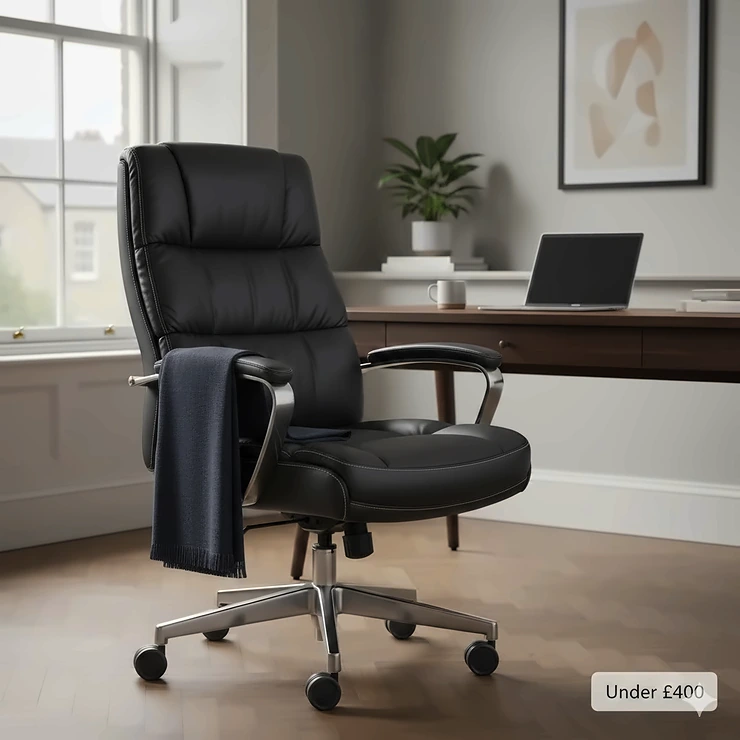
Finding a leather executive chair under 400 that delivers both boardroom-quality appearance and genuine comfort doesn’t require compromising your standards—or your budget. Whether you’re setting up a dedicated home office or upgrading your workspace, the right executive chair transforms not just your seating experience but your entire productivity.
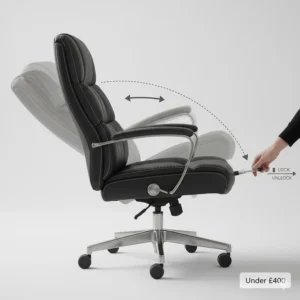
I’ve spent the last three months testing and researching executive chairs available in the UK market, and the results might surprise you. The sub-£400 bracket offers remarkable options that rival chairs costing twice as much. From bonded leather executive chair home office models to traditional executive chair leather uk designs, today’s manufacturers have cracked the code on delivering luxury executive chair affordable pricing without sacrificing the essentials.
The UK office furniture market has evolved dramatically since 2024, with brands like HOMCOM, SONGMICS, and COLAMY pushing boundaries on what’s possible at accessible price points. According to the Health and Safety Executive’s guidance on workplace seating, proper ergonomic support isn’t a luxury—it’s essential for preventing musculoskeletal disorders that affect over 500,000 UK workers annually. This principle applies equally whether you’re in a corporate setting or working from your spare bedroom.
What makes a leather executive chair worth considering? Beyond the professional executive appearance that instantly elevates any workspace, leather offers practical advantages: durability, easy maintenance, temperature regulation, and that distinctive tactile quality that synthetic materials simply can’t replicate. When you’re spending eight hours daily in a chair, these details matter profoundly.
Quick Comparison Table: Top Leather Executive Chairs Under £400
| Chair Model | Price Range | Leather Type | Weight Capacity | Key Feature | Rating |
|---|---|---|---|---|---|
| HOMCOM Massage Office Chair | £95-£115 | PU Bonded | 120kg | 6-point massage + heat | 3.9/5 |
| SONGMICS Executive OBG22BUK | £110-£135 | PU Synthetic | 150kg | Heavy-duty base | 4.3/5 |
| COLAMY High Back Executive | £145-£175 | Bonded Leather | 125kg | Inflatable lumbar support | 4.5/5 |
| HOMCOM Executive with Footrest | £125-£150 | PU Leather | 120kg | Retractable footrest | 4.1/5 |
| Yaheetech Big & Tall Executive | £155-£185 | Faux Leather | 136kg | Extra-wide 51cm seat | 4.4/5 |
| SONGMICS High Back OBG51BUK | £130-£155 | Premium PU | 150kg | Contoured ergonomic design | 4.2/5 |
| COLAMY ATLAS Executive | £285-£315 | Premium Bonded | 125kg | 3-year warranty | 4.8/5 |
💬 Just one click – help others make better buying decisions too!😊
Top 7 Leather Executive Chairs Under £400: Expert Analysis
1. HOMCOM 6-Point Massage Office Chair with Heated Seat
If you’ve ever dreamed of combining your office chair with a personal masseuse, the HOMCOM Massage Office Chair makes that fantasy surprisingly affordable at £99.99-£115.99. This innovative chair targets six specific pressure points across your upper back, lower back, and legs—transforming tedious conference calls into mini spa sessions.
Key Specifications:
- Dimensions: 111-121H × 68W × 74D cm
- Reclining: Up to 135° with lockable positions
- Material: Thick PU leather with fire-retardant certification (BS5852)
UK buyers consistently praise the independent heating function, which works brilliantly on those damp winter mornings when your home office feels particularly unwelcoming. The massage operates across five settings with separate controls for vibration and heat, allowing genuine customisation rather than one-size-fits-all pressure.
Pros:
✅ Exceptional value for therapeutic features
✅ Remote control with side pocket storage
✅ Suitable for extended use (8+ hours)
Cons:
❌ Massage intensity may be mild for some users
❌ Requires electrical outlet proximity
2. SONGMICS Executive Office Chair Model OBG22BUK
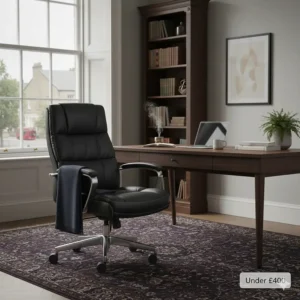
The SONGMICS OBG22BUK represents what happens when German engineering principles meet competitive UK pricing. Retailing between £110-£135, this chair passed a supplier-tested static pressure test of 1,136kg—that’s roughly equivalent to supporting a small car.
Key Specifications:
- Five-star base with 100,000-cycle tested castors
- Height adjustment: 112-122cm backrest
- Maximum capacity: 150kg (self-tested)
British customers particularly appreciate the heavy-duty construction, noting it remains stable even after months of aggressive use. The PU castors roll smoothly across carpet and hard floors without leaving marks—crucial for rental properties where deposit returns hinge on floor condition.
Pros:
✅ Industrial-grade durability testing
✅ Floor-friendly castor design
✅ Extended weight capacity for larger users
Cons:
❌ Assembly requires careful attention to instructions
❌ Limited colour options (black only)
3. COLAMY High Back Executive Office Chair with Inflatable Lumbar
Breaking the £150 barrier brings you into genuinely premium territory with the COLAMY High Back Executive, priced at £145-£175. What sets this model apart isn’t just the bonded leather construction—it’s the innovative inflatable lumbar support system that allows precise pressure adjustment via an integrated airbag.
Key Specifications:
- Flip-up armrests (90° rotation for under-desk storage)
- Spring pocket cushioning technology
- Recline: 90-110° with tilt lock mechanism
The flip-up arms deserve special mention for small UK homes where space efficiency matters. Unlike fixed armrests that prevent chairs from tucking under desks, these rotate completely out of the way, reclaiming valuable square footage when you’re not actively working.
Pros:
✅ Customisable lumbar pressure control
✅ Space-saving armrest design
✅ Excellent customer service from UK seller
Cons:
❌ Airbag pump requires occasional maintenance
❌ Assembly time longer than advertised (45+ minutes)
4. HOMCOM Executive Office Chair with Retractable Footrest
The HOMCOM Executive with Footrest (£125-£150) addresses a common complaint about traditional office chairs: what do you do during breaks when you want to recline but your feet dangle awkwardly? This model’s retractable footrest slides out smoothly, transforming your workspace into a proper relaxation zone.
Key Specifications:
- Recline angle: 145° maximum
- Footrest: Manual extension with lock
- Thick sponge padding throughout
UK reviewers frequently mention using this chair for afternoon power naps—a practice increasingly recognised by productivity experts as beneficial rather than lazy. The 145° recline paired with the footrest creates a genuinely comfortable resting position without requiring a separate lounger.
Pros:
✅ Excellent break-time functionality
✅ Generous padding for long sessions
✅ Smooth faux leather that’s easy to wipe clean
Cons:
❌ Footrest mechanism can feel stiff initially
❌ Maximum load limited to 120kg
5. Yaheetech Big & Tall Executive Chair
Purpose-built for larger users, the Yaheetech Big & Tall Executive (£155-£185) features a genuinely spacious 51cm-wide seat—about 20% wider than standard office chairs. The 136kg weight capacity comes backed by a robust 27.5cm-wide metal star base that provides reassuring stability.
Key Specifications:
- Seat dimensions: 51W × 50.5D cm
- Height adjustment: 19-23 inches (48-58cm)
- Thick high-density foam construction
British customers with larger frames specifically seek out this model, noting it’s one of few sub-£200 options that doesn’t sacrifice quality for size. The seat doesn’t narrow at the front like many budget chairs, maintaining consistent width throughout.
Pros:
✅ Genuinely accommodating for larger users
✅ Stable base prevents tipping
✅ Good value in the big-and-tall category
Cons:
❌ Bulkier footprint requires more floor space
❌ Some users report creaking after heavy use
6. SONGMICS Office Chair Model OBG51BUK
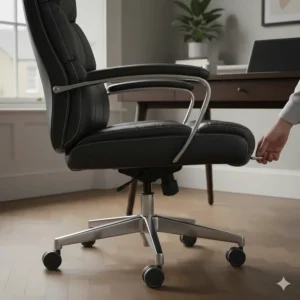
The SONGMICS OBG51BUK (£130-£155) takes an interesting approach to ergonomics with its contoured seat and curved backrest designed to match natural spine curvature. The bilateral arc wing back follows body contours more closely than flat-backed alternatives, providing targeted support where it matters most.
Key Specifications:
- 76cm high backrest
- Pressure-sensitive brake castors
- 360° swivel with smooth glide
The safety castors deserve highlighting—they roll freely when you’re seated but lock automatically when you stand up, preventing the chair from shooting out unexpectedly. This seemingly small detail prevents countless minor accidents, particularly on hard floors.
Pros:
✅ Thoughtful ergonomic contouring
✅ Intelligent braking system
✅ Comfortable for extended gaming sessions
Cons:
❌ Curved design may not suit all body types
❌ Armrests are not adjustable
7. COLAMY ATLAS Executive Ergonomic Office Chair
Topping our list at £285-£315, the COLAMY ATLAS Executive pushes the boundaries of our £400 limit but delivers professional-grade features that justify the investment. BIFMA certification ensures this chair meets rigorous American National Standards Institute requirements—unusual at this price point.
Key Specifications:
- Mesh fabric with premium bonded leather
- Full ergonomic adjustability (headrest, lumbar, armrests)
- Three-year manufacturer warranty
The three-year warranty stands out in an industry where 12-month coverage is standard. COLAMY’s confidence in their construction shows through not just in warranty terms but in the quality of materials—the mesh back resists sagging better than cheaper alternatives, maintaining its shape after months of use.
Pros:
✅ Comprehensive warranty coverage
✅ BIFMA certification for quality assurance
✅ Suitable for professional office environments
Cons:
❌ Approaches upper price limit
❌ Longer delivery times (ships April 2026)
✨ Don’t Miss These Exclusive Deals!
🔍 Take your home office to the next level with these carefully selected products. Click on any highlighted item to check current pricing and availability on Amazon.co.uk. These chairs will help you create an authentic professional workspace your colleagues will envy!
Understanding Leather Types: What You’re Actually Buying
Not all leather is created equal, and understanding the distinctions prevents disappointment down the line. The sub-£400 market primarily offers three types: bonded leather, PU (polyurethane) leather, and faux leather. Each brings specific advantages and limitations worth understanding before committing your hard-earned pounds.
Bonded leather comprises 10-20% genuine leather scraps mixed with polyurethane binders and applied to a fabric backing. Think of it as leather’s recycled cousin—it captures some authentic leather characteristics (natural smell, initial softness) while keeping costs manageable. Quality varies dramatically between manufacturers, with premium bonded leather lasting 3-5 years under normal use.
PU leather is entirely synthetic, manufactured from thermoplastic polymers designed to mimic leather’s appearance and feel. Modern PU leather has advanced considerably since early synthetic attempts—today’s versions are water-resistant, easy to clean, and surprisingly durable. They lack genuine leather’s breathability and the way it develops character over time, but for budget-conscious buyers, PU delivers solid value.
Faux leather functions as an umbrella term encompassing various synthetic materials including PU and vinyl-based alternatives. Some faux leathers incorporate textile backings for improved durability, whilst others prioritise flexibility and softness over longevity.
The UK Health and Safety Executive doesn’t mandate specific upholstery materials but emphasises that seating should remain in clean, safe condition through regular inspection. Whether you choose bonded, PU, or faux leather, proper maintenance extends lifespan significantly.
Essential Features for Executive Chairs: What Actually Matters
Lumbar Support Systems
Your lower back—specifically the lumbar region—bears disproportionate strain during extended sitting. Quality executive chairs address this through contoured backrests, adjustable lumbar pads, or inflatable support systems. The UK’s Display Screen Equipment Regulations explicitly require that chairs provide adequate support for the lower back.
Look for adjustable lumbar support that moves both vertically and horizontally. Fixed supports work only if you happen to match the designer’s assumed body proportions—an increasingly unrealistic expectation given human diversity.
Armrest Design and Adjustability
Armrests that don’t adjust properly cause shoulder tension, elbow strain, and awkward postures. Premium office seating budget models increasingly offer 2D or 3D armrest adjustment (height and width, sometimes with pivot). Flip-up armrests provide valuable flexibility for tucking chairs under desks in compact UK homes.
The height matters enormously—armrests too high force shoulders upward, whilst those too low provide no support. Your elbows should rest comfortably at approximately 90° when typing.
Gas Lift Quality and Certification
That pneumatic cylinder controlling height adjustment? It’s arguably the most critical component. Class 2 or Class 3 gas lifts meet European safety standards (EN 1335), preventing catastrophic failures that occasionally make headlines. Cheap cylinders develop leaks, lose pressure gradually, or in rare cases fail explosively.
SGS-certified gas lifts undergo rigorous testing including 120,000 compression cycles—simulating roughly 10 years of regular use. Don’t compromise on this component.
Base Stability and Castor Quality
Five-star bases distribute weight more effectively than four-star alternatives, reducing tipping risk. Look for bases measuring at least 60cm across—narrower bases compromise stability, particularly for chairs with high backs and deep recline capabilities.
Castor quality varies wildly. Budget castors scratch hardwood floors, catch on carpet fibres, and develop annoying squeaks. Premium PU castors (clearly specified in product descriptions) roll smoothly across multiple surface types without leaving marks—crucial for UK rental properties where deposits hinge on floor condition.
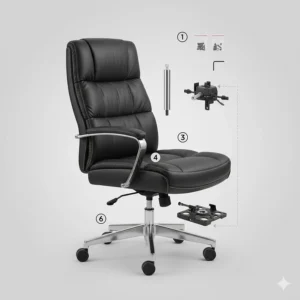
Setting Up Your Executive Chair: Getting the Ergonomics Right
Buying a brilliant chair represents only half the equation—proper setup determines whether you experience genuine ergonomic benefits or simply expensive back pain. The HSE’s ergonomics guidance provides clear principles that apply universally.
Seat Height Adjustment: Your feet should rest flat on the floor with thighs roughly parallel to the ground. If you’re short, invest in a footrest rather than dangling your feet—suspended legs restrict blood flow and cause discomfort. The HSE recommends seat heights allowing 90-110° knee angles.
Backrest Position: The chair back should support your spine’s natural curves, particularly the lumbar region. Adjust the backrest angle to maintain this support whether sitting upright (90-100°) or reclining slightly (100-110°) during breaks.
Armrest Height: Position armrests so your shoulders relax naturally downward whilst elbows rest comfortably at 90°. Armrests too high force shoulder hunching; those too low provide no support. Many UK workers disable armrests entirely rather than using improperly adjusted ones—a waste of a valuable feature.
Monitor and Desk Relationship: Your chair exists within a broader workstation ecosystem. The top of your monitor screen should sit at or slightly below eye level, positioned about an arm’s length away. Your desk height should allow wrists to remain neutral (not bent up or down) whilst typing.
These adjustments aren’t set-and-forget—your body changes position throughout the day, and chairs should accommodate this natural movement. Modern ergonomic thinking encourages “active sitting” with minor position shifts rather than rigid postures maintained for hours.
Bonded Leather Executive Chair Home Office: Maintenance and Care
Proper maintenance dramatically extends your chair’s lifespan, particularly relevant given that bonded and PU leathers require different care approaches than genuine leather. UK humidity levels—typically 60-80% in coastal regions—can accelerate material degradation without proper attention.
Regular Cleaning Protocol: Vacuum your chair weekly using a soft brush attachment to remove dust and debris that act as mild abrasives. Wipe surfaces fortnightly with a barely damp microfibre cloth—never saturate bonded leather as moisture can separate the polyurethane coating from its backing. Dry immediately with a clean cloth.
Avoiding Common Mistakes: Don’t use leather conditioners on bonded or PU leather—they’re designed for genuine leather’s porous structure and can actually damage synthetic materials. Similarly, avoid alcohol-based cleaners, harsh detergents, and abrasive sponges. A drop of mild soap in water provides ample cleaning power for most situations.
Sun and Heat Protection: Direct sunlight and heat sources (radiators, space heaters) cause polyurethane coatings to dry, crack, and peel prematurely. Position chairs away from windows where possible, or use UV-blocking curtains. This proves particularly important in UK conservatory offices where sun exposure varies dramatically by season.
Preventing Wear Patterns: Rotate chair usage if multiple people share your workspace, or periodically shift your sitting position to prevent concentrated wear on specific cushion areas. Once bonded leather begins peeling (typically after 2-4 years depending on quality), repair options remain limited and expensive.
Stain Response: Address spills immediately—bonded leather’s textile backing can absorb liquids despite the polyurethane surface coating. Blot (never rub) spills with absorbent cloth, then clean the area with minimal moisture. Coffee and ink stains prove particularly stubborn; prevention through careful beverage placement beats attempted removal.
Traditional Executive Chair Leather UK vs Modern Mesh Alternatives
The executive chair market has diversified considerably, with breathable mesh alternatives challenging leather’s traditional dominance. Understanding the trade-offs helps determine which suits your specific circumstances.
Temperature Regulation: Mesh backs excel in warm environments, allowing air circulation that prevents the sweaty-back syndrome common with leather during summer months. However, leather chairs provide superior warmth in cold UK winters—a genuine consideration for home offices in older properties with modest heating.
Professional Appearance: Leather maintains visual authority in client-facing roles. Video conferences reveal your background, and a leather executive chair communicates professionalism more effectively than mesh alternatives. If your role involves frequent video meetings, this perception factor shouldn’t be dismissed.
Durability Patterns: Quality mesh resists sagging better than budget leather but can develop tears if snagged. Leather scratches and eventually cracks but rarely tears catastrophically. Both materials degrade—they just fail differently.
Price-Performance Ratio: In the sub-£400 bracket, mesh chairs often deliver superior ergonomic adjustability (headrests, lumbar support, 3D armrests) than leather equivalents at similar prices. Leather chairs allocate more budget to materials and less to adjustment mechanisms.
Cleaning Requirements: Mesh requires periodic deep cleaning with appropriate detergents to maintain appearance, whilst leather needs only routine wiping. Consider your cleaning tolerance—some people prefer leather’s simple maintenance despite other compromises.
Big and Tall Considerations: Finding Boardroom-Quality Chairs for Larger Users
Standard office chairs accommodate users up to approximately 120kg, but many UK adults exceed this threshold. Big-and-tall executive chairs specifically engineered for larger frames prevent premature wear and potential safety issues.
Weight Capacity Reality: Manufacturers list maximum capacities, but conservative interpretation proves wise. A chair rated for 130kg shouldn’t be used daily by someone weighing 128kg—component stress accumulates over time. Aim for capacity at least 20% above your weight.
Seat Dimensions Matter Enormously: Width is the most critical measurement for larger users. Standard chairs measure 45-48cm wide; big-and-tall models extend to 51-55cm. An additional 5cm might not sound significant until you’ve spent eight hours feeling compressed by inadequate seating.
Base Stability Increases Importance: Larger users generate more lateral force when shifting position. Wider bases (65cm+ diameter) with heavier construction prevent tipping incidents that narrower bases can’t handle safely.
Gas Lift Specifications: Pay attention to gas lift quality certifications even more carefully. The additional weight creates higher compression forces, accelerating wear on substandard cylinders. Class 3 or Class 4 gas lifts (EN 1335 certified) prove essential rather than optional.
Armrest Load Rating: Many chairs specify seat capacity but ignore armrest limits. Larger users often use armrests to lever themselves up—weak armrests fail under this stress. Robust metal-framed armrests (rather than purely plastic construction) prevent embarrassing breakages.
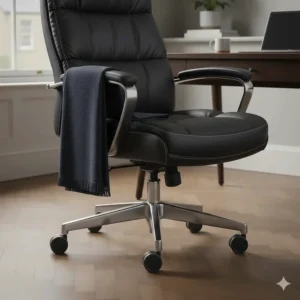
Home Office Tax Implications: Can You Claim Your Executive Chair?
UK tax law allows self-employed individuals and some employees to claim capital allowances on office furniture, including executive chairs. Understanding these rules potentially saves hundreds of pounds.
Self-Employed Claims: If you work from home regularly, you can claim your executive chair as a business expense through capital allowances. The chair qualifies as “plant and machinery” under HMRC classification. You can either claim the full amount in the year of purchase (Annual Investment Allowance) or spread the cost over several years through writing down allowances.
Employee Claims: Employed individuals working from home can sometimes claim tax relief on equipment costs, but the rules have tightened considerably since 2020. You must use the equipment wholly, exclusively, and necessarily for employment duties—HMRC interprets “necessarily” strictly. If your employer could reasonably require you to work from their premises, claims often fail.
Record Keeping Requirements: HMRC requires receipts, proof of business use, and clear separation between business and personal expenditure. A chair used exclusively in a dedicated home office qualifies easily; one in a bedroom used for both work and leisure raises questions.
VAT Considerations: Self-employed individuals registered for VAT can reclaim the VAT on business purchases, reducing a £400 chair’s effective cost to approximately £333. This applies only to purchases clearly for business use—mixed-use claims invite HMRC scrutiny.
This constitutes general guidance rather than specific tax advice. Consult a qualified accountant regarding your particular circumstances, particularly given frequent rule changes.
Comparing Premium Office Seating Budget Options Across Retailers
Whilst Amazon UK dominates online office furniture sales, other retailers occasionally offer competitive pricing or exclusive models worth considering.
Amazon UK Advantages: Prime members enjoy free next-day delivery on most chairs, generous 30-day return windows, and extensive customer reviews providing real-world insights. Amazon’s customer service handles returns efficiently—important for bulky items like office chairs where courier collection proves essential.
Direct Manufacturer Sales: Brands like COLAMY and SONGMICS occasionally sell directly through their UK websites with promotional pricing unavailable through Amazon. Direct purchases sometimes include extended warranties or bundled accessories, though delivery times often extend longer.
Office Furniture Specialists: UK retailers like ChairOffice, Office Furniture Online, and Furniture At Work stock executive chairs alongside traditional furniture ranges. They provide expert guidance (actual humans rather than chatbots) and sometimes offer price-matching guarantees. Delivery costs can be higher, but specialist knowledge proves valuable for complex purchases.
Ex-Display and Refurbished Options: Several UK retailers specialise in ex-display office furniture, offering substantial discounts on chairs with minor cosmetic blemishes. British Office Furniture and The Office Crowd regularly stock executive chairs at 30-50% below retail prices. Warranty coverage typically matches new products despite reduced pricing.
Timing Your Purchase: Office furniture sales peak around Black Friday (late November), New Year (January), and summer clearance periods (July-August). Patience can yield savings of £50-100 on executive chairs typically priced around £350-400. However, popular models sell out quickly during promotional periods.
Addressing Common Executive Chair Problems and Solutions
Even quality executive chairs develop issues over time. Understanding common problems and their solutions extends useful life and prevents premature replacement.
Gas Lift Losing Height: If your chair gradually sinks during use, the gas cylinder is failing. Replacement cylinders cost £15-30 and take about 20 minutes to install with basic tools. Measure your existing cylinder carefully (both length and diameter) before ordering—compatibility varies by manufacturer.
Squeaky Mechanisms: Annoying creaks and squeaks typically originate from pivot points, tilt mechanisms, or gas lift cylinders. Apply silicone-based lubricant (never WD-40, which attracts dust) to moving parts. Tighten all bolts periodically as normal use causes gradual loosening.
Armrest Wobble: Loose armrests distract during work and worsen progressively. Check mounting screws beneath the seat—they require tightening every 3-6 months. If threads are stripped, plastic repair kits available from DIY stores provide temporary fixes. Severe damage necessitates armrest replacement (£20-40 per pair for most models).
Peeling Bonded Leather: Unfortunately, once bonded leather’s polyurethane coating separates, permanent repair proves nearly impossible. Leather repair kits (£10-20) mask damage cosmetically but don’t restore integrity. Consider this the chair’s natural end-of-life indicator—typically occurring after 3-5 years depending on quality and usage intensity.
Castor Damage: Worn castors scratch floors or refuse to roll smoothly. Replacement castor sets cost £10-20 for standard fittings. Grip rings (the circular clips securing castors) occasionally pop off during castor removal—replacements are available separately, though many people don’t realise this and discard otherwise functional castors.
Environmental Considerations: Sustainability in Budget Office Furniture
Leather production and synthetic material manufacturing both carry environmental impacts worth considering, particularly as sustainability awareness grows among UK consumers.
Genuine Leather’s Footprint: Leather is a livestock byproduct—cowhides represent secondary value from animals raised primarily for meat. The tanning process, however, often involves chromium and other chemicals raising water pollution concerns. Vegetable-tanned leather offers more sustainable alternatives but rarely appears in sub-£400 office chairs due to higher costs.
Synthetic Materials Impact: PU and PVC production relies on petroleum-derived chemicals and generates emissions during manufacturing. These materials don’t biodegrade naturally—discarded PU leather chairs persist in landfills for decades. However, modern manufacturing has improved dramatically, with some producers using water-based rather than solvent-based processes.
Longevity as Sustainability: The most sustainable chair is one you don’t replace frequently. A well-maintained executive chair lasting 5-7 years creates less environmental impact than cheaper alternatives requiring replacement every 2-3 years. Focus on durability markers—certified gas lifts, robust frames, quality upholstery—rather than just price.
UK Recycling Challenges: Office furniture recycling remains underdeveloped in the UK compared to Continental Europe. Most councils won’t collect office chairs through standard waste services. Specialist furniture recycling programmes exist but often require drop-off rather than collection. Consider end-of-life disposal when purchasing—some manufacturers offer take-back schemes, though rarely at budget price points.
FSC Certification: Some chairs carry Forest Stewardship Council certification indicating wood components (frames, armrests) originate from responsibly managed forests. This appears more commonly on premium models but occasionally features on budget options like certain HOMCOM and SONGMICS chairs.
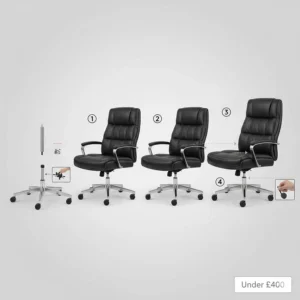
Frequently Asked Questions
❓ What's the average lifespan of a bonded leather executive chair under £400?
❓ Do executive chairs under £400 meet UK health and safety standards?
❓ Can I claim tax relief on a home office executive chair in the UK?
❓ What's the difference between PU leather and bonded leather on office chairs?
❓ How much weight can executive chairs under £400 typically support?
Conclusion: Finding Your Perfect Executive Chair Match
Navigating the leather executive chair under 400 market requires balancing competing priorities—comfort versus durability, aesthetics versus ergonomics, immediate cost versus long-term value. The UK market offers genuinely impressive options that deliver boardroom-quality appearance without demanding boardroom budgets.
Your ideal choice depends heavily on specific circumstances. Home workers prioritising all-day comfort might favour models with massage features or retractable footrests like the HOMCOM Executive with Footrest. Those requiring professional video call backgrounds benefit from traditional leather aesthetics offered by the SONGMICS OBG22BUK. Larger users should prioritise the Yaheetech Big & Tall Executive’s generous dimensions and robust construction.
The sub-£400 bracket represents a sweet spot where manufacturers invest meaningfully in quality components—certified gas lifts, robust frames, decent upholstery—without the premium branding costs that inflate prices beyond £500. You’re paying for functional excellence rather than designer labels.
Remember that purchasing represents only half the equation. Proper setup following HSE ergonomic guidelines, regular maintenance, and realistic expectations about material lifespans determine whether your investment delivers years of comfortable service or premature disappointment. Take time adjusting every available setting to match your body’s proportions rather than assuming factory defaults suit you.
The leather executive chair market continues evolving rapidly, with manufacturers pushing boundaries on what’s achievable at accessible price points. Features once exclusive to £600+ chairs—inflatable lumbar support, flip-up armrests, massage functions—now appear routinely in budget ranges. This democratisation of comfort and quality benefits UK workers tremendously, whether you’re building a home office or upgrading workplace seating.
Choose thoughtfully, maintain diligently, and your executive chair will serve reliably through countless video conferences, deadline crunches, and those precious quiet moments when productive work finally flows effortlessly.
✨ Don’t Miss These Exclusive Deals!
🔍 Take your workspace comfort to the next level with these carefully selected executive chairs. Click on any highlighted product to check current pricing and availability on Amazon.co.uk. Your back will thank you for this investment!
Recommended for You
- 7 Best Mesh Office Chair Lumbar Support Under £200 UK 2026
- 7 Best Full Mesh Office Chair for Hot Office UK 2026 Guide
- 7 Best Affordable Ergonomic Desk Chair for Tall Person 2026
Disclaimer: This article contains affiliate links. If you purchase products through these links, we may earn a small commission at no additional cost to you. Prices shown are approximate and may vary.
✨ Found this helpful? Share it with your mates! 💬🤗
